Economics

Why I can’t resist a red-light district

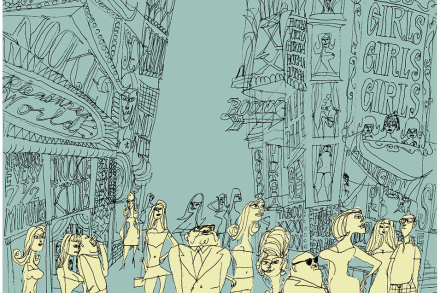
I am writing this on the 17th floor of the Novotel Sukhumvit, on Soi 4, aka “Soi Nana,” in Khlong Toei, Bangkok. For anyone that knows the Big Mango, they’ve already guessed where I am, psychogeographically: from that tell-tale word “Nana.” For those still in the dark, I am on the rude, ribald, rambunctious street that is Soi 4, which is full of tattoo parlors, 7-Elevens, dried-squid-sellers, fake Italian winebars, blaring “British” pubs, slightly dodgy pharmacists, hair salons that do laundry as well – it culminates in Nana Plaza, a multitiered al fresco mall of gaudy and noisy go-go bars that probably constitutes the single largest collection of sex workers on the planet.

Eclipse of the boomers

Shortly after Christmas, the oldest baby boomer will turn 80. The 75 million people born between 1946 and 1964 who have dominated the American political imagination since the Eisenhower administration are starting to fade from the scene. Anyone who has felt oppressed by the baby boom – and this includes virtually every non-senior citizen in the country – will complain that it’s about frickin’ time. If the boomers are only now losing their influence, they long ago lost their marbles. What was the archetypal boomer moment of recent years? Probably Hillary Clinton’s 2016 presidential campaign. But maybe it was the indignant boycott of Spotify by Neil Young and Joni Mitchell over the Covid “misinformation” to which Joe Rogan allegedly gave vent in 2022.

boomers

Andrew Ross Sorkin reconstructs the 1929 crash

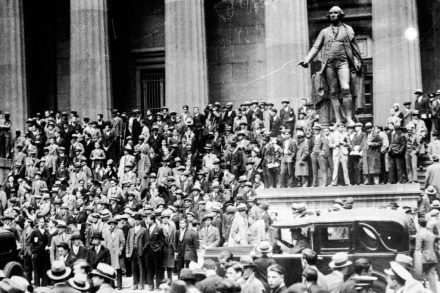
During the great financial panic of 1907, the banker J.P. Morgan locked the titans of the financial world in his lavish private study to determine which banks to rescue and which to let fail. This intervention saved the banking system, restoring public confidence. But trust in Wall Street was shaken to its core. Six years later, Congress passed the Federal Reserve Act, which sought to stabilize the American financial system by establishing a central bank to regulate credit and serve as lender of last resort. By the mid-1920s, the very mechanisms that were designed to promote stability had fueled a surge in stock market speculation.

1929 crash

Why Thomas Sowell still matters

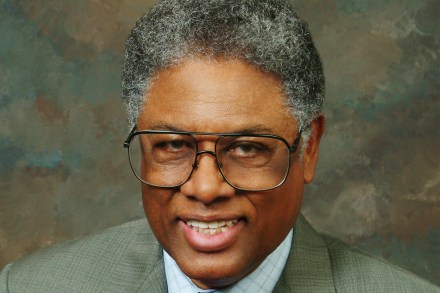
New York socialist Zohran Mamdani is hailed as the social media sensation of American politics. He knows how to talk directly to young people, we’re told. Yet an account called “Thomas Sowell Quotes” has almost twice as many followers on X as Mamdani. Sowell turned 95 this year. He is an unlikely influencer and yet hour-long interviews with him, published by Stanford’s Hoover Institution, have been watched millions of times. In his most popular video, Sowell argues for personal responsibility over dependence on the state and is meticulous in his use of empirical evidence. Black men who read newspapers and own library cards have had the same income as their white counterparts since 1969. Married black couples have the same poverty rate as white couples and have done for decades.

thomas sowell

A rare earths deal is China’s gift to Trump

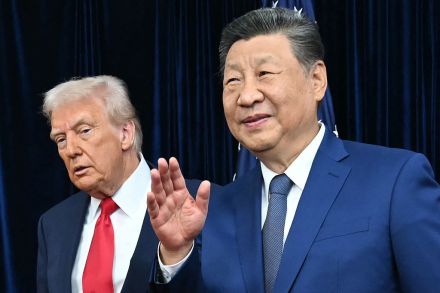
Donald Trump went nuclear. Before his meeting with Chinese leader Xi Jinping at an air base in South Korea, he ordered the Pentagon to test atomic weapons on an “equal basis” with China and Russia. Was Xi impressed? Probably not. While Russia expressed indignation, China did not permit itself to be distracted by Trump’s nuclear shenanigans. Instead, Beijing aimed to obtain economic concessions from a prideful Trump, which it did. From the outset, Xi sought to bring Trump down a peg, declaring that “both sides should consider the bigger picture and focus on the long-term benefits of cooperation, rather than falling into a vicious cycle of mutual retaliation.” Trump seems to have absorbed the lesson.

Javier Milei wins on chainsaw-slashing reforms

Javier Milei, Argentina’s self styled “anarcho-capitalist” President, defied pessimistic poll predictions on Sunday to win in the midterm elections and save his radical economic reforms. With almost all the votes counted, Milei’s La Libertad Avanza (LLA) party had won nearly 41 percent of the national vote, while the main left-wing Peronist opposition Fuerza Patria party netted just over 31 percent.  Up for grabs in the election were 127 of the 257 seats in the lower house of Congress, and 24 out of 72 seats in the upper house Senate. The LLA won 64 lower house seats and 12 in the Senate, enough for Milei to overcome an opposition veto against his most radical measures.

Why gold is at an all-time high

Gold is in the middle of what looks like an unstoppable bull run. It has already punched through $4,000 an ounce. At the rate the price is rising, it may well go to $5,000 within a few weeks, and perhaps even $6,000 as the next year unfolds. There have been lots of different explanations for this, from the looming collapse of the dollar, to secret Chinese buying, to the conspiracy theories circulating on the wilder fringes of the internet, such a secret plot to re-establish the gold standard, or attempts to replace all the metal that is meant to be stored at Fort Knox, America’s official gold reserve, which apparently went missing decades ago. But the real explanation is very simple: it is the only way to hedge against soaring government debt.

gold

Can stablecoins make America the crypto capital of the world?

“I will make sure the US is the crypto capital of the world,” Donald Trump vowed earlier this year. In July, he signed the Guiding and Establishing National Innovation for US Stablecoins (Genius) Act. The Act creates federal guardrails for dollar-pegged stablecoins and regulates who can issue and redeem them. Concerns from law enforcement are also addressed, by making sure anti-money laundering and consumer regulation applies. But what are stablecoins? They are digital tokens built to stay at a stable price, usually one dollar. They sit on the blockchain – the computer protocol that makes crypto work – but what’s underpinning their value are real-world assets, usually cash or government bonds.

crypto

Mission creep has infected the IMF and the World Bank

The following is a transcript of a speech delivered yesterday by the Treasury Secretary Scott Bessent. In the final months of World War Two, Western leaders convened the greatest economic minds of their generation. Their task? To build a new financial system.  At a quiet resort high up in the mountains of New Hampshire, they laid the foundation for Pax Americana.  The architects of Bretton Woods recognized that a global economy required global coordination. To encourage that coordination, they created the IMF and the World Bank.   These twin institutions were born after a period of intense geopolitical and economic volatility.

IMF

The grandeur of Trump’s tariffs

The first thing revealed by the high and wide-ranging new tariffs President Trump announced on “Liberation Day” is just how limited other recent American presidents have been in their thinking. Their ambition was to get elected and re-elected, then retire comfortably into a tranquil post-presidency. They would finish their days lending their names to charities and writing their memoirs (or rather, commissioning ghostwriters to fulfill their publishing contracts).   The idea of destroying and remaking the global economic order never crossed their minds. But Trump is thinking bigger. He doesn’t want to go to his grave as just another has-been ex-president.

tariffs grandeur

Tariffs make sense in a world of predatory mercantilism

The classical defense of free trade, the one found in Econ 101 textbooks and Ricardo’s comparative advantage model, goes something like this: countries should specialize in what they can produce most efficiently, export the surplus and import the rest. Trade allows global output to increase, everyone gets richer and any government interference – like tariffs or subsidies – just gums up the works. But that’s not the world we live in. David Ricardo, the early 19th-century British economist who developed the theory of comparative advantage, illustrated it with a now-famous example: even though Portugal could produce both wine and cloth more efficiently than England, both countries would benefit if Portugal specialized in wine and England in cloth, then traded.

tariffs

Can Trump fix eggflation?

"You can’t make an omelette without breaking eggs" is a maxim attributed to leaders on both sides of the French Revolution. "Move fast and break things" is today’s equivalent, emanating from Silicon Valley and amply demonstrated by Donald Trump and Elon Musk in their approach to government and geopolitics. "You can’t make omelettes at all if you can’t afford eggs" might be the next variant: inflation and scarcity afflicting America’s favorite breakfast have become a major political issue. In brief, a dozen US eggs used to cost $2 or less but by January this year the supermarket price was $5 and rising – in some places $9 was reported, rationing had to be introduced and Mexican suppliers were spotted smuggling truckloads across the border.

eggs

The Europe of American imaginations no longer exists

Since the United Kingdom left the European Union five years ago, the pair have been in battle to prove who has performed better. But the real story of the past five years is not a stagnant UK falling behind a buoyant EU, but of Britain and Europe being trapped in the same cycle of relative decline. It’s America that has quietly raced ahead of Europe this century. Following the pandemic it has become impossible to ignore the gulf in economic vitality between the US and Europe, the former growing by 16.3 percent per capita since 2008. There are very good reasons for America’s success, or rather, Europe’s decline. The EU and the UK increasingly treat their industries as pieces of heritage which must be preserved against disruptors and foreign competition.

Europe

Is it worth it for Trump to buy Greenland?

"The art of the deal" is President Trump’s much-vaunted modus operandi as well as the title of his 1987 bestseller. But how smart would he be to make an offer for Greenland to the Danish government? Leaving aside issues of military sites and future unfrozen shipping routes, would the currently still-frozen north Atlantic island be worth a rich price for its mineral deposits alone? I consulted an intrepid investor who spent six years there prospecting for tantalum, a "transition metal" used in capacitors for mobile phones. His answer was not encouraging. There’s no disputing the potential to find everything from gold and uranium to rare earth elements such as neodymium and dysprosium, in demand for advanced electronics. But the operating difficulties are truly formidable.

Greenland

The West faces a new type of housing crisis

Throughout the West, particularly the Anglosphere, housing costs are ravaging the middle class. Homeownership, long the key to social mobility, is on the decline, particularly among younger generations and minorities. According to the Organization for Economic Cooperation and Development, house prices in high-income countries have been rising “three times faster than household median income over the last two decades,” causing the standard of living “to stagnate or decline.” Unlike previous housing crises, this one is not primarily caused by mass displacements due to wars or natural disasters or population growth.

housing

The academic legacy of Donald J. Harris

Kamala Harris is a master shapeshifter — whether through codeswitching, pandering or just being phony. One moment she’s rolling up masala dosa with Mindy Kaling on live TV; the next she’s FaceTiming the BET Awards, declaring, “Girl, I’m out here in these streets.” Donald Trump’s bumbling attempts to highlight her cultural inconsistencies briefly shifted the election focus to Harris’s race and ethnicity — and away from far more important qualities. Perhaps it’s because her actual policy ideas have been so scant and vague that attacking them directly has proven difficult. Perhaps her chameleonic history has made anything beyond a surface-level attack difficult.

harris

Kamala unleashes radical economic agenda

The long wait for Vice President Kamala Harris’s policy platform is over... well, at least on the economic front. Harris released her economic plan on Friday after weeks of running at the top of the ticket for the Democratic Party. The rollout, however, was less than stellar, as Harris proposed a mix of Soviet-style price controls with more popular policies pilfered from former president Donald Trump’s speeches and policy platforms.Harris said in the past week that she would end taxes on tips for service workers, which Trump promised back in June to do. The plan also runs counter to policies the Biden-Harris administration implemented that empowered the IRS to go after serviceworkers’ tips. Today, reports said Harris also intended to increase the child tax credit to $6,000.

The safest bets in Wall Street will be our downfall

It’s not often that anyone — much less an academic — writes a book that launches a revolution, but that’s exactly what Burton Malkiel did in 1973 when the Princeton economist published a short, potent book called A Random Walk Down Wall Street. As of 2023, the book is in its thirteenth edition. Malkiel famously insisted that “a blindfolded monkey throwing darts at the stock listings could select a portfolio that would do just as well as one selected by the experts,” and then he spent his entire career doing his best to prove that hypothesis.

passive

Will gas prices determine the election?

Ideally, responsible citizens would think big when deciding on a presidential candidate. But the election outcome may just be determined by one factor: gas prices.  In a CNN article this week, economist Mark Zandi asserted that gas prices were likely to determine election results. On Tuesday, Biden announced his release of a million barrels of reserve gasoline. Even with the many factors that affect oil prices, it may be possible to predict where prices will be come November and if that can tell us who will win the presidency. Zandi and his colleagues from Moody’s Analytics (Brendan Lacerda and Justin Begley) published a nineteen-page econometric analysis in January.

gas prices

How AI helps the tech giants

Artificial intelligence (AI) and its related technologies — machine learning and the metaverse — represent a watershed in the evolution of the global economy. Like other such shifts, its emergence is likely to favor certain interests, notably a handful of technology giants, the media and a small cadre of highly skilled programmers. Everyone else faces economic danger, certain to roil domestic and international politics in coming years. Eighty-two percent of millennials fear AI will reduce their earning ability — and they are right to be worried. The first group to lose will be the usual suspects: factory and warehouse workers as well as professionals with largely routinized occupations suited to automation.

ai