Earth

The making of America

From our US edition

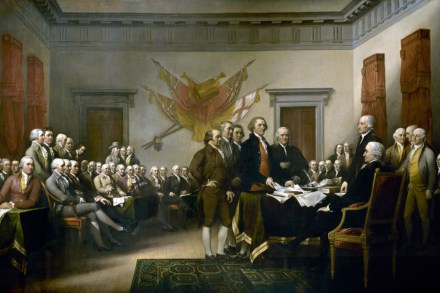
The story of the United States was determined from the start by the manner of its birth. The original 13 English colonies may seem lost in the distant past. Yet it was their diversity that was the key to their union. The creation of the US reflected the tensions of 17th-century England, pitting the Puritan republicans of Massachusetts against the landed gentry of Virginia, Quaker New Jersey against Catholic Maryland. The Founding Fathers resolved these tensions by instituting the concept of states’ rights. Their Constitution was a tissue of compromise, yet it was robust. What served to unite 13 colonies still holds together the mightiest nation on Earth.
America

The difficult pursuit of happiness

From our US edition

For six centuries, from the Renaissance forward, the architects and creators of modernity have promised and predicted a new world, one which, in Thomas Jefferson’s immortal words, would be dedicated to “the pursuit of happiness.” The birth of that world in its political aspect is being celebrated this year in the United States, as well as, to some extent or another, throughout the West. This phrase, so vague and rhetorical as to be meaningless, is also the best definition there is of the modern project. Hence the 250th anniversary of the birth of the US is an obvious moment to consider how far America, and with it the world it has so radically influenced, have advanced since 1776.

Why Artemis II matters

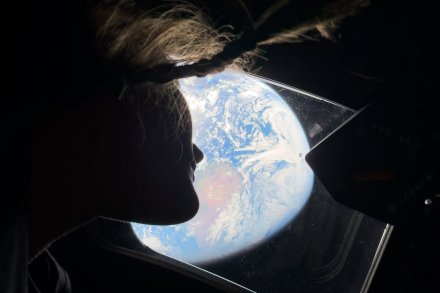
Weren’t those images beamed back from the Artemis II mission something to catch the breath in the throat? If something in you wasn’t stirred by the sight of Earth, glimpsed through the window of the space capsule past the silhouetted face of the astronaut Christina Koch, I don’t think you can be fully alive. And what about the thought that for the first time in history, human eyes will look directly on the dark side of the moon; or that the inhabitants of that spacecraft will travel further from our home than any humans have ever done? That for a few tens of minutes before earthrise, they will be wholly out of contact with home as they travel through the vast dark? Stir the soul it might; but why, some will reasonably ask, should we be doing it at all?

Lovely slice of Cosmic Scouse: Michael Head & the Red Elastic, at EartH, reviewed

One of the more bizarre but recurring tales about how the music of Liverpool has been shaped over these past 45 years concerns Courtney Love, the American musician famed, music aside, for being married to Kurt Cobain, and for being wildly unpredictable. This story claims the 17-year-old Love, who had travelled across the Atlantic to be near the bands she loved, introduced Liverpudlian musicians to LSD, setting in train a decades-long phenomenon known as ‘Cosmic Scouse’.

A bird’s-eye view: Orbital, by Samantha Harvey, reviewed

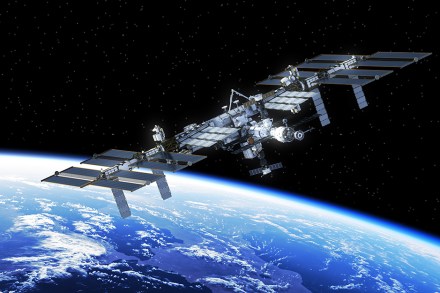
This slender, gleaming novel depicts a day in the life of six astronauts at the International Space Station – but a day isn’t a day for a crew orbiting Earth at more than 17,000 miles an hour. Space ‘takes their 24 hours and throws 16 days and nights at them in return’. Weaving a line of philosophical enquiry through her luminous prose has become something of a trademark for Samantha Harvey, who probed the elasticity of time through a portrayal of Alzheimer’s disease in her prize-winning debut The Wilderness and, in All is Song, transported Socrates to the 21st century.

A brief history of flat earthers

From our US edition

In 2020, an American pilot and daredevil named “Mad Mike” Hughes launched himself in a homemade steam-powered rocket, hoping to achieve enough altitude to prove to himself that the Earth was flat. Unfortunately, the rocket crashed and Mad Mike was no more. “I’m not going to take anyone else’s word for it, or NASA, or especially Elon Musk with SpaceX,” he had once explained in an interview. “I’m going to build my own rocket right here and I’m going to see it with my own eyes what shape this world we live on is.” In this way he became a martyr to the modern conspiracy theorist’s mantra: “Do your own research!

Flat earthers

Going out on a fossil fuel bender

From our US edition

Covid rates are abating just in time for surging gas prices to eclipse the pandemic as our crisis du jour, and people from both sides of the political aisle are crying out in unison: something must be done! The current energy crisis debate consists of a few camps: one group professes that they can’t abide fossil fuels being used at all, while another can’t imagine living without them. The third group makes up the middle of the Venn diagram, and though a paradoxical state of mind, it contains the most members. Choosing a winner from among the prevailing arguments is no simple task.

oil

The slippery stuff of slime: should we loathe it so much?

As humans, we are supposed to have an aversion to slime. It should repel us. Objects and organisms that might be harmful trigger feelings of disgust which keep us away. And, according to the biologist Susanne Wedlich, the common denominator of ‘wide-ranging microbial threats, covering sickness, sex, death and putrefaction’ is their sliminess. It is easy to test this theory. Google ‘slime moulds’ and note your first response. They are gross. But these organisms are worth sticking with. Japanese researchers once conducted an experiment using a slime mould and a map of the country. They put the mould on top of Tokyo and dropped food on to the city’s surrounding towns.