Drones

Renewed hope on Ukraine’s Independence Day 

From our US edition

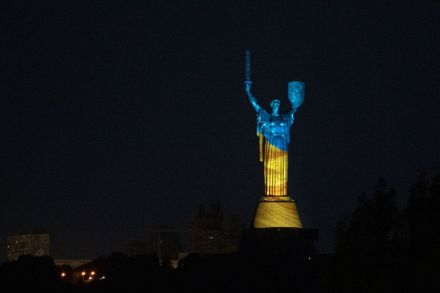
Kyiv Because I was born on the same day as Ukrainian Independence, there were always fireworks on my birthday. Until I was eight, I thought these rockets were in my honor. I even asked my mother to bring a bag so that I could catch a “firework” and it would keep shining for me all night long.  In addition to fireworks, there were concerts and cotton candy, and the fountain on the main square would be transformed from ordinary to multi-colored. It was like the Fourth of July in America, only on August 24 in Ukraine. But my childhood is over, I’ve become an adult and this year after eighteen months of Russia’s full-scale war, I’m not expecting fireworks. I’m hoping there won’t be Russian rockets or Iranian drones either. War forces us to adjust.
independence

Portrait of the Week: Trump’s indictment, Costa’s PR fail and Niger’s new leader

Home Rishi Sunak, the Prime Minister, announced the granting of 100 new North Sea oil and gas licences. In Aberdeen he confirmed funding for two new carbon capture projects. Thangam Debbonaire, the shadow leader of the House, said: ‘We are not going to grant any more. It is not OK. The world is on fire.’ Sir Bob Neill, the chairman of the Commons justice committee, called for a change in rules that deduct the cost of board and lodging in jail from compensation of those unjustly imprisoned. He was responding to the case of Andrew Malkinson, 57, cleared after 17 years in prison of a rape he did not commit.

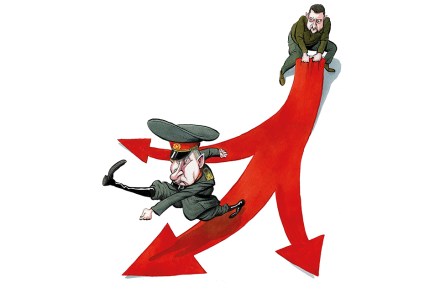
The Ukrainian war is coming to Moscow

A few hours after Ukrainian kamikaze drones struck the proud towers of the Moscow City business centre, a Muscovite friend received a cold call from her insurance company. Would she like to upgrade her home insurance to include drone attacks, a chirpy salesman asked. Another couple of friends, out for a walk in the woods not far from Vladimir Putin’s country residence at Novo-Ogaryovo, were surprised to discover a pair of Pantsir-S1 mobile anti-aircraft batteries parked by the edge of a field, their warheads pointing warily towards Ukraine. A Muscovite journalist shares a new listing for bed space in an underground garage that he has converted into a bomb shelter.

Inside Ukraine’s drone army

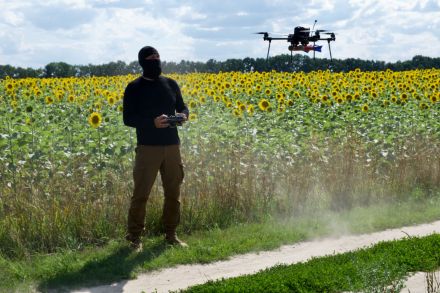
Kyiv ‘We will end this war with drones,’ says Mykhailo Fedorov, deputy prime minister of Ukraine. We meet at the Ministry of Digital Transformation, which he runs in Kyiv. It has become crucial to the counter-offensive. To reclaim occupied land, Ukrainian troops need to remove miles of landmines, and can do so only if kept safe by swarms of drones that fly ahead, searching for the enemy. Russia has drones too – many more of them – and is adept at jamming and downing Ukraine’s fleet. A drone arms race is under way. Soon after his election, President Volodymyr Zelensky asked the then 28-year-old Fedorov to run a new ministry aimed at turning Ukraine into a digital country (or, as he put it, a ‘paperless state’).

There’s no excuse for Russia’s downing of a US drone

From our US edition

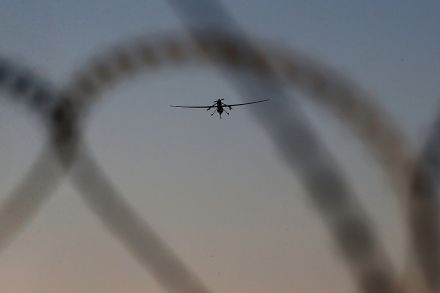
A US MQ-9 Reaper drone’s propeller was hit by a Russian Su-27 fighter jet over the Black Sea on Tuesday, causing the drone to lose control and crash. Before the fighter made contact with the drone, it and its wingman released fuel in what was likely an attempt to impair the American aircraft. The drone was in international airspace — which Russia seems to acknowledge — leaving no justification under international law for Moscow’s aggressive actions. Whether or not the physical contact was premeditated remains unknown. The Kremlin claims the drone’s “sharp maneuvers” caused it to crash and that its jet did not hit it.

vladimir putin army

Turkish drones are transforming the war in Ukraine

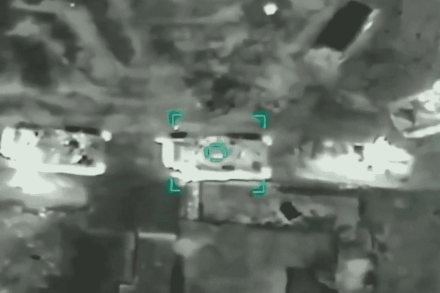
Istanbul, Turkey A cheer rings out in a secret command centre. On the screen, another Russian missile launcher has vanished in a cloud of shrapnel and smoke. Working miles behind the front line, a team of Ukrainian drone operators is trying to turn the tide of the war against the Kremlin’s forces. The most effective weapon in their arsenal is the Turkish-made Bayraktar TB2. Soaring 160 meters above the battlefield, it delivers death at the push of a button. So fearsome is its reputation that it has inspired a love song that has gone viral in Ukraine and even a video game. https://www.youtube.com/watch?

Why Israel won’t give lethal aid to Ukraine

From our US edition

Israeli defense minister Benny Gantz announced this week that Israel would maintain its policy of not supplying weapons to Ukraine. This drew criticism, including charges that Israel has a moral obligation to help Ukraine and is instead foolishly prizing its relations with Russia. Critics also note that Israel’s archenemy Iran is providing weapons and advisors to Russia. They further point out that Israel’s Ukraine arms embargo puts it out of step with Israel’s most important partners in the West, especially the United States. Yet aiding Kyiv is a far riskier bet for Jerusalem than for most Western capitals. This is no easy call, and the one Israel made is probably the right one.

The Russia-Iran axis that’s menacing Ukraine

From our US edition

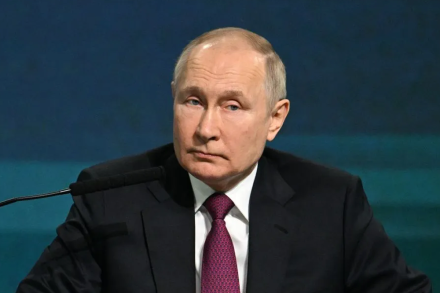
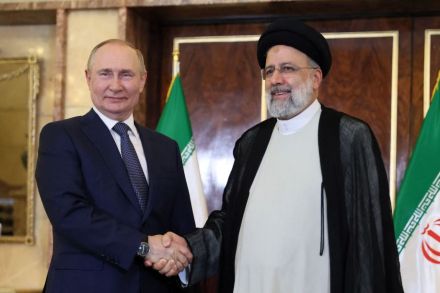
Russia’s brutal war in Ukraine is coming up on its eighth month, and the costs to the Kremlin’s military have been immense. Increasingly isolated on the world stage, Vladimir Putin has joined the world’s club of pariah states, the only group willing to give him support. Chief among his allies is the Islamic Republic of Iran, a state with similarly imperialistic designs and global isolation. This axis has been brewing for some time — the two nations worked together extensively in Syria, for example — but the relationship has reached new heights as the Russian armed forces buckle under the strain of war. Perhaps the most potent symbols of this relationship are the hundreds of Iranian drones flooding into Ukraine to fill a gap in Russia’s weapons inventory.

Ukraine is witnessing the future of drone warfare

Russian forces have reportedly been ordered to watch last year’s state-funded propaganda film Sky. The Kremlin-funded drama follows the lives of Russian airmen in Syria, where an estimated 18,000 people are believed to have died in Moscow's bombings. With jets soaring through the sky and explosive special effects, it tells the story of Oleg Peshkov, a pilot shot down by a Turkish fighter plane. When Hollywood makes its own action flicks about the war in Ukraine, directors may settle for a different kind of hero. Instead of strapping military men jumping into cockpits, it is becoming increasingly clear that Kyiv owes much of the credit for its fierce defence to drones.

The drone era has arrived

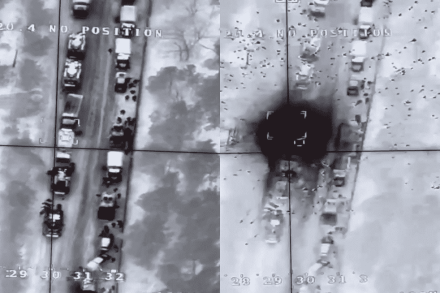
The Ukrainian airforce has so far held out in the battle for the skies. Russia continues to rely on missiles for deep strikes into Ukrainian territory while the defenders have been able to contest the airspace by employing drones. Ukraine has proven a turning point in the age of drone warfare. The first great drone superpower, the United States, used its unmanned aerial vehicles in places like Afghanistan where few fighters had the technology to shoot them down. But Ukraine isn’t primarily using drones to hunt people, loitering over targets for days; rather, it's using them to go after Russian armoured vehicles and supply columns. This seems like a strategy designed particularly for Russia.

The decline of drone killings

From our US edition

On the very same day that Joe Biden was inaugurated, he imposed an order on the national security bureaucracy that received little attention at the time: drone strikes in Yemen and Somalia were to be curtailed until further notice. If American commanders wanted to strike a target in those countries, they would have to bring the request directly to the White House for debate. The new, temporary guidelines would be in place until the Biden administration completed its inter-agency review on America's policy of targeted killings. That review is still in the process of being finalized. And while we don’t necessarily know what the Biden administration’s new rules and procedures will be, we do know that the White House is ramping down the pace of drone strikes.

Paying the price for Obama’s drone war

From our US edition

It was nearly six years ago on October 3 that the Médecins Sans Frontières hospital near Kunduz, Afghanistan, was hit by US airstrikes. The bombings occurred 'repeatedly and precisely' and for more than 30 minutes afterwards, hospital officials frantically called Afghan and American military officials. In the end, the hospital — which was caring for Afghans wounded in the ongoing war — was partially destroyed and 22 civilians and medical workers lay dead. The timeline afterward went something like this: the Pentagon acknowledged there may have been collateral damage to a nearby medical facility during a fight with Taliban insurgents. A day later, officials said the US had fired on insurgents who were engaging with Afghan military in 'the vicinity' of the hospital.

price obama drone war

First-rate TV: Clarkson’s Farm on Amazon Prime reviewed

I was at a party the other day when who should accost me but Jeremy Clarkson. There were lots more famous and interesting people in the room, including the surviving half of Wham!. But Clarkson was itching to talk to me about, of all things, a review I’d written of a BBC reality series called This Is My House. He was genuinely mystified as to why I’d given such tosh a favourable critique. Having just watched his new series, Clarkson’s Farm, I now understand his puzzlement. Since late 2019, Clarkson has been playing at being a farmer on his 1,000-acre Oxfordshire estate.

Automation and the future of modern warfare

From our US edition

There is an epic moment in the latest Gerard Butler movie Angel Has Fallen where he gets to save the life of the US president (again). The bad guys launch a swarm of dozens of micro drones able to detect and kill dozens of Secret Service agents, destroying anything and anyone that might get in the way of their mission to kill the president.It’s a chilling moment in the movie that clearly demonstrates just how powerless mere mortals will be in the face of superior technology that can operate independently of any direct human control.As with so much in Hollywood these days, movie truth is remarkably close to a reality that has been prefaced since 1984 when the first Terminator movie appeared and suggested the idea of autonomous robots as terrifying killing machines.

drones automation

How drones are dramatically changing warfare

From our US edition

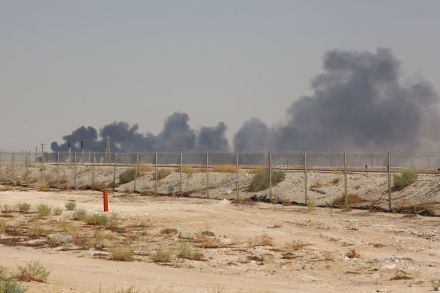
The attack on Saudi Arabia’s oil facilities by Houthi rebels using a fleet of 10 drones loaded with explosives has caused serious damage and will result in a global production cut of around five percent. The Houthi strike was the second aimed at Saudis oil facilities after a previous effort last month resulted in minimal damage. The Houthi drones were likely supplied by Iran, which has a large drone fleet and has been arming the rebel group in Yemen for years. Saudi Arabia is likely to launch retaliatory strikes against both the Houthis and Iran. Drones have become a new frontier in warfare allowing activist groups and nations access to a potent weapon that can be used for surveillance or as a remotely piloted bomb.

drones oil saudi arabia