Drink

I tried the world’s worst drink

I am standing in a sunny courtyard in the little town of Gijduvan, waiting for a drink. Just in case you don’t know, Gijduvan is a way station on the old Silk Road, in the far west of Uzbekistan: it is known for ceramics, Sufi mystics and loud celebrations of the Persian spring festival, Nowruz. As part of this festival, the locals make a special soup/beverage called sumalak. The recipe, I’m told, dates to Zoroastrian times – more than 3,000 years ago – and includes “wheat sprouts,” “cottonseed oil” and, I am not joking, “stones.” I can already see the sumalak bubbling away in a vast steel pot. It looks like viscous brown cow slurry. To be honest, I’m not brimming with eagerness.

drink
shooting

Wine highlights from a weekend shooting party

Do you know Charlotte Mulliner’s charming poem “Good Gnus”? It was transcribed by P.G. Wodehouse in his short story “Unpleasantness at Bludleigh Court.” I went shooting with friends last weekend at a magnificent rural fastness in a semi-secure, undisclosed location near Millbrook, New York. Although we were shooting clays, not pheasants or other fauna, the opening of “Good Gnus” nevertheless floated into my mind like a tocsin with its irrefragable psychological insight.

The loveliness of Ligurian wine

From our UK edition

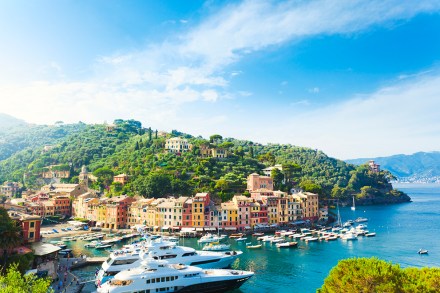
We were talking about Italy: where and when to sojourn. I confessed to so many gaps. It is years since I visited Genoa and I know that the Ligurian coast has innumerable hidden treasures. There are the well-publicised places, such as Portofino and San Remo, which I am sure are pleasant enough out of season. But for many months they are likely to resemble an eastern extension of Monaco. Small is the key word. We are not dealing with the mighty names from Piedmont. In Liguria many of the local wine producers have tiny plots, sometimes only a couple of acres. They will supply the local restaurants which also draw on local ingredients and recipes: just as nonna made it. Visitors are welcomed. These people are confident in their own way of life.

How to save Britain’s pubs

From our UK edition

In Bradford a few weeks ago, I popped into a pub called Jacobs Well. It’s a squat old building, all but submerged behind the stultifyingly ugly road that grinds around the edges of the town centre. The Well was fairly quiet on a Monday night, but everyone there was congregated around the bar and it was immediately apparent that this was a place where long friendships are nurtured and strangers are welcomed. There were interesting cask ales, free hotpot and doorsteps of bread on a side table for anyone who fancied a meal, wonderful photos of old Bradford on the walls and a blackboard chock-full of handwritten notices advertising upcoming band nights and quizzes. The Jacobs Well probably doesn’t make huge profits.

The art of the political lunch

From our UK edition

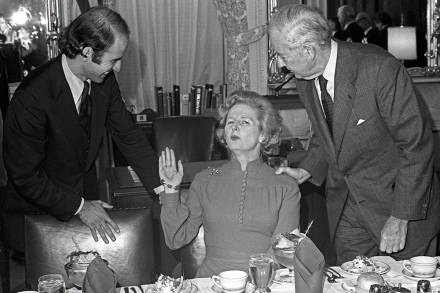
We had been discussing Ukraine, Gaza, Iran, the possibility of a nuclear exchange across the Punjab and other trifling matters. It was decided to change the subject. A youngster was planning to write a piece on lunching and suggested I might know something about that. I did not disagree. In the old days, lunching was a vital part of the political process. It was a good way of getting to know politicians, so that contacts would ripen into friendships. That said, it was not an efficient method of discussing complex matters. Lunch was forgossip and general political impressions. If detailed rumination was necessary, the place for that was in the minister’s office, equipped with a notebook. The 1980s were particularly fruitful.

Beaujolais is the ideal summer wine

It’s been a while since we have traveled to Beaujolais, that ancient wine growing region along the Saône River north of Lyon. Since summer is nigh, it’s time for another visit. Beaujolais is an ideal summer red wine. It is almost always made exclusively from the Gamay grape, a cross between Pinot Noir and an ancient white varietal called Gouais. It is light, flowery, full of pleasing acidity and fruitiness, satisfying by itself and notably food friendly. Of course, anyone who writes about Beaujolais these days has to begin by issuing a little advisory, like the Surgeon General’s warning on packs of cigarettes and certain medications. A few decades back, Beaujolais was plagued by scandal.

beaujolais

The reinvention of limoncello

From our UK edition

My first memories of limoncello, I expect like most people, are from an Italian holiday, the slender bottles as yellow and radiant as the Amalfi sunshine. And at a local, family-run Italian restaurant, cheerfully slammed down on the table at meal’s end. The lemon liqueur is now having a new lease of life, born again as an aperitif. The limoncello market grew 31 per cent from 2019 to 2023 and it is popping up everywhere from Australia to Germany. Above all this is down to the advent of the ‘limoncello spritz’, which was even added to the menu at J.D. Wetherspoon last year. Having enjoyed two decades as top dog, the Aperol spritz finally has some meaningful competition.

My new-found love for Marsala

From our UK edition

Western Sicily is one of the most wonderful places on Earth. From the Greek temples in the south to the Arab-Norman architecture and frescos around Palermo, there are endless treasures and glories. There are also records of fascinating characters, especially the Emperor Frederick II Hohenstaufen, Stupor Mundi. Historians still argue whether he was a prototype of a Renaissance ruler, with a distinct flavour of the Enlightenment, or merely among the most remarkable men of the high Middle Ages. He was a polymath, but one of his most distinguished qualities ultimately limited his inheritance. He found it impossible to stop fighting, not least against a succession of popes. In that particular phase of the conflict between papacy and Holy Roman Empire, Frederick could not win a decisive victory.

The Chinese tried to get me drunk

From our UK edition

China: what next? Around the time of the millennium, I wrote that during this century, many of the world’s great questions would be answered in Chinese characters and that great fortunes would be made, and lost, in the China trade. That is one prophecy which might hold good. No one ever says that they could take or leave Maotai Churchill said that the longer you can look back, the farther you can look forward, and it is worth following the Chinese example and thinking in epochs. Consider one of the most significant might-have-beens in history: the career of the 15th-century eunuch admiral Zheng He.

The paradox of West Virginia

From our UK edition

West Virginia. There is a paradox. A state of natural beauty, glorified by mountains and watered by rivers – including the Shenandoah (surely the most beautiful word in American) – carved out of reluctant nature by hard human labour, then divided by slavery and war, but ending on the Union side – it ought to be an honoured political jurisdiction. But the West Virginians broke away from the rest of Virginia. In its early days, it was governed by cultivated gentlemen, who filled their cellars with fine wine and their libraries with fine books. Yet the way of life which managed this transplant of European civilisation was sustained by slave labour in the cotton fields. It is as if the West Virginians have never been forgiven for abandoning the lost cause Another paradox.

Could Trump’s tariffs be good news for British wine-lovers?

From our UK edition

Professional Englishmen and women – doctors, accountants and even journalists – could once afford to drink first-growth claret like Château Latour on a regular basis. In 1972, when the Daily Telegraph’s Guide to the Pleasures of Wine was published, Pomerol was still an obscure corner of Bordeaux, known for offering ‘very good value’. Those days are long gone. Prices began to take off in the 1980s, with Auberon Waugh blaming ‘American millionaires looking to impress their guests’. The 1982 Bordeaux vintage was highly lauded by a then-unknown young lawyer called Robert Parker Jnr who would go on to become the most influential wine critic in the world. After this, anything Parker recommended became unaffordable to most British wine-lovers.

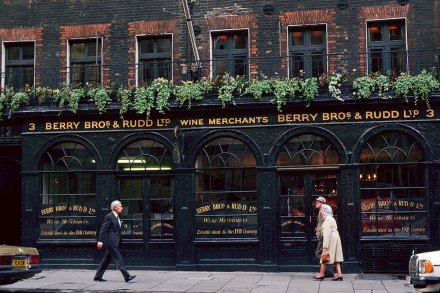
The Berry Bros supremacy

From our UK edition

For more than 50 years I have assumed that any sensible person will be a right-winger, even if not all of them will admit it, and that this will be especially true of oenophiles There are exceptions. Harry Waugh, a clubman, author – Bacchus on the Wing is especially good – and merchant-connoisseur, was one of the most delightful wine experts of the last century. It was an education to sit with him as he talked his way through a good bottle, which effortlessly became a good several bottles. Moreover, Harry lived to be 97. I spent far too little time in his company and cannot remember his ever talking about politics. Why on earth should he? There were far more important topics to consider. But it is said that during the 1930s he was briefly in the Communist party.

The seductions of Provence

From our UK edition

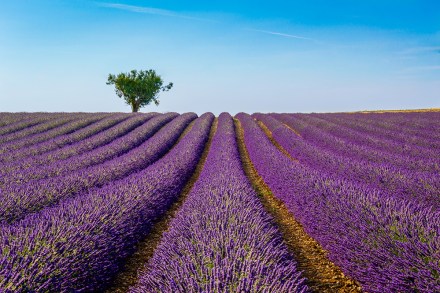
Riches, ancient cities, great architecture, splendid landscape, agriculture to match, trade routes, romance. Records of human settlement stretching to the dawn of civilisation, recurrent conflicts and invasions, dynastic struggles which lasted for centuries, wars of religion followed later by revolutionary conflicts. We are contemplating Provence, a region with a glorious history but which has often produced more history than it could consume. That gives rise to an ironic parallel. In the UK, we too have a Province, pronounced Prov’nce. It too has exported a lot of history, for which it has received little recognition. Almost a third of the signatories of the US Declaration of Independence had Ulster Protestant roots.

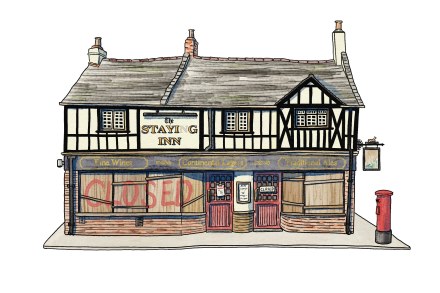
Last orders: farewell to my 300-year-old local pub

From our UK edition

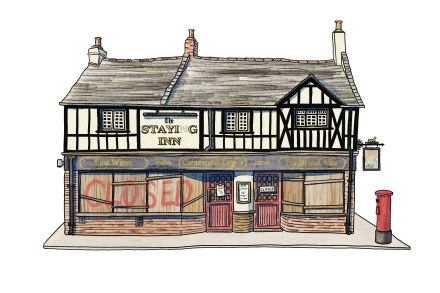
The Cherry Tree on Southgate Green began life as a coaching inn on one of the historic routes from London to York and beyond. It has been trading since 1695, when what are now the north London suburbs were open fields. But the other evening, the pub – my local – rang last orders for the final time. The brewery that owns it is having it refurbished as a brasserie, its pub status coming to an end after 330 years. I went on its final evening for the closing-down party. It was like being in an episode of EastEnders, in the sense that it was a pub full of faces you dimly recognised from events long past, drinking and being jolly, like the Queen Vic at Christmas. Becoming a brasserie seems an unlikely route to financial redemption for the Cherry Tree, though.

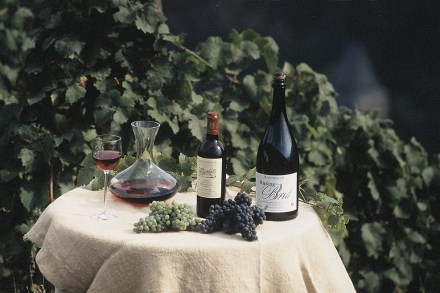
Should you bother decanting wine?

From our UK edition

We were almost having a symposium and I was invited to define Toryism in one sentence. I replied that one book would be easier: the late Roger Scruton’s On Hunting, which ought to be subtitled: ‘From Horse-Shit to Heaven: the Search for Love, Order and God.’ ‘But what if you leave out God, and therefore heaven?’ said one fellow: ‘What would be left?’ ‘What indeed. Many learned Tories – Dr Johnson, Salisbury and Quintin Hogg being obvious examples – would have given a simple answer: nothing.’ Those of us who have to do without God and yet avoid the abyss of nothingness can only fall back on eupeptic pessimism. Edward Fitzgerald’s Omar points the way: ‘A jug of wine and thou.

The fine wines of Meursault

In November, I was privileged to attend the 91st Paulée de Meursault. There are three coveted invitations at that time of year in this part of Burgundy: the world-famous wine auction held in Beaune and the luncheons called la Paulée de Beaune and la Paulée de Meursault. La Paulée de Meursault celebrates the fine wines grown in this small village. It is home to eighty wine-growing families and the area is known for its charm and terroir, that unique blend of soil and climate that has been producing exceptional white and red grapes for centuries. I had heard from our family about this festive celebration ever since our daughter and son-in-law moved to France fifteen years ago to work in wine.

Meursault

The best way to approach sake 

From our UK edition

We were discussing civilisation, as one does, and its relationship with cuisine. Pasta in Italy, paella in Spain, the roast beef of Old England; wurst in Germany, burgers in the States –though with those latter examples we are moving away from the concept. What about Japan, a complex society which is full of paradoxes? For three-quarters of a century, the Meiji Restoration was the most successful revolution since the Glorious Revolution itself. It was part of a process which opened Japan to western influences and vice versa. Rather as in the UK, ancient forms were preserved, which helped to ensure social stability during a period of rapid change. Japan often bewilders westerners.

The key to finding the best pubs in Britain

From our UK edition

Entering the New Inn in Llanddewi Brefi in Ceredigion is like stepping back in time. The only pub in the village (since the Foelallt Arms closed down four years ago), The New Inn seems to hail from the 1970s. Its till is a pull-out wooden drawer full of coins and notes. There’s a coal fire in the grate. The bar is littered with eccentric and old-fashioned clutter: a jar of pickled eggs, boxes of Swan Vestas as if smoking in pubs was still the norm, plaques to award the winners of a conker competition long past, sheep farming memorabilia.   The clientele are dressed as if they’ve just got back from marching down Whitehall with Jeremy Clarkson. And, it transpires, these drinkers are waiting to be fed.

The bitter cocktail of British decline

From our UK edition

You can’t get a Pegu in Rangoon any more. That may not sound like a disaster for the ages – nothing, say, compared to the ongoing chancellorship of Rachel Reeves, MP for Blankstare-upon-Derr – but it is quite telling, once you know the background. To explain, the Pegu is a cocktail. Here’s the recipe, if you fancy making one: Take 2 oz of gin. Add ¾ oz of orange curaçao or triple sec. Squeeze ½ oz of fresh lime juice. Include 2 dashes of Angostura bitters. Add 1 dash of orange bitters. Fill a cocktail shaker with ice and combine all the ingredients. Shake vigorously for 15 to 20 seconds until well chilled. Strain into a chilled coupe or martini glass. Sounds nice, right?

How beer cracked France

Only a fool tries to guess exactly what awaits at a French karaoke bar. But on a Saturday night in Avignon, I wasn’t expecting to find a crowd of twentysomething hipsters drinking American-style IPA and singing “Mr. Brightside” and “Friday I’m in Love.” France, in all its stereotypical glory, has always been a wine country. Edward Lear wrote no limericks about a “young man from Saint-Étienne, who liked drinking Old Speckled Hen” but things are changing. France has the most breweries in Europe and beer is now the most bought alcohol in supermarkets, though if you ask a middle-aged Frenchman why young people are embracing beer instead of burgundy, you are met with the most Gallic of shrugs and a “bof... je ne sais pas.” So, why are they doing it?

beer