Drink

Let’s bring back elevenses

From our UK edition

Join me, if you will, for a short stroll down the Charing Cross Road, back in the days when it was festooned with bookshops and Morris Oxfords. At Cambridge Circus, there was a large catering equipment shop owned by my great-uncle, Bill Farnsworth. He made it big when he sold water coolers to the American military. Above the enormous ground-floor showroom was his counting house, where men in tailored suits laboured over ledgers on high sloping desks, dipping their nibs into ink pots. This would have been about 1960. Were you to have a meeting with Bill in his office, say in the late morning, he would invariably turn to his walnut drinks cabinet and offer you a glass of something reviving and strong; a sherry, port or brandy, perhaps. Armagnac? It’s very good.
The quest for the perfect January red wine

From our UK edition

There are different ways to approach the tyranny of Dry January. One is to drink in secret. Another is to indulge only on feast days. Personally I have always refused to make January a miserable and puritan month, which means finding excellent red wine to transition from Christmas exuberance to the long, drawn-out evenings of the new year. And so the quest to find the perfect January red begins. It should not be too expensive, but nor should it be a false economy. After the excesses of December, value is key. Readers are forgiven for pursuing a bargain in the January sales – we have all done it. But the truth is many discounted offerings represent exactly the kind of wines one should not be drinking. They are the rejects, the failures, the lesser vintages.

There’s nothing to fear from Madeira

From our UK edition

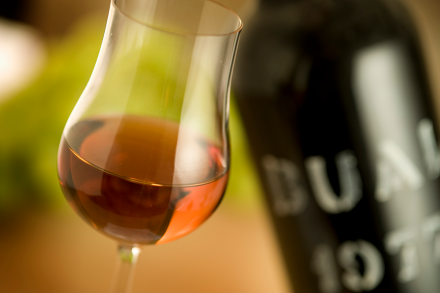
Perhaps because of the Flanders and Swann song in which a louche older gentleman tries to lure a younger lady to bed with Madeira wine, the drink has unfairly acquired a fusty image. While port and sherry have experienced a resurgence, Madeira remains underappreciated despite the fact it stands as a proud monument to the grand old Anglo-Portuguese alliance. One man, Jamie Allsopp, is intent on fighting a noble battle to promote the virtues of Madeira. And so to the Blue Stoops, Allsopp Brewery’s newish pub on Kensington Church Street, for their second annual Game and Madeira Dinner, named after the site in Burton-on-Trent where Jamie’s ancestors first brewed Allsopp’s Ale in 1730.

Tea with a twist: the army’s curious Christmas drink

From our UK edition

On Christmas morning, as you make your first tea or begin mixing your eggnog, spare a thought for our armed forces. Since the 1890s, they have been starting Christmas Day with a drink that sounds more like a bizarre hangover cure than a festive pick-me-up.  Known as ‘Gunfire’, the drink is made of one part rum to three parts black tea. By tradition, the beverage is taken hot and is served by senior officers to junior soldiers, making it one of the few occasions in which the ordinarily inflexible roles of the military are reversed.  Although no one is quite sure how Gunfire got its name, the most compelling theory, according to the Royal Norfolk Regimental Museum, comes from an encyclopaedia compiled by Major R.D. Ambrose.

Dessert wine isn’t just for pudding

From our UK edition

At the end of the 1970s, when I had my first taste of wine, the choice was limited. It was either cloyingly sweet German Liebfraumilch, or something from the Don Cortez or Hirondelle types, both of which were sour and brash. That, younger readers, was how bad things were, and why many of us during that time stuck to lager and lime. When Le Piat D’Or came on the market, it was, frankly, a relief. But things have changed, including my palate. Sweet or semi-sweet wines can be delicious, and bear no resemblance to the cheap German variety of my youth. Many moons ago, invited to my first posh dinner party, I was bowled over when served a lightly sweet Riesling with a fruit crumble. Riesling is a key component in Liebfraumilch, but not all Liebfraumilch is Riesling.

France is becoming a nation of sexless puritans

From our UK edition

Bring back brothels! It’s not your typical political slogan, but Marine Le Pen’s National Rally has launched a campaign to reopen and regulate France’s brothels for the benefit of sex workers. In an interview last week Jean-Philippe Tanguy, one of Le Pen’s senior MPs, said his party would table a bill to reopen the brothels – known as maisons closes in France – which were closed in 1946. ‘The prostitutes would be empresses in their own kingdom,’ explained Tanguy. Le Pen’s party believes that regulated brothels would better protect sex workers from violence. But some on the left are outraged at the proposition. In an op-ed in the left-wing L'Humanité newspaper, 12 lawyers dismissed the idea as a ‘fascist project’.

One of the joys of wine is the people who make it

From our UK edition

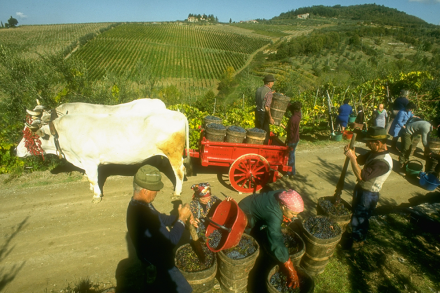
Towards the end of the war, a young Guards officer met some Italian aristocrats. They had much in common. Robert Cecil was the heir to a marquessate. The Principe di Venosa’s daughter was married to an Italian marchese. Lifelong friendships have ensued down the recent generations. Nevertheless, the English family would be the first to concede that when it comes to generations, the Italians are a couple of centuries ahead. In 1385, Giovanni di Piero joined the Florentine winemakers’ guild. The easy movement between the Florentine bourgeoisie and the aristocracy helps to explain that great city’s long success: the Medici are the obvious example, as are the Antinori, who have been making wine for 26 generations, and are still gaining momentum.

Santa Pants: a cocktail recipe by Matthew and Camila McConaughey

From our UK edition

Our Santa Pants cocktail is one of our go-to holiday pours when hosting at this time of year. Made with our organic tequila and ginger beer, cranberry juice and fresh lime, it brings all the sparkle and cheer of the season. It is like Christmas in a glass. And while the world doesn’t need another celebrity tequila, it could use a shot of fun. So this Christmas, enjoy yourself and keep the holiday spirit flowing. Here’s how to make it. Ingredients for one serving – 60ml Pantalones Organic Tequila – 60ml cranberry juice – 15ml lime juice – Top with ginger beer – Garnish: sugar rim, cranberries, rosemary Rim the edge of a rocks glass with a lime wedge, dip the rim in sugar to coat, and set aside.

In celebration of solo drinking

From our UK edition

‘Be not solitary; be not idle,’ wrote Robert Burton in The Anatomy of Melancholy. Now, 400 years later, one bar is taking his instruction to heart and banning solo drinkers. An Altrincham venue which goes by the gloriously 1990s nightclub name of Alibi will only allow groups in after 9 p.m. Owner Carl Peters said he introduced the policy after certain individuals had been ‘mithering other groups’ – ‘mithering’ being a northern word meaning to pester or make a fuss. Alibi also has a strict dress code: ‘No sportswear/trackies, no Stone Island, no ripped/frayed jeans, no baseball caps, no roadman vibes.’ I should point out to Spectator readers that a roadman isn't someone employed by the council to fix potholes, it's a young man with gangster pretensions.

Bring back the Budget tipple!

From our UK edition

Of all Gordon Brown’s mistakes, perhaps the most sobering was his decision to end the tradition of drinking at the despatch box on Budget day. Commons convention holds that alcohol in the chamber is forbidden – with the sole exception of the chancellor when making his or her big speech. Rachel Reeves is known to like an Aperol spritz, though sadly not enough for her to restore this great custom. But we wanted to do our bit, so in protest at this abstemiousness we set ourselves a challenge: try every chancellor’s drink for which records are available, all in one sitting.  The tradition of the ‘Budget tipple’ seems to have been popularised in the 1850s, with Benjamin Disraeli. ‘Dizzy’ favoured a simple brandy and water – good for keeping one alert, warm and alive.

A Frenchman who does not drink wine is a disgrace

From our UK edition

The world is in an even greater mess than was apparent. I am not referring to Ukraine, Gaza, Sudan or other swamps of mayhem and misery, although they are bad enough. No: the new crisis is in France, and it has two malign and reinforcing aspects. First, large numbers of the younger French have given up drinking wine. It is not clear what they are substituting: Coca-Cola, perhaps. If so, God help us (and them). A Frenchman who does not drink wine is a disgrace to his history and heritage. After the liberation in 1944, and in order to punish collaborators, the new French government created a crime: indignité nationale. As it is presumably still on the statute book, it could surely be used to bring condemnation on those who collaborate with teetotalism, or Coke.

Charleston notebook: following an English country band through the Holy City

My impression of Charleston, a city I’ve been visiting since my late teens, is that it is oddly more European than American. Real Charlestonians, they say, have more in common with their cousins across the pond than with their compatriots in America’s big cities. I've found that to be true. I’m here for the birthday of one such real Charlestonian, my friend Toto. A former White House staffer, Toto now works in the private sector, but he is destined for a return to politics – his great grand uncle was an accomplished South Carolina statesman and Toto, as he puts it, "feels a deep sense of purpose and mission to ensure South Carolina continues to be the greatest state in union".

How America fell in love with the G&T

The gin and tonic has had quite the journey. From humble beginnings protecting British explorers against malaria, it has become the country’s favorite cocktail. Abroad, Italians grown tired of spritzes now opt for it come aperitivo hour. The Japanese bow before it. The world stumbles after it. Yet there is one land the G&T has been slow to conquer: America, the land of vodka sodas and zero-calorie seltzers. In recent years that has begun to change. While overall consumption of spirits is down, sales of gin in the US are on the rise and expected to grow some 6.5 percent a year for the rest of this decade. Craft distilleries are in the vanguard: in California, gin is infused with citrus and coastal herbs. In the South, it might be perfumed with watermelon rind or magnolia blossoms.

g&t
corkscrews

Cheers to corkscrews!

For the first 50 years of the corked bottle, there was no easy way to get into it. The combination of cork and a strong glass bottle came together around 1630, but the first mention of a device to open the bloody thing wasn’t until 1681. Cavalier get-togethers must have resembled the teenage parties I attended, with everyone desperately trying to open bottles using keys, pens, knives etc. Or using that technique where you bang the bottle against a wall with the heel of a shoe. Halcyon days. More likely the Cavaliers would have just taken the top off cleanly with a swift blow from a saber. Early devices for extracting corks were called “bottle screws.” According to wine writer Hugh Johnson, the word “corkscrew” was first used in 1720.

Wine to toast the fallen

From our UK edition

Solemn, moving, serious: British. As silence fell and the wreaths were lain, even teenagers joined in the mood of reverence. Suddenly it did not matter what the gossip columns were saying about Andrew Mountbatten Windsor, or what latest mischief might arise from the Duchess of Sussex. The great ship of state and of history sailed on serenely. The sacrifices of a previous generation were saluted. They had paid the price for their Britishness. We, their successors, unworthy as we might feel, could at least salute them, especially as good bottles were about to be opened, to toast the fallen. Yet there was a problem far more important than princely indiscretions. We British won the war. Since then, we have defended the peace. Hard fighting is a tough business.

Why bother banning US booze in Canada?

You know what they say about America: beautiful for spacious skies, for amber waves of grain and purple mountain majesties above the fruited plain. But its fruited plains – specifically its vineyards – and amber waves of grain aren’t doing her neighbor to the north much good at the moment – at least not in the beverage department. In the Loyalist province of Ontario, just as in la belle province of Québec, no California wines have graced the store shelves for more than half a year. American tipple is out. As far as eastern Canada is concerned, the minions of Francis Ford Coppola crush grapes in vain, all is quiet along the Yakima and it matters not whether pinot noir still reigns supreme in the Willamette Valley. Ask not for whom the Napa flows; it’s not for thee.

alcohol

What doesn’t kill Egly-Ouriet makes it stronger

In recent columns, we have visited some lesser known spots in Burgundy – Saint-Romain, Maranges, Ladoix – where the wines are good and the prices reassuring.  This time, I’d like to travel to Champagne to introduce you to one of my most exciting recent discoveries, the wines of Egly-Ouriet. You know about Dom Pérignon, Krug, Bollinger and Taittinger. They can be very good. Egly-Ouriet is something else. Remember that Champagne occupies the northernmost precinct of French wine production. The northeastern bit of the area borders Belgium. It’s chilly up there, and damp. Nietzsche famously declared that, “What doesn’t kill me makes me stronger.” That may not be true of people. I am pretty sure it is not. But the observation has a certain application to wine.

egly-ouriet

How to survive a Chinese banquet

When heading to China on a business trip, I was somewhat bemused to be warned about the banquets I would be attending. Do not sit next to the host, I was told. I was to find out why. Learning the rituals of banquets is an essential part of doing business in China. I was treated to at least one every day on a ten-day trip around the country – and sometimes two or three. There is no such thing as a casual business lunch. Any meal will turn into a semiformal event held in a private room and hosted by the most senior person in the organization. The meal starts slowly, with a few rather unappealing cold dishes laid out on a lazy Susan that sits on a round table, though initially no one sits down.

chinese banquet

Should you mix whisky and potash?

“‘I am not screwed,’ replied the Caterpillar, solemnly. ‘Whisky and potass does not agree with everybody; but I am not screwed, not at all.’ So speaking he sat down rather suddenly.” By screwed he meant “drunk” of course. The Caterpillar is the nickname of a pupil in The Hill (1905) by Horace Annesley Vachell about boys at an English boarding school, more particularly the love between them. The Caterpillar was drunk on whisky, then sometimes mixed with potassium bicarbonate water. In Doctor Claudius (1883) by F. Marion Crawford, in a scene in Baden-Baden, we hear of an English duke drinking “curaçao and potass water.” Crawford was an American man who settled in Italy.

content potash survivor fresh hell

How to drink sake

From our UK edition

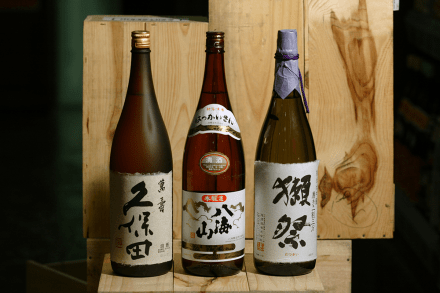
There is a fellow called Anthony Newman who is fascinated by drink, as a consumer, a producer and an intellectual. That said, he spent some years supplying Australians with craft beer, which does not sound very intellectual. But he insists he paid for his own passage and was able to return without a ticket of leave. While living in Oz he visited Japan, and found himself captivated by many aspects – not least sake, the rice wine which is its national drink. Nearly 90 per cent of sake is consumed locally. Anthony decided the potential export market was enormous. I have heard it persuasively argued that Japan is the most complex of all the world’s great countries.