Drink

A sip of the Vieux Carré

It’s 1951 and the Hotel Monteleone burns bright, a gilded island of light and liquor adrift in the New Orleans dark. Inside, the air is thick with the sweet tang of cigar smoke and the murmurs of polished conversation. Over in the Swan Room, the trumpets blare, their brassy notes cutting through the gentle chatter, their absence filled with the lively, gravelly voice of Louis Prima. The crowd sways in rhythm, caught between the pulse of jazz and the flicker of chandelier light. Outside, the French Quarter is still alive.

Vieux Carré
vineyards

The objectively, subjectively, best vineyards in the world

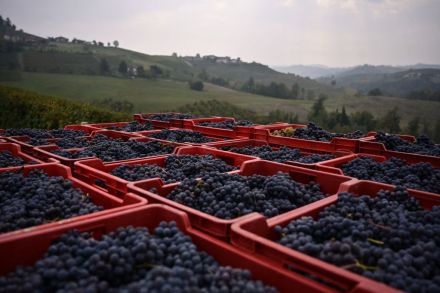
The October 15 issue of the Wine Spectator carries two intriguing features. The first is a series of reports, with lavish photographs, on “The World’s Greatest Vineyards.” This list of ten superstars is followed by a cast of twenty supporting actors, wineries the editors regard as “world class” but relegate to slightly lower rungs on the scale of vinous celebrity. You might think that any such listing would be powerfully subjective. Isn’t one’s taste in wine a classic instance of de gustibus non disputandum est? Well, yes and no. You don’t have to be Immanuel Kant to appreciate that in judging wine there are some objective, or objective-like, features, as well as wholly subjective ones.

Alan Clark’s wines were as remarkable as he was

From our UK edition

Où sont les bouteilles d’antan? For that matter, où sont les amis with whom one consumed them? These autumnally melancholic musings arose because a young friend asked me about Alan Clark. He had been reading the Diaries. Were they truthful? Was Alan really such a remarkable character? The answer was simple. An emphatic yes, on both counts. I suspect that I speak for most of his muckers when I declare that I have never met anyone who was more fun. The 1967 Yquem tasted like a Greek temple melted down in honey. Alan served it as a house wine If Alan was of the company, the conversation might well have a whiff of sulphur. But one could rely on spice and scintillation. Alan’s very walk presaged mischief.

Nick Elliott and a life worth drinking to

From our UK edition

The English language has immense resources, but the odd weakness. What, for instance, is the translation for ‘Auld lang syne’? We were discussing that profound topic while telling stories about absent friends, recalling the occasional bottle and thinking about Britain. Nick Elliott’s response to grim news was to open a bottle of Mouton Rothschild ’82 A fascinating fellow called Tim Spicer, who commanded a battalion of the Scots Guards, has written a book about an even more remarkable chap called Biffy Dunderdale. Biffy was the sort of man who helped to win our nation’s wars, including the (first) Cold War. In these pages a couple of weeks ago, Charles Moore brought a colleague of Biffy’s to memory.

Prosecco goes posh

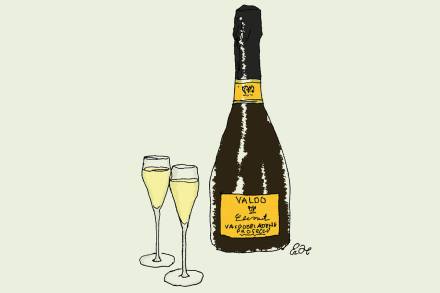
Compromises are odious. They reek of disappointments both large and small, when no one really gets his way — there’s never a loser per se, but also rarely a winner. But very occasionally, seemingly disparate concepts can come together and create a new thing that is technically a compromise but ends up feeling like more than the sum of its parts, thanks to felicitous, and often impossible to predict, synergies. See: the bánh mì sandwich, the Constitution of the United States, Disney and Pixar. And now: Prosecco. The world’s favorite cheap, cheerful, reliably tasty tipple is dipping its toes into profundity — and the results are surprisingly successful.

Prosecco

Shaking up the mojito

Barmen despise making mojitos. The descendant of various Caribbean rum-based cocktails, they only became truly popular in the early 2000s. It’s not that they’re that difficult or require too many ingredients — and they’re nothing compared to hellish drinks like the Ramos gin fizz — but the mojito has several qualities that, combined, make it intensely frustrating. Namely, the mojito is very refreshing, can be drunk quickly and looks pretty, and therefore one order will spark a rush of others.

mojito

Portuguese wines are back

Regular readers will recall my fondness for Lord Falkland’s observation that “when it is not necessary to change, it is necessary not to change.” That crisp declaration is not only elegantly framed but (in my view) true. In this it differs, it saddens me to acknowledge, from the Duke of Cambridge’s even more robust confidence that he was “opposed to all change, at any time, for whatever reason.” I am not sure whether that mot was a testimony to the duke’s utopian inclinations or merely his stubbornness. But it is sharply at odds with the realities, if not, perhaps, with the governing temperament, of most of its main actors in the world of wine.

Portuguese

The wonder of wine from the Mosel

From our UK edition

Conservatives used to be good at inspiring a mass membership, underpinned by organisations. Before the first world war, the Primrose League had a million members. Shortly after the second war, the party’s membership, including the Young Conservatives, reached three million. This is partly explained by the social mores of the day. The range of available leisure activities was much smaller, there was no television, and parents were happy for their daughters to join the YCs, the assumption being that the girl would meet a nice type of young man. It is easy to understand why German oenophiles insist Riesling is the greatest grape of all All that is redolent of a vanished age. But this has consequences. Traditionally, local associations, including YCs, were the party’s foot soldiers.

Trying the best coffee in the world

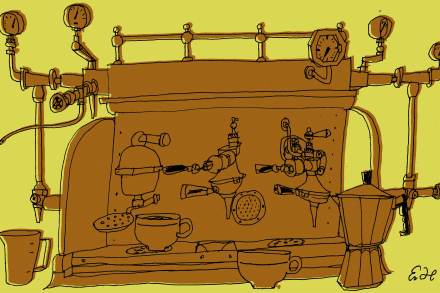
It was nine on a Monday morning, and whereas my fellow commuters were heading to the office, or their classrooms or a lecture hall, I was on my way to Parcafé in the Dorchester Hotel, right next to London’s bougie shopping district, Mayfair. It’s a place to buy Ferraris and Bugattis and shop at the Row and Goyard and be passed by an endless convoy of black Rolls-Royce SUVs. Waiting for me at the hotel would be a man with a little golden cup, containing a freshly brewed portion of mankind’s favorite black nectar. And his is the best, uncut stuff on the market. The man is Amir Gehl, founder and CEO of Difference Coffee, which sources some of the best, rarest coffee beans in the world.

coffee

The healing power of wine

From our UK edition

What goes best with a broken rib? The answer, I think, is any drink you enjoy that will not make you laugh. I was strolling along to Richmond station after spending the night with old friends. (Very Jorrocksian: ‘Where I dines, I sleeps.’) I was carrying a scruffy overnight bag containing one shirt, one pair of socks, ditto underpants and sundry toiletries. Phone rings: put down bag – and suddenly a toerag appears from nowhere, grabs the luggage and scoots off. I yell ‘Stop thief’, run a few paces and trip. Passers-by prop me up and ask if I want an ambulance: would have saved a lot of trouble if I’d said yes. Instead, I went home hurting, then managed to fall over and could not get up. Unable to raise anyone on the phone, I contacted 111, and was told to ring 999.

When in doubt, have a drink

From our UK edition

Most Tory MPs enjoy leadership elections. There may be an element of what the trick-cyclists call ‘displacement activity’. Equally, it is tempting to employ the cliché about rearranging the furniture on the Titanic. The Brane-Cantenac 2000 was everything that a claret lover could wish for Until 1990, the process was brief. It took only four days to elect John Major, whose team used an underground ‘bunker’ in Alan Duncan’s house as their HQ. By 1997, when the party had been grievously wounded and the election procedure extended, there were lots of gatherings which required more spacious premises – including Jonathan Aitken’s garden.

What’s behind all the buzz about non-alcoholic beer?

There’s nothing quite like the third swig of a gin and tonic at the end of a long summer’s day. Or of an Old-Fashioned combating Old Man Winter’s chill. The bite on the tongue. The slow burn in the belly. The gradual easing of emotional and physical tension. Except for the hangovers. There’s nothing quite like those, either. As I — sigh — age, I’ve developed a relationship with alcohol that has become increasingly love-hate: I love it, it hates me. A slight intolerance to booze, German/Irish heritage notwithstanding, has always given me a rosy flush that on round three deepens to an unflattering scarlet that could be mistaken for theatrical rouge.

non-alcoholic

Margarita magnificence: a consummately customizable cocktail

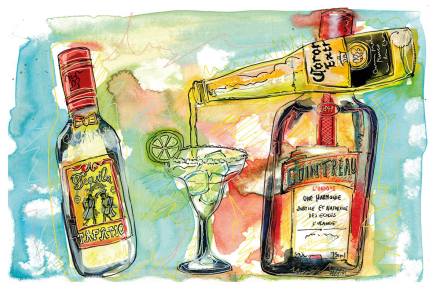
Despite being one of the most popular cocktails in the world, most margaritas are made poorly — intentionally. Nobody buys a margarita in a plastic cup for its complex flavor and balanced profile. They’re for long days out on the beach, to cool you down and kick things up — and they’re mostly made quickly and sweetly, like slushies with crushed ice. Frozen margaritas are the invention of Dallas restaurateur Mariano Martinez, who started serving them in 1971 from a converted soft-serve ice-cream machine, but the exact origin of the classic margarita was at some unknown far earlier date. Margaritas were introduced to Americans in the 1950s, with the arrival of Sauza and Cuervo tequilas, and by the 1960s, had secured their place as one of the nation’s most popular cocktails.

margaritas

Outdoor wines for the summer

There are some cramped, unimaginative people who — I have been told — maintain that writing about wine is a bootless enterprise. Even more extraordinary, I have heard it rumored that there exist unfortunate sods who believe that it is a waste of time to gather with friends over food and wine while discussing the events of the day, the state of the republic, the repair of one’s soul. Fortunately, neither you nor I are acquainted with any such freaks, otherwise you wouldn’t be reading this column and I would not be sitting down to write it. At the end of his brief, tantalizing book The Educated Imagination, Northrop Frye, the great Canadian literary critic (do you sense a passing adumbration of contradiction there?

wines

How to drown your sorrows

From our UK edition

Age. At the Spectator party last week, the editor asked me how long I had been attending the festivity. I could not remember whether it had been since the late 1970s or not until the early 1980s. But change is not always for the worse. During the 1980s, dearly beloved Bron Waugh was in charge of the wine. Talk about plonk. I do not know whether cats or horses were responsible, but there should have been no question of calling in a vet. The beasts ought to have been sent straight to a laboratory, to hunt down the toxicity. The Blairites had no shame about drinking champagne in public These days, we are graced by supplies from Pol Roger. They not only make splendid champagne, they are also devoted Anglophiles.

The key to dealing with this election? Wine

From our UK edition

An old friend phoned. Normally cheerful, he was fed up. One of his business partners was being more than usually incompetent. ‘I told him that I’d describe him as a halfwit, if I could find the half.’ We went on to discuss another couple of friends, both good men and true, who seem doomed to imminent parliamentary defenestration. By the end of lunch, we were thoroughly benign. I was persuaded I could endure a Labour government Then there was hunting: a passion. It survived for several years under the Blair government and it seemed clear Tony had no stomach for the ban, which was half-hearted. That witty and cynical fellow Charlie Falconer said he could not understand why anyone was complaining. The antis wanted a ban and got one. The hunters wanted to go on hunting and did.

A lunch good enough to lift Tory spirits 

From our UK edition

Things could have been worse. My host was determined to lunch al fresco, and after all it was late June. Yet this is England and as everyone knows, even D-Day had to be postponed for 24 hours. In the event, we were fine. The elements were kindly. The temperature did not fall below 60, the rain held off, we more or less managed to forget about politics and it would have been hard to improve on the setting. Saint Jacques, a restaurant which I have often praised, always deservedly, has a courtyard and is next to Berry Bros: so this is a sophisticatedly bacchanalian quartier. The rain held off, we forgot about politics and it would have been hard to improve on the setting The sophistication may be recent.

The boozed-up beers of summer

Some undetermined time in the long past, possibly in 1890s Montana, a miner had finished a long and tiring day and needed a refreshing beer. But after aparticularly taxing shift, a beer wasn’t going to cut it alone. He asked the barman for a shot of whisky as well — and washed it down with his pint. It’s hard to call the boilermaker a cocktail, and inventing one certainly wasn’t on the mind of our tired protagonist. To this day, mixing beer and spirits is not generally the province of mixologists; it’s a combination more often favored by partygoers looking to get slammed as entertainingly and quickly as possible.

beers
South Africa

The secrets of South African wine

What do you suppose the grandest wine was in the early 1800s? The wine that populated the sideboards and dining tables of the courts and palaces of Europe? That consoled Napoleon as he moldered on St. Helena? That John Adams judged among “the most delicious in the world?” That Baudelaire apostrophized along with his lover’s lips in Les Fleurs du Mal? That Queen Victoria quaffed nightly after dinner as a digestif? That Hugh Johnson says many kings and consorts preferred to Yquem, Tokay or Madeira? If you said “Constantia, the sweet wine from the eponymous town southeast of Cape Town,” go to the head of the class and collect a golden star reminiscent of the honey-colored, late-harvest Muscat Blanc à Petits Grains that today makes up the wine.

The joy of Portuguese wines

From our UK edition

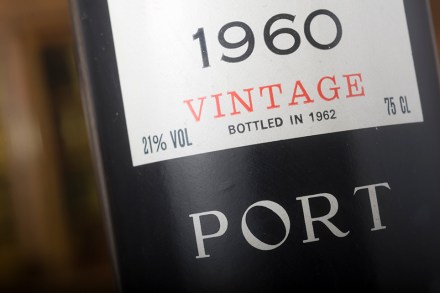
There was a wonderful old boy called John – Sir John – Wordie, who was a quintessential member of the establishment. A barrister, he spent much of his time defusing controversies before they had boiled over. In that enterprise, he never sought publicity, finding it much easier to dispense wise advice if no one knew who he was. An accomplished sailor from his RNVR days during the war, he was always a stalwart of nautical good and goodery – and he knew a very great deal about wine, especially port. A Texan can extract five syllables from Goddam: Go-o-o-day-um. John could do as well with port. Po-o-o-o-rt. It was a deeply reassuring sound. Whatever was going wrong with the world, as long as John was in his place, saluting the port, nothing could be as bad as it seemed.