Donald trump

Is it time for me to move back to Britain?

From our UK edition

I first saw America 50 years ago. I spent the summer of 1974 with my New York girlfriend. Richard Nixon resigned halfway through my trip. Gerald Ford took over. My first visit spanned two administrations. It was a different country then. Income equality in America was better in the 1970s than it is in Norway today. Throughout the 1950s, 1960s and 1970s, it was better than anywhere in Scandinavia today. Politics was grubby, but retained a discernible spine. Congress was so appalled by the slush fund which paid the Watergate burglars that it passed tough election finance laws even before Nixon went. Those laws worked. Limits were imposed. Ten years later, Ronald Reagan won his 49-state re-election without holding a single fundraiser. The laws were toughened still further as late as 2002.

Does it matter if Trump is weird?

From our UK edition

Would-be veep Tim Walz has opened Pandora’s box with his use of the W-word to characterise Donald Trump and his running mate (no sniggering at the back: this W is for ‘weird’). Because, let’s face it, a heck of a lot of politicians are way-out weird, aren’t they? It’s practically part of the job description. If we start calling them all out on it, the currency’s going to devalue fast. My thesaurus devotes nearly half a page to synonyms for weird. ‘Freaky. Wacko. Odd. Eccentric. Crazy. Off the wall. Out to lunch…’ Well, sure, that’s pretty much Trump to a T. He is uniquely odd, but those adjectives neatly summarise plenty of politicos this side of the pond too. Liz Truss. (Oh, come on, don’t get all Truss-defensive – you know she was weird.) Theresa May.

Woody Johnson: What a second Trump term would mean for the UK

From our UK edition

If Donald Trump does return to the White House, then another restoration could soon follow. Woody Johnson, a confidant of the president since the 1980s, served as his man in London from 2017 to 2021 and is now tipped for a second spell as ambassador. ‘What I know about President Trump is if he asks you to do something, you probably do it,’ Johnson says. ‘So, it depends on what he would want me to do, if anything. If he would want me to do something, of course I would consider it.’ When we meet at the Republican National Convention in the splendour of Milwaukee’s Pfister Hotel, it is just five days after a would-be assassin’s bullet narrowly avoided killing Johnson’s old friend. ‘He’s got divine inspiration or divine help. That’s the only way that happened.

How supporting Trump became cool

From our UK edition

For the past decade, the basic lines of conflict in American public life seemed clear. Donald Trump was pitted against the establishment, the ‘basket of deplorables’ who supported him against the elites. The reality was more complicated. Yes, plenty of rich and powerful Americans supported Trump and plenty of poorer Americans on the fringes of society were against him. But in a certain section of society the disdain for Trump was unequivocal. Among the country’s elite – at Harvard and Stanford, at Google and Goldman, near the beaches of the Hamptons and the mountains around Aspen – anyone who defied the anti-Trump consensus could expect swift consequences for their social standing. There have been constant melodramas over this form of social ostracism.

The mystery of Melania Trump

From our UK edition

While everybody at the Republican National Convention in Milwaukee was preoccupied with Donald Trump’s triumphal story after the assassination attempt and the prospect of near-certain victory in November, I dwelled on that low-rumble question of the 2024 election: where’s Melania? She had not made one campaign appearance, nor been at her husband’s side for his myriad courtroom dates. A theme of the proceedings was the adoration of Trump family members for their patriarch. From the stage, his sons and their wives extolled him as the greatest family man of all time. But no Melania. Finally, at the last moment on Thursday, when her husband had already left the VIP box, sphinx-face as always, she showed. No explanation or excuses were offered – and never are.

The curious rise of Kamala Harris

From our UK edition

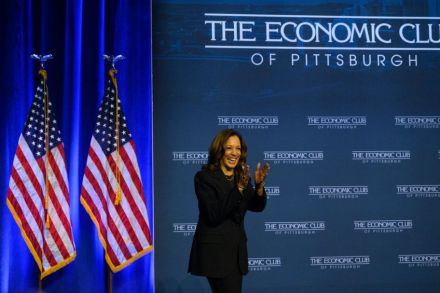
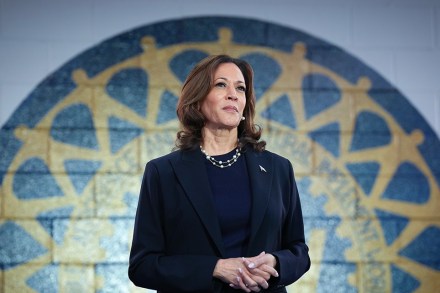
I’m struck just in your presence,’ a news anchor gushed to Kamala Harris in January. The Vice President beamed, nodding for her interviewer to continue. ‘You hear candidates suggesting that a vote for President Biden, because of his age, is a vote for you.’ The reporter paused: ‘And that is hurled as an insult.’ Harris explained that this is the price women pay for professional success – in her case, rising from first female attorney general in California to state senator to Vice President of the United States. ‘I love my job,’ Harris concluded, wrapping up the kind of hard-hitting interview the media tends to throw her way. Insult or not, the suggestion that a vote for Biden was a vote for Harris turned out to be true.

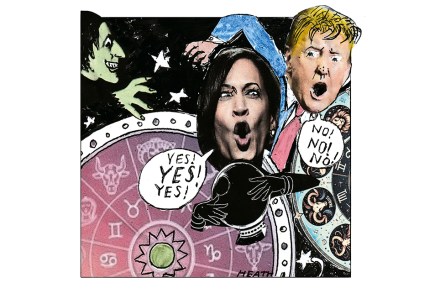
Does Donald fear Kamala?

From our UK edition

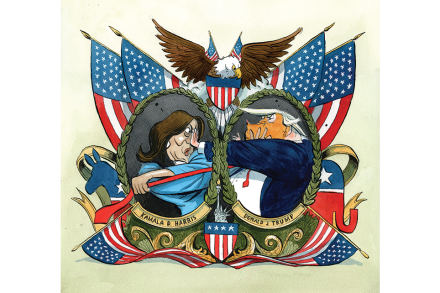
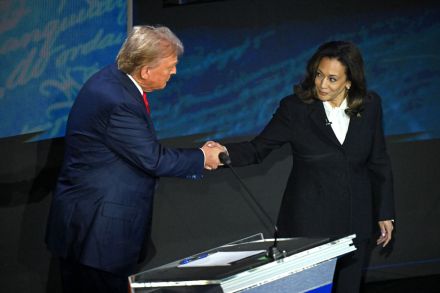
On Monday, Donald J. Trump sent out an urgent campaign memo. ‘Joe Biden just dropped out of the race, and now, his replacement has just been announced,’ it said. ‘It’s me!’ How typically Donald. If Trump were worried about the sudden replacement of Biden with Kamala Harris at the top of the Democratic ticket, he’d never show it. He’s already busy pointing towards polls that suggest ‘Lyin’ Kamala’ is the least popular vice president in history. He’s calling her ‘Dumb as a rock’ and emphasising her abysmal performance as Biden’s ‘border tsar’. Trump’s campaign staff, meanwhile, are insisting that they knew all along Harris would at some point be the Democratic nominee and their attack lines are well-rehearsed.

Born in the USA: how Bruce Springsteen’s 1984 album bridged the American political divide

From our UK edition

In 1977, in the wake of the death of the king of rock’n’roll, the American journalist and music critic Lester Bangs said: ‘We will never again agree on anything like we agreed on Elvis.’ The ‘we’ was America. And Bangs was right – until June 1984, when Bruce Springsteen released Born in the U.S.A. The album’s blend of synths, guitars and colossal drums would vault Springsteen into stadiums. It went on to sell 17 million copies, and for a time made its creator the biggest rock star in the world. Steven Hyden looks to trace who Springsteen was before this moment, what happened to him during it, who he became after it – and, with more difficulty, what became of his audience.

Biden backs out: can anything stop Kamala Harris?

From our UK edition

19 min listen

What happens after Joe Biden? The President has announced that he won’t run for re-election. Biden has endorsed Kamala Harris, his Vice President, to be the new Democratic nominee. Can she convince Democratic voters, and the rest of the US? The Spectator’s Freddy Gray and Kate Andrews are joined by Tim Stanley, columnist for the Telegraph. This episode was originally broadcast on SpectatorTV.

Republicans shouldn’t underestimate Kamala Harris

From our UK edition

Joe Biden has bowed to the inevitable in withdrawing from the presidential race and endorsing his Vice President, Kamala Harris. Only now has the presidential race become interesting as the 59-year-old Harris, who is more than likely to receive the Democratic nomination, prepares to face off against Donald Trump. Suddenly the Republican candidate has become the old codger while the probable Democratic one represents generational change. Trump, you could even say, has become yesterday’s news. This is why Republicans would be wise not to underestimate Harris, a former federal prosecutor and California senator whose early years as Vice President were marked, among other things, by public scrutiny of her staff shakeups. But that scrutiny appears to have toughened her up.

Does Kamala Harris poll better against Donald Trump?

From our UK edition

Kamala Harris seems overwhelmingly likely to replace Joe Biden as the Democratic nominee, having been given the blessing of both Bill Clinton and Biden himself. But does she actually have a better chance of beating Donald Trump than Biden did?  The betting markets think it’s a done deal: the below shows that other possibilities (Gavin Newsom, Whitmer etc) are nothing more than wild outside bets. So let’s focus on Harris. Since the Trump-Biden debate last month, a handful of polls have shown that voters would be no more or less likely to vote Democrat if Harris replaced Biden as the presidential nominee. In all of these polls, Trump leads (albeit by a fairly small margin).

Could Ukrainians ever trust a Putin peace deal?

From our UK edition

Last week at the Buxton International Festival I joined a big audience for an onstage interview with Anna Reid. She’s a writer who specialises in Eastern European history, was once the Economist magazine’s correspondent in Ukraine, and made her name with a brilliant book, Borderland, which was both a portrait, a history and an appreciation of that country long before it entered the western public consciousness. It’s still worth reading today. But at Buxton she was introducing her latest book, A Nasty Little War: the Western Intervention into the Russian Civil War, which opened the eyes of many in the audience (including me) to an almost forgotten but serious and grisly conflict straddling the end of the first world war.

The cognitive dissonance of the Democrats

From our UK edition

Believe it or not, I planned to write the gist of this column before Saturday night. However, a caveat. Unlike the newly christened Republican VP pick, J.D. Vance, I don’t directly blame hyperventilating Democratic rhetoric for last weekend’s attempt on Trump’s life. Responsibility rests with the would-be assassin. Nevertheless, the party’s off-the-charts argumentation has rankled me for the past year. From the get-go, Biden has framed his campaign as a defence of ‘our democracy’, echoing Britons’ sacred obligation to lock themselves in their cupboards to save ‘our NHS’. For Democrats, what’s at stake in this election is nothing less than the perpetuation of America’s form of government. Donald Trump’s threat is ‘existential’.

David Lammy’s Trump problem

From our UK edition

There’s no shortage of people who have spent recent years comparing Donald Trump with Adolf Hitler. Among other places, the comparison has been made on magazine covers from America to Germany. Neither is it uncommon for people to say that Trump is planning to usher in an authoritarian state and is a Nazi, neo-Nazi or similar. After the attempted assassination of Trump last Saturday the people who went in for this sort of thing are in a certain bind. On the one hand they seem to sense that urging on the assassination of a political opponent is not a good look. On the other they can’t just reverse course and declare: ‘Of course it was just hyperbole.

How the markets reacted to Trump’s assassination attempt

From our UK edition

Market reactions to the assassination attempt in Pennsylvania represent, according to taste, rational bets on the significantly increased likelihood of a second Trump presidency or stark confirmation of the madness that has overtaken America and threatens the civilised world. Shares in Trump Media & Technology – the parent of his social media platform Truth Social – rose by 30 per cent on Monday, adding more than $1 billion to Trump’s notional fortune despite the company’s revenues being, as one observer pointed out, ‘comparable to that of two Starbucks stores’. Also up were shares in gunmakers such as Smith & Wesson and in private prison operators – and US Treasury bond yields, reflecting fears that Trump will let government debt rip.

Meet the MAGA megafans

From our UK edition

Milwaukee, Wisconsin If you want to see how Donald Trump has changed his party, look at what attendees wore to this week’s convention in Milwaukee. Gone are the days when Republicans plumped for preppy blazers and demure khakis; now the fashion is for ostentatious displays of red, white and blue. Even the red ‘MAGA’ baseball caps of 2016 have been eclipsed, replaced by this year’s must-have accessory of the cowboy hat – a classic symbol of rugged individualism. It’s a sartorial revolution, as well as a political one. ‘Everyone loves having their photo taken,’ says one press photographer.

(Getty)

The curious life of a foreign minister’s wife

From our UK edition

The Polish constitution delineates no role for the foreign minister’s wife. In fact, the foreign minister’s wife is not mentioned in Polish state documents of any kind. Nevertheless, there are times when, as the Polish foreign minister’s wife, I find that I have no choice but to bear witness to great historical events. On the Friday following the British election, the Polish foreign minister – better known as an occasional Spectator diarist – was informed that the new British Foreign Secretary planned to visit Poland on his first trip abroad. Because we had planned to spend that weekend at our country house, north-west of Warsaw, and because there is a nearby airport, it was suggested that the official talks be organised there.

Is Donald Trump now unstoppable?

From our UK edition

‘You’re gonna be so blessed,’ said Pastor James Roemke, doing a pretty good Donald Trump impersonation in the warm-up to his Benediction of the Republican National Convention on Monday. ‘You’re gonna be tired of being blessed, I guarantee it, believe me.’ Sitting in the stands with a bandage on his ear, Trump enjoyed the joke – a riff on his famous line from 2016 about ‘winning’. He smiled almost beatifically for the cameras. In the wake of the shooting, Trump has begun to sound, believe it or not, graceful and magnanimous It was poignant, too, because in his case it seemed so true: God, or some supernatural force beyond our understanding, does seem to be showering the Republican nominee with blessings of late.

Portrait of the week: King’s Speech, Trump shot and Rouen cathedral in flames

From our UK edition

Home The government funnelled three dozen bills into the King’s Speech, highlighting one to make a specific offence of spiking a drink, which is already illegal. But backbenchers and Labour in Scotland failed in efforts to remove the cap of two children for the payment of child benefit. A new state-owned energy company would be set up and railways nationalised. Landlords’ rights to evict tenants would be reduced. Police were to be given more powers against gangs smuggling migrants in small boats. Between 10 and 15 July, 701 migrants crossed the Channel in small boats.