Dominic sandbrook

The problem with books podcasts

The Rest Is History has a new spin-off podcast called The Book Club. If you listen to the former, you’ll know Dominic Sandbrook but perhaps not his producer Tabby Syrett, who has joined him as co-host for the new venture. Tom Holland had presumably nipped off early to feed the cats. The release follows, slightly unfortunately, on the heels of a Sunday Times article in which the current crisis in sales of non-fiction is attributed in part to the boom in factual podcasts. If people are no longer buying history books because they’re ‘getting their history’ from Spotify for free, then ought we to be wary of a podcast about novels, lest we stop buying those as well?
A tale of two parties

From our US edition

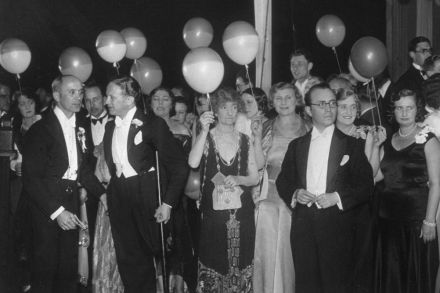
This is a tale of two London parties. They say something about London society, status, power, fame and fun — but I’m not sure what exactly. Party one was what I call a Power Party. It was full of famous faces from the upper echelons of British politics and media. I spotted chancellor of the Exchequer Rachel Reeves talking to the former Tory chancellor George Osborne and the former foreign secretary David Miliband. Party two was what I call a Pulchritude Party — a dazzling array of beautiful women and handsome men. There was a mix of young writers, journalists, lawyers, filmmakers and artists. It did not have the high social wattage of name recognition that the Power Party had — but it had beauty and youth on its side.

parties

A dutiful exercise carried out in a rush

Like department stores, empires and encyclopaedias, the multi-volume narrative national history is an invention of the later 18th century. It reaches its apogee, promising to bring everything important within a single enclosure, in the 19th and early 20th century. After that, ambitious examples appear to be fighting against a general lack of enthusiasm. Most of these works are little read now, from David Hume’s 1750s The History of England all the way through to Winston Churchill’s idiosyncratic A History of the English-Speaking Peoples in the 1950s. The grand sweep has a tendency to define the significant in advance.