Disease

How dangerous is the cruise ship hantavirus?

Virologists, the imaginative bunch that we are, often name new viruses after the places they were first found. Zika virus was initially described in Uganda’s Zika forest, while the Ebola river, flowing through what is now the Democratic Republic of the Congo, needs no explanation for the dread disease documented there. There are existing case reports of human outbreaks in South America stemming from gatherings and parties. That said, the documented efficiency of the transmission under these circumstances is extremely low Hantaviruses are chips off the same block.

The rat as hero

Behold rat. Behold the magnificent, clever creature as it runs from the bin you have just opened or disappears into the nearest bush. Behold rat as it is cut open or drugged or injected to improve your health in the name of science, as many millions of its peers have been. Behold rat – though you may find that tricky, because the old adage that you are never more than six feet away from a rat is comprehensively skewered in this wonderful, charming book. Wonderful? Charming? Rats? Yes. Even Joe Shute, a man scared of the creatures, bravely takes two four-inch baby rats into his house and slowly grows to love them. He acknowledges that his fear is no less powerful for it having been socially instilled in him by a society that, for ignorant reasons, demonises rats.

It’s not that hard to not be overweight

From our US edition

Being overweight, unless you’re a sixteenth-century Rubens model, ain’t the thing. But looking at America, where more than two-thirds of people are obese or overweight, you’d think thin is definitely not in. It’s well known extra pounds increase a person’s chance of heart disease, stroke and diabetes, along with the general discomfort of carrying around extra heft for which your frame wasn’t designed. Being overweight is also linked to increased cancer risk, and the New York Post reports: “In all, thirteen types of [cancer] were previously known to be associated with overweight body types — but now, that number has climbed to eighteen different cancers. And the risk of developing cancer begins when people are young — between the ages eighteen and forty.

overweight

The West’s industrial-sized chicken farms could be as dangerous as any wet market

It wasn’t Henri IV’s Sunday poule au pot or Herbert Hoover’s less sexy-sounding chicken in every pot, but even in the mid-20th century chicken was a rare treat, not a cheap meal. What has happened to transform the noble Gallus gallus domesticus into what Paul R. Josephson startlingly calls ‘a genetically formed meat machine’? Chicken is a serious subject, even when it’s not the chlorine-washed kind the US President wants to foist on us. I can remember buying a distressingly uneviscerated chicken in a Co-op in Cornwall in the late 1960s; and even ordinary supermarket fowl then came with neck and giblets neatly packaged inside them. You can still buy tubs of chicken livers, but what has become of all those gizzards?

And end to decent dying

From 22 March 1986: They used to say that war is the ruin of serious soldiering. Too much disorder, too many accidents. So it could be said of the bubonic plague: it spoilt dying completely. There was so much to fear. Not merely a sudden, unexplained and incurable form of disease, since brevity of life and mysterious illness were commonplace; besides, there was no lack of plague-theories and official nostrums. What was truly dreadful was the subversion and mockery of all that was usually done to dignify the final moment, of the pains taken to celebrate death, and prevent him from doing irreparable harm to the community. So plague gave death a bad name, and for more than 300 years no Englishman could grow up without expecting to witness or suffer one outbreak or more before he died.

Envy is the greatest blight of all

Gstaad Hippocrates is known as the father of Western medicine and he discovered and named a disease known as ‘micropoulaki’ during the Periclean period, in around 430 BC. He did not call it a virus, but a sickness of the brain. Some years later, Aristotle described micropoulaki syndrome as a disease but one that was not contagious, ‘no more than a fool can influence an intelligent fellow to act foolish’. Micropoulaki in classical Greek translates as having a tiny willy. Women should, by definition, be immune from the disease. But they are, strange as it may seem, known to suffer from it, although not as often and as badly as men do.

Could the lockdown have side-effects no one has considered?

From our US edition

‘Nothing makes sense in biology, except in the light of evolution,’ the splendidly named biologist Theodosius Dobzhansky wrote in 1973. It’s a good rule of thumb. Despite near-miraculous advances in medical science we remain biological beings, subject to biological laws. None is more central to our understanding of disease than evolution. Yet this theory remains poorly understood and poorly utilized in medicine. And an evolutionary perspective raises important questions about the drastic action we have been taking to confront COVID-19.Most doctors are too busy dealing with the day-to-day deluge of cases to have much time for what they may consider abstruse academic ideas.

effects

COVID-19 vs the American spirit of resistance

From our US edition

If the coronavirus were as deadly as the bubonic plague, which killed about a third of the population of Europe in the 1340s, there would be no doubt about the need for extreme measures. But this virus spares far more people than it kills, and is sometimes mild to the point of invisibility, even as it proves lethal to others. It’s almost as though nature had calibrated the virus exactly to the point where risk-avoiders saw the lockdown as vital for survival while risk-accepters saw it as so economically destructive as to be worse than the disease itself. America is polarized not just politically but in its attitude to risk.

resistance

What have we learned since the swine flu outbreak?

From our US edition

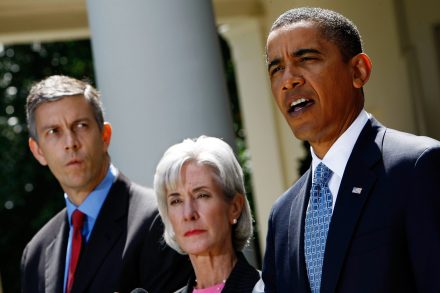
Donald Trump declared a national emergency on Friday over the spread of COVID-19, promising to dedicate $50 billion in funding for states to fight the virus. The order is the latest in a line of actions taken by the administration to try to stem the spread of the virus: major restrictions on travel from China and the European Union, convincing insurance companies to waive copayments on Coronavirus testing, and loosening FDA restrictions on testing, among others. 'We will overcome the threat of the virus,' President Trump said during a news conference in the White House Rose Garden.

Barack Obama swine flu

In coronavirus quarantine

From our US edition

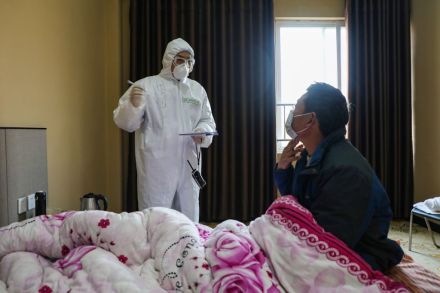
This article is in The Spectator’s March 2020 US edition. Subscribe here. I’ve been quarantined, like millions of others in China. It was bound to happen sooner or later. I traveled all the way from Beijing to the third-tier city of Jining in Shandong province, where anyone arriving from another region must be detained for 14 days. There’s no kind way to deliver the news, so a Chinese colleague broke it to me over WeChat in a gentle but firm tone. It felt like being fired or dumped. It could be worse. I’m free to leave my building, but not the walled housing compound surrounding it.

coronavirus

Is China hiding how bad the coronavirus is?

From our US edition

The Chinese government would have the world believe that the coronavirus is under control and the risks of it spreading to the rest of us is minimal. But foreign governments and intelligence agencies believe that China has been lying about the extent of the epidemic and continues to deny the truth about the numbers of dead and infected.Judging by leaked videos on social media that purpotedly show the dead lying untended in the street, bodies wrapped in sheets lying on benches and crematoriums working 24/7 with bodies unceremoniously stuffed into ovens with no burial rites, millions of Chinese people appear to agree with the foreign assessments.

coronavirus

Map reveals where in Scotland Lyme-infected ticks are most likely to get you

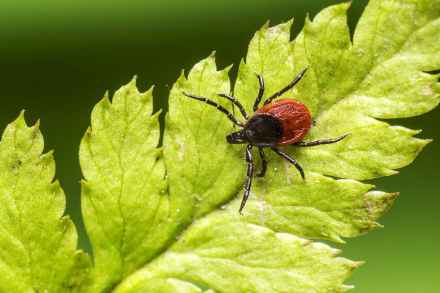
Researchers can now predict where in Scotland you are most likely to encounter ticks that carry Borrelia burgdorferi, the bacterium that causes Lyme disease. If that wasn’t enough to make you reconsider those picnic plans, then they have also forecast that this risk will increase as global temperatures rise. In a recent paper, the researchers predicted that people were more likely to come into contact with an infected tick in the months of August and September. They also identified both the Highlands and Tayside as areas of particular risk. Their map can be viewed in full here.