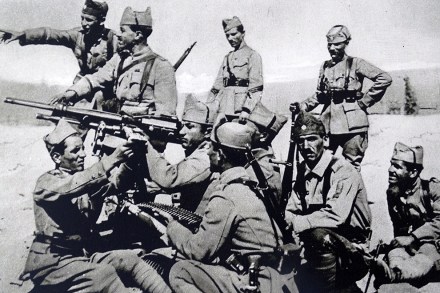
Return of the war-weary: Gjak, by Dimosthenis Papamarkos, reviewed
The Second Greco-Turkish War (1919-22) ended catastrophically for Greece and led to a massive population exchange: аt least 1.2 million Orthodox Christians were expelled from Turkey and around 400,000 Muslims from Greece. Gjak: Tales in Blood, a collection of short stories published in Greece in 2014, shows us the aftereffects of this war as experienced by the inhabitants of a small village north of Athens. The word gjak has a broad range of meaning: blood, bloodline or blood feud. Each story is a monologue by a returned soldier, spoken in heavy dialect with a sprinkling of Albanian. Dimosthenis Papamarkos shows us the difficulty of these soldiers’ homecoming with great subtlety. All have been traumatised, but this manifests itself in often unexpected ways.