Denmark

Brexit could fire Denmark up to leave the EU – and reignite its smokehouses

From our UK edition

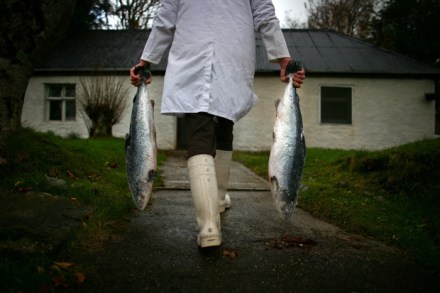
Denmark has been basking in a glorious June heatwave this past week, hastening the annual migration cycle.  ‘Summer Danes’ are a delicate subgenus of the species.  We roam the planet’s warmer regions every year between September and May, absenting ourselves from Nordic noir winters.  But mercury rising brings us home; and last week was the warmest early June week in recorded history. So I made my annual pilgrimage to our idyllic local fishing village, Gilleleje, at the northernmost tip of Zealand, a few dozen miles north of Copenhagen. Though still gorgeous, Gilleleje isn't what it used to be.

Greedy greenies

From our UK edition

‘We have a problem. Yes. At the wind farm.’ Any conspiracy thriller with lines like that has definitely got my vote. Possibly most of you are unaware of this, because it’s not something I talk about often, but I happen to be not too fond of the things I call bat-chomping, bird-slicing eco-crucifixes — nor of the charlatans, crooks, liars and parasites who make their living out of them. Indeed, whenever I try to think of an industry that’s worse than wind farms I keep coming unstuck. At least landmines serve a useful purpose for force protection; at least Albanian prostitutes make a few men very happy.

Why are children in Guernsey extolling Islam to their parents?

From our UK edition

I have never been to the island of Guernsey. This is a large world and we have a finite amount of time on it and must make our decisions about where we visit based on necessarily limited information. We cannot know everything. I have never been to Japan, for example, because I do not wish to be crushed to death by a mass of jabbering humanity, nor take part in unpleasant sadomasochistic sex acts, nor watch people disembowelling themselves in order to affirm their masculinity. I realise that this is not all that Japan has to offer. There is also sushi, for example, and buttock-clenched politeness. I could get both of those things in Harrogate. So that’s Japan off my itinerary.

Can Denmark preserve its international reputation?

From our UK edition

Copenhagen Denmark has had a difficult few weeks. While it’s used to grabbing the headlines for being the happiest country in the world or having an enviable work-life balance, lately the country has been hit by a torrent of criticism. Thanks to its tougher immigration laws, politicians have even had to deal with Nazi Germany comparisons. And it’s hurt – a lot. Last week, Parliament passed new rules including the controversial ‘jewellery law’. This gives police powers to confiscate valuables and cash worth more than £1,000 from refugees. Never mind that few believe this policy will ever be put into practice.

If you’re stupid enough to let all these people in, at least treat them decently

From our UK edition

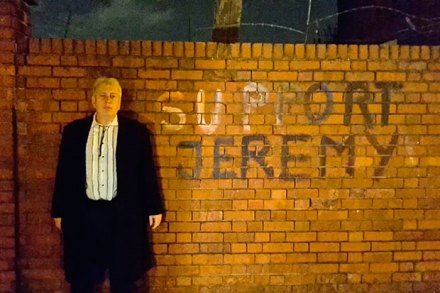
We were on our way to a party in south-east London when my friend, Rob, saw the graffiti. Sprayed with painful neatness on a wall: ‘Support Jeremy’. It suited the area so well — a small quadrant of our capital city that the inhabitants I dare say still think is ‘edgy’, even now after they’ve got rid of all the blacks and the white working class by pricing them out of the market. Artisan bread shops and ‘community’ pubs and vegetarian cafés. Whereas once the occupants of this enclave were engaged in actual work — plumbers, electricians, drug dealers etc. — now I would wager almost all of them get their wages from you via grants and the NHS and what have you.

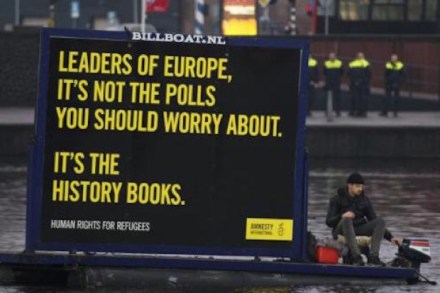
Our leaders should read history books – but not just ones about the Nazis

From our UK edition

If I was in charge of the Home Office I’d employ someone whose sole area of expertise was Hitler’s Germany and whose only job was to keep an eye out for any vague echoes of Nazism, however fatuous, in the working practices of the government or its contractors. This would have avoided Monday’s controversy over asylum seekers being made to wear red wristbands in order to receive free meals, because being asked to wear ID to qualify for things is exactly like being a Jew in Hitler’s Germany. A chilling echo, as many people commented.

Portrait of the week | 7 January 2016

From our UK edition

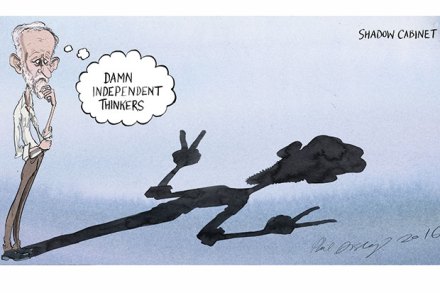
Home David Cameron, the Prime Minister, decided to allow ministers to campaign for either side in the referendum on membership of the European Union, once his negotiations had been concluded on Britain’s relationship with the EU. The government said it was commissioning 13,000 houses to be built by small builders on public land made available with planning permission. Junior doctors decided to go on strike after all, starting with a day next week, after talks between the government and the British Medical Association broke down. In an extraordinarily drawn-out reshuffle, Jeremy Corbyn, the leader of the Labour party, replaced Michael Dugher as shadow culture secretary with Maria Eagle, who was replaced at defence by the Trident-hating Emily Thornberry.

‘Health and safety concerns’ are now being used to censor anti-Isis artwork

From our UK edition

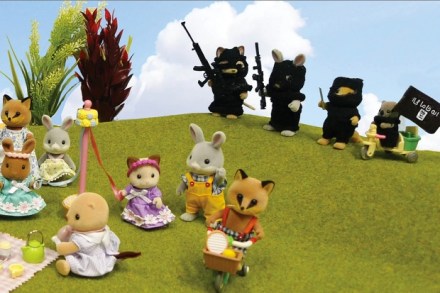
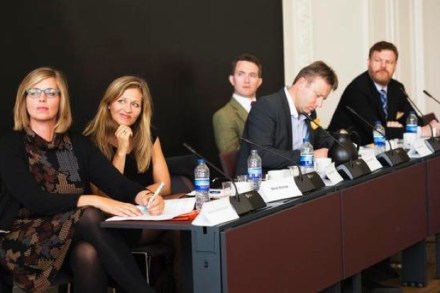
On Saturday I wrote a blog recommending readers catch the ‘Passion For Freedom’ festival’s final hours in London.  Thank you to all the readers who did and helped make it a packed-out show.  One further detail about the show came up afterwards in the Guardian and I mentioned it at the start of my talk at Denmark's free speech conference on Saturday. That is the fact that one of the artist’s work was removed from the show on the advice of the British police.  The work in question – entitled 'Isis Threaten Sylvania', featuring the children's toys Sylvanian Families - is certainly anti-Isis, but it is hard to see it as ‘potentially inflammatory’ as the police insisted.

Denmark’s free speech conference kept the spirit of Charlie Hebdo alive

From our UK edition

This has been a terrible year for free speech. In January, after the atrocities in Paris, the whole world was ‘Charlie’, for about an hour.  Then the violence and intimidation did the job they usually do (though we like to pretend otherwise) and by July even Charlie wasn’t Charlie anymore. So I was delighted earlier this year when the Free Press Society of Denmark asked me if I would be willing to come to Copenhagen this September to take part in a conference to commemorate the 10th anniversary of the original ‘cartoon crisis’.  I have spoken for this excellent group of doughty Danes before, and they have certainly shown more courage than the rest of the European media class combined.  Not that they don’t pay a price for their bravery.

Wild things

From our UK edition

Mud, timber, junk, fires, splinters, rust, daubed paint… Suddenly people are talking about adventure playgrounds again. With the Turner Prize-nominated collective Assemble constructing a new adventure playground in Glasgow, and their exhibition The Brutalist Playground at Riba, we’re being asked to think again about these ugly but lovable spaces. It was the landscape architect Lady Allen of Hurtwood who saw that in these gloriously chaotic environments — with their dens, walkways, animals, zip wires and cargo nets — children could find a freedom, self-expression and self-determination that is denied to them elsewhere. In 1946, on the way to Norway for a lecture tour, Lady Allen’s plane stopped to refuel in Copenhagen.

Portrait of the week | 2 July 2015

From our UK edition

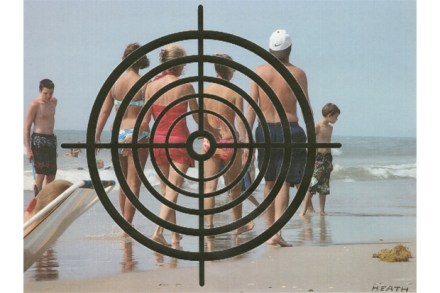
Home At least 30 British people were among 38 shot dead at a beach resort at Sousse in Tunisia by Seifeddine Rezgui, aged 23, a Tunisian acting for the Islamic State and said to have been trained in Libya. Soldiers, emergency services and 1,000 police took part in a two-day exercise in London simulating a terrorist attack. A statutory obligation became binding on public bodies, including schools, to prevent people being drawn towards terrorism. Nicky Morgan, the Education Secretary, said that schools should look out for ‘homophobia’ as a symptom of Islamist jihadism.

Yvette Cooper needs to do more than just talk about Nordic models

From our UK edition

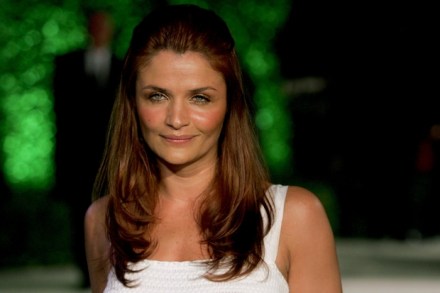
Britain's Left has been indulging in worship of Scandinavian social democracy ever since the tide started ebbing on the New Labour project, most recently on prostitution reform and the SNP's vision for an independent Scotland. Thinking wistfully of Borgen beats the hard work of actually reinventing socialism, but I haven't heard so much excited talk about the 'Nordic Model' since I was at school and Helena Christensen was practically everywhere. Happy memories indeed. Last month Yvette Cooper announced that one of the pillars of her leadership bid would be childcare: campaign[ing] for universal childcare – as other countries, including Scandinavia, have.

A tax on sugar won’t work, as the shipwreck of the Danish ‘fat tax’ shows

From our UK edition

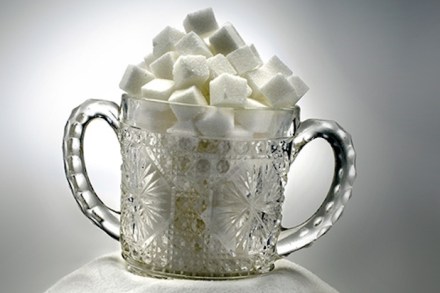
Bad ideas die hard in the world of ‘public health’, especially when the government can make money out of them. The shipwreck of Denmark’s notorious ‘fat tax’ should have served as a lighthouse for politicians for a generation. The negative consequences of the Danish experiment could not have been clearer. After levying a tax on all food products which contained more than 2.3 per cent saturated fat, Danes fled over the borders to Germany and Sweden to stock up on their butter and bacon. Those who did not shop abroad switched to cheaper supermarkets and bought budget brands of the same products.

The fairytale life of Hans Christian Andersen

From our UK edition

It has long been my habit, when approaching a new biography, to read the account of the subject’s childhood first, then jump to the deathbed, before settling down to the main narrative between. It was rather disconcerting, therefore, to find that Paul Binding’s life of Hans Christian Andersen eschews the deathbed and ends with the author’s last, not very cheering, written words rather than his last breath: The brewer is dead, Auntie is dead, the student is dead, him whose sparks of ideas ended up in the rubbish bin. Everything ends up in the rubbish bin. It is only in the chronology that we learn that Andersen’s 70th birthday was internationally acclaimed and that his funeral a few weeks later was attended by the King of Denmark and a multitude of admirers.

Møn

From our UK edition

The sky over the island of Møn, which is at the bottom right of Denmark, was cobalt and the whitewashed walls of the Elmelunde church dazzled in the bright sunshine and hurt our eyes. Our arrival had been preceded by an argument about visiting the church at all, some of the party being of the opinion that they had seen enough medieval churches already during the four-week trek across northern Europe. Nevertheless, culture won the day and in we filed to glory in the frescoes of the Elmelunde Master, who some time during the 15th century devoted himself to the decoration of this church. The frescoes are spare and sinuous, bleached in hue and basic in execution.

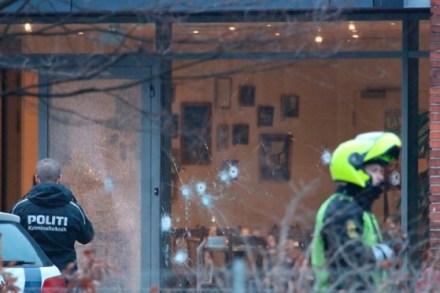
A survivor of the Copenhagen attack speaks: ‘If we should stop drawing cartoons, should we also stop having synagogues?’

From our UK edition

Two years ago the Danish writer Helle Brix helped found the Lars Vilks Committee. The group of media figures from left and right came together to support the Swedish artist who has been under constant threat of death since drawing a picture of Mohammed in 2007. ‘We agreed that Mr Vilks should not be alone in the world,’ says Helle when we spoke earlier this week, ‘and if the establishment or the Swedish artists wouldn’t support him then we would. We wanted to give him a platform and a possibility to do what he used to do before he was unable to go out and meet the public because this is, of course, what disappears when you become a target, you get a lot of security around you and people are afraid to invite you.

Why did the House of Lords ever have a rifle range?

From our UK edition

Gun lords The House of Lords shooting range is to be turned into a cupboard, having previously survived an attempt by Labour MPs in 1997 to turn it into a crèche. — The range was constructed in 1916 for the Palace of Westminster Rifle Club, which managed to convince the Lord Great Chamberlain that rifle clubs were ‘a means of promoting a stronger sense of citizenship among members’. — The motive was not to train lords for front but to help them practise for the annual Lords vs Commons shooting match, held at Bisley since 1862. An early participant was the Maharajah of Vizianagram, who in 1875 provided £400 to make a trophy for the event.

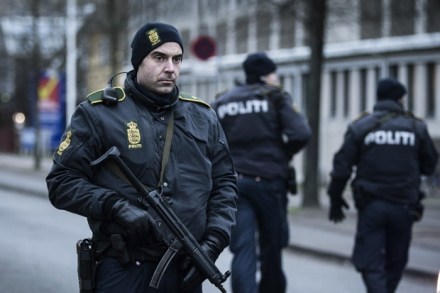
Copenhagen shooting: we debated free speech despite the gunfire – we will not surrender

From our UK edition

I was invited to Lars Vilks* Committee in Copenhagen to present Passion for Freedom London Art Festival. The committee is organised annually, on the anniversary of Salman Rushdie's fatwa. The meeting started with a short introduction from one of the organizers followed by François Zimeray, the French ambassador, commemorating Charlie Hebdo and discussing the challenges that we face when it comes to the threats to freedom of speech and democracy in our countries. After a short introduction, Inna Shevchenko opened the panel and started to talk about Femen and her work. She also discussed her close friendship with Charb, the editor of Charlie Hebdo, and how they both stood strong exercising their right to freedom of expression.

Freedom of speech is a sacred British value (and those who disagree can hop it)

From our UK edition

In the aftermath of last month’s Paris atrocities there was a remarkable piece in one of Denmark’s leading papers signed by more than a dozen prominent Danish Muslims.  It said that France, like Denmark, is a country where there is freedom of speech and freedom of religion and that writers and cartoonists had every right, in such societies, to draw and cartoon whatever they wanted, including Islam’s prophet.  Muslims should get used to it. At the end of translating this article for me the Danish friend who showed it to me said something very important: ‘This has only happened because we’ve been having this argument in Denmark for nine years.

It’s time Labour talked about universal benefits

From our UK edition

For years the Nordic model has stood out as a beacon of universal welfare provision. But if you want evidence of how the global financial crisis has ripped up the political rulebook then look no further than Denmark, the country with the highest tax burden in the world and one that’s long prided itself on a highly developed system of welfare for all. Its current Social Democrat-led Government has cut welfare payments, raised the retirement age and started to means test college and university students for study grants. And, as of this year, they’ve cut access to child support for richer households. According to Danish Finance Minister Bjarne Corydon, this reflects ‘a continuing debate of priorities’. And it’s not just taking place in Denmark.