Denmark

What Iran could learn from Denmark

Iran is looking increasingly Danish, which sounds like a strange thing to say. What could Iran (a theological dictatorship which massacred 30,000 of its citizens earlier this year) and Denmark (a social democracy which is one of the world’s most generous foreign aid donors) possibly have in common? Iran has chosen a great short-term policy in asserting its control over Hormuz, but a mediocre long-term one But Iran’s theologians like to keep themselves half a millennium back from contemporary mores.

A trove of avian lore and history

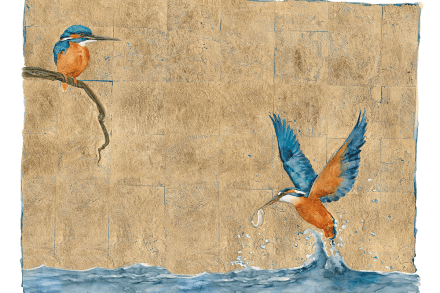
I finished reading The Book of Birds by Robert Macfarlane and Jackie Morris, and leaned out of my attic window to smoke and think about it, when there among the tumbling spires of the apple trees was a spasm of fluttering and a flurry of notes: two spotted flycatchers! One held the air for a moment, hovering and looking me in the eye, and then darted back to its perch while the other called. It has been years since we have seen them, and straight to my bird books I went. The Book of Birds was no help because it does not include the spotted flycatcher and is not designed as a recognition guide. Instead, Macfarlane writes: ‘Ours is a field guide with a difference... It asks not “What is that bird?” but “Who is that bird?”. The aim is to help readers identify with them.

Denmark and the myth of centrism’s reinvention

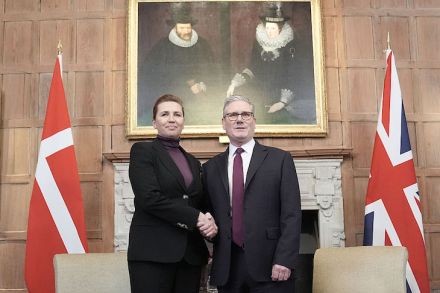
The European center’s favorite trick, when losing voters, is to explain that democracy is under grave threat and that power must therefore remain inside the circle of “sensible” centrists who know why voters are wrong. Starmer embodies the British variant of centrism: despite promises of real change, only managerial declinism has emerged Denmark has now provided the latest demonstration. Almost ten weeks after the election, Mette Frederiksen has secured another government. Her Social Democrats suffered their worst result since 1903, falling to 38 seats in a parliament of 179.

greenland denmark centrism

How the Danish election backfired for the left

In the aftermath of the bitterly contested 2000 US presidential election, Bill Clinton famously commented: "the American people have spoken; but it’s going to take a little while to determine exactly what they said." That election ultimately took over a month plus a Supreme Court decision to finalize and remains hotly debated to this day. Pity the poor Danes, then, who now face a similar period of extreme uncertainty. The snap Danish general election produced a polarized and atomized result for its smorgasbord of 12 political parties, with no party gaining more than 22 percent of the vote, and no overall majority in Denmark’s 179-seat parliament.

danish

How Trump’s Greenland strategy could imperil his legacy

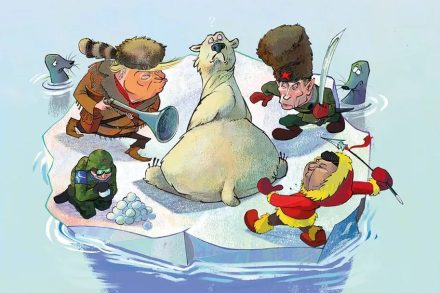
President Trump has returned home from Davos, Switzerland, basking in the glow of his latest diplomatic Houdini act. For weeks, the President made Europe shudder with fear and sputter with rage as he abruptly escalated his demand for a total US takeover of Greenland. He said he was ready to launch an invasion or reignite a trade war to do it, even in the face of threats that such an act would destroy NATO. On Truth Social, the President shared a post suggesting NATO was a greater threat to America than Russia or China, along with AI slop depicting not just Greenland but also Canada under US dominion.

greenland

Trump’s Greenland caper will heighten inflation

On February 24, Donald Trump will deliver the first State of the Union speech of his second term as president. That impending date goes a long way toward explaining Trump’s avidity for annexing Greenland – sooner rather than later – as the centerpiece of his program for restoring an American golden age of imperial power. Nothing would please Trump more than to be able to declare mission accomplished when he addresses Congress in February. Far from backing away from the issue, Trump, who will travel to Davos next week, is doubling down. He seems convinced that he can cow European leaders into submission, but the more he badgers them, the greater the likelihood that they begin to resist.

Greenland

Europe’s self-deception over Greenland

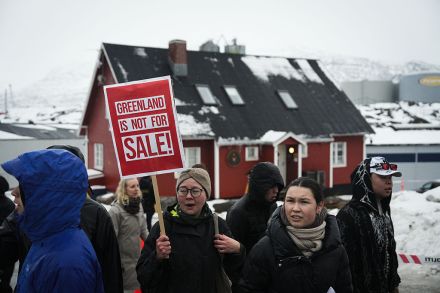
As Donald Trump weighs up taking control of Greenland, Britain and the EU has fallen back on a familiar strategy: talk tough, and do nothing. The UK joined France, Germany, Italy, Poland, Spain and Denmark yesterday in making a joint statement affirming that "Greenland belongs to its people." Arctic security, it said, must respect "sovereignty, territorial integrity and the inviolability of borders." Invoking it Article 5 the United States would expose NATO’s limits rather than overcome them If Donald Trump decides to take Greenland, Europe’s initial response would be loud, formal and legally impeccable. Europe and the UK would protest loudly, threaten, – and then do almost nothing at all.

The case for annexing Greenland

What do you think: is it manifest destiny that the United States acquire or at least exercise control over Greenland? That’s pretty much how we got Texas, California, New Mexico, Hawaii, the Philippines, Puerto Rico, Guam and American Samoa. Then there was the Louisiana purchase. In 1803, Thomas Jefferson doubled the size of the United States, paying France $15 million or a bit less than three cents per acre for a land mass that is about 26 percent of the contiguous United States. And let’s not forget about Alaska. A few facts about Greenland. It is big: 836,000 square miles. It is home to about 50,000 people, mostly Inuits. Historically, it has been seen as the semi-autonomous property of Denmark.

The West has become ungovernable

My favorite opinion poll of recent times was the one which showed that Donald Trump is disliked by more than 90 percent of Danes. This is a glorious achievement and one of which the President should be proud, and perhaps boast about from time to time – averse though he may be to boasting, of course. This was the lowest favorability rating for Trump anywhere in Yerp and I suppose is partly occasioned by his determination to pry Greenland from the grasp of these ineffably smug Scandis because they have no idea what to do with it and have mismanaged its meager affairs for decades. A personal admission: I cannot stand Danes.

Why did the Danish PM call for a ‘spiritual rearmament’?

From our UK edition

22 min listen

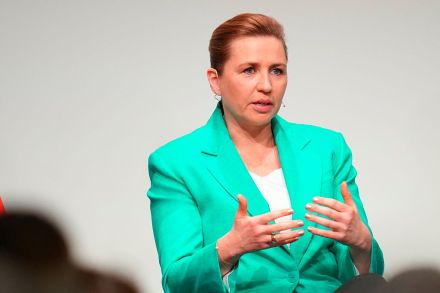
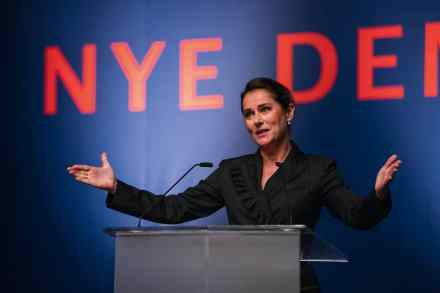
Earlier this year, Denmark’s Prime Minister, Mette Frederiksen, stood before a group of university students and made a striking statement: ‘We will need a form of rearmament that is just as important [as the military one]. That is the spiritual one.’ This was all the more remarkable from the leader of the Social Democrats, and in a country which is amongst the most secular in the world. Danish journalist Iben Thranholm – who joins Damian Thompson for this episode of Holy Smoke – says that in some ways the welfare state had replaced the belief in god in Denmark. So to what extent is Frederiksen's call to action a political project, and how reactionary is it? And is this part of the Christian revival, shoots of which are being seen across the global West?

Tom Slater, Justin Marozzi, Iben Thranholm, Angus Colwell & Philip Womack

From our UK edition

28 min listen

On this week’s Spectator Out Loud: Tom Slater says that Britain is having its own gilet jaunes moment; Justin Marozzi reads his historian’s notebook; Iben Thranholm explains how Denmark’s ‘spiritual rearmament’ is a lesson for the West; Angus Colwell praises BBC Alba; and, Philip Womack provides his notes on flatmates. Produced and presented by Patrick Gibbons.

Denmark’s ‘spiritual rearmament’ is a lesson for the West

From our UK edition

Something unusual is happening in Denmark – and other countries across Europe, including Britain, ought to pay attention. This spring, Denmark’s Prime Minister, Mette Frederiksen, stood before a group of university students and made a striking statement: ‘We will need a form of rearmament that is just as important [as the military one]. That is the spiritual one.’ Few expected such words from the leader of the Social Democrats, a party which spent much of the 20th century reducing the Church of Denmark’s influence in public life. Yet this was no passing remark. Just days earlier, Frederiksen had announced a major military build-up: increased conscription, a sharp rise in defence spending and intensified strategic readiness.

How they treat trans children across the pond

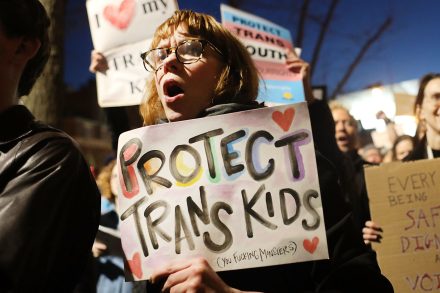
England's National Health Service made the major announcement last week that they would limit the prescription of puberty-blocking drugs for transgender children to clinical trials. A report released by the NHS on June 9 states that "there is not enough evidence to support their safety or clinical effectiveness as a routinely available treatment and that they should only be accessed as part of research." The decision is the latest consequence of a multi-year review into how the medical community in England should treat children who suffer from gender dysphoria.

LGBT activists gather outside the Stonewall Inn (Photo by Spencer Platt/Getty Images)

Self-preservation in Sweden and Denmark

I am completely naked, shivering and mildly terrified. The word “vulnerable” goes partway to describing my state as my toes curl over the edge of a slippery jetty, in pitch-darkness. Did I mention that I am completely naked? This is not a fever dream, but a midweek wellness pursuit on the island of Nacka, where Stockholm city and countryside meet. It’s 7 p.m. and the sun is long gone. I inwardly curse a previous incarnation of myself, who booked this intrepid getaway while holed up in my warm apartment. The trip grew from my preoccupation with two Nordic lifestyle concepts currently in vogue: Swedish lagom (loosely translated as “balanced living”) and Danish hygge (retreating somewhere cozy, often with friends).

hygge

No justice for minks in Denmark

The architect of the Great Mink Cull of 2020, Danish prime minister Mette Frederiksen, led her Social Democrats to victory in Tuesday’s elections. Cockburn is dismayed, for her government presided over the mass slaughter of over 15 million minks in Denmark, devastating an industry that brought in three-quarters of a billion dollars per year. The concern was that the poor creatures could spread a mutated form of Covid-19. After initially burying the dead animals, the government realized that that might not be such a good idea. The Covid-19 scare may be eliminated, but what about the pollution of drinking water? So the mink saga continued, and they were dug up to be incinerated. But wait, there is more!

minks

The return of the implausibly moreish Borgen

From our UK edition

A decade ago the unthinkable happened: a subtitled TV drama about people agreeing with one another went global. On paper it bore the hallmark of a barrel-scraping pitch from Alan Partridge. Somewhere between youth hostelling with Chris Eubank and monkey tennis, he might easily have proposed a new ne plus ultra in implausible entertainment concepts: Danish coalition politics. Yet Borgen caught a thermal and soared. The show took its name (which, correctly pronounced, sounds like a Cockney saying ‘Bolton’) from the so-called fortress in the heart of Copenhagen where state business is conducted. It featured Birgitte Nyborg, a moderate heroine who snuck into Denmark’s highest office through a small centrist crack between left and right.

Why Denmark has called for the end of Covid restrictions

From our UK edition

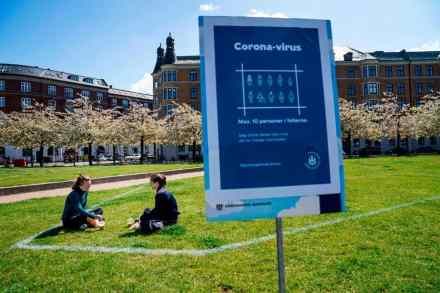
England has been described by some as an outlier in that the government is lifting Plan B restrictions in spite of Covid infections remaining high – daily numbers are still higher than at any point prior to the emergence of the Omicron variant. Some have even accused the Prime Minister of lifting the restrictions in order to divert attention from his political troubles. Yet Boris Johnson’s government is not alone. The Danish government, too, has announced that all remaining restrictions will be lifted on 1 February and Covid-19 will no longer be classified as a ‘socially critical disease’ in the country.

Time for Another Round

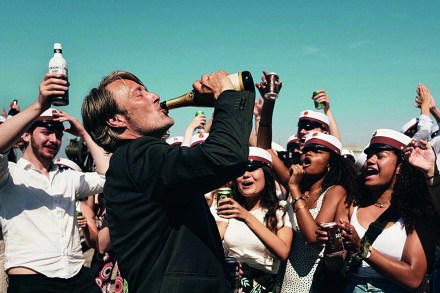
Years ago, a friend of mine turned to me at someone’s birthday party and called beer ‘the universal panacea’. Beyond a physical intolerance to most alcohol, I can hardly tolerate alcoholics and their often appalling behavior. Anything that valorizes drinking alcohol, a drug whose societal acceptance is wildly at odds with its negative effects and addictive nature, is a hard sell for me. Unless you’re a member of the Jackass ensemble — that’s appointment viewing. If you’re getting bitten by scorpions and jumping off buildings for fun, a beer bong up the rear end is a nice surprise, at least in the world of cinema.

another round

Have Southgate’s England lost their moral compass?

From our UK edition

Back in the 1980s the BBC Match of the Day opening credits featured a clip of Manchester United winger Mickey Thomas prostrate on the pitch. He raises himself up and gives a saucy wink to the camera. The implication was that he had ‘won’ a penalty and was cheekily acknowledging his successful deceit. Contrast with Raheem Sterling on Wednesday night. It’s generally accepted that if there was any contact between the England striker and the body parts of various Danish defenders swarming around him, it was minimal, and not enough to send him tumbling to the ground. And certainly not worth a crucial penalty. But Sterling seemed oblivious, no guilty look, no sly wink to anyone, not even a furtive glance at the third official.

Euro 2020: It would have been a travesty if England didn’t win

From our UK edition

England 2 (herringmuncher og, Citizen Kane) Denmark 1 (anotherherringmuncher) It was a penalty because the referee gave a penalty and VAR agreed. OK, Denmark? I wouldn’t have given it, mind. But then I would have given the absolutely stonewall penalty when Kane was clattered in the Danish penalty area a little earlier. Either way, it would have been a travesty if England had not won. They absolutely hammered the Danes for the last 75 minutes of the match: the game became a siege. Did the Danes have a single chance after their goal? I don’t remember one. I scarcely remember them attacking. I’ve decided I don’t like them and they’re going on my list of awful countries as a consequence of their bad-tempered, sour grapes, griping.