Denmark

The misery of watching England beat Denmark on ITV Hub

From our UK edition

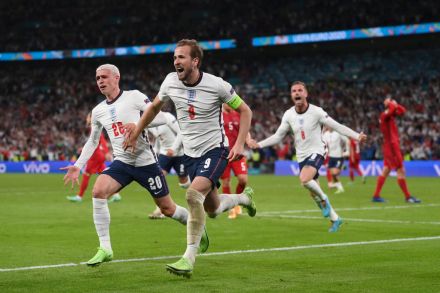
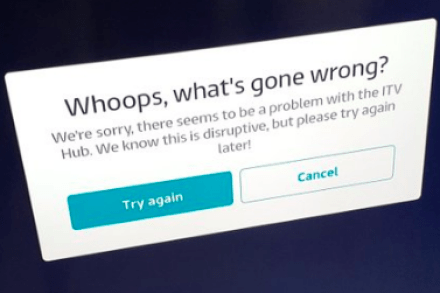
The tension in last night’s semi-final against Denmark was unbearable, wasn’t it? The early Danish goal – the thrilling equaliser – that penalty rebound! Every true Englishman had their hearts in their mouths. Even Priti Patel, I fancy, found herself reaching for a toothpick. But to those who were watching the show over the internet, it was a hundred times more tense. It wasn’t just: will we score a goal? It was: if we score a goal will I see it happen? The only means of watching the game, for those with Apple TV or a similar blessing of the modern age, was the ITV App. And by the climax of the game it had taken to crashing every seventy seconds or so.

Euro 2020: Don’t underestimate the Danes

From our UK edition

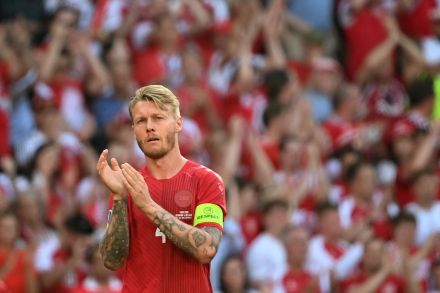
Italy: 1 (moped riding infant) Spain: 1 (swarthy bull-taunting thug) Spain are not terribly good at penalty shoot-outs. Hell, even England beat them in 1996. And so they lost a match they had dominated pretty much from start to finish. If you remember, I tipped Italy to win this tournament right at the outset — but there are flaws to this side.  What you need to do — to state the obvious — is take the chances you create, because with Italy there will be chances. They are a counter-attacking side and invite pressure. If that pressure amounts to playing neat triangles outside the penalty area, then forget it. You need to get behind their backline, missus. You need to frighten them. And so Denmark vs England.

How Denmark made England

From our UK edition

International football is good for many things other than the sport itself. Politics, culture and history are all in play in the best matches. I’m hardly a football fan but I’d watch, say, Spain vs Portugal just for the spectacle. And who could turn away from Serbia vs Croatia, or Finland vs Russia? Like a lot of countries, England fixtures are often seen through the prism of the country’s history of conflict. So far, Euro 2020 has heard echoes of battles ancient and modern, as England played Scotland then Germany. And everyone knows the history of those meetings. But what about England and Denmark? How many people know that this is about as old a rivalry as nations can have, one that goes back to before there really were nations?

An unrewarding slog: Thomas Vinterberg’s Another Round reviewed

From our UK edition

Thomas Vinterberg’s Another Round has been heaped with awards: an Oscar, a Bafta, it swept the European Film Awards. And it has received rave reviews everywhere. I must now work out, I suppose, why I found it such a hard, boring, unrewarding, annoying slog. I did have a stern talk with myself, and even watched it again, but with the same result. I suppose your enjoyment may depend on how much time you might wish to spend with drunk middle-aged men who imagine they are being interesting. Or have you been trapped at parties by too many of them down the years? You may ask yourself: why should I be at all interested in these annoyingly stupid men?

Why is Macron feigning outrage at the Danish spying scandal?

From our UK edition

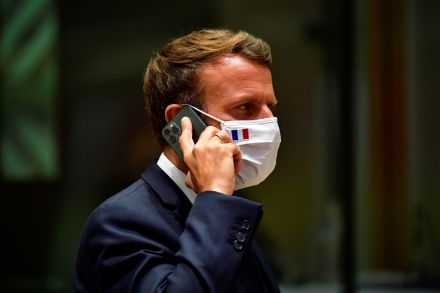
The feigned outrage in Berlin – but mostly in Paris – at the USA’s proxy use of Denmark’s intelligence services to intercept submarine cable traffic to spy on European leaders raises more than a wry smile. Allies have always spied on allies for legitimate reasons. Few have done so, and continue to do so, as much as the French.  As president of France and commander-in-chief of the French armed forces, Emmanuel Macron will be perfectly aware of this. The French foreign intelligence service, DGSE, runs an interception programme on submarine cables that listens in to potential enemies and friends in similar fashion to the US National Security Agency or Britain’s GCHQ.

The competitive cult of cosiness

From our UK edition

Do you remember the first wave of hygge, in 2015? It seems a long time ago — back in the freewheeling technicolour of a pre-Covid world — but at that time hygge was the hottest thing to come out of Denmark. The country already attracted envy for its vigorous welfare state, covetable knitwear and high rating on the international happiness index, but the new export outshone them all. It roughly translated as ‘cosy’, people said, but the English word was frail and puny next to the soul-feeding, friendship-cementing, quasi-spiritual force that was hygge. The latter signified home-baked bread and cakes, hand-knitted socks and friends laughing around a wooden dinner table as a hotpot bubbled on the stove.

Why isn’t Britain adopting the Danish roadmap?

From our UK edition

Denmark’s greatest philosopher, Søren Kirkegaard, experienced only one epidemic in his lifetime, the cholera outbreak of 1853, which occurred after Denmark foolishly lifted the coastal quarantine that had saved the country from Europe’s miserable 19th century cholera pandemics. Yet he aptly sensed our response to indeterminate lockdowns: ‘the most painful state of being is remembering the future, particularly the one you'll never have’. Danes and Britons are keenly ‘remembering’ summer 2021 and are desperate for lockdown to be over.

Eight key questions on the Danish facemask study

From our UK edition

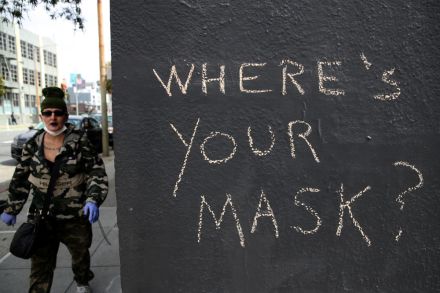
The ‘Danmask-19 trial' sought to test whether face masks are effective in preventing infection with SARS-CoV-2 (the virus that causes Covid-19) for the wearer. It found that the recommendation to wear surgical masks to supplement other public health measures 'did not reduce the SARS-CoV-2 infection rate among wearers by more than half in a community'. So does this mean wearing masks is a waste of time? There are several reasons that drawing such a conclusion from this study might be unwise. A randomised controlled trial (RCT) is often – though not always – the best way of testing whether a treatment works, because RCTs guard against the biases inherent in many other research designs.

Landmark Danish study finds no significant effect for facemask wearers

From our UK edition

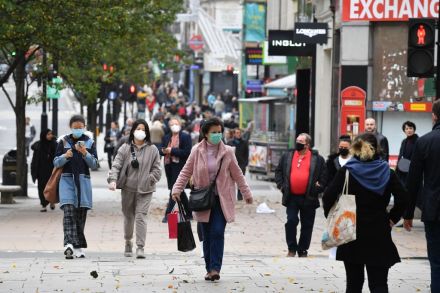
Do face masks work? Earlier this year, the UK government decided that masks could play a significant role in stopping Covid-19 and made masks mandatory in a number of public places. But are these policies backed by the scientific evidence? Yesterday marked the publication of a long-delayed trial in Denmark which hopes to answer that very question. The ‘Danmask-19 trial’ was conducted in the spring with over 6,000 participants, when the public were not being told to wear masks but other public health measures were in place. Unlike other studies looking at masks, the Danmask study was a randomised controlled trial – making it the highest quality scientific evidence.

Denmark is creating a roadmap for mandatory vaccination

From our UK edition

Could British residents be forced to have a Covid-19 vaccine? Yesterday Health Secretary Matt Hancock refused to rule out mandatory inoculation, telling TalkRadio that the government would ‘have to watch what happens and… make judgments accordingly’. His comments have sparked questions about how realistic the prospect of mandatory vaccination is in the UK, or what restrictions people could face – with MP Tom Tugendhat suggesting that the unvaccinated could be banned from workplaces – if they refuse to get inoculated. If a policy of mandatory vaccination were to be carried out in the UK, what might it look like?

Obituary: Eric Christiansen

From our UK edition

Over the past year, we have lost two names cherished by Spectator readers. Rodney Milnes, our opera critic for 20 years before he moved to the Times, as well as editing the monthly magazine Opera, died last December, and Eric Christiansen, the Oxford medieval historian, who was a regular book reviewer here for many years, followed on the last day of October. They both died at 79, both of cancer. Their upbringing and education were similar — Rugby and Christ Church for Milnes, Charterhouse and New College for Christiansen.From the last peacetime ‘call-up’ generation, both served unenthusiastically and unheroically in the army. They were both old and dear friends of mine.

Open and shut case: how did lockdown affect shops?

From our UK edition

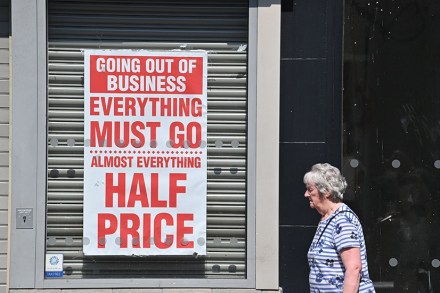
Shot in the arm Global stock markets reached a new high after pharmaceutical firm Pfizer announced a vaccine it is developing has been found to be 90 per cent effective. What have been the best- and worst-performing FTSE 100 shares over the past 12 months? BEST Scot. Mortgage Investment Trust | +109% Ocado | +94% Fresnillo (gold production) | +86% Flutter Entertainment | +75% Polymetal | +51% WORST Rolls-Royce | -74% Int. Consolidated Airlines | -71% BP | -61% Shell (B shares) | -58% Lloyds Bank | -52% Pharma’s life Who was Mr Pfizer? Charles Pfizer set up a factory with his cousin Charles Erhart in Brooklyn in 1849, initially to produce the drug santonin, used to purge the intestinal tract of parasitic worms.

The evidence on school re-openings is being ignored

From our UK edition

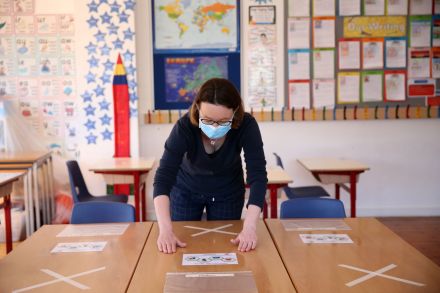
One of the benefits of the UK exiting lockdown so slowly is supposedly that evidence from other countries can help mould our decisions. If liberalising parts of society in other countries doesn’t cause a Covid-19 flare-up, the UK can proceed with cautious optimism. If lockdown easing leads to a spike in infection rates, the UK can row back its plans before its too late, or put off making changes for a while longer. Around 50 per cent of people polled oppose the partial re-opening Based on this logic, the return of Reception, Year 1 and Year 6 to school today should be warmly embraced, as reports from Denmark over the weekend (which reopened daycare and schools for kids aged two to 12 in mid-April) confirmed that doing so has not led to an increase in infections.

It’s easy to see why Trump wants to buy Greenland

From our UK edition

When the news broke of Donald Trump’s interest in acquiring Greenland from the Danes for strategic, mining and perhaps golf course development purposes, it was a perfectly timed affirmation of what had otherwise looked an eccentric choice of summer holiday destination — namely to spend three days last week exploring part of the island’s east coast. When friends asked ‘Why Greenland?’ I explained that Iceland had served as the gateway drug. A fortuitous visit to Reykjavik a few years ago to advise on a new budget law had prompted return trips, not least for the food but also to explore the country’s fabled natural landscape. But it wasn’t enough. Surely you must have something else behind the counter, you know, a little harder…?

Fear and Loathing on Netflix

Remember hygge, the Danish art of warding off existential horror by suffocating your fear and trembling beneath a soft blanket? The cult of coziness is a Scandinavian speciality. You too would insist on marshmallows in your hot chocolate if there was a howling blizzard outside your window — in May. You too would feel like making the best of living alone with a cat and a set of matching sofa pillows if you had no choice but to live alone like Agnetha from ABBA in ‘The Winner Takes It All’. It was a Dane, Søren Kierkegaard, who wrote Fear and Trembling. This is not a novel set in a Danish dinner party, but a reflection on patriarchal authority and the uses of religious despair.

fortunate man

From Italy to Sweden, Europe is dying

From our UK edition

In what I promise won’t become a regular feature, I thought it worth issuing an update under the heading ‘I told you so’. It relates to two recent, connected pieces of news. The first comes from Italy where the government is now threatening to close its ports. The ongoing influx of migrants from Africa is once again threatening to overwhelm the country, with almost 13,000 people arriving last weekend alone. Once again the Italians are being made to bear the burden of decisions made at EU-level and exacerbated by activist NGOs. The result is a country once again approaching breaking-point.

Rued awakening

From our UK edition

It’s always promising when the orchestra won’t fit on the stage. For the UK première, some 97 years after it was written, of the Danish composer Rued Langgaard’s Sixth Symphony (The Heaven-Rending), the BBC Scottish Symphony Orchestra filled every available inch of platform space, with four additional trumpeters perched in the choir seats. Everything was set for what the conductor Thomas Dausgaard described, pre-concert, as a ‘cosmic struggle between good and evil’. And god knows, it certainly made a fantastic noise. In a venue as compact as Glasgow City Halls, the onslaught of two sets of timpani had an almost physical impact. You felt the air wobble.

Joining the dots

From our UK edition

A new website, radio.garden, lets us browse radio stations across the globe. Nothing new about that. That’s been a key feature of wireless since the days of valves and crystals. Turning a knob and stopping off at Hilversum, Motala, Ankara or Reykjavik, if and when short-wave reception was possible, is part of radio’s magic, listening in to life elsewhere without having to leave the house. Now, though, with radio.garden (developed in Amsterdam by Jonathan Puckey for the Netherlands Institute for Sound and Vision, and part-funded by the EU), it’s possible to turn the globe that appears on your computer screen as soon as you log on to the site and to sweep across India, Africa or Australia, stopping off wherever you find a green dot.

Hygge

From our UK edition

‘If there’s one thing I can’t stand,’ said my husband, ‘it’s scented candles.’ Now, we have never knowingly harboured a scented candle in the house. He was merely rebelling against the notion of hygge, named by Collins’ dictionaries as one of the words — English words — of 2016. The motive for naming it may stem from the dictionary wars mounted by rival publishers’ marketing departments, but hygge is indeed everywhere, not least bookshops, where the Christmas shelves offer Hygge, The Book of Hygge, The Little Book of Hygge, How to Hygge, Keep Calm and Hygge, The Cosy Hygge Winter Colouring Book. I’ll stop there. What does it mean? ‘Cosiness’.

Denmark’s former Prime Minister speaks out: Brexit would not lead to Dexit

From our UK edition

There has been much speculation that a Brexit could lead to a number of other countries following suit and leaving the EU. Top of that list is Denmark, with Nigel Farage claiming that the country would be the first to leave in a domino effect triggered by Brexit. Now Denmark's former Prime Minister Helle Thorning-Schmidt has waded into the discussion. When asked, at Fortune's Most Powerful Women event in London, whether Denmark would leave the EU if Britain did, Thorning-Schmidt poured cold water on the suggestion.