Democracy

What Americans can learn from the monarchy

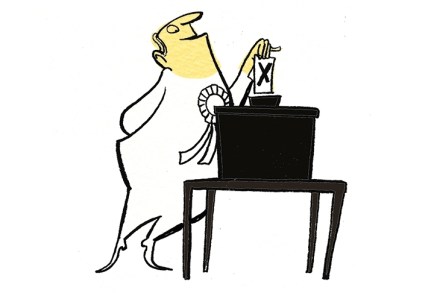
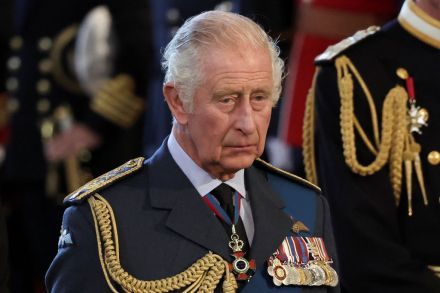
September 8, 2022 will go down in history as the date we lost Her Majesty Elizabeth II, Queen of the United Kingdom of Great Britain and Northern Ireland, Canada, Australia, New Zealand, and of her other realms and territories, Head of the Commonwealth, Defender of the Faith. Her son Charles, Prince of Wales, has now succeeded her as King Charles III. For the first time in this writer’s life, the anthem is to be sung as "God Save the King." To write about the accomplishments of the sole public figure remaining from one’s earliest memories is a daunting task. The Queen in her turn inherited an institution that is difficult for Americans — especially of a conservative stripe — to understand.
Boris Johnson was a terrible strongman

From our UK edition

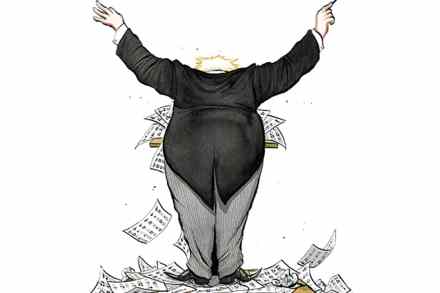
The ejection of Boris Johnson from Downing Street today proves that the UK has not gone the way of Donald Trump’s United States, Viktor Orbán’s Hungary or Narendra Modi’s India. For all our faults, the strongman model of leader ends in farce rather than fascism here. Liberal critics ought to be big enough to concede that Conservative MPs – more than any opposition party, movement or institution – saved us from populist authoritarianism. No doubt they did so for impure and self-interested reasons, but this is politics and it is deeds – not motives – that matter most. Johnson’s failure to impose his will on his parliamentary party was his greatest mistake.

The EPA’s loss is a win for democracy

Thursday’s decision by the Supreme Court that the Clean Air Act does not give the Environmental Protection Agency (EPA) authority to proceed with President Obama’s Clean Power Plan is much more significant than the narrow grounds on which it was decided. The Clean Power Plan was already dead. It had been repealed and replaced by the Trump administration, decisions that were later struck down by a court of appeals. Moreover, there is history between the EPA and the Supreme Court. In 2014, the Court ruled against the EPA’s rewriting of the Clean Air Act to facilitate its use as a tool of climate policy, which was already seen as “poor and probably unworkable” by officials in the Obama administration.

We let Hong Kong down: Chris Patten on the end of colonial rule

From our UK edition

After 13 years in parliament, rising star Chris Patten had the bad luck to be one of the few Tory MPs to lose his seat in 1992. Had he been re-elected he would probably have become chancellor of the exchequer. Instead, he found himself in the wilderness. But not for long. Within months he had been appointed governor of Hong Kong, tasked with the tricky business of presiding over the transfer of the territory to communist China. It was a lucky break. Had he been chancellor, the odds are that his political career would have come to a sticky end the following September, when the pound fell out of the Exchange Rate Mechanism. Instead, it was Norman Lamont who drew the short straw. By the time Patten arrived in Hong Kong the clock was ticking.

America the busybody neighbor

Imagine a neighbor who is constantly in everyone’s business. Perhaps you have such a person, or persons, in your own community. The neighbor complains about the paint colors of shutters, the height of lawn grass, and the number of cars parked on the street. You better hope he doesn’t find out about your backyard chicken coop if it's prohibited in your county. It’s bad enough to have neighbors like this, constantly on the alert, monitoring everyone’s behavior, and complaining to everyone in earshot. But imagine if an entire country was like this. Actually, you don’t have to imagine. For that is America — at least the foreign policy establishment and the powerful elite institutions like corporate media and the academy that influence it.

neighbor

Hong Kong is now a police state

No one now denies that Hong Kong is a fiefdom of Beijing. Its democratic leaders have been packed off to prison on spurious grounds or have left the territory, and its street protests have long been beaten to pieces with batons. The 2020 national security law has made mockery of Hong Kong's last shreds of freedom of expression, rendering all criticism of the Chinese Communist Party akin to terrorism; and its uncensored homegrown newspapers are now closed by the state — their proprietors inexorably marched off to jail. Any pretense of adherence to the treaties signed by Britain and China around the time of the handover in 1997 — treaties that guaranteed Hong Kong autonomy — has long fallen away. Hong Kong is a subject province of the People's Republic now, and nothing more.

Elon Musk let me back on Twitter

After an almost four-year lifetime suspension, Elon Musk let me back on Twitter, with a new account, @PeterMVanBuren. I could again read the "takes" of people smart enough to have a Blue Check (I do not) including those whose points of view I usually don't share. Here is what I've learned. Progressives are insane. They have lost their minds. They are certain every event which they do not personally support is the End of Times. I started back on Twitter the week after Justice Alito's draft opinion overthrowing Roe was leaked, and right away was blasted by Blue Anon stuff like "The Supreme Court is a Tool of Tyrants" and "Time for Canada to Offer Gender Asylum to American Women.

Diversifying democracy

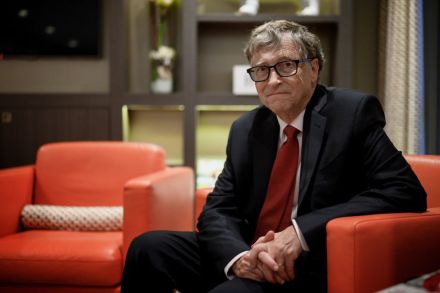
In 1790, George Washington wrote that “the establishment of our new Government seemed to be the last great experiment, for promoting human happiness, by reasonable compact, in civil Society.” Today, Yascha Mounk has reassessed Washington’s words. He proposes in his new book The Great Experiment that many Western nations are now conducting their own experiments. Never have so many nations tried to establish such diverse democracies, regimes that grant citizens of so many colors and creeds the same freedoms, opportunities and responsibilities. Mounk, a professor at Johns Hopkins University and the founder of the Substack publication Persuasion, is both hopeful and pragmatic about the experiment’s outcomes.

mounk

Democracy and economic freedom are in decline

The first report cards on democracy and economic freedom for 2021 are out and the results are not good. Economic Intelligence Unit, the sister company of The Economist magazine, found that last year’s Democracy Index had fallen by almost a tenth of a percent. That’s the biggest drop in the index’s 15-year history. The Heritage Foundation’s Index of Economic Freedom, meanwhile, saw a similar albeit larger decline of 1.6 points out of 100. Heritage looked at economic policies and conditions in 177 countries while the Democracy Index looked at 167 countries. Both reports blame government-enforced COVID restrictions for the declines.

mask

Welcome to body-camera democracy

The introduction of body cameras as a staple of the police uniform has been a transformative piece of tech. After just eight years of their use, it’s hard to argue against the impact of body cams in stemming police misconduct. According to a recent study by the University of Chicago’s Crime Lab and the Council on Criminal Justice’s Task Force on Policing, civilian complaints about police misconduct are down 17 percent since the introduction of body cams. Physical encounters, whether fatal or non-fatal, are down 10 percent. It was a struggle to get here. Many cops said that complaint statistics did not justify the indignity of policing the police taping every interaction they have with the public. A vocal minority countered: “If everything is so cool, we will see it.

body cam

The rise of the new autocracy

From our UK edition

Gstaad Dinner parties are no longer verboten here, so I posed a question to some youngsters my son had over: did any of them feel morally entitled to their privilege? The problem with talking about privilege is that the discussion goes around in circles, original thoughts get lost, and what emerges says more about those conversing than about the subject at hand. Ditto when I posed the question to my son’s friends. There were no straightforward answers. Let’s face it, privilege is so enjoyable that the beneficiaries are mostly seen as undeserving, spoilt lightweights — by the underprivileged, that is. Envy has always been around, as has the urge to take away wealth from those not seen as having earned it.

Glasnost merely confirmed Russia’s deep-seated suspicion of democracy

From our UK edition

Thirty years ago the Soviet Union was guttering to its close. Those of us who were there remember the exhilarating hope, the apprehension, the illusion. For everyone else it is a distant echo. Russia was always likely to lose the Cold War competition with America. It was unmanageably large, too poor and too reliant on too few products. Stalin’s bloody grip had enabled the Soviet Union to defeat the Germans at a terrible cost to his people. When he died in 1953 his system entered a protracted agony. Over the next decade Nikita Khrushchev tinkered with half-baked solutions. They misfired, and he was overthrown by the hard men in the party, the KGB, and the army. His more cautious successors managed to equal America’s military might.

Who won the Cold War, anyway?

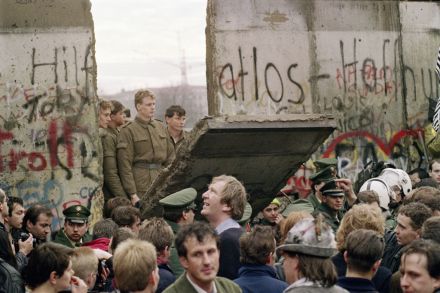
Thirty years ago this December 26, the impossible happened. One of the bloodiest states of the twentieth century (a horrific and highly competitive category) dissolved without violence. The Union of Soviet Socialist Republics had all but ended months earlier, when Russians took to the streets to defy the communist hardliners who had seized the government from an impotent Mikhail Gorbachev. That popular countercoup was itself largely bloodless: the soldiers called upon to enforce the hardliners’ rule refused to shoot their own countrymen. The Cold War is often said to have ended with the toppling of the Berlin Wall in 1989. Had things turned out differently in Moscow two years later, the struggle might well have resumed.

Cold War
class

The foremost challenge facing Western democracies

A few philosophers since ancient Greece have been wise, scarcely any humble. None at all, to my knowledge, has had the hubris — or maybe courage — to tackle the foremost challenge in political philosophy facing Western democracies today: how to achieve a demotic political system with an elite culture resting on top of the popular one, and the subordinate problem of how to prevent bad culture from driving out good, or making it impossible. Not even Tocqueville addressed the problem, which shows what a wise man the aristocratic Frenchman truly was.

Welcome to the age of entropy

Americans and other westerners have long been accustomed to thinking that history has a clear direction. Sometimes the direction is contested, as it was during the Cold War. The future could have been capitalist or communist, or perhaps a blend of both systems — ‘convergence’ was a trendy notion for a time — but one way or another the alternatives were clear. After the Cold War, there were no alternatives. Capitalism, democracy and liberalism were here to stay, and soon they would be everywhere else too. All the Islamic world needed if it was to join us at the end of history was a nudge: regime change would speedily bring about social and economic change.

liberalism

Ella Pamfilova and the dismantling of Russia’s democracy

From our UK edition

Vladimir Putin’s Russia is hardly known for its free and fair elections. But a purge of the field ahead of this September’s parliamentary vote has led to protests even from politicians who benefit from his system. And it has brought the woman on whom the whole democratic façade relies close to a breakdown. Ella Pamfilova, the head of Russia’s Central Election Commission, had just wrapped up a meeting in which her officials disbarred the popular Communist party candidate Pavel Grudinin when she was approached by Nikolai Bondarenko, Grudinin’s ally and a popular YouTuber. ‘This is a disgrace to the whole country. You’re trampling democracy,’ he told Pamfilova in a video he posted to his channel.

A DC evening with Svetlana Tikhanovskaya

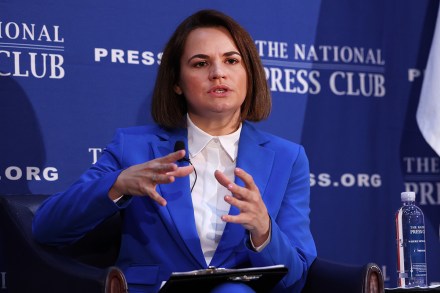
A few years ago, in my capacity as editor of the National Interest, I sent out a sonorous query to a variety of contributors asking them to comment for a forum on the direction of American foreign policy now that the Cold War was over. I promptly received a tart reply from Ferdinand Mount: 'Almost every word of the National Interest’s question could itself be questioned: has the Cold War ever definitively ended? Vladimir Putin doesn’t seem to think so.’ How right he was! His words came back to me last night with particular force when I attended an event on behalf of Belarusian democratic opposition leader Svetlana Tikhanovskaya last night, co-sponsored by the Lithuanian embassy and the Atlantic Council.

svetlana

The tragedy of the Texas COVID-crats

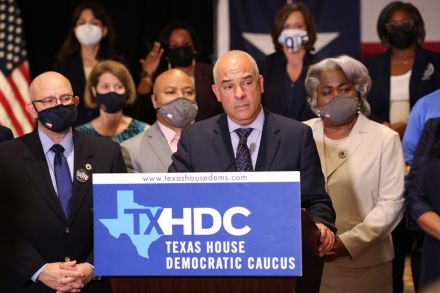
Last week, Texas Democrats fled the state on a chartered plane to Washington DC, maskless with a case of Miller Lite in tow, to a chorus of whoops and cheers of our national media. As Texas attempts to pass new election integrity legislation, or to Democrats and our media writ large, ‘voting restrictions’, Texas Democrats decided to object to the Senate filibuster, by participating in a filibuster. They were doing the rounds on CNN and MSNBC, appearing on morning shows or being celebrated on them (The View). The irony of celebrating a minority party as ‘brave’ few for mucking up the legislative process was apparently completely lost on our journalistic elite.

texas democrats

Why voters should have to show photo ID

From our UK edition

This week’s publication of the Elections Bill has given pressure groups and others a fresh opportunity to complain about what they see as the latest manifestation of this government’s illiberalism: a requirement for people to produce photo ID when they go to vote. Forgive me, but I fail to see what is so terrible, so undemocratic, about that. The arguments go like this. First of all, opponents say, any change is unnecessary, as the UK simply doesn’t have a problem with voter fraud – with impersonation, say, or multiple voting. Trust in the UK electoral process is high and the instances of fraud are infinitesimal compared with the numbers of votes cast.

Watch: parish council meeting descends into chaos

From our UK edition

Why are academic disputes so vicious? Because the stakes are so small – or so the saying goes. The same could probably be said of parish council meetings. Though they make up a small and vital part of our democratic life, these local bodies also have a rather unfortunate habit of being dominated by petty squabbles. Even so, Mr S was still taken aback by the drama, intrigue and betrayal on display at a Handforth parish council meeting for planning and the environment, which took place over Zoom on a cold evening in December last year. Thankfully, the meeting was captured by the council for posterity, so everyone can now witness the exciting world of local politics in Cheshire. Watch and enjoy… https://www.youtube.com/watch?