Democracy

The modern hysteria about hysteria

From our UK edition

The McKinsey Institute says that health outcomes for women are less successful than those for men, and it has been argued that men should take a greater interest in the problem. We have names of about 50 female doctors from the ancient world, and one wonders what they made of the male theorists’ views of their bodies. Health in the ancient world was understood to depend upon the balance of the four ‘humours’ (liquids) inside the body: yellow bile (vomit), black bile (from the spleen and liver), phlegm and blood. Having no idea what the purpose of menstruation was, doctors argued that women’s soft and spongy bodies tended to corrupt their blood, which the body very sensibly expelled every month.
Lessons in oratory for Andy Burnham

From our UK edition

A Mr Burnham, A.M. (Andrew Murray) fancies being PM and Labour MPs have decided to humour him. Needing to assert what a democratic triumph this is, they will welcome ideas from Menander, the ancient Greek orator. Menander would suggest starting their acclaim as follows: ‘With favourable omens have you come to us, as splendid as a bright day of sunshine, appearing to us from on high. A welcome report announced your auspicious arrival and the good fortune that your subjects had fervently prayed for.’  MPs should then explain why he is needed, not slandering the previous leader but suggesting the subjects were unhappy, and go on: ‘Just as if night and darkness had held the world in its grip, you appeared like the sun to our eyes and scattered all our hardships at once.

‘Make Germany normal again’: an interview with Germany’s exiled spy chief

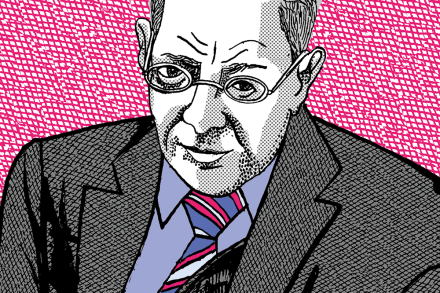
Hans-Georg Maassen is an unlikely dissident. In his trademark three-piece suits and small glasses, he looks more like a law professor. Indeed, that is what he studied, earning a doctorate on the legal status of asylum seekers in international law. This bourgeois exterior is the perfect cover for a man who was Germany’s top spy, charged with protecting the country from the far-right and Islamists. But now he is no longer under the quiet protection of the German state; he is its victim. He is under investigation from the agency he once led, the Federal Office for the Protection of the Constitution (BfV). Like George Smiley, Maassen is a remnant of an older and more powerful country, soldiering on in spite of the decline, trying to preserve what he can.

hans-georg maassen

The disgrace of Juan Carlos of Spain, a modern-day Don Juan

From our UK edition

The life of Juan Carlos I, Spain’s 88-year-old former king, who reigned from 1975 until his abdication in 2014, falls into two parts: richly deserved triumph followed by richly deserved disgrace. Building on his 2004 biography, Juan Carlos: A People’s King, Paul Preston’s account of this extraordinary life is magisterial. The son of Don Juan de Borbon, the exiled heir to the Spanish throne, Juan Carlos was born in Rome in 1938. With a view to the eventual restoration of an authoritarian monarchy, he was sent to Spain, aged ten, to be indoctrinated in General Franco’s political tenets. He also had to endure the dictator’s long lectures on the mistakes made by previous Spanish monarchs.

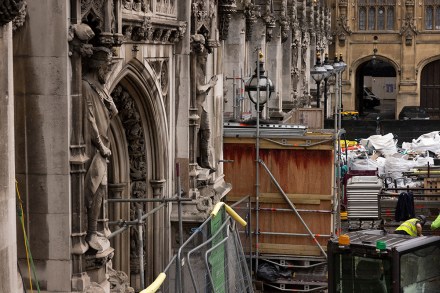
What does it say about Britain that the Palace of Westminster is crumbling?

From our UK edition

Many political scientists are oddly uninterested in politics. Their fascination is at a level of theory; but the means through which decisions are made in practice, through specific conversations and arguments and accommodations between actual people, strike them as so much gossip – or, worse, journalism. Jan-Werner Müller, a professor of politics at Princeton, best known to general readers for his trenchant, well-timed and comfortingly short What Is Populism?, here wanders like a niche flȃneur through the territory in between the personal and the theoretical: the ways in which people and politicians are variously welcomed, channelled, liberated and constrained by their concrete environments.

Let’s ditch the idea of the ‘black vote’

I long took for granted that US opinion polls break down respondents into white people, black people and Hispanics. But I’ve come to look askance at this convention. Reporting on political views by race now seems perverse. It implies that a citizen’s primary identity is grounded in skin colour, and it reifies a way of thinking about the American people that is regressive, divisive, inaccurate and downright un-American. I was reminded of this recent point of annoyance last week when the Supreme Court struck down a Louisiana congressional map that none too subtly contrived to create an additional majority-black district. (The district in question drizzled and blobbed diagonally from one northern corner of the state to the far southern one like a trail of ink on blotting paper.

IQ

Why is intelligence declining?

In 1906, the famous polymath Sir Francis Galton visited a country fair on the edge of Plymouth, England. A bullock had been tethered for slaughter and almost 800 locals were invited to guess its dressed weight: how heavy it would be after butchering. Galton – an obsessive measurer of people, weather and intelligence – gathered the entries, calculated the average and found something remarkable. The crowd’s collective estimate came within a single pound of the ox’s actual weight. This elegant experiment would become one of the founding truisms of modern democratic thought. Galton had shown that while individuals may err, the group, in aggregate, can reason with uncanny accuracy and prescience. He had discovered “the wisdom of crowds.

With no coherent strategy, Britain seems perpetually adrift in the world

From our UK edition

The British state seems perpetually befuddled. Every international crisis catches it in its sudden glare like so many headlights trained on a nervous rabbit hopping hopelessly around a motorway. One moment Russia is invading Ukraine, then Hamas attacks Israel, Israel flattens Gaza, America knocks out Venezuela, then attacks Iran, while all the time China leers over Taiwan. Each new event leaves us spinning. Whose side are we on? What do we want? How do we get it? We use grand words to navigate our way in the confusion: ‘the special relationship’; ‘the national interest’; ‘the rules-based order’. But if these once signified some grand story we could all relate to they now feel empty and confusing.

Do politics matter at all?

It is likely that the ordinary man, not being an ideologue, would agree as he grows older with Arthur Balfour’s famous epigram: “In politics nothing matters very much, and few things matter at all.” This is only partly to do with sub specie aeterni, etc. For the rest, there is the simple recognition that politicians always make politics (and the questions and policies with which they concern themselves) out to be much more substantial and consequential than they actually are.

balfour

How Garrison Keillor is living at 83

I’ve been having a wonderful year since I turned 83 and decided to lighten up on world affairs and let other people agonize over corruption in high places and the fate of American democracy, which concern me too. But at this age one can only take on so much. Time is running out. Time to leave the problems to the young and energetic and devote myself to writing limericks. Better to do one thing well than wave your hands and yell at a brick wall. One day an old man in ManhattanSaid at the library he sat in,“Enough politics,I’ll write limericks.So light up your pipe and put that in.” A remarkable metamorphosis:One door opens, one closes.What a reliefTo give up that griefAnd happiness is the prognosis.

How the Roman ranking system actually worked

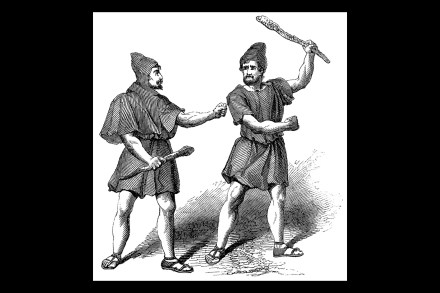
For otherwise healthy plebs in the Roman world, survival depended on four Fs: farming (the sole source of food and money), fighting, family and friends. Everything else that made life worth living meant having some degree of political control over your own existence, which could be summed up in a fifth F: freedom, or political equality. But the elite had little time for such goodwill towards men. For the plebs, there was the rub. In the 20s BC Livy began writing a history of Rome from its foundation in 753 BC. It was first ruled by a series of seven kings (none actually Roman) who were finally thrown out as tyrants in 509 BC.

roman ranking

Kamala: ‘Democracy is dead. Buy my book’

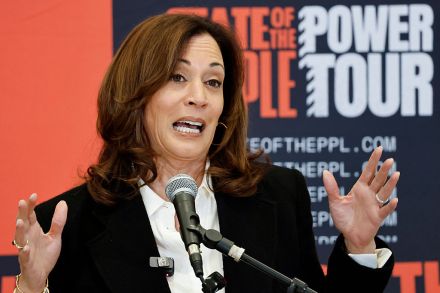
Kamala Harris reappeared last night, making a 30-minute guest appearance on the now-canceled Late Show with Stephen Colbert, to deliver this message of hope to the American people: The country is irretrievably broken and there’s nothing anyone can do to fix it. Hilarious! Momala said that everything terrible that was going to happen if she lost to Donald Trump has now happened (relatively strong economy, world peace) but the worst thing is that her fellow Democrats have “capitulated” to Trump’s fascist program of trade protectionism and renaming everything after himself. Harris, who recently announced that she’s not running for California governor, said she probably won’t run for President in 2028 either.

Britain’s decline is a threat to democracy

From our UK edition

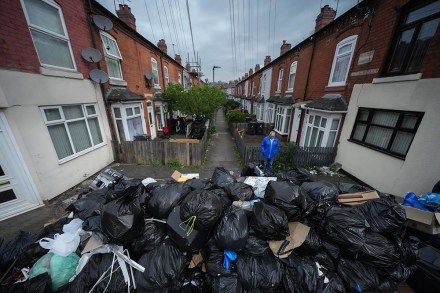
Democracy was born in the public square. The Athenian agora was the central meeting place of an engaged citizenry where business was transacted, social life flourished and a common direction for the people was determined. The idea of a public square – where individuals operate in a relationship of trust and shared endeavour – is embedded in the life of our democracy. But today, increasingly, our public squares are squalid, lawless, derelict spaces, as Gus Carter records in our cover piece. Shoplifters go unpunished, fly-tipping is unpursued, drug-taking and dealing are commonplace.

The age of the strongman, Tesla under attack & matinee revivals

From our UK edition

35 min listen

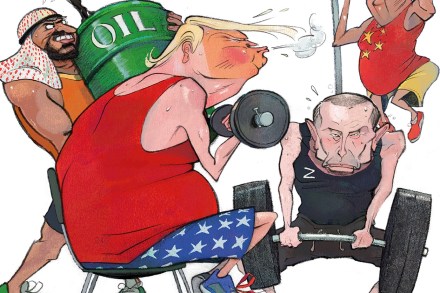
This week: welcome to the age of the strongman ‘The world’s most exclusive club… is growing,’ writes Paul Wood in this week’s Spectator. Membership is restricted to a very select few: presidents-for-life. Putin of Russia, Xi of China, Kim of North Korea and MBS of Saudi Arabia are being joined by Erdogan of Turkey – who is currently arresting his leading domestic political opponent – and Donald Trump, who ‘openly admires such autocrats and clearly wants to be one himself’. ‘This is the age of the strongman,’ Wood declares, ‘and the world is far more dangerous because of it.’  Despite their bombast, these ‘are often troubled characters’, products of difficult childhoods.

Rana Mitter on the legacy of Sun Yat-sen

From our UK edition

43 min listen

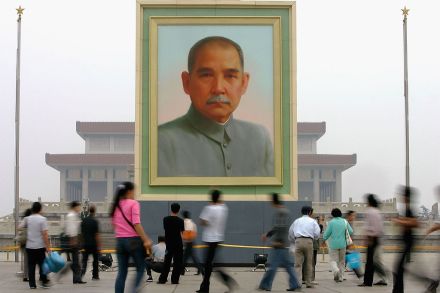
Walking around Taipei a couple of years ago, I spotted a familiar sight – a bronze statue of a moustachioed man, cane in his right hand, left leg striding forward. The man is Sun Yat-sen, considered modern China’s founding father. I recognised the statue because a larger version of it stands in the city centre of Nanjing, the mainland Chinese city that I was born and raised in. That one figure can be celebrated across the strait, both in Communist PRC and Taiwanese ROC, is the curious legacy left behind by Sun. March 12th this year is the centenary of Sun’s death, so what better opportunity to look at his legacy, and who better to discuss Sun than the historian Rana Mitter, who needs no introduction with Chinese Whispers listeners.

Biden bids an ominous farewell to a falling America

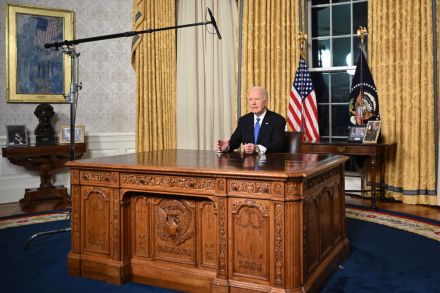
President Joe Biden delivered his farewell address last night in the Oval Office. While he started with strong patriotic themes, he ended by warning the country of some “things that give me great concern.” Biden declared that America is an oligarchy now. Cockburn thought it was turning into a dictatorship? He can’t keep track. Overall, though, he thought Biden’s speech presented an idealistic view of America. It featured inspiring snatches, with stories about the Statue of Liberty and references to the words of the Declaration of Independence and Constitution, saying America is “a nation holding the torch of the most powerful idea ever in the history of the world. That all of us are created equal.

biden farewell

Trump is Team MAGA’s last chance

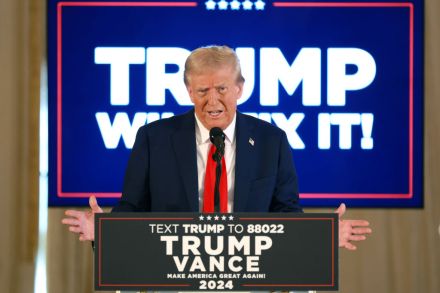
Elon Musk has often commented that “if Trump is NOT elected, this will be the last election.” He often adds that, “far from being a threat to democracy, he is the only way to save it.” I believe both statements are essentially true. I say “essentially” because, should Trump lose — or to follow Musk more accurately, should he not be elected, which is not quite the same thing as losing — then there would still be events called elections. Only they wouldn’t be like elections of yore.  According to the Constitution (another thing that would retired should Trump fail to be elected), the qualifications to be president of the United States are pretty minimal.

trump

Trump and his lawyers take on the Syndicate

Who has better lawyers: Donald Trump or the Syndicate? The fate of the election, and hence the fate of the country, may well come down to the answer to that question.  By “the Syndicate” (what I sometimes call “the Committee”), I of course mean the shadowy board of overseers that controls the Democratic Party and, by extension, the administrative apparatus that governs us. No one knows exactly who sits on this board. I suspect that even those who, in retrospect, we can see have occupied senior positions in its ranks are often uncertain about their place in the hierarchy.  Elsewhere, I have invoked C.S. Lewis’s idea of “The Inner Ring” to explain the dynamics of this phenomenon.

lawyers

It’s not too late for the press to start doing their jobs

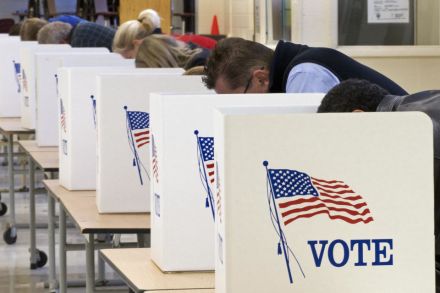
One night last week I got a robocall asking me to participate in a candidate town hall. “If you’d like to ask Ed Montanari a question, press star three,” a female voice instructed me as I joined the call to satisfy my curiosity. Though I had previously not given any thought to the Florida District 60 state House race, I spent the next hour listening with interest as Mr. Montanari, a Republican challenger, fielded questions from voters. At one point, I pressed one to ask a question. I told the screener my question was about crime, and fifteen minutes later I was connected to the candidate to ask my question. Isn’t this how democracy is supposed to work?

Is the fate of democracy truly at stake?

In a few months, the stolen election narratives will start in earnest. There was one in 2020, of course, but there had been another in 2016, a liberal myth about Russian interference stealing victory from Hillary Clinton. Disgruntled Democrats similarly said the Republican president before Trump was “selected, not elected” — put in office by the Supreme Court, not voters. Claiming that Barack Obama wasn’t a natural-born citizen of the United States, as “birther” Republicans did in 2008 and 2012, was another variation on the stolen-election theme. Even when elections run smoothly, ideologues easily find cause for complaint. Discontents can even apply to foreign elections.

democracy