Defense

Trump’s NATO troop reduction isn’t Europe’s biggest problem

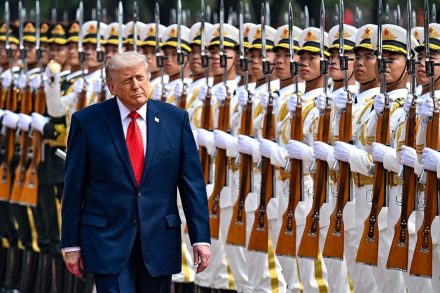
Before Donald Trump returned to the White House last year, there were many commentators who sought to sanitize the President. Take him seriously but not literally, they said. Some hinted that his cruder and wilder hyperbole was not the ignorant, boorish reflex it seemed but a shrewd and daring negotiating tactic in Trump’s beloved "art of the deal." It has been reported that the United States is planning to announce a reduction in the number of troops it will make available to NATO in Europe. America is planning to shrink its commitment to the NATO Force model, under which troops "carry out the alliance’s operations, missions and other activities during peacetime.

nato

Britain’s ‘drone gap’ makes it vulnerable

When John Healey was asked, onstage at the London Defence Conference, whether the armed forces were “ready” for war, the Defence Secretary replied: “Yes.” One of those present says: “That was greeted with near incredulity in the room.” Another attendee compared Healey’s plight to someone “playing French cricket,” with critics from all sides hurling balls at his ankles while he tried to bat them away. “You can’t score any runs in French cricket.” George Robertson, Healey’s most respected Labour predecessor and a former secretary general of NATO, was not present; he was in Scotland celebrating his 80th birthday. But he returned to give a withering interview to the FT and a speech.

britain drone

The defense industry and the US government are inextricably linked

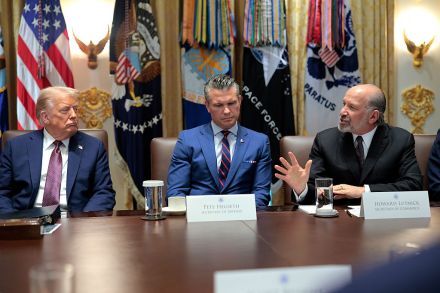
Fresh on the heels of news that the government will take a 10 percent stake in failing chip company Intel, Commerce Secretary Howard Lutnick has floated the possibility of commanding a direct stake in Lockheed Martin and other large defense corporations. Speaking on CNBC, and extolling the “exquisite” proficiency of Lockheed products, he claimed “my Secretary of Defense and Deputy Secretary of Defense are thinking about it.” The proposal obviously fulfills a key requirement, which is to appeal to the transactional proclivities of the boss. Donald Trump had greeted the Intel arrangement as a “good deal” criticized only by “stupid people,” and suggested that there will be more such investments.

defense

Democrats vexed by Trump’s success in Iran

There are serious, unanswered questions about the impact of America’s bombing of three Iranian nuclear sites. Three stand out. How much was actually destroyed? Where is the highly-enriched uranium that Iran apparently removed from the Fordow site before the bombs fell? And is America threatened by Iranian sleeper cells, perhaps hidden among the more than 700 Iranians whom the Biden administration released into the American interior after they crossed the border illegally? Nor are they the only threat. We have no idea how many terrorists are among the 2 million “got aways” who were seen on surveillance cameras crossing the border but never apprehended.  Those are serious questions about serious threats, and they deserve thoughtful, bipartisan inquiry. They won’t receive it.

Democrats

How America can develop its own rare earth elements industry… safely

Give a country rare earth elements and it’ll have fighter jets, missiles and warships for a day. Force a country to extract and process its own rare earth elements and it’ll be safe from relying on countries run by unstable dictators forever.  Such is President Trump’s sensible line of thinking as he keeps up America's trade war with China. As China imposed export licensing restrictions on seven rare earth elements, or REEs, last week, Trump signed an Executive Order “launching an investigation into the national security risks posed by US reliance on imported processed critical minerals and their derivative products.” The administration is now pursuing a deal to procure REEs from Ukraine.

rare earth elements

Is Anduril Industries building the future of warfare?

Defense contractors tend, on the whole, to be a pretty faceless crew, indistinguishable in their dark suits and hence little known to the world outside the military-industrial complex. Palmer Luckey, founder of Anduril Industries, strives to be different, invariably sporting a uniform of Hawaiian shirts, shorts and flip-flops – projecting an iconoclastic image attractive to venture-capital investors, somewhat in the manner of former crypto mogul Sam Bankman-Fried. He beguiles journalists with exciting monologues about the great things his vision can accomplish for US defense, making him, according to a glowing profile in the Financial Times, “arguably the most crucial figure bringing Silicon Valley to the front lines of American national security.

anduril palmer luckey

AI and the new way of war

What is happening in Gaza now provides a glimpse of how all wars may be fought in the future — with artificial intelligence. In The Spectator last November, I wrote about an Israeli airstrike that brought down a six-story building in Gaza City, reportedly killing more than forty civilians. One of the residents, a man named Mahmoud Ashour, dug through the rubble with his bare hands, trying to find his daughter and her four children, a girl aged eight and three boys of six, two and six months — all killed. The Israeli military would not tell me why the building was hit, beyond saying that Gaza’s armed groups put their military infrastructure amid civilians, but Amnesty International said there had been a single member of Hamas living there.

gaza ai war

Joe Biden’s failure is Bob Gates’s vindication

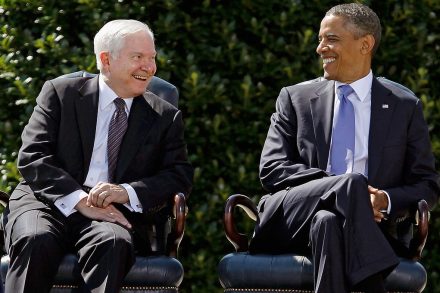
One of the most famous criticisms of Joe Biden over the years came from former Bush and Obama secretary of defense Robert Gates, who wrote in his 2014 memoir that "I think [Joe Biden] has been wrong on nearly every major foreign policy and national security issue over the past four decades.” The former SecDef has repeatedly been asked if he stands by the statement — and each time, he does. Of course, we're a decade removed from that memoir — and in that time, Gates has openly criticized Biden over the botched Afghanistan withdrawal, his administration's approach to Putin and Russia and the slow walking of military aid to Ukraine. So it seems it's safe to say we're at five decades now. https://www.youtube.com/watch?

robert gates

Lloyd Austin’s mistake should be career-ending

The disappearance of defense secretary Lloyd Austin for a few days without notifying the White House, or even the second in command at the Pentagon, is more than a one- or two-day story.  It’s a much larger problem. It’s a problem politically for the White House, an opportunity for Republicans, a dilemma for congressional Democrats and a problem for the most powerful military in the world. And, of course, it’s a major problem for Secretary Austin’s future in the position. Let’s start with the problem for the military. It is absolutely essential that the military have a clear chain of command that is clearly specified and operational at all times. Within the military, that chain of command goes up to the senior-most officer in each service branch.

lloyd austin

Lawmakers debate milk in school lunches

The stakes were high this week as Congress’s dairy big cow-culation to allow whole milk back in cafeterias loomed. When push came to shove, Republicans and Democrats set aside their beef to allow kids the freedom to drink as they please. The broadly bipartisan bill, the Whole Milk for Healthy Kids Act, passed the House by a 330-99 vote — reversing Michelle Obama’s crazy push to ban whole milk from school lunches. “I am udderly in favor of whole milk,” Nebraska congressman Don Bacon told me, milking this vote for all it’s worth.

milk

America’s undersea lifelines

It is out of sight and usually out of mind, but recent events are forcing Americans to focus on the security of a vast network of undersea cables that the nation depends upon. In early February 2022, cables connecting Taiwan to its Matsu Islands off the coast of China were cut in what appears to be an act of sabotage that Taipei later ascribed to Chinese vessels. It took nearly two months for the internet to be up and running again, highlighting the importance of a largely ignored element of a country’s critical infrastructure.  According to TeleGeography, a telecommunications research and consulting firm, there are around 552 undersea cables, connecting almost every inhabited landmass. Most are fiberoptic, utilizing light to transmit massive quantities of data.

cables

Contra the hawks, Biden’s defense budget keeps ballooning

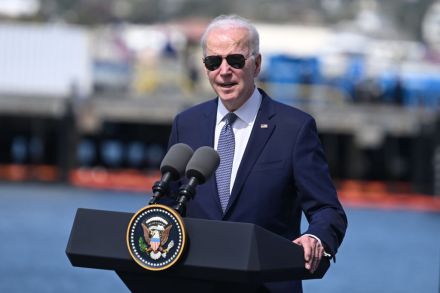
This week we heard a lot about AUKUS, a trilateral initiative between the United States, the United Kingdom and Australia that will revamp the Australian naval fleet with nuclear-powered submarines over the next two decades. President Biden, UK Prime Minister Rishi Sunak and Australian Prime Minister Anthony Albanese made a show of it in sunny San Diego on March 13, where they officially inaugurated the defense agreement and gave speeches about defending sea lanes and the rules-based international order in the Indo-Pacific. But there was another story here: the Pentagon released a torrent of charts and bureaucratic documents on what it would like to see in the coming year’s defense budget.

Europeans are still free-riding off American security

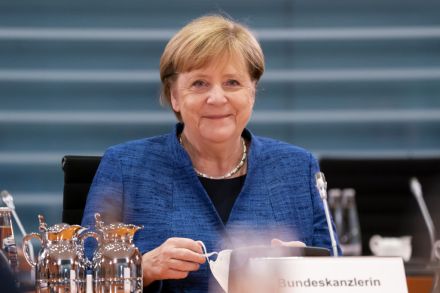
Remember how Washington’s foreign policy establishment and their media echo chamber bashed the “isolationist” President Donald Trump for abusing, humiliating and making life miserable for our close European allies, in the process obliterating the “liberal international order”? Remember how some of the Europeans responded? Germany’s Angela Merkel declared “a new chapter” in US-European relations, saying that Europe “really must take our fate into our own hands.” France’s Emanuel Macron stated that Europeans need to stop “being naïve,” and assert their strategic independence from the US. What happened? Nothing. Here we are, three decades after the end of the Cold War, and it is déjà vu all over again between Washington and Moscow.

angela merkel

A government of drunken sailors

It seems strange, but just two decades ago the United States government had a balanced budget. Bill Clinton had run for president as a new type of Democrat, calling for an end to the deficits that had so bedeviled George H.W. Bush. Thanks in large part to pressure from Newt Gingrich and the Republican Congress, he pulled it off. Clinton trimmed military spending and signed into law a package of tax increases. This cued haunted house noises in the parlors of center-right think tanks, but Biden also approved more conservative-friendly measures like domestic spending cuts and welfare reform. This bipartisan approach, in conjunction with a galloping economy, led to the unthinkable: budget surpluses for four fiscal years in a row.

drunken sailors

Congress’s defense budget is pure madness

The United States Congress is divided on pretty much everything these days. But there is one agenda item that traditionally brings lawmakers together: the defense budget. Usually Pentagon funding amounts to a pro-forma love-fest with a result — higher military spending — that is basically baked in. The defense budgeting process is usually like a boring movie, where the conclusion is foreseen about 10 minutes into the flick. Last week, the House of Representatives passed its own version of the National Defense Authorization Act by a resounding 316-113 vote. It's a mammoth 1,362-page bill that piled an additional $25 billion onto what President Joe Biden had submitted in his own $753 billion budget request.

congress defense budget

How the US military got rich from Afghanistan

The departure of American troops from Afghanistan is being lamented (or hailed — see the Chinese press, passim) as a defeat. But this is a shortsighted attitude, at least from the point of view of the US military and the multitude of interested parties who feed at its trough. For them, the whole adventure has been a thumping success, as measured in the trillions of taxpayer dollars that have flowed through their budgets and profits over the two decades in which they successfully maintained the operation. The truth of this was forcefully brought home to me once by a friend of mine who, as a mid-level staffer, attended a conclave of senior generals discussing Donald Trump’s Afghan mini-surge back in 2018.

afghanistan military

Can Patrick Shanahan handle the madness of King Trump?

For Donald Trump, parting is never such sweet sorrow. He’s been jettisoning cabinet officials with rapidity. The latest is Defense Secretary James N. Mattis, whose stiff resignation letter has predictably enraged Trump, prompting him to appoint Patrick Shanahan, a former Boeing executive who has curried favor with Trump by backing a space force, as acting Defense Secretary starting January 1. This morning, Trump tweeted, ‘I am pleased to announce that our very talented Deputy Secretary of Defense, Patrick Shanahan, will assume the title of Acting Secretary of Defense starting January 1, 2019. Patrick has a long list of accomplishments while serving as Deputy, & previously Boeing. He will be great!

patrick shanahan