Debt

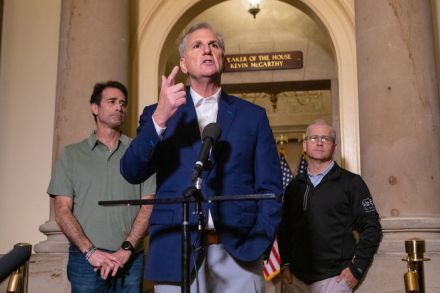
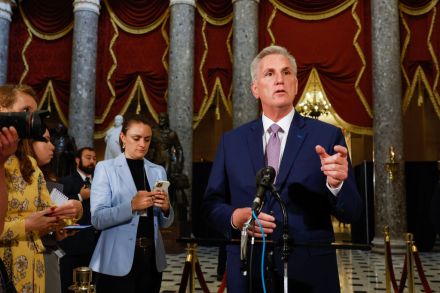
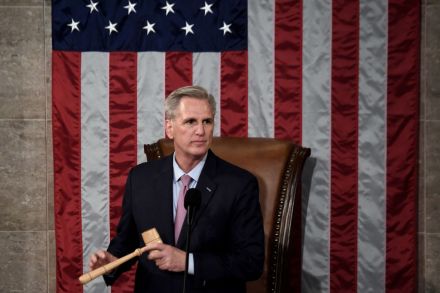
Kevin McCarthy is proving his worth

Kevin McCarthy rose to the speakership despite being loathed by a lot of very online conservatives and a rump portion of his own party in the House. He had to win that role across multiple votes, which the media pronounced as humiliating, indicative of a GOP incapable of governing and all the normal tropes that partisans such as Jake Tapper deploy in place of real informed analysis of the situation. This is why they’ve proven to be so utterly wrong about McCarthy’s strength as a leader since taking the gavel.

kevin mccarthy

The budget fight and the new politics of entitlements

It’s almost spring, and you know what that means: buds popping on the trees, birds chirping as the days grow longer, and the president introducing a budget that will be quickly forgotten. And so it's happened. But there have been a few interesting twists that could make this budget season more interesting than most. President Biden wrote an op-ed for the Wednesday New York Times presenting his plan to “extend Medicare for another generation.” The piece was largely predictable: calls to raise taxes on the wealthy as a way “to increase the program’s solvency by twenty-five years.” While some fiscal conservatives welcomed the president’s willingness to raise the issue of Medicare solvency, his ideas are largely dead on arrival for Republicans.

kevin mccarthy

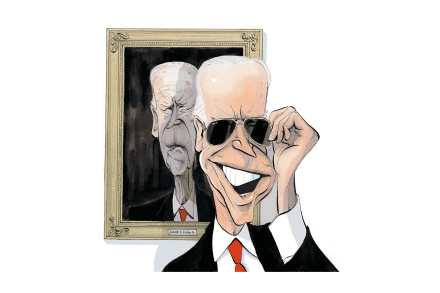
Biden’s unforgivable student loan authoritarianism

The frame for virtually any discussion of American politics at the moment advanced by the hair-on-fire segment of our media elite is that democracy itself is under attack. We are surrounded, according to the likes of CNN's Brian Stelter (peace be upon him), by those who would tear down the foundations upon which the government and ordered law of the United States of America stands, in a frontal illiberal assault on the institutions that keep us free. Fear the QAnon Shaman and his Viking hat! We all remember how close he came to ruling us all astride the floor of Congress.

student

The post-Covid mental health crisis

Recent mass shootings have reminded us of just how much gun violence has surged since Covid. The record of 45,222 Americans dying from gun-related injuries in the first year of the pandemic could well be topped in 2022, with more than 12,000 fatally shot since the end of April. Many rightly condemn progressive district attorneys in cities for failing to condemn the increased bloodshed. Yet the uptick in violence has been uniform across the nation, plaguing rural counties as much as urban ones, which is why most psychological experts put the blame squarely on the emotional residue of lengthy Covid lockdowns.

moran

Return of the congressional earmark zombie

Much like a Hollywood movie monster franchise, earmarks are back in the federal government. Congress’s $1.5 trillion omnibus bill contains pages upon pages of so-called “member-directed spending” for hundreds of pet projects in congressional districts across the country. Senator Mike Braun put the final earmark count at $8 billion, taking up 367 pages of the 2,700-page bill that funds the government through the end of the fiscal year. Congress banned earmarks in 2011 thanks to a rather rare show of bipartisanship by House Republicans and then-President Barack Obama. Congressional bipartisanship then unanimously brought back earmarks last year.

How Congress broke the budgeting process

That the federal budget process is broken is the worst kept "secret" in Washington. The White House and Congress know it. The think tanks know it. A 2010 study from the progressive Center for American Progress called the budget process “not a pretty picture.” The conservative Heritage Foundation said in 2005 that the process “stifles debate, prevents cooperation, and frequently breaks down.” Proposals come along every few years to fix the problem, but nothing ever gets done. “The fundamental reason why the federal process is broken is because Congress doesn’t have a budget,” says Kurt Couchman, a senior fellow at Americans for Prosperity. “Congress doesn’t do a budget. Congress does appropriation bills, there are 12 of them.

mccarthyism

Biden’s budget doesn’t matter

Every year, the president puts forth a budget. And every year, the media diligently reports on it as if it matters to what the government will do over the coming year. Don’t get me wrong: budgets are important. They provide a sense of their crafters’ priorities and a roadmap for achieving their goals. But budgets don’t hold the force of law, which means — in our government — they serve as non-binding blueprints and little else. This is especially true of presidential budgets. That’s because while the budgetary process starts with the president, where it goes from there is determined by Congress alone. During the Trump years, Congress didn’t even bother bringing the president’s budget to a vote.

budget

The rise of the second-string left

If a recent Scientific American opinion piece purporting to explain how growing opposition to critical race theory damages public education reveals anything, it is that the real problem with today’s left goes much deeper than its progressive ideology. The co-authors assert that resistance to CRT is based on white supremacy, a refusal to acknowledge history, a rebirth of ‘50s-style anti-communism, and the conservative desire to harden racial divisions. These stunning inaccuracies raise questions not just about the validity of their argument but the competence of the supposed experts making it.

defund

The next real estate crisis could come from China

Debt is as much a part of the real estate business as bricks and mortar. And as the great New York builder William Zeckendorf once famously remarked, 'it’s better to be alive at 20 percent than dead at the prime rate.' But the Evergrande Group, the second largest real estate company in China, has taken corporate debt to new heights, with liabilities of a staggering $310 billion, to finance its breakneck growth. In 2010, it had revenues of $7.3 billion and assets totaling $16.7 billion. In 2020, the figures were $81 billion and $368 billion. To be sure, it is a huge company, with 1,300 projects in more than 240 cities in China and 200,000 employees. This year alone, it began 77 new projects.

evergrande

A government of drunken sailors

It seems strange, but just two decades ago the United States government had a balanced budget. Bill Clinton had run for president as a new type of Democrat, calling for an end to the deficits that had so bedeviled George H.W. Bush. Thanks in large part to pressure from Newt Gingrich and the Republican Congress, he pulled it off. Clinton trimmed military spending and signed into law a package of tax increases. This cued haunted house noises in the parlors of center-right think tanks, but Biden also approved more conservative-friendly measures like domestic spending cuts and welfare reform. This bipartisan approach, in conjunction with a galloping economy, led to the unthinkable: budget surpluses for four fiscal years in a row.

drunken sailors

Republicans’ fiscal responsibility theater

If you think Washington couldn't get any more dysfunctional, think again. On Monday night, Senate Republicans blocked a Democratic attempt to avoid a government shutdown. This raises the temperature in a Congress that’s already had, shall we say, a pretty high fever since being sworn in on January 3. Depending on who you ask, the Republicans’ latest action is either a brave attempt at stopping Biden’s massive spending package — Mitch McConnell’s stated perspective — or a foolish gamble bringing us one step closer to a debt default, as Democrats claim. In a sense, both sides are right. But Washington also needs to remember that refusing to raise the debt limit is akin to cutting up the credit card after maxing it out. It doesn’t solve the actual problem.

fiscal responsibility

Congress pretends to hold the Pentagon accountable

The Biden administration’s latest $3.5 trillion spending proposal continues to attract attention. With a hodgepodge of Democratic priorities ranging from climate change to Medicare expansion, the bill is the more partisan companion of the administration’s $1 trillion infrastructure plan. Of course, another blockbuster story has been distracting attention from these packages — the difficult withdrawal from Afghanistan. Many in Congress continue to be critical of the administration’s handling of the pullout, and some are determined to use the crisis to their political advantage.

congress defense budget