Debt

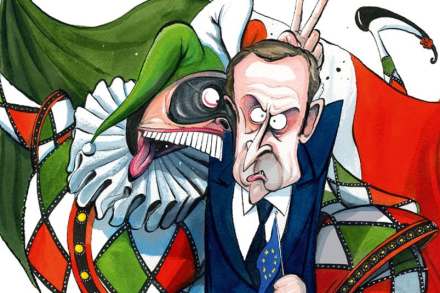
A government of drunken sailors

It seems strange, but just two decades ago the United States government had a balanced budget. Bill Clinton had run for president as a new type of Democrat, calling for an end to the deficits that had so bedeviled George H.W. Bush. Thanks in large part to pressure from Newt Gingrich and the Republican Congress, he pulled it off. Clinton trimmed military spending and signed into law a package of tax increases. This cued haunted house noises in the parlors of center-right think tanks, but Biden also approved more conservative-friendly measures like domestic spending cuts and welfare reform. This bipartisan approach, in conjunction with a galloping economy, led to the unthinkable: budget surpluses for four fiscal years in a row.
drunken sailors

Republicans’ fiscal responsibility theater

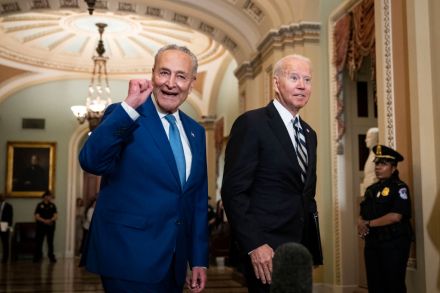
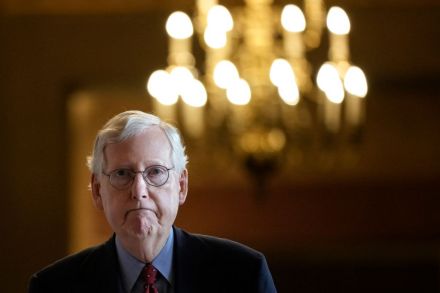
If you think Washington couldn't get any more dysfunctional, think again. On Monday night, Senate Republicans blocked a Democratic attempt to avoid a government shutdown. This raises the temperature in a Congress that’s already had, shall we say, a pretty high fever since being sworn in on January 3. Depending on who you ask, the Republicans’ latest action is either a brave attempt at stopping Biden’s massive spending package — Mitch McConnell’s stated perspective — or a foolish gamble bringing us one step closer to a debt default, as Democrats claim. In a sense, both sides are right. But Washington also needs to remember that refusing to raise the debt limit is akin to cutting up the credit card after maxing it out. It doesn’t solve the actual problem.

fiscal responsibility

Congress pretends to hold the Pentagon accountable

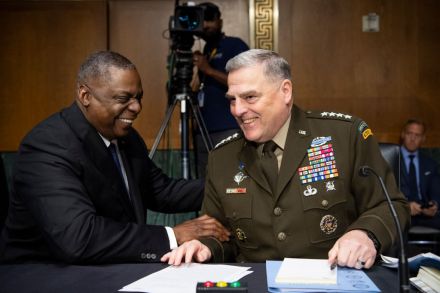
The Biden administration’s latest $3.5 trillion spending proposal continues to attract attention. With a hodgepodge of Democratic priorities ranging from climate change to Medicare expansion, the bill is the more partisan companion of the administration’s $1 trillion infrastructure plan. Of course, another blockbuster story has been distracting attention from these packages — the difficult withdrawal from Afghanistan. Many in Congress continue to be critical of the administration’s handling of the pullout, and some are determined to use the crisis to their political advantage.

congress defense budget

Why we should worry about the post-Covid exodus of older workers

From our UK edition

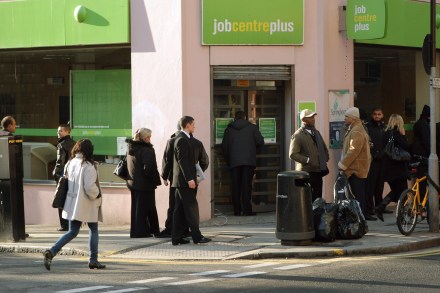
Concerns around unemployment during the pandemic have, understandably, been focused on younger people. Last year it was under-24 year olds most likely to be furloughed and then subsequently made unemployed when coming off the government’s scheme. For millions, the fate of their jobs remains on the line, as unemployment is expected to rise over the course of the year (albeit far less than originally predicted), even as the economy rebounds when lockdown restrictions lift. But today the Office for National Statistics flags another concern; one that could potentially have a bigger impact on the labour market’s recovery post-pandemic. While the youngest have experienced a substantial economic hit from the virus, so have those at the other end of the working-age spectrum.

The thinking behind Rishi Sunak’s cash grab

From our UK edition

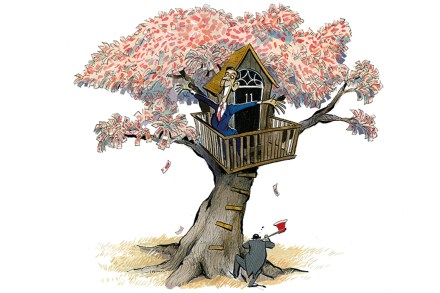
Rishi Sunak’s tax hikes pack a punch: by 2025, over £19bn is estimated to be raised from the freeze to the personal tax threshold, and a staggering £50bn from a new, tiered corporation tax structure. That’s a lot of people out of pocket, and businesses diverting their profits away from workers and consumers and towards the state. Criticisms of the cash grab are splashed across the front pages of the papers today. Across the pond, the Wall Street Journal has lambasted Sunak’s policies: 'Britain’s political class, and especially the governing Conservative party, prides itself on fiscal rectitude. So Mr. Sunak already faces pressure to “pay for” all this relief. We sympathise, but in this instance he would have been better off waiting.

Why 2021 could be the year of economic Armageddon

From our UK edition

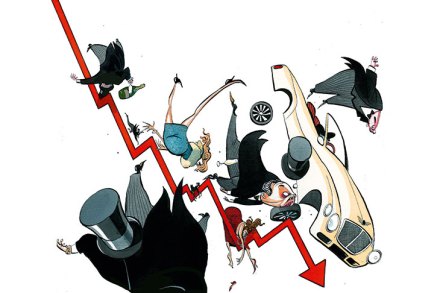
The British economy is wrapped in bandages – we won’t know whether the wound has scabbed or turned septic until they are ripped away. By the time the furlough scheme ends in April, whole sectors of the economy will have been out of action or severely incapacitated for over a year. Cash grants and the job retention scheme, both riddled with fraud, have propped up zombie businesses, some of which would have gone bust in the last year even without a pandemic. Of the businesses frozen in March 2020, how many will come out of hibernation in April 2021? How many people on furlough will discover that they have, in effect, been on gold-plated unemployment benefit for a year? No one knows, but the signs are not good.

Italy is about to hijack the eurozone

From our UK edition

There is still some debate about who came up with the adage that ‘if you owe the bank $100 that is your problem. If you owe the bank $1 million dollars that is their problem’. It is usually attributed to the oil tycoon J. Paul Getty, which may help explain how he became the richest man of his era. Occasionally, and in a slightly modified form, it is attributed to John Maynard Keynes in his advice to the British cabinet after world war two. And yet in truth, it should probably have been coined by an Italian. Why? Because the country now owes so much money to the rest of the eurozone it looks about to hijack the whole system.

Can Britain get its record-high debt under control?

From our UK edition

Last month, Britain joined the club of countries whose national debt is greater than 100 per cent of economic output. According to an Office for National Statistics update, public debt exceeded £2 trillion, taking the debt to GDP ratio over 100 per cent for the first time in 60 years. A fast economic recovery will prove vital for getting the Britain’s deficit under control Crossing this mark doesn’t come as much of a surprise given the copious amounts of spending the UK has done on Covid-related policy. July saw the fourth highest borrowing of any month on record – the top three coming in the previous three months when the UK was under strict national lockdown.