David cameron

Cameron settling in nicely

From our UK edition

David Cameron was on punchy form at PMQs today. He jibed that in Harriet Harman’s case the Budget Red Book should be called ‘the unread book’ and called Labour backbenchers ‘dunces’ who didn’t know what the last government was planning. The Cameron Harman exchange was interesting. Harman had come armed with some classic follow-up questions using the details in the Red Book. Cameron didn’t want to engage on the detail, suggesting that Harman might have had a point. But his ability to attack Labour for having got the country into this mess allowed him to win the exchange on points quite comfortably. Bob Russell, a Lib Dem MP who said he may oppose the Budget yesterday, roared out three nil after Harman’s first three questions.
Cameron previews the austerity budget

From our UK edition

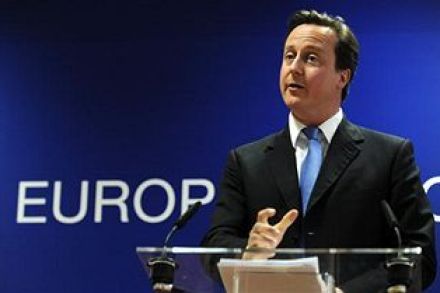
Tick, tock, tick, tock: only three-and-a-bit days to go until George Osborne's long-anticipated austerity Budget, and the coalition is gearing up its efforts to prepare us for the worst.  Exhibit A is David Cameron's interview in the Times this morning, which contains few pleasantries and a whole heap of stern talk  – particularly for those in the public sector.  As the PM puts it: "There is no way of dealing with an 11 per cent budget deficit just by hitting either the rich of the welfare scrounger … there are three large items of spending that you can't ignore and those are public sector pay, public sector pensions and benefits.

All in all, a pretty good day for the government

From our UK edition

I doubt David Cameron will have many better days in government than this. Considering the government cancelled a hospital project yesterday, today has passed as one long photo-op, free of incident. It began with Theresa May banning a radical Islamist cleric, Zakir Naik, displaying a resolve that eluded her immediate predecessors. The papers were full of Cameron’s ‘coup’ in Brussels yesterday; the only major news story that might have unnerved Cameron was the FT’s research into Tory immigration policy, which the FT calculates will hit growth and raise taxes. It was too esoteric to hit the TV screens, so too the cuts in arts funding. It must have been a happy breakfast in No 10 this morning.

The euro crisis is an opportunity for Cameron

From our UK edition

Gerard Baker has written the cover piece for this week’s magazine and it’s a must read. In it, he explains why ‘closer fiscal union’, as Rompuy terms it, is not to Germany’s advantage: ‘Any attempted fiscal union might well yield to Germany the biggest single vote in how much to raise in taxes and how to spend it. But it could still be outvoted by an alliance of smaller countries. Such a set-up would become an institutionalised mechanism by which German taxes will be siphoned off permanently to weaker European states.

Cameron’s European balancing act

From our UK edition

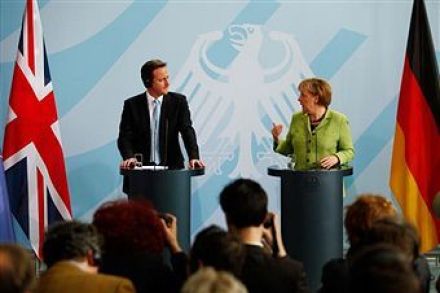
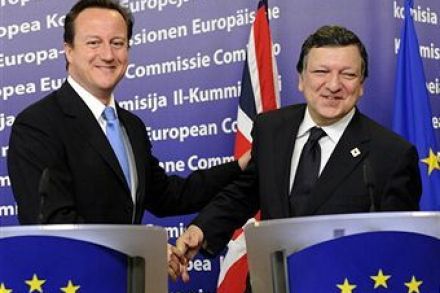
So David Cameron strides onto the European stage today, with his first EU summit since becoming Prime Minister. And early signs are that it's going to be a peculiar day for him. As Ben Brogan writes in the Telegraph, Europe seems to be liking the (liberal-democratised) Tories more than they thought they would. Sarkozy is, apparently, "smitten" with our PM, while Angela Merkel "has come to admire his directness". So after pitching himself against the Lisbon Treaty, and broadly selling himself as a eurosceptic over the past few years, Cameron now faces the prospect of cuddles over the coffee and croissants in Brussels. Like I say: peculiar. I suspect Cameron will be keen to avoid being hugged too tight, though.

Hark! A human at the dispatch box

From our UK edition

After years of fury and rancour in the chamber, the mood at PMQs was sober and rational today. (Personally, I hope it hots up again soon but the armistice certainly made a change). Under no pressure whatever, Cameron roamed at will over the full spectrum of government policy and gave intruiging hints about future priorities. Tory backbencher Philip Davies urged him to cancel the subscriptions of 4000 convicts signed up for Sky TV. The PM didn’t seem bothered by this. They may not get the vote but they’ll carry on getting Adam Boulton. Cameron is more concerned by the 40 percent of prisoners who celebrate the end of their sentence by committing another crime.

Cameron is dignified in trying circumstances

From our UK edition

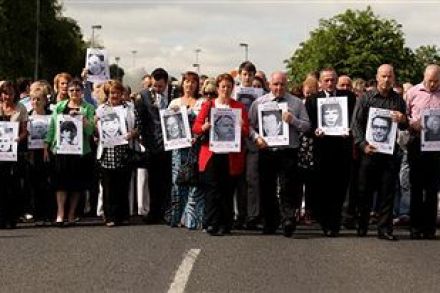
As David says, the conclusions of the Saville Inquiry make for grim reading. One person with close links to the services who served in Northern Ireland just told me, ‘it is far worse than we expected.’ In the House, David Cameron’s statement on it was heard in subdued silence. It would be remiss not to say that David Cameron dealt with this situation as well as anyone could. There was no equivalent to Jonathan Powell’s disgraceful statement that ‘the war against Irish terrorism was not our war’. He pointed out the context of the event and the fact that it was very much the exception rather than the rule of the work of the British security services in Northern Ireland.

Lord Saville eviscerates the British army

From our UK edition

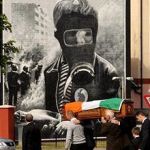
David Cameron has just told the House of Commons: ‘There is no doubt, there is no equivalence. The events of the 20th January were in no way justified…You do not honour the British army by excusing the unjustifiable.’ He apologised for the atrocity and the Wigery report. According to Lord Saville, there was no conspiracy or pre-meditation, but soldiers of Support Company 1 Para entered Bogside in Derry and opened fire without provocation from the victims or nationalist paramilitaries – though Martin McGuiness ‘was present, probably armed with a Thompson sub-machine gun’. Lord Saville concludes that the testimony of many soldiers was false.

How Hughes will play the coalition

From our UK edition

Simon Hughes is an experienced campaigner, whose reputation is deservedly blemished by a handful of duplicities – Peter Tatchell, denying a referendum on the Lisbon Treaty and the like. Hughes has just appeared on the Daily Politics and, very subtly, split the Lib Dems from the Tories. It was very simple: the Tories are responsible for all that’s bad and the Liberal Democrats are benevolent. First, Hughes dissociated the Liberals from tax rises: "I hope that the chancellor's hearing the voices that says VAT is not the right tax to change in the budget next week." Those voices are, of course, his ‘colleagues in the Treasury’ – an enlightened check on George Osborne’s excess.

Seeing it through

From our UK edition

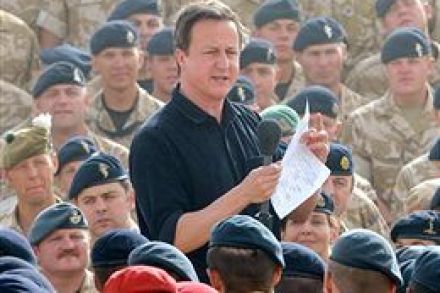
David Cameron’s address to the House contained no surprises. NATO and its allies are 6 months into a strategy to stabilise Afghanistan. All sides of the House were agreed that Britain should fulfil its commitments, but remain in Afghanistan not a day longer than necessary. That date is unknown. Like Blair and Brown before him, Cameron aspires to ‘improve Afghan security’. ‘Stability’ surely means the expulsion of al Qaeda from Afghanistan. How likely is that without the complete co-operation of the Taliban? (At what cost would that be secured?) And, as Julian Lewis MP pointed out, is al Qaeda more dangerous in Afghanistan than it is The Yemen, Somalia or Pakistan? The grand strategy remains indistinct and an outright victory impossible.

Naughty Nokes

From our UK edition

Life has imitated art – or Jilly Cooper in this case. The former chief executive of the National Pony Club, Caroline Nokes MP, 37, has been having a three year affair with a Tory toy boy, Councillor James Dinsdale, 27. Theirs was an affair of hotel-room assignations and steamy conference meetings - Bournemouth has little else to commend it. They were outed by the Sunday Mirror. Mrs Nokes, a married mother of one, was photographed entering the Kensington Close Hotel last Monday night. Minutes later, Mr Dinsdale arrived, casually dressed in a blue hoodie. Taking a ‘Hug a Hoodie’ to extremes, Mrs Nokes checked out at 8:30 the following morning. All Labour governments bankrupt themselves; the Tories often collapse under the weight of their own hypocrisy.

Defence matters

From our UK edition

Sir Jock Stirrup’s early departure was one of the worst kept secrets in Westminster. But the ‘resignation’ could have been better handled. The coalition has created a lame duck in Stirrup. And, rightly, Con Coughlin asks why Stirrup is overseeing the strategic defence review if he was sufficiently inept as CDS? It makes no sense, as removing Stirrup and Sir Bill Jeffrey (the MoD’s permanent secretary) is clearly about preparing the way for spending cuts and a new model of UK military intervention. Liam Fox gave a speech this morning promising a ‘clean break with the Cold War mindset’. He emphasised the importance of maintaining counter-insurgency spending and training; presumably, that will come at the expense of conventional warfare.

Should Cameron mention McKinnon?

From our UK edition

Lord Tebbit poses the question on his latest blog, pointing out that Nick Clegg campaigned against Gary McKinnon’s extradition, and urged the government ‘to do the right thing’.   Well, now he can and it would be a popular decision in the current circumstances. The US-UK extradition treaty should be unacceptable to any government that considers itself sovereign, but this is no time for bluster and confrontation. Barack Obama has leapt about with shrill adolescent abandon; it would be hypocritical for Cameron to return fire in kind. Despite what Obama protests, BP is not solely liable (Halliburton and TransOcean have a case to answer).

Darling: it’s not as bad as all that

From our UK edition

Alistair Darling is about to retire to the backbenches, though he stresses (and hopes) that it's a brief stint in obscurity. ‘I get bored,’ he tells the Guardian in an interview today. Darling is remarkable. He emerged from 13 years in cabinet and a hellish tenure as Chancellor with his reputation enhanced. There were rumours of a leadership bid, but those were fanciful. Darling was not an architect of New Labour, but he certainly laid the odd brick. Darling could not break the legacy of Blair and Brown, and reveals as much in his Guardian interview.

David Davis is the darling of the Tory right

From our UK edition

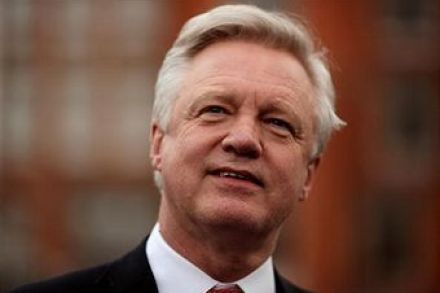
ConservativeHome conducted a poll into prominent, right-wing Tory backbenchers. Unsurprisingly, David Davis topped the poll. 70 percent of respondents hold that David Davis represents their views and 54 percent believe he articulates those views effectively. John Redwood and Daniel Hannan were some way behind as DD’s closest rivals. Davis’s chief weapon is communication. Plain speaking and from a working class background, people easily identify with him; and he expresses an acute intelligence in simple terms, something that John Redwood has failed to do. And whilst Hannan has charisma, Davis has more - the fruit of a decade at the forefront of British politics.

The end of BP

From our UK edition

BP is in trouble. Deep trouble. American lawmakers are threatening to take away its dividends and now President Obama is huffing and puffing in order to deflect attention from the role of his administration. BP is struggling to get a word in with the media, pundits, talking heads, politicians and environmental experts monopolising the airwaves.      Not a lot of people will be sympathetic to BP’s plight. The Deepwater Horizon explosion and oil spill is first and foremost a human and natural tragedy: 11 workers were killed, others were injured and now many Gulf Coast residents will end up losing their homes and livelihoods while their natural environment will be polluted for years to come. BP should, rightly, share much of the blame for this.

Keeping the backbenches occupied

From our UK edition

In this new world of Coalition politics, there is a difference between Conservative party policy and government policy. There are things that the Conservatives would like to do but can’t do because they didn’t win a majority. As Tim wrote this morning, this provides an opportunity for the Conservative parliamentary party to fill this gap. When the backbench policy committees of the 1922 are set up, they should start working on developing, detailed policy ideas rather than just critiques of Coalition policy. The Prime Minister should encourage this for three reasons. First, it would provide him with a series of possible options for the next manifesto.

Events that are shaking the special relationship

From our UK edition

Barack Obama knows language and innuendo: he will know what he’s doing by deploying what Boris Johnson rightly calls “anti-British rhetoric” in the BP disaster. BP has not – for many years – stood for British Petroleum’ – you won’t find the two words anywhere in its annual report. But you hear them plenty tripping off the presidential tongue, as if to point the finger on the other side of the Atlantic. It makes you wonder how highly he values UK-US relations: Bush was genuinely grateful for the fact that Britain was America’s most dependable ally in Iraq and Afghanistan. It’s hard to imagine Bush using the rhetoric that Obama has so quickly resorted to.

Coulson on £140,000

From our UK edition

The list of Special Advisors pay is out. The headline grabbing figures are that Andy Coulson is on £2,500 less than the PM, and that the overall bill is allegedly £1.9m less than Labour’s. Also, George Osborne appointed Rupert Harrison and Eleanor Shawcross to the Council of Economic Affairs, but they will claim no extra salary. And, for those interested, there are 5 SpAd vacancies in government. Still, £4.9m is a lot of money for unaccountable, party officials. Some time ago, I asked if Cameron would govern any differently. Transparency and cost-cutting are welcome, but wearing fewer garments doesn’t change the innards of a government.

What can Cameron do about Obama’s war against BP?

From our UK edition

Very little is my immediate answer. The President’s approval ratings are biting the dust. Powerless to stem the tide of oil and unpopularity, Obama can only victimise a ‘foreign’ oil company. Obama may be embattled at home, but if any doubt the US President’s ability to influence global events, they need only look at BP’s share value and the pension funds derived thereof. BP is mired in an expensive oil disaster, but the President’s rhetoric about the ‘habitual environmental criminal’ and threatening BP with criminal proceedings demolishes market confidence. If the British government had condemned AIG, Goldman Sachs and Merrill Lynch in similar tones, the US administration would have retorted. Cameron can do nothing.