David cameron

Encouraging early signs for the coalition

From our UK edition

Was the delayed ballot in Thirsk and Malton a referendum on the coalition government?  If so, the result released in the early hours of this morning will greatly reassure David Cameron and Nick Clegg.  The Tory candidate Anne McIntosh won the seat with 52.9 percent of the vote (up from 51.9 percent in 2005), and the Lib Dems came second with 23.3 percent of the vote (up from 18.8 percent).  Labour were pushed way down into third place on 13.5 percent (down from 23.4 percent). So, over three-quarters of the vote for the two coalition parties. I'd be hesitant to draw any firm conclusions from a one-off election, conducted under unusual circumstances.
A new approach to party management

From our UK edition

The newly-elected 1922 Executive is another demonstration of the strength of the right wing of the Conservative party. Paul Goodman notes that of the seven MPs elected to the executive who were are not new to Parliament, six are on the right. The only one who isn’t is Nick Soames, who is a special case. As one member of the ’22 executive said to me earlier today, Soames, because of his immense popularity and standing in the party, transcends his factional labelling. Of the five new MPs elected to the exec, three — Robert Halfon, Charlie Elphicke and Priti Patel — are definitely on the right of the party. On the Today Programme this morning, Cameron signalled a welcome shift in his approach to party management.

Cameron’s public debate with his backbenchers

From our UK edition

So, did Cameron say anything particularly noteworthy during his interview on the Today programme?  In truth, not really.  Most of the answers were of the "let's wait and see what in the Budget" variety.  The ratio of spending cuts to tax rises: wait and see.  Plans for hiking capital gains tax: wait and see, and so on.   The only answers that weren't determined by the Budget seemed to be his racing tips for the sports bulletin.  You can hear them here. But that isn't to say the interview wasn't revealing.  For much of it, Cameron was quizzed about the objections that David Davis and John Redwood have raised to the planned hike in capital gains tax.

The Tory right asserts itself

From our UK edition

The results of the 1922 elections show that Conservative backbenchers are distinctly right-wing and keen to assert independence. In the race for chairman, Graham Brady — the only man to resign under David Cameron’s leadership on an issue of party policy — romped home by 126 votes to 85. This result suggests that Brady would have beaten Richard Ottaway even if Ministers had been allowed to vote. Brady’s margin of victory suggests that the new intake are an independent bunch as it was the worst kept secret in Westminster that Ottaway was the leadership’s preferred candidate. Indeed, one member of the new intake told me that he thought his colleagues had gone for Brady by a two to one margin. Down ticket results were also good for the right.

Tactical considerations over the timing of the AV referendum

From our UK edition

A referendum on AV was the concession that Nick Clegg felt he needed to get a coalition deal with the Tories past his party. But the referendum poses obvious dangers to the coalition, just imagine the sight of Nick Clegg and the leader of the Labour party sharing a platform to denounce the Tories' 'reactionary' opposition to electoral reform.   The Guardian this morning reports that the Lib Dems are pushing for this referendum to take place in May 2011 at the same time as the Scottish and Welsh elections. There is, as the article notes, a huge benefit to the Lib Dems in getting this referendum in early before the cuts kick in and the coalition becomes unpopular.

German lessons

From our UK edition

Angela Merkel's fall from favour is something David Cameron ought to bear in mind as he looks for lessons to guide his term in office. The German chancellor could do no wrong when she was first elected. A new "Iron Lady", she was seen as a giant among pygmees. Tony Blair was leaving the scene, Nicolas Sarkozy had yet to be elected, the newspapers swooned, the voters applauded. Mrs Merkel was respected in the US and Europe. She made her unwieldy coalition with the Social Democrats work, almost singlehandedly picked the NATO secretary-general and ruled over EU meetings.

So Who’s the Senior Partner in this Coalition?

From our UK edition

The choreography of the new coalition is designed to make this look like a partnership of equals. But I'm increasingly convinced that Nick Clegg pulled a masterstroke here. This really is a joint premiership. Someone suggested I take a look at the full coalition document  on the Cabinet Office website to see just how much the Liberal Democrat leader had wrung from his Tory counterpart in the negotiations. The most striking phrase is: "... will be agreed between the Prime Minister and the Deputy Prime Minister", which litters the document. The "I agree with Nick" slogan used by the Lib Dems during the election campaign has thus become embedded in the constitutional agreement.

Laughs, politics and sincerity

From our UK edition

The opening of the Queen’s speech debate is, traditionally, a light-hearted affair. Peter Lilley opened up with a rather witty speech. He compared the Liberal Democrats to the bastards of the Major Cabinet, it is better to have them inside the Cabinet pissing out than outside the Cabinet pissing in. He went on to warn the new Prime Minister that the appropriate response to John Major and Gordon Brown’s microphone troubles is not to turn your microphone off but to keep ‘your receiver switched on to hear legitimate concerns.’ David Cameron would be well advised to heed this tactfully-expressed advice. Lilley ended with a heart-felt plea to bring the troops home from Afghanistan as soon as possible.

The debate begins in lively fashion

From our UK edition

The initial exchanges of the Queen's Speech Debate have just come to a close – and, I must say, it was all rather jolly.  Harriet Harman came prepared with gag after gag about the Tories' "marriage" to the Liberal Democrats, while David Cameron had a few about Harman's actual marriage to Jack Dromey.  There was much laughter, good-natured jeering and cat-calling.  So – business as usual. Underneath it all, though, there was a substantive clash between the two sides.  In a spritely performance, Harman wisely avoided an "investments vs cuts" style attack, instead charging the coalition with not having a mandate for many of its political reforms.  Whereas Cameron accused Labour of not facing up to its fiscal legacy.

A show of Cameron’s adaptability

From our UK edition

Great to hear that David Cameron has decided to keep the 1922 committee reinstated. This is a significant, unexpected development – and sign of strength, not weakness. Interestingly, I hear that George Osborne had not been properly consulted about last week's events: ie the way in which MPs were asked to vote into effectively abolishing the 1922 committee of backbenchers and being strongarmed, Blair-style, by the leadership. Cameron had not intended things to turn out as they did and Osborne, in particular, was dismayed.   I always suspected that last week's fracas was a simple misjudgment, easily explained under the chaotic events of coalition.

Ministers won’t be able to vote in 1922 elections

From our UK edition

So it turns out that John Redwood's uncertainty was well-placed. According to Jonathan Isaby over at ConservativeHome, the Tory chief whip has decreed that ministers won't be able to vote in 1922 Committee elections after all. They will only be able to attend meetings, which, as Jonathan says, "no-one ever really had a complaint about." All this comes on the back of confusion about what last week's ballot even meant, making a curious situation even curiouser.  But, whatever the reasons behind it, the outcome will be seen as a climbdown by David Cameron – and perhaps the first real dent to his authority since coming to power. Meanwhile, the 118 "rebels" will revel in how things have turned out.

The spending battle begins

From our UK edition

Mark the date, dear CoffeeHouser – for this the day when the spending cuts began.  George Osborne is set to give details on his £6.2 billion cuts package later today, but we already know the broad outlines of it all: £900 million from the business department budget, £500 million from chopping down some quangos, £150 million from cutting Whitehall recruitment, and so on.  One encouraging fact is that only £500 million of these cuts will be "recycled" back into the public sector. The rest will go towards getting the government's annual overspend down. But let's not pretend that this is anything other than a start.  With the deficit at £160 billion (not to mention total debt rising towards £1.

Have the Tories fallen victim to the Lib Dem Hug of Death?

From our UK edition

First, a little bit of history: as recently as last Christmas, I was a member of the Liberal Democrats. I can't remember why I joined them, and I can't remember why I left – which strongly implies that I put very little thought into either – but that's a story for another time. As a member, I was part of a group within the party that wanted to pull it in a more classically liberal direction: a smaller state, lower taxes and greater personal freedom. The idea of a party committed to greater personal freedom, but not greater economic freedom, always struck me as equal parts ridiculous and confused. If the Lib Dems exist to find a balance between liberty and equality, we thought we needed to prove that the correct balance was 100 percent liberty.

Cameron should seek the common ground

From our UK edition

Last weekend, David Cameron had few rebels at all in his party. This week, he has 118. The vote on the 1922 Committee membership was a free vote, of course, so this can by no means be compared to a proper, whip-defying Commons rebellion. But we have seen there are scores who are not prepared to support the leadership automatically. As I say in my News of the World column today it was unnecessary to draw such a dividing line over a party that badly wants the coalition to succeed. True, Tony Blair bossed his party about. But Blair earned the right to when he won a landslide victory. His message was “if you follow my modernising path, we get mass popular support”.

The Tories have their eyes on Iran

From our UK edition

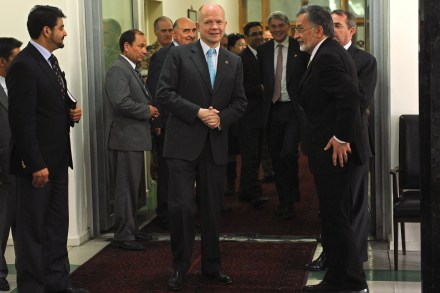
You may not have expected anything less, but it's still encouraging to see the new government pay so much attention to Afghanistan. After David Cameron's meeting with Hamid Karzai last week, no less than three ministers have visited the country today: William Hague, Liam Fox and Andrew Mitchell. And Whitehall's number-crunchers are busy trying to find extra money for the mission. There's a sense, though, that all the attention actually represents an underlying shift in focus.

The axeman speaketh

From our UK edition

There's an entire gaggle of noteworthy interviews in the papers this morning, but let's start with David Laws in the FT. It's generally quite hard to draw substantive conclusions about the actual interviewee in political interviews, but I'm sure you wouldn't come away from this one thinking anything but that Laws is a good man to have in the Treasury right now. Here, anyway, are five observations about what he actually said:  1. Sharing the blame. If people in Tory circles feel that there's one major consolation to working with the Lib Dems, then it's that they can share the blame over spending cut.

John Redwood “not sure” whether ministers will vote in 1922 Committee

From our UK edition

John Redwood is interviewed by Andrew Neil on Straight Talk this weekend, and there's a rather eyecatching exchange where the Tory MP claims that he's "not sure" whether ministers will be able to vote in the 1922 Committee, after all: John Redwood: ...as I understand the ballot, the ballot was about whether Ministers should come regularly to the 22 or not, and so I have no problem with that, and if that is the agreement, then fine. Andrew Neil: So are you not clear yet whether Ministers can come along as full members of the 22 Committee? JR: Well, I’m not sure whether they vote in 1922 elections, which is the point you were asserting, and we’ll have to see whether that’s true or not.

The Tories still need to do more to sell their school reforms

From our UK edition

It is quite telling that David Cameron's first newspaper article since becoming Prime Minister is for the Daily Mail, and even more telling that its central message is, "you still have a Conservative Prime Minister".  There then follows a series of reassurances about Dave's political motivations ("I believe the state is your servant, never your master. I believe in the common sense and decency of the British people") and about the policies contained in the coalition agreement. One line that jumped out at me, though, is this rather inspid description of the Tories' radical school reform agenda: "We're also giving parents, charities and other organisations the opportunity to set up their own new schools." Hardly inspiring, is it?

A curious little episode

From our UK edition

Iain Martin asks a good question about today's 1922 Committee vote: "This is a rather curious little episode. In what other club, society or members-run committee would nonmembers (ministers in this case) get to vote for their being granted full membership against the wishes of the existing members?" N.B. Paul Goodman has done the maths to suggest that a majority of Tory backbenchers voted against Cameron.

Calling Osborne’s bluff

From our UK edition

I've just read through George Osborne's speech to the CBI annual dinner last night, and there's much in there about free markets and tax cuts that will encourage Tory supporters.  But one passsage seemed a little strange to me: "And on the subject of coalitions, let me be absolutely frank. As a member of the negotiating team, we did consider whether we could try to bluff our way into a minority government. But it was David Cameron’s bold vision and Nick Clegg’s great foresight which saw, before anyone else, that that option would be the greatest compromise of all. A weak, unstable government, risking defeat night after night in Parliament.