David cameron

International development’s statist underpinning

From our UK edition

Why increase aid to Afghanistan by 40pc when troops are dying from a lack of body armour and helicopters? The pledge to not just protect but vastly increase the aid budget is one which, polls show, leaves the public puzzled.  I was on the Politics Show with Jon Sopel, who was putting to Andrew Mitchell some very sharp questions about all of this. Why build schools in Afghanistan, but cancel them in Britain? Worse, in fact, DFID has a habit of building schools but not finding teachers for them - its ideology states that teaching should be a job for central government, just like it is in Britain. The Afghan government is corrupt and pays a pittance for teachers, who can usually earn more as translators for other foreigners, etc.

Convenient timing

From our UK edition

Guess who has popped-up as David Cameron departs for Washington? The Lockerbie bomber, Abdelbaset al-Megrahi, who is defying the gravest of medical prognoses. It’s all suspiciously convenient, given Britain and America’s recent terse relations. What’s more BP, the international bogeyman, is in the firing line – Hillary Clinton will investigate rumours that the company conspired with the British government to include al-Megrahi in a Prisoner Transfer Agreement, and that BP pressured the Scottish executive to release al-Megrahi last summer. She’s wasting her time: this well of fetid intrigue was capped last summer.

Cameron: 2015 is a “long term cut-off point” for troops in Afghanistan

From our UK edition

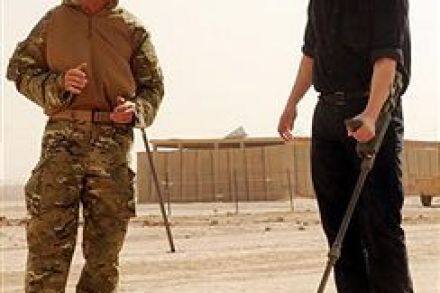
Remember when David Cameron said that Britain "cannot be [in Afghanistan] for another five years"?  Since then, the coalition has expended a good deal of energy trying to clarify this statement.  The latest formulation was something like that given by William Hague to the Telegraph a couple of weeks ago: "By the time of the next election, [Cameron] hopes we won't still be fighting on the ground ... but there is 'no strict or artificial timetable'." But now Cameron has brought up the 2015 date again, and this time it sounds a lot more like a pledge than a hope.  Here's what he said at a PM Direct event today: "I don't think we should set lots of short term deadlines ....  I've set, if you like, a long term cut off point of 2015.

Clegg and the coming of liberal conservatism

From our UK edition

Nick Clegg is a liberal, and just in case you'd forgotten that fact he gave a speech today in which the word features some 64 times.  As it was made at the think-tank Demos, it's a touch more wonkish than his recent efforts on cutting back the state - but still worth a read for those who want a general sense of how the coalition sees itself. The main purpose of the speech is, I suspect, political.  It says, to any of Clegg's sceptical colleagues, that the government's agenda is liberal, liberal, liberal all the way.  From cutting state spending to Michael Gove's schools reforms, the goal is to "disperse power and build capability in our citizens.

Meetings galore

From our UK edition

All of a sudden, the coalition partners can't get enough of their backbenchers.  Last night, it was David Cameron meeting the 1922 Committee to reassure them about their mutual relationship.  And, today, Nick Clegg is going on an "away day" with that half of his party which isn't in government, all to explain his close affair with the Tories.  Presumably, flowers and chocolates will be involved. The Clegg meeting, in particular, is worth dwelling on – and Sam Coates and Greg Hurst do just that in an insightful article for this morning's Times.  For those who can't travel beyond the paywall, here's the line which stands out: "Lib Dem MPs will be warned that history shows that small parties that walk out of a coalition are destroyed at the polls.

A lap of honour for the Hatwoman

From our UK edition

This is amazing. People could scarcely believe it. No less an organism than the Big Society was spotted briefly at PMQs today. Angie Bray, Tory member for South Acton, asked David Cameron to praise a voluntary programme which enables her constituents to share skills and expertise with their neighbours. ‘This is what the Big Society is all about,’ declared Bray, (with the quietly jubilant tone of one who knows her elevation to government will not be long delayed.) Cameron’s delight was palpable. He beamed at everyone. Then his eager ears picked up the groan of a Labour cynic opposite and he instantly switched into a mode of preachy dismay which he may well have learned from Nick Clegg.

Five highlights from the Mandelson serialisation

From our UK edition

So now we know what happened during those uncertain days following the election in May – or at least we know Peter Mandelson's side of it.  The Times begins its serialisation of the Dark Lord's book today with a front-page photo of Nick Clegg and the legend, "Clegg the Executioner".  And, inside, Mandelson explains how the Lib Dem leader made Gordon Brown's departure a precondition of any coalition deal with Labour.  Not the most surprising news ever, but worth having on record nonetheless. Aside from that, there's little of much weight in these first extracts, but plenty of titbits for political anoraks. Here are five that jumped out at me: 1) Blair thought that a LibLab deal was an "error".

Cameron’s refreshing honesty on schools

From our UK edition

David Cameron has today told the News of the World that he is "terrified" about the prospect of sending his children to an inner-London state school. This is quite some statement, given how many tens of thousands of parents are in the same predicament. Isn't it the classic politician's error? To betray how his aloofness from voters by showing how he fears what ordinary parents have to put up with? That's what Tony Blair thought – so he'd pretend to be happy with state schools while sending his kids to the ultra-selective Oratory School. That is hypocrisy. What David Cameron has said represents honesty. After all, why shouldn't he be terrified? As I say in my News of the World column today, the record is appalling.

Insane culture

From our UK edition

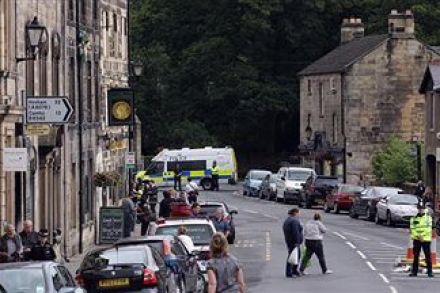
I’ve just flicked on the television in search of fresh disasters. The news that Raoul Moat shot himself when cornered in a kessel is still ‘breaking’. In this heat I’d be surprised if he wasn’t oozing by now, but 24 hour news doesn’t concern itself with such trivialities. The ‘Yours Concerned’ BBC reporter intoned in horror that 2 tasers had been used in the operation.  Now, I wouldn’t arm the officious clown who asked why I was carrying a bottle of Crozes Hermitage through Waterloo station yesterday evening. I oppose the adoption of tasers in anything other than extreme circumstances.

Sir Humphrey always has the last word

From our UK edition

The Great Repeal Act seems to have gone the way of all flesh. Perhaps the task was deemed too cumbrous. Or perhaps the Civil Service replaced their original contrivances with a bill so convoluted that the Repeal Act itself would have to be repealed. As Alan Clark wrote: ‘Give a civil servant a good case and he’ll wreck it with clichés, bad punctuation, double negatives and convoluted apology’. I mention the civil service because the government plan to ‘cure Labour’s Health and Safety neurosis’. Lovely turns of phrase from David Cameron in interview with the Mail: concern for safety and welfare has invaded the private sphere and it will be undone.

The ’22 bares its teeth

From our UK edition

Tim Montgomerie reports that the 1922 Committee is to launch its own inquiry into the Tories’ election campaign. This, as I understand it, is in addition to the party’s official inquiry, and therefore suggests that the backbenches want to assert their independence by criticising Steve Hilton and George Osborne’s strategy. After May’s ruptures between Cameron and the backbenches there is a chance that this story could snowball. There is a sense that some of the ’22 haven’t yet buried the hatchet. And the feeling’s mutual. Some Cameroons and modernisers are disdainful – ‘self-indulgent farts’ was how one put it. But the ’22 must assert itself and I welcome this review.

Coalition is the making of Cameron

From our UK edition

It’s all going swimmingly. David Cameron is almost as popular as Gordon Brown was in August 2007. A worrying omen perhaps, but for the moment the government’s honeymoon is in full swing. It’s quite a bash, and many of the coalition’s initial detractors admit to being pleasantly surprised by Cameron and Clegg. Iain Martin is positive, though he maintains a learned scepticism. Fraser Nelson can see a possible re-alignment of British party politics, and today Martin Kettle gushes about Cameron the ‘man of grace’. I'm not sure what a 'man of grace' is, but Cameron’s languid charm and opportunism are effective. Kettle writes: ‘[Cameron] recognises that he is delivering a deal, not a sell-out.

Osborne must make the workings of the OBR even more transparent

From our UK edition

Forget the hubbub about Gove's schools list, the most damaging story for the government this week could well be on the cover of today's FT.  Alex Barker does a great job of summarising it here. But the central point is that the Office for Budget Responsibility changed its forecasting methods just before the Budget, with the effect of reducing how many public sector jobs would be lost due to the government's measures. This isn't damning on its own: statisticians constantly tweak their forecasting methods. But when you consider that the OBR's new methods incorporated policies which haven't even been announced yet (including one which pre-empts the findings of John Hutton's pensions commission), then it starts to look more dubious.

Bring on people power – but Cameron will still need to get his hands dirty

From our UK edition

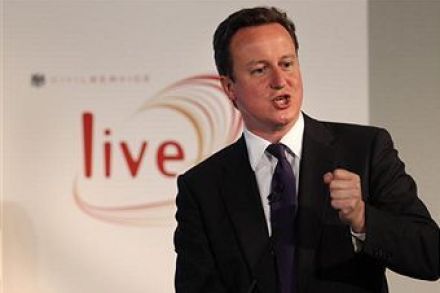
You've got to hand it to him: David Cameron knows when to dish out the charm. Just days on from news about cuts to their pay-offs, he is today giving a speech to civil servants in which he purrs that they "the envy of the world". Not that he withholds the stick, though. The meat of the speech is a series of measures designed to make the operations of Whitehall more transparent and its actors more accountable. Which, lest it need saying, is something I'm all in favour of. But it's worth noting that much of this "post-bureaucratic" agenda will still require strong central control to work properly. Take Cameron's proposal to make departments publish "structural reform plans," setting out their objectives and progress towards meeting them.

Cameron’s intervention causes uproar

From our UK edition

Iain Dale has news of fresh ruptures in the Tories’ controversial European grouping. Here are the details: This is an intriguing development. Perhaps the combination of being in government, the balance of the coalition and Cameron’s markedly improved relations with Merkel and Sarkozy (whose parties are aligned with the EPP) brings the need for fresh European alliances? Most of the controversy surrounding the CRG is unfounded but it certainly damaged Cameron at home and abroad. I’m told that the Tories have no intention of shifting allegiance, and that the original plan was for Kirkhope and Kaminski to share the chairmanship if possible.

Bercow’s screech

From our UK edition

Speaker Bercow needs to be stopped. His management of PMQs is becoming a scandal. Having menaced MPs last night with a speech complaining about unruly behaviour in the house, (‘the screech of scrutiny’), he added a coded threat to sin-bin any member who offends his sense of decorum. Today he found the chamber as quiet as a slapped puppy. Perhaps that delighted him. It dismayed viewers at home. We watched the dullest PMQs of the year. Perhaps for several years.   The exchanges between Harman and Cameron lacked tempo or bite. Both leaders sensed that their parties had been doped with fear by Bercow.

Who will follow Cameron?

From our UK edition

Matthew d’Ancona’s piece in the new GQ on who’ll succeed David Cameron as Tory leader has been much discussed today. Matt says that Jeremy Hunt ‘is the man to watch’. But I think Hunt’s problem is that he is too like the current leader—telegenic, personable and pragmatic—and parties tend to opt for a successor who is a bit different from what they’ve just had. Boris Johnson would, of course, be very different from Cameron. But as Matt notes, if Boris returns to Parliament early it will be regarded as a declaration of intent. Boris’s greatest weakness is that he’s seen as great fun but not a man of substance.

Boris is keeping the faith

From our UK edition

Both Tim Montgomerie and Bernard Jenkin report that Boris has not lost the faith: the Mayor of London is opposed to ditching first past the post. This runs contrary to what was reported in the Times this morning. It makes sense: Johnson’s contempt for coalition government is open - it is highly unlikely that he’d advocate a reform that might entrench it. It also adds to the growing narrative of Boris Johnson protector of the traditional right. Cameron’s position on voting reform is intriguing. As Iain Martin notes it’s as clear as mud, and deliberately so. The preservation of the coalition is everything. Cameron is far too canny to campaign against reform, no matter how deep his convictions (and even they aren’t crystal).

Is Boris the only Tory losing faith in FPTP?

From our UK edition

While we're on the subject of Boris, this article by the Times's Sam Coates is worth noting down.  It suggests that the Mayor of London has "lost faith" in our first-past-the-post voting system, and has declined the opportunity to campaign in its favour.  And while he remains an "agnostic" about the alternative votes system, he is more inclined towards it after "the election and the successful creation of the coalition". Now, Boris's views are Boris's views – so we shouldn't read too much into the story.  But it will still reinforce the idea that more and more Tories are coming around to AV.  And it could fuel fears that the No campaign lacks a dash of oomph.

Cameron’s realignment of our party politics

From our UK edition

When the coalition was first formed, I expected it to collapse in months. But, then, I was expecting the type of coalition that I’d seen in the Scottish Parliament when Labour and the Lib Dems kept their distance (and their mistrust). But what has emerged is a far tighter coalition – and one that may even end up in a merger. Cameron has been very generous to the Lib Dems, in both Cabinet places and policies. But since then, he has just grown more generous. In the News of the World today, I wonder if he’s playing for keeps.   It was great to welcome Nick Clegg to The Spectator’s summer party last week, and the other Lib Dems who turned up to raise a glass to the return of fiscal sanity.