David cameron

The battle over IPSA enters a new phase

From our UK edition

MPs have never really got along with the new expenses body, the Independent Parliamentary Standards Authority. But now their mood towards it seems to have become even frostier. I imagine that IPSA's three-month anniversary, and the rather complacent-sounding celebrations that accompanied it, are something to do with that. Tom Harris's wonderfully acerbic Birthday message, from a couple of days ago, captures how many MPs feel about the whole affair. In letters to the Telegraph today, Michael Fabricant and Denis MacShane ratchet up the attacks on IPSA. And while many will not see them as the ideal poster boys for a rebellion against an expenses watchdog, it's worth remembering that they are far from alone.
Bring on the debate about social housing

From our UK edition

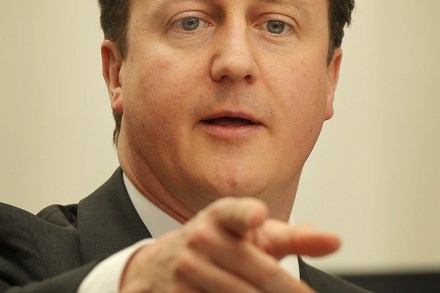
David Cameron did say that his proposal to end council houses for life would trigger "quite a big argument" – and that is exactly what he has got today. The Lib Dems' Simon Hughes has offered the most vociferous dissent so far, stressing that this "in no way represent the policy of the coalition and certainly do not represent the policy of the Liberal Democrats." And, to be fair, he has a point: the idea had not gone through coalition channels before Cameron mooted it yesterday, and neither was it contained in the Tory manifesto – so there still needs to be a lot of conversation and consideration before anything like it can be put into action. It would be a shame if this reduced to a Tory-Lib Dem split story, though.

Zardari drops a rhetorical bombshell

From our UK edition

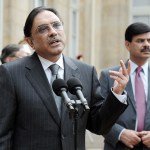
David Cameron isn't the only world leader who can lob rhetorical hand-grenades about the struggle in Afghanistan, you know. Speaking ahead of his visit to the UK, Pakistan's President Zardari has said that the "international community … is in the process of losing the war against the Taliban." Adding that, "And that is, above all, because we have lost the battle for hearts and minds." Given his pivotal, front-seat role in proceedings, it's got to go down as one of the most significant statements on the war so far. Is this intended as a riposte to Cameron's remark about Pakistan and terrorism? I'm not sure.

A postcard from Dave and Nick

From our UK edition

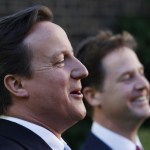
Here's a slightly curious one: David Cameron and Nick Clegg have written a public letter to their ministers, reminding them that, "deficit reduction and continuing to ensure economic recovery is the most urgent issue facing Britain," and that, "the purpose of our government … [is] … putting power in the hands of communities and individuals and equipping Britain for long-term success." If you wanted to read into it, then you could say that the emphasis on the "long-term" throughout the letter is a warning to any disgruntled sorts: policies for the long-term require time to implement, so the coalition has to be built to last, etc. etc. But, of course, this missive is directed at voters as much as anyone else.

Dannatt’s departure means one less cook stirring the defence broth

From our UK edition

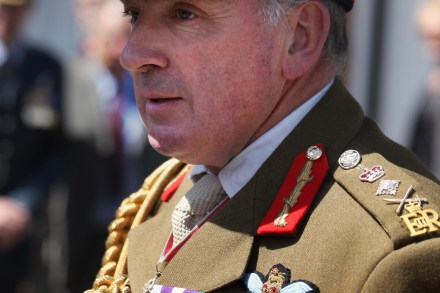
So Sir Richard Dannatt has departed the Tory fold almost as curiously as he entered it. Sure, have been no gaffes from Chris Grayling this time around – but when it was announced last October that the former head of the Army was advising David Cameron, it was widely expected that he'd graduate to become a peer and a minister in any Tory government. But today he announces his "retirement" as neither. The Tories are downplaying all this, eager to avoid a repeat of the speculation that surrounded Sir Alan Budd's departure. And, to be fair, there are few signs, as yet, that this is a viciously unamicable split.

There is no Cabinet rift on benefit reform

From our UK edition

Here's me about to go on holiday, and the welfare wars seem to be opening up. Neil O'Brien has a piece on it over at the Telegraph website. And Hopi Sen, one of the better leftie bloggers, has written a response to my post yesterday. Partly, he wants to stir: it's not so much that the Treasury want to block IDS's reforms, he says, but rather that they are following Osborne's orders to reduce the deficit. And so it's one part of the government at war with another. By contrast, the Whitehall wars I outlined are hangovers from the Brown days, where the Treasury set policy for all other departments and its instinctive reaction was to destroy any proposal it did not come up with.

Cameron’s circles of influence

From our UK edition

Andrew Rawnsley's potted hierarchy of the coalition government – and especially its final sentence – is worth pulling out for the scrapbook: "There is still, of course, an inner circle. When not abroad, the first key fixture of the day at Number 10 is the strategy meeting. Its usual attendees include George Osborne, the chancellor; Andy Coulson and Steve Hilton, his director of communications and his senior strategist; Jeremy Heywood, the permanent secretary at Number 10; the prime minister's chief and deputy chief of staff, Ed Llewellyn and Kate Fall. Note that Nick Clegg is not on that list. He belongs to the next circle of influence around David Cameron.

Cameron must take this chance to end the giant evil of welfare dependency

From our UK edition

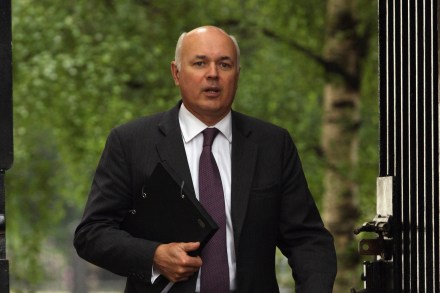
There’s been plenty political drama in these past few weeks, but the most crucial agenda – and by some margin – is Iain Duncan Smith’s proposed overhaul of welfare. It doesn’t deserve to be categorised as just another political tussle. As I say in the News of the World today, it is easily the most important issue in Britain, and it is overlooked because of an affliction which most of our political class suffers: that of moral long-sightedness. No one wears wristbands for the British poor, Prime Ministers pledge to “eradicate illiteracy” in Africa yet are strangely indifferent to the illiteracy on our own doorstep.

The coalition’s Lib Dem conundrum

From our UK edition

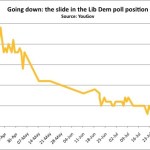
Yesterday, a "source close to the Prime Minister" told the Telegraph that we shouldn't bother much with the opinion polls as at the moment. As they put it, "we're only a few weeks into a new Parliament and we've got nearly five years to go before everyone really has to worry about the polls again." But, make no mistake, there will be Lib Dems who are deeply concerned by how their party is polling at the moment. The YouGov poll in today's Sunday Times, which has the yellow bird of liberty stuttering along at 12 percent, only underlines a remarkable decline since the election campaign (see chart above).

Will Cable be selling the coalition’s cuts?

From our UK edition

Compared to the major affairs of state, David Cameron's decision to spend part of this summer touring the nation to sell the coalition and its spending cuts may seem but a trifle. Yet it's a good move nonetheless. After the obfuscations from all sides before the election, Osborne's Budget swept in a more upfront approach to cuts. Cameron's roadshow, you hope, will keep that going. One thing to look out for is how Vince Cable gets on this summer. The Telegraph reports that he will also be involved in the coalition's big promotional drive, and will be holding his own public meetings during August. A recipe for trouble given Cable's singular approach to united government? Perhaps.

The past few weeks have made the struggle in Afghanistan even more difficult

From our UK edition

Domestically speaking, it has been an encouraging week from the coalition. Internationally speaking, less so. And today we see the first real rush of fallout from David Cameron’s appearance on the world stage, as the Pakistani intelligence agency cancels a visit to London, “in reaction to the comments made by the British Prime Minister against Pakistan.” It’s not the kind of development that we should exaggerate –after all, it still looks likely that President Zardari will visit Cameron next week, even if officials in Pakistan have been wavering on that front. But we shouldn’t underestimate it either. The main reason to worry is, largely, one of personality.

Is the real love affair between Fat Pang and Dave?

From our UK edition

We know that Chris Patten is advising David Cameron over the Pope’s visit – the Spectator interviewed him in that capacity recently. But a number of events this week suggest that Patten is very close to Cameron. Patten is currently in India, selling Oxford University with Cameron, but he has found time to pen an article about Gaza for the FT. Like Cameron, Patten believes that Gazans are serving an ‘interminable prison sentence’. He writes: ‘Gaza is totally separated from the rest of Palestine. It is cut off by a brutal siege. The objective is collective punishment of the one and a half million people who live there simply because they have a Hamas administration.

5 days that changed the country

From our UK edition

Westminster has rewound the tape today, in anticipation of Nick Robinson's documentary on the coalition negotiations tonight. There's speculation about what Nick Clegg did or didn't say back in May; Anthony Seldon has a piece on Gordon Brown's side of things in the Independent; and Robinson himself has a summary article in the Telegraph. Much of what's revealed so far could already be pieced together from the Mandelson memoirs, as well as from Westminister chatter, but some of the new contexts are eyecatching. This, for instance, from Robinson, suggests just how important personality politics was during those days after the election: "Gordon Brown had not prepared a policy offer, nor got the backing of his Cabinet, nor developed a relationship with Nick Clegg.

Pakistan’s double game in Afghanistan

From our UK edition

So what is Pakistan up to? Cameron has a point: it is playing a dangerous double game which I once outlined in a piece. But in today's Spectator, it is all spelled out by a writer who is - in my view - the best authority on this mess and by some margin. Ahmed Rashid, whose book Descent into Chaos is the definitive work on the Afghan war, explains that Karzai has effectively switched sides - he's given up on Nato (as, it seems, has Cameron) and now wants Pakistan to preside over talks with the Taliban: " A few months ago Hamid Karzai would have been thrilled to have confirmation that American officers are speaking openly about how divisions of Pakistani intelligence are helping the Taleban.

Cameron lambasts Pakistan whilst on Indian trade mission. Bad move

From our UK edition

Oh for the days of inactive prime ministers. After yesterday’s hot-headedness about Gaza, comes an even more deliberately pointed statement. Cameron said: ‘[Pakistan] should not be allowed to promote the export of terror whether to India, whether to Afghanistan or to anywhere else in the world.’ I agree, providing of course it is established that the Pakistani state is fomenting terror and the Wikileaks revelations do not give that impression. That said, the Pakistan government is responsible for all of its agents, and they should curb S-Wing’s collusion with the Taliban and its affiliates in Waziristan. Cameron and Obama are right to press the Pakistani authorities. But a goodwill tour to India is plainly not the stage on which to do it.

David Cameron is not cutting it with India’s media

From our UK edition

The British press has worked itself into a gibbering mass of excitement about Cameron’s visit to India. The Indian press has barely noticed it. There is no mention of Cameron on the front page of The Times of India’s website, which is dominated by the spat between cricketing legends Bishen Bedi and Muttiah Muralitharan – in fact, those two are all over the press. Also, the Hindustan Times leads with a scintillating description of a parliamentary point of order; the Calcutta Telegraph splashes with an account of army operations against Maoist rebels in northern Bengal. India Daily has coverage of the Wikileaks saga.

The immigration battle

From our UK edition

Why is Vince Cable kicking off about immigration? Sure, to cause trouble – this is what he sees as his role. His ego can’t quite fit in that department. But the pledge to have immigration in the “tens of thousands” was not in the coalition agreement. At the time, David Cameron said this was an oversight and that it was still government policy. But as James said in his political column in the magazine, a great divide has emerged between policies in that bald coalition agreement and those mentioned verbally. The policies in the documents are now deemed sacrosanct, and things not in it – like the extraordinary pledge to take immigration to the tens of thousands – are up for negotiation. So what else is up for negotiation?

Who should make the concessions to appease the AV rebels? Cameron or Clegg?

From our UK edition

The honeymoon has been spoilt by a bout of food poisoning: Tory dining clubs have decided to obstruct the AV bill. More than 50 Tory MPs will rebel because they believe the referendum should be held on a day other than May 5th and that the referendum should not be binding unless turnout exceeds an agreed minimum. Labour, already masters at opposition, will oppose the bill on the grounds that it includes changes to electoral boundaries – a reform that would lessen the in-built bias in favour of Labour, but which it haughtily considers ‘gerrymandering’. For the sake of the coalition, Cameron owes it to Clegg to at least deliver a referendum, so he must quash this backbench dissent.

Dave’s pageant is all very well, but India wants to talk immigration

From our UK edition

In 1690, Thomas ‘Diamond’ Pitt led an opulent delegation of the East India Company’s Madras factors, bearing their wares, to the Nawab of the Carnatic, the richest man in southern India, with the intention of buying him out. They succeeded, but Pitt had nothing on David Cameron’s delegation.  Six cabinet ministers, more than 10 CEOs and God knows how many diplomats are accompanying the Prime Minister. The only person missing is Nick – but that sort of thing is frowned upon by Delhi’s Edwardianly genteel political classes. As I wrote yesterday, pageantry titillates commercial diplomacy, and Cameron is staking everything on this mission.