David cameron

Cameron’s provocative language over Gaza serves to obscure the issue

From our UK edition

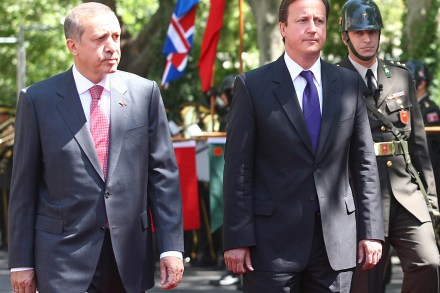
And there's me thinking that David Cameron's overtures to Turkey were newsworthy enough, when he drops this into his speech in Ankara: "Let me also be clear that the situation in Gaza has to change. Humanitarian goods and people must flow in both directions. Gaza cannot and must not be allowed to remain a prison camp. But as, hopefully, we move in the coming weeks to direct talks between Israel and the Palestinians so it's Turkey that can make the case for peace and Turkey that can help to press the parties to come together, and point the way to a just and viable solution." In a wider sense, this is indicative of the West's firmer attitude towards Israel in the wake of the flotilla incident.
The coalition’s summer challenge

From our UK edition

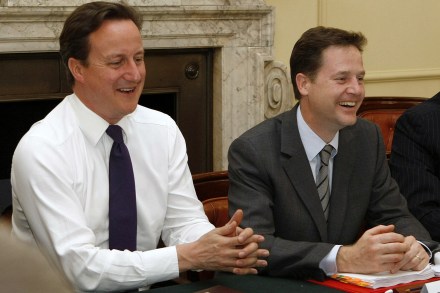
How striking that, as another Parliamentary term draws to a close, all the talk is of some sort of union between the Tories and the Lib Dems.  There was Mark Field's blog post about an electoral pact, yesterday, of course.  But now Rachel Sylvester follows it up with an article in the Times outlining a possible "metrosexual merger" between the two parties.  And Paul Goodman has a piece in the Telegraph suggesting that such a merger may well be in the offing. In many repsects, all this chatter is testament to the early success of the coalition.  What we have seen over the past few months has, on the whole, been responsible and surefooted government by a group of people who seem to get on personally as well as politically.

Cameron’s foreign policy is music to the ears of a resurgent FCO

From our UK edition

Tim Montgomerie observes that the FCO now stands for Foreign and Commerce Office. David Cameron is determined to conduct British foreign policy in our economic interest. And, in that spirit, he is off to charm India in the hope of gaining access to that enormous emerging market – last week’s magazine has exhaustive coverage of the trip. Tim also claims that the Foreign Office won’t like this ‘redirection of their mission’. I’m not so sure. From what I hear, the Foreign Office is loving it; it’s just like old times. The FO was marginalised under the previous government; Labour cut staff in embassies and consulates around the globe.

System failure aids another EU power-grab

From our UK edition

David Cameron's so-called “referendum lock" is supposed to ensure no more powers are handed to the EU. His thinking, bless him, is that if he just keeps a low profile and doesn't sign any extra treaties then things won't get worse. This fundamentally mistakes the way the EU works. As we say in the leader for this week's magazine, ever-greater integration is hardwired into the system. An example we cite is the coming European Investigatory Order, which Theresa May has naively described to other ministers as a tidying up exercise (Jack Straw said the same about the EU constitution).  As we put it: “Another power grab is looming. Plans are being drawn up for a European order that would mandate British police officers to follow requests lodged from overseas.

AV, what is a Conservative to do?

From our UK edition

Matthew Parris and Charles Moore are the two of the most eloquent exponents of conservatism. But they represent different strands of conservative thought as their views on AV demonstrate. Matthew argues in his column in The Times today that the Conservative party should let AV pass if that is what it takes to keep the Lib Dems happy. He thinks that the Lib Dems are not only needed to make the Coalition work but that their presence is, in itself, a good thing. As he writes, ‘Lib Dems bring to government a distinct and healthy slant on politics. There is a reactionary component in the Tory make-up; I often share it, but it must always be kept in check.’ Charles, by contrast, remains a principled opponent of AV.

The Brokeback coalition

From our UK edition

It’s the silly season. The Newspapers have been trawling for anti-coalition quotes from MPs, their wives and their dogs. They’ve found two. Tim Farron, the defeated candidate for the Lib Dem deputy leadership, said yesterday that David Cameron had a ’toxic brand’ and it wasn’t his job to cleanse it. Well, the latter is certainly true, and Lib Dem benches are concerned by plummeting polls and intense flak from Labour. David Cameron will make a very public effort to grant the Lib Dems concessions on civil liberties and fairness in the tax system, a pre-emptive tonic ahead of cuts.    There is disquiet on Tory backbenches - there always is. David Davis has been stitched-up in the Boot and Flogger in Southwark.

Self-interested Britain

From our UK edition

Liam Fox is in the most invidious position. It is hard enough to secure significant budget cuts against vested interests that maintain anti-competitive procurement; and being at war deepens the task. Cuts of 10 to 20 percent must be made but at the same time Fox acknowledges, in an interview with the Telegraph, that: ‘We have to keep sufficient land forces to hold territory if required, we have got to maintain enough maritime power and we have got to maintain air power to maintain air superiority.’ Like all defence secretaries, Fox is trying to contain the warring service chiefs, their temperaments exacerbated by the coming cuts. Fox is even handed.

In the service of others

From our UK edition

David Cameron’s Big Society re-launch continues after his American interlude. Today, he will introduce the national citizens’ service for 16 year olds, which was famously backed by Michael Caine during the election campaign. There is no military element to this national service; the aim is to unite different communities, ages and classes. As a leader in the Times puts it: ‘The bold aim is to turn a summer of potential drift and disaffection into one of purpose for youths from different backgrounds, working together to help people worse off than themselves, under the wing of various charities and social enterprises; and thereby, perhaps, to lay the ground for a less dislocated society in the future.

Not David Cameron’s finest hour

From our UK edition

David Cameron has just made a quite spectacular mistake. Talking to Sky News he said: 'I think it's important in life to speak as it is, and the fact is that we are a very effective partner of the US, but we are the junior partner'. 'We were the junior partner in 1940 when we were fighting the Nazis.' The obvious problem with Cameron’s remarks is that, as any fule kno, the Americans did not enter the war until after the attack on Pearl Harbor in 1941. The error is even odder given Cameron’s penchant for war movies, he’s watched Where Eagles Dare 17 times apparently. This howler from Cameron following Clegg’s Iraq gaffe at PMQs, means that this has not been a good day for the Coalition.

Howard versus Clarke

From our UK edition

Michael Howard appeared on today's Daily Politics and laid into Ken Clarke's 'caricature' of a policy to reduce prison places. There is, Howard argues and John Denham supported him, a correlation between increasing the number of those incarcerated and a fall in crime. In other words, prison still works. Howard criticised Clarke's 'rather foolish' denial of that link. Howard echoes the Spectator's editorial line that early release endangers society, and that it costs less in real terms to keep criminals in prison. Howard's off-message critique is the most total I have yet seen, particularly on the statistical case against the government's position.

All for show?

From our UK edition

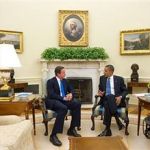
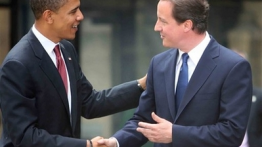
Gordon Brown will be seething, and with some justification: he never got photo-ops like these with Barack Obama. Shots of a cosy chat in the Oval Office are usually reserved for Benjamin Netanyahu, following the latest impasse between Israel and America. The Obama administration has gone to great lengths to repair the damage it did to Anglo-American relations at the start of its term. The President was all sparkle and bonhomie during the joint press conference, and he was careful to name-check ‘The Truly Special Relationship’ twice. Obama may be faking it but he looks comfortable with Cameron. He has always given the impression of being a cold fish, short on empathy, and I suspect he objects to leaders fawning at his throne.

The SNP was responsible, all the way

From our UK edition

A little odd, and certainly inconvenient, that al-Megrahi still lives and breathes. Then again, Scotland's a notoriously unhealthy place and a bit of desert air probably did him some good. Ensconced in Washington, David Cameron will have taken some flak for the Lockerbie bomber’s compassionate release, for which he has the perfect riposte: terrible business, but nothing to do with me. His second line of defence is constitutionally watertight: the decision was Holyrood’s alone. The Lockerbie Papers suggest that al-Megrahi’s inclusion in a Prisoner Transfer Agreement was a precondition of any deal between the UK and Libyan governments, as Saif al-Islam Gadaffi maintains.

The small society

From our UK edition

No one, especially me, has comprehended the Big Society in its entirety. As far as I can gather, the state will shed some of its bureaucratic armour, but there is no clue as to where it will be dispensed. Writing in today’s Times, Rory Stewart, whose constituency contains one of the ‘Vanguard Communities; attempts a definition. He writes: ‘It is about decentralisation, but without giving more power to county councils. It is not necessarily about charities or even the private sector. It’s about collective action.’ Collective action already exists in Britain. People group together to re-paint the Village Hall; they organise a school run; they teach knitting to the inmates of Wandsworth Prison.

Osborne keeps it simple

From our UK edition

George Osborne has talked of simplifying the tax system for years, and today he launched the OTS, The Office for Tax Simplification. The OTS will be chaired by Michael Jack, s Treasury minister in the Major government, and John Whiting of PWC and Chartered Institute of Taxation. The OTS looks suspiciously like a quango, but some public bodies are necessary and welcome. The tax system is unintelligible, and, needless to say, Gordon Brown complicated it further with morass of stealth taxes, tax credits and new loopholes opened more by chance than design. This has particularly affected small businesses and the OTS will identify salient businesses taxes and recommend their simplification. That can only assist hard-pressed small businesses.

A special relationship in the making?

From our UK edition

I’ve spent the morning contending with the WSJ’s Heath Robinson-esque subscription service so you don’t have to. Inside the paper, David Cameron explains what the Special Relationship means to him. 1). The Special Relationship is close and robust because British and American values are essentially the same, which explains why our national interests are often aligned: 'The U.S.-U.K. relationship is simple: It's strong because it delivers for both of us. The alliance is not sustained by our historical ties or blind loyalty. This is a partnership of choice that serves our national interests.

DC’s trip to DC

From our UK edition

There are some British politicians who are obsessed with American politics, who could at this moment tell you who is most likely to pick up the open Senate seat in Colorado or pride themselves on their ability to name every Republican and Democratic vice presidential nominee since the war. But David Cameron isn’t one of them. Rather, Cameron takes a rather more hard-headed approach. At times this lack of emotional attachment has translated into a lack of empathy; giving a speech on the fifth anniversary of 9/11 which was designed to distance himself from the policy of the then US government was not particularly sensitive.

Green gold

From our UK edition

Most of Tim Yeo’s proselytising on climate change must be resisted. He calls for a dramatic reduction in carbon emissions in the short-term, which would paralyse Britain’s already geriatric economic competitiveness. He also endorses a policy that would push consumer energy prices to punitive levels in the hope that their behaviour is moderated. And he is adamant that David Cameron’s Husky photo-op was the last word in political positioning. But, his central point, one shared with John Redwood and Peter Lilley, is unanswerable: ‘Working towards a low carbon economy is not a “luxury”; it is essential to our future prosperity.

The age of philanthropy

From our UK edition

Cameron’s Big Society Blitzkreig is underway, and he says that he hopes to ‘foster a new culture of voluntarism, of philanthropy and social action’. So far so good. As Fraser noted yesterday, there is a long and generous history of philanthropy in Britain; success will depend on the government transforming a culture of private charity into one of community charity. Collective action is hard to instil, not least when money is tight. Some projects and schemes will be favoured over others and many people will be disappointed. Cameron hoped to lessen financial shortfalls by raiding dormant bank accounts. It’s a brilliant idea in theory, but the FT sounds a note of caution.

The return of the Big Society

From our UK edition

It’s back. David Cameron is re-launching the Big Society, the least captivating idea in British politics. There is nothing wrong with the central idea: the grand plan to decentralise power to local communities. Terminology was a problem. The Big Society sounded infantile and patronising. The detail was lost in a morass of wonkery. The overall vision was contradictory: ‘people power’ was the end, community organisers were the means. The authors of the Big Society erroneously assumed that people care about community. But community is a turn-off for many, and the Big Society sounded like one enormous management meeting from which there is no escape. From Westmoreland to Richmond-upon-Thames, voters hated it.

Clueless Chuka

From our UK edition

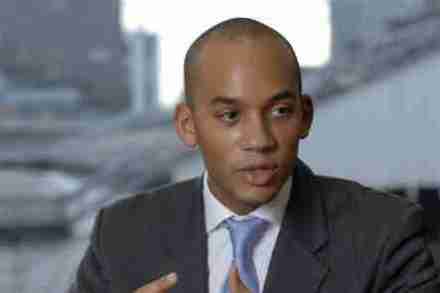
Given that the Labour leadership campaign is so dull, we should thank Chuka Umunna for cheering us up with his comedy economic analysis. Now on the Treasury Select Committee, he has regaled us with an ‘Open letter to George Osborne' where he makes many entertaining points. It’s worth looking at, because it sums up a few errors swirling around the Labour benches.   1)   During our exchange, you insisted your budget was "progressive"… you stood by your decision to apply a 10 percent cut to the housing benefit of those who have been on JSA for more than 12 months. Osborne has to use words like “progressive" to assuage the LibDems, but by their definition he is right.