David cameron

Ambition should be made of sterner stuff

From our UK edition

Few writers can make a silly season story read like official history, so it's worth drifting behind the Times’ paywall to read Rachel Sylvester on Boris and Dave's mutual emnity. It is no secret that BoJo and DC are united in rivalry, but Sylvester adds a second dimension with insider quotations - a mix of arch witticisms and savage partisanship. Here are several of many from today’s column: ‘Most people at Westminster assume that Boris — compared by one of his editors to Marilyn Monroe, “another egomaniacal blonde” — still harbours ambitions to lead his party.

Clegg must resist temptation

From our UK edition

As Pete notes, Nick Clegg is moderating the debate over the spending review in David Cameron’s absence. It’s an unenviable task. IDS and Liam Fox have been the most cussed opponents of George Osborne, but all ministers are fighting for their budgets behind the scenes. This morning, reports suggest that Chris Huhne could break from the ranks of the silent. The Times gives details of ‘intense discussions’ over the future of nuclear clean-up and renewable energy funding, worth more than £2bn of the Energy department’s £3.4bn budget. Obviously, any reductions in environmentally friendly initiatives carry a political cost for the Liberal Democrats.

An important fortnight for Nick Clegg

From our UK edition

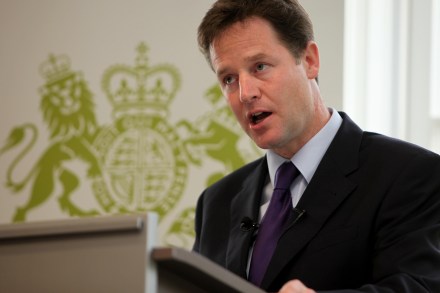
Another reason to be glad of the Brown government's downfall is that there seems to be less silliness about the summer holidays. Today, Nick Clegg returns to London to steer government in David Cameron's absence – but there's no fanfare, nor energetic pretence that the Lib Dem leader is actually "running the country". Unlike those times when Harriet used to have a go at it, followed by Peter, followed by Alistair, followed by Jack, the overriding impression is just business as usual. But that doesn't mean that the next two weeks are insignificant for Clegg. Rather, he can make sweeping advances on a number of fronts. The most important, and least public, will be how he handles the ongoing spending review.

Readying the bombardment

From our UK edition

Westminster might be in holiday mode, but behind the scenes the coalition is preparing to take on the new Labour leader. As I say in the Mail on Sunday, the coalition is determined to hit whichever Miliband wins early and hard. The Cameroons believe that Tony Blair’s decision not to attack Cameron straight away in 2005 was crucial in allowing him to present himself to the public on his own terms. By contrast, both Hague and Duncan Smith were made to look like losers by the Labour attack machine within months of becoming leader of the opposition. The result of the Labour leadership election will be announced on the 25th of September.

The return of Alan Milburn

From our UK edition

Frank Field, John Hutton and now Alan Milburn – the red tinges to the coalition mix are like a Who's Who of reforming Labour politicians. Milburn, we learn today, is to return to government as an adviser to David Cameron on social mobility. It's a role he should be accumstomed to, as he was tasked with writing a report on the issue under Brown. That time, his suggestions were buried by a government which didn't want to face up to the sorry facts. This time, you hope they meet with a more constructive response. But why wasn't a Conservative (or conservative) appointed? That's the question which Iain Dale asks over at his blog – and you can see his point. There are plenty of people on the right who could have stepped into the role, not least someone like Jill Kirby.

Ambassador, you’re spoiling us

From our UK edition

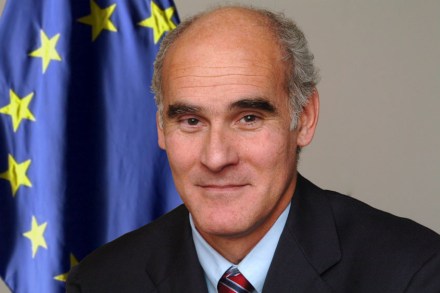
The European Union’s creeping barrage continues. Brussels has appointed the urbane looking Joao Vale de Almeida as ambassador to Washington; Vale de Almeida hopes that Henry Kissinger will call him if the old campaigner wants to talk to Europe. It is perverse that Britain is saving money by closing embassies and downscaling around the globe whilst also paying its share to install Senor Vale de Almeida in the swanky environs of the Beltway. In this era of devolution, cost-cutting decentralisation, the European Union is beginning to behave like a state, and an opulent one at that. In the past fortnight it has once again suggested that it should raise taxes.

Bravo, Mr Pickles

From our UK edition

I think it's fair to say that Eric Pickles doesn't look like a pioneer of the Cameroonian "Post-Bureaucratic Age". But that's exactly what he is, as his department becomes the first to publish data on all its spending over £500. At the moment, the document provides plenty of ammunition for – rather than against – the coalition, covering as it does the financial year between 6 April 2009 and 5 April 2010. And thus we read of how, under the last administration, £17,000 was spent at a luxury hotel, £635,000 on taxis, £13,000 on Manchester United catering costs, and so on. But this isn't just a retrospective exercise: the prospect of these figures being released in future should hopefully restrain some of the more egregious spending now.

Cameron devolves the tricky issue of alcohol pricing

From our UK edition

Politicians often get nervous around alcohol – and not just because, in these straitened times, a glass of champagne can broadcast the wrong image. No, the real concern is the more basic, fiscal one: how should it be taxed and priced? There's a difficult trade-off involved. Pushing up the cost of alcohol could halt the staggering advance of binge drinking and all its associated social and medical ills. But, depending on what booze is targeted, it could also hit the least well-off harder than anyone else. And who's to say whether the effect on drinking habits would be that substantial anyway? The trickiness of the situation was clearly demonstrated by Labour's internal ding-dong over minimum pricing back in January.

Season’s greetings | 10 August 2010

From our UK edition

David Cameron’s just launched his benefit cheat crackdown (Con Home has a little footage). There were two notable occurrences. First, Cameron agreed that tax evasion was as serious as benefit fraud and vowed to tackle it – this defused the slightly absurd criticism from the left about not challenging tax avoidance whilst hitting benefit cheats – tax avoidance is legal, benefit fraud and tax evasion are not. Tom Harris attacks his party’s attempt to draw any equivalence between tax evasion and benefit fraud, saying it misses the point: tackling fraud is to the benefit of all. Second, a Mancunian woman called Sharon Reynolds has a crush on our Dave, a friend informed the Prime Minister.

Prepare to be nudged

From our UK edition

‘Nudge’ posits that people can be subtly cajoled into changing their behaviour. The Cameroons were convinced nudgers at one stage. Greg Clark and Grant Shapps designed The Green Deal, a free home insulation programme to encourage green living, paid for by savings on energy bills. Then David Cameron and Steve Hilton conceived the Big Society and nudging was discarded as some unwanted puppy.    But, James Crabtree reports that nudging is back. There’s even a ‘nudge unit’ in No.10: ‘The group, whispers one insider, was first set to find alternatives to the constant regulations flowing through Whitehall, but is becoming increasingly influential.

Downing Street extends a tentacle

From our UK edition

Following the milk fiasco, No. 10 plans to tighten its control over Cabinet Ministers. The Times (£) has the details. To paraphrase, No.10 holds the egregious Andrew Lansley responsible for not recognising that Anne Milton’s proposals were politically untenable. Cameron has ordered a political review of Cabinet Minsters’ proposed cuts to minimise embarrassments ahead of October’s spending review. Understandably, Cameron is keen to insulate himself against inevitable negative publicity. But there is a danger that a hands-on Downing Street will become publicly embroiled in Whitehall spats.

The questions surrounding Cameron’s benefit crackdown

From our UK edition

There were hints of toughness in his article at the weekend, but now David Cameron has rolled up his shirt sleeves and pulled out the baseball bat. In a combative piece for the Manchester Evening News the PM outlines out a zero tolerance approach to welfare fraud and administrative error. The two problems "cost the taxpayer £5.2 billion a year," he says, "that's the cost of more than 200 secondary schools or over 150,000 nurses. It's absolutely outrageous and we can not stand for it." And so IDS is going to prepare "an uncompromising strategy for tackling fraud and error," which will be published this autumn.    Two things are worth keeping a close eye on. First, the Lib Dem reaction to all this.

Cameron, Villa and the succession

From our UK edition

The Prime Minister is, as we know an Aston Villa fan. So we can expect him to be disappointed at Martin O’Neill’s departure. On his trip to Birmingham the other week, Cameron’s support for Villa caused the PM to, as the phrase has it, misspeak. He told the Birmingham Post that with “the Governor of the Bank of England as a supporter, the next King of England and the current Prime Minister, [Aston Villa] got a good set” of fans in high places. But his reference to the next King of England being a Villa fan will raise a few eyebrows as it is Prince William — not Prince Charles — who is the Royal Villain. Now it is obvious that Cameron just slipped up and that he didn’t mean to impart any information about the succession.

Sour milk

From our UK edition

David Cameron can’t afford to be known as ‘The Milk Snatcher.’ It is for that reason that N0. 10 has airily dismissed Anne Milton’s suggestion that free school milk for the under fives be cut. Still, it is encouraging that Milton has the freedom to think the unthinkable in government – her immediate predecessors were subject to a maniacal control-freakery. Despite the restitution of cabinet government, Ben Brogan asks if Cameron remains ‘too tight’ with his ministers, denying them the latitude they require run byzantine bureaucracy. This is an important point: ministers will only find cuts if they are allowed to get their hands dirty.

Cameron makes the cuts more presentable

From our UK edition

David Cameron's neatly-constructed article in the Sunday Times (£) perfectly typifies the balancing act he is performing ahead of this autumn's Spending Review. The Prime Minister has to sound tough on the deficit because, thanks to the fiscal brinksmanship of one G. Brown, that's the job he has been appointed to do. But he doesn't want to come across as sadistic or gloomy, lest it alienate voters and coalition partners alike. The edges of the cuts need to be rounded off, made more presentable. To that end, Cameron suggests first that the cuts aren't ideological. There are, he says, items of spending that he'd like to keep – but wider budget constraints mean that he can't.

Will Hughes succeed in stirring up trouble over Right to Buy?

From our UK edition

Simon Hughes led the angry response to David Cameron's thoughts on social housing, and now he's stirring it up again. In an interview with the South London Press – picked up by Sunder Katwala over at Next Left – the Lib Dem deputy leader has attacked the Right to Buy, saying that local councils should decide whether to offer it or not. Given the Thatcherite roots of the policy, there's a firecracker quality to Hughes's comments: lobbed into the debate, and designed to provoke the Tories. I'm not sure the Tories will be too perturbed by Hughes's intervention, though. Of course many of them are proud and supportive of Thatcher's Right to Buy policy – and rightly so.

The politics of the Lib Dem conference

From our UK edition

It's only gesture politics, but sometimes gestures matter – which is why the Tories are thinking seriously about dispatching a party envoy to the Lib Dem conference in September. The idea, naturally, is to cement the bonds of friendship between the two sides, as well as to suggest that the Tories are happy to mix it with the wider Lib Dem party. But there's a problem: that wider party doesn't seem eager to play along. As soon as there were rumblings that Cameron might speak at their conference, they slapped the idea down with the unswerving efficiency of an executioner. And they've done similar today in response to reports that William Hague is being lined to up deliver a "witty" address in Cameron's stead.

Cable, Cameron and speaking out in public

From our UK edition

For the foreseeable, Vince Cable is going to be a political barometer figure: journalists and other innocent bystanders will sift through everything he says to check the temperature of the LibCon coalition. In which case, they'll find little to excite or worry them in his cool interview with the Newcastle Journal today. The Business Secretary says all the right things about staying his role for the full five years ("that's my intention, yes") and about the internal dealings of the coalition ("it works in a very business like way"), even if he does quash the idea of a full merger between the two parties. It's all unsurprising, uncontroversial stuff.