David cameron

Coulson under the spotlight again

From our UK edition

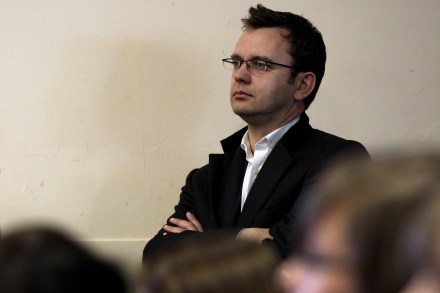
The New York Times Magazine's article about phone hacking at the News of the World comes, it must be said, a little out of the blue. It's over a year since the story last exercised printing presses in the UK – and a year, too, since David Cameron's communications chief, Andy Coulson, was hauled in front of MPs to explain what happened under his editorship of the paper. Back then, he distanced himself from the dubious methods of some Screws reporters, saying that he was neither aware of, nor complicit in, any phone hacking. And, in the absence of any countervailing evidence, the process left Coulson with a few light bruises, but no real scars. But today's article contains material that could put the heat on Coulson once again.
Britannia ruled the waves

From our UK edition

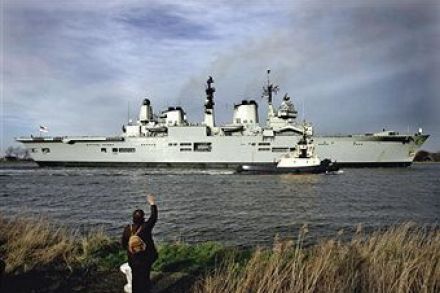
As Pete wrote this morning, the plan to share aircraft carriers with France is controversial. It seems that concerns over sovereignty, job losses and differing strategic interests reduce to the one issue that no government has addressed: the protectionist system of defence procurement, which hampers the operational effectiveness of our armed forces. Typically forthright, Douglas Carswell identifies the problem: ‘Seems like protectionist defence procurement isn’t quite giving us sovereign capability the way we were promised, eh? Had we ordered much of the new carriers to be built overseas, we could have had them at a fraction of the £5 billion cost.

Darling exhumes Cameron’s Big Mistake

From our UK edition

Amid all the feverish commotion about cuts, it's easy to forget that it took the Tories until November 2008 to ditch Labour's spending plans - and, indeed, that it was barely a year ago when George Osborne first mentioned the c-word in public. Even David Cameron admits that this delay was his biggest mistake. It weakened his party's claim to foresight, and gave them less time to embed a new narrative about the economy before the election. So it's noteworthy that Alistair Darling exhumed this mistake on the airwaves earlier, telling the Beeb that "the Tories supported [our spending plans] until the end of 2008." This may sound like a cheap shot at Cameron and Osborne, but I expect we'll hear more of it in coming months.

Will Labour boldly go with ‘Red Ed’?

From our UK edition

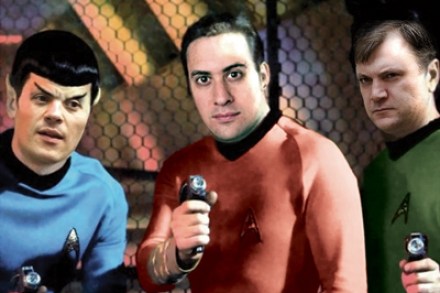
  David Cameron has dismissed the Labour leadership election as a "Star Trek convention" with policy wonks battling out to go where no spad has gone before. That caricature has some currency (see picture, left). But as he'll know, a deeper choice faces Labour. David Miliband may be the geekier one - playing Spock to Ed's Kirk. You can argue that Ed speaks better human, that he's more plain-speaking. But when he does speak, it's worth listening to what he has to say. And his piece in the Observer makes clear why so many Tories want him to win. He says he will "make capitalism work for the people" - who has it been working for so far? The government? He proposes to ration corporation tax cuts for companies if they up the minimum wage to £7.

Cameron: I fear David Miliband most

From our UK edition

Strange but true: the Cameroons are wary of a Labour Party led by David Miliband. The Guardian's Nick Watt has been eavesdropping and he's gathered a few choice quotes. Kool-aid drinking Tories say: "David Cameron said the candidate he hoped for was Ed Miliband, and the candidate he most feared was David Miliband."  "On the whole we would prefer if Ed Miliband won. His analysis that Labour has to go for a traditional Labour vote, rather than the middle classes, is absolutely wrong. The Ed Miliband analysis will lead them into big trouble." In spite of his best efforts, David Miliband is likely to win.

Cameron’s close shave

From our UK edition

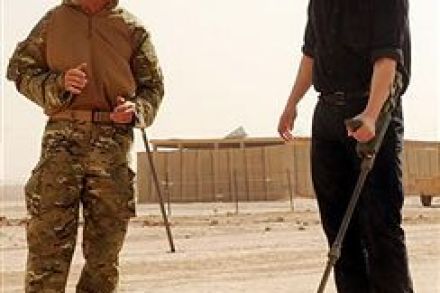
As Paul Goodman notes, being Prime Minister means taking risks. So perhaps we shouldn't be surprised to read in the Times (£) that, during his recent trip to Afghanistan, the security threat to David Cameron was more urgent than previously thought: "At the time Downing Street played down the incident, saying that it should not be seen as a huge security issue. But The Times can reveal that senior military figures are demanding changes to the way in which future visits to war zones by Mr Cameron and other senior Whitehall figures are conducted. They believe that the Taleban knew which helicopter was carrying Mr Cameron and are deeply concerned over the increasingly sophisticated nature of the enemy’s intelligence operation.

Lead by example: take paternity leave

From our UK edition

The birth of the Cameron’s baby daughter is, obviously, wonderful news for the Cameron family. All the political chatter around it is, frankly, irrelevant compared to the happiness that they must be feeling.   But I do hope that David Cameron does take paternity leave. The Tories have talked a lot about making Britain the ‘most family friendly country in Europe’ and the PM taking paternity leave would be a good ‘nudge’ to employers and prospective fathers alike. One other timing issue worth noting is whether Cameron now goes to the UN summit in New York on the millennium development goals.

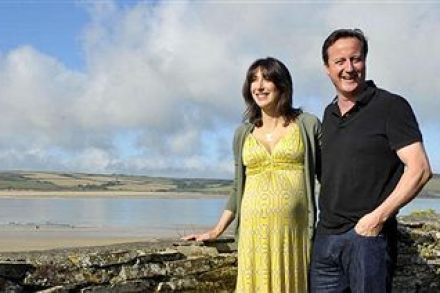
Congratulations to Samantha and David Cameron

From our UK edition

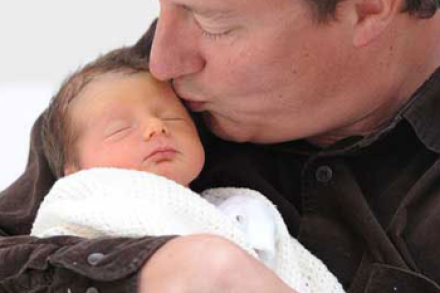
Coffee House congratulations to Samantha and David Cameron on the birth of their baby daughter. Here's the Downing Street statement: "The Prime Minister and Mrs Cameron are delighted to announce the birth of their fourth child, a baby girl. Both the baby – who was born weighing 6lbs 1oz – and Mrs Cameron are doing very well. The PM and Mrs Cameron would like to thank the doctors and nurses at the hospital for their help and kindness." No name, as yet – any guesses?

IDS versus Osborne: there can only be one winner

From our UK edition

The Quiet Man is an odd moniker for Iain Duncan Smith. There was nothing quiet about his opposition to the Maastricht Treaty and he turned up the volume when he told the Tories to ‘unite or die’. Matthew d’Ancona observes that IDS is a noisy maverick again. IDS has threatened to resign if his welfare reforms are obstructed. Principles are one thing and tactics another. As d’Ancona notes: ‘Such talk is fine if a minister means he will quit if he himself fails. But in IDS's case it has sounded more like a threat: if the leaders of the coalition do not give him what he wants, he will resign and bring the temple walls crashing down around him.

Clegg’s no Dave

From our UK edition

Nick Clegg faced a stormy Q&A session this afternoon and he isn’t in David Cameron’s league as a performer. He struggled through tough questions on VAT, DfID, a transaction tax, AV and the appointment of Philip Green. His answers were garbled, though he did stick to the government’s script. There was, however, one particularly damaging exchange. Clegg was heckled by a man who thought the coalition ‘lacked a mandate for its rather brutal social policies’, and added that Clegg should get out of the coalition before it was ‘too late.’ Clegg’s response was limply pugilistic. ‘You’ve obviously got an axe to grind.

Brittan and the state of politics

From our UK edition

The reaction to Leon Brittan’s appointment tells us three important things about the current political situation. First, the Tory backbenches are becoming increasingly grumpy at jobs going to people other than them. A large number of Tory MPs who had expected ministerial posts missed out because of coalition. Cameron’s failure to write to many of these people thanking them for their service in opposition has made some of them rather bitter. But this resentment has grown in recent weeks as jobs have gone to various other people. The former Tory MP Paul Goodman says what many of his former colleagues are thinking when he writes, ‘There are more than 300 Conservative MPs. Isn't one of them up to the job of being Trade Minister?

Lord Ashcroft’s warnings about David Rowland

From our UK edition

Here in Westminster, the David Rowland story is the talk of the hour. It seems that Lord Ashcroft and Michael Spencer had both warned Cameron that Rowland would come in for unfavourable coverage from the media if appointed and that they worried that other donors would not want to deal with him. I’m informed that they feared that his appointment could undo much of the work they had done to strengthen the party’s finances. The media’s attention tonight is turning to the question of why David Cameron ignored the warnings about the controversy that this appointment would cause. Some senior Tories are questioning his judgement over the matter pointing out that the stories that have appeared about Rowland were entirely predictable.

A solid enough start

From our UK edition

The Liberal-Conservative administration deserves to pass its 100 day probation. It hasn’t done much yet, but it has said some of the right things and sounds like it might even get round to doing a few of these things at some point in the not-too-distant future. I’d pretty much accept that from a new staff member, so I guess I should be half-pleased that I seem to be getting this level of performance from my government. The coalition partners were right to shelve their timid pre-election rhetoric about the size of the hole in the public finances. The Liberal Democrats’ implausible insistence that cuts shouldn’t start until next year was ditched as soon as they had “looked at the figures”.

Trouble on the horizon | 18 August 2010

From our UK edition

100 days in, a danger emerging for the coalition: the idea that it is balancing the budget on the backs of the middle class. The Daily Mail front page today warns in apocalyptic font of a ‘Bonfire of the middle class benefits’ while the Times says ‘Families to lose out in bonfire of the benefits.’   The problem for the coalition is that because it is committed to protecting the poorest and the most vulnerable, the cuts will have to be concentrated further up the income scale. This means that a lot of will what go in the cuts are the middle class bits of the welfare state. To compound the problem — and as as Paul Goodman notes - many of the coalition’s tax rises will worry the middle class.

Taking stock of the coalition’s first 100 days

From our UK edition

While the milestone of 100 days is not new – US presidents are still measured against the progress made in 100 days by Franklin Delano Roosevelt in 1933 –  it is important. A poor start can create the impression of a government of novices. A good one can provide a new government with critical momentum. So how has the coalition done so far? And, in particular, how well have they done in beginning to rescue the UK’s public finances? Today Reform has released a report discussing the coalition government’s performance over its first 100 days. This report draws on four cross-party conferences held over June and July on welfare, education, public sector productivity and healthcare.

The 100 Days

From our UK edition

It’s been 100 days since love was in the air in the Rose Garden. So, how’s it been for you? For most, the Honeymoon continues. An ICM poll for the Telegraph reveals that 46 percent think the government is governing well and that 44 percent believe the government is doing a ‘good job’ in securing economic recovery, against 37 percent who think we’re irreversibly on the road to ruin. True, spending cuts have not yet hit the easily swayed and the government’s popularity will recede, but it won’t collapse – the 37 percent who think the economy is doomed do so for ideological reasons, the economy has not tanked yet.

The coalition’s choice over Winter Fuel Allowance

From our UK edition

The Winter Fuel Allowance has tapdanced back onto the political landscape today, and it's all thanks to some insightful work by the FT's Alex Barker. He had an article in this morning's pink 'un which suggested that IDS is lobbying to have it, and and some other "middle-class benefits", trimmed to help pay for his benefit reforms. And he's followed that up with a blog-post explaining how even an apparent "cut" in the allowance may not result in savings for the Treasury or the DWP. Strange but true, as they say. This could be a delicate situation for the coalition. In the background to it all is David Cameron's pre-election pledge that the Tories wouldn't cut Winter Fuel Allowance.

Is Cameron slowly winning the argument on public service reform?

From our UK edition

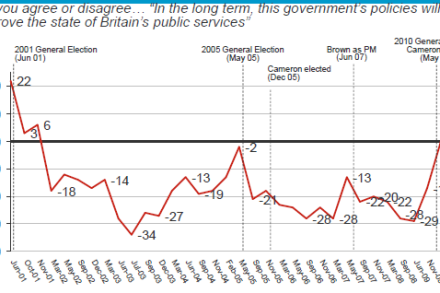
Guido has already highlighted one of the most important graphs from this Ipsos MORI treasure trove, showing that the public have overwhelmingly accepted the need for spending cuts. But this other graph forms a striking companion piece: Sure, the public may be split on whether the coalition will be good for public services. But the main thing to note is that overall optimism is at its highest level since 2001 – and rising. Maybe, contra Brown and Balls, people are realising that you can get more for less.