The View from 22: reaction to David Cameron’s speech
David Cameron appears to have done a successful job of reinvigorating his party and bringing it together once more.
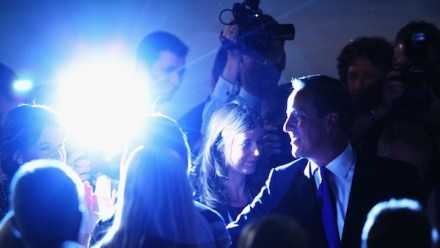
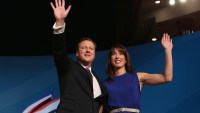
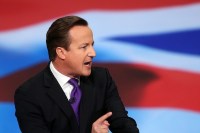
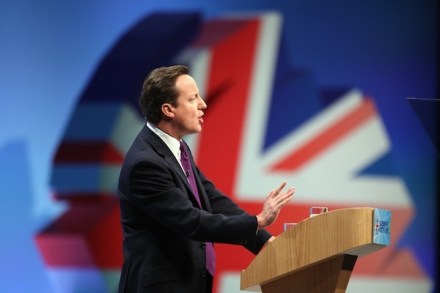
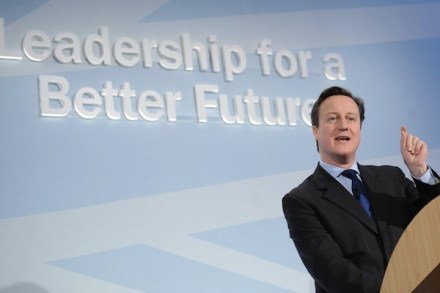
The Cameroons are leaving Birmingham with a spring in their step. David Cameron’s conference speech was the best he has delivered in years. He finally got off the mat and took on Labour’s argument about 50p and him being out of touch. His willingness to engage Ed Miliuband on his claim that he is writing cheques to millionaires was a refreshing sign of confidence in the power of Tory arguments about the relationship between the state and the individual. Crucially, Cameron — for the first time — gave a really clear explanation of what his government is doing. He linked together education reform, welfare reform and his economic measures as part of a broader effort to make Britain more competitive.
This was one of David Cameron's optimism speeches, a recession-era variant of his 'let sunshine win the day'. It was pretty short of announcements, which is understandable given the lack of any good news. Instead he focused on essential optimism of the Conservative message: that this is a party which places faith in people, not in governments. And he wanted to spell out what that means, confronting Labour's criticism of his party (and himself) head-on. His speech was full of praise for 'buccaneering' Britain, a nation whose ability to take on the world was reflected in the Olympic medals table. That there is no problem we can't solve, if we can persuade the Queen to parachute out of an aircraft to raise a laugh we can do anything.
For months now, David Cameron and his government have been pursued around the ring. Chased by Labour and harassed by events they have often been caught on the ropes. Off-balance and out of position Cameron has struggled to respond to Labour's jabs. No wonder he's behind on points. The Prime Minister's speech to the Conservative party conference this morning was a counter-attack. Cameron has had enough of running; now he means to stand in the centre of the ring and trade blows with the opposition. It will be a rare old tear-up. Those who say this was a speech delivered to his party, not his country are, I think, mistaken. This was Cameron's clearest declaration of principle in years. A pugilistic defence of his ideas and his politics.
In May 2010, this party stood on the threshold of power for the first time in more than a decade. We knew then that it was not just the ordinary duties of office that we were assuming. We were entering into Government at a grave moment in the modern history of Britain. At a time when people felt uncertainty, even fear. Here was the challenge: To make an insolvent nation solvent again. To set our country back on the path to prosperity that all can share in. To bring home our troops from danger while keeping our citizens safe from terror. To mend a broken society. Two and a half years later of course I can't tell you that all is well, but I can say this: Britain is on the right track.
David Cameron's speech today to the Conservative party conference will be deeply personal, and deeply challenging. I understand that the Prime Minister is going to weave in stories from his own life: pushing his late son around in his wheelchair, and his late father's own story. He will say: 'It’s only when your dad’s gone that you realise – not just how much you really miss them – but how much you really owe them. My dad influenced me much more than I ever thought.' These this-is-who-I-am details will help the Prime Minister talk about his vision for the Conservative party, and his vision for the country too. It's not dissimilar to the approach Ed Miliband took in his own speech last week.
What gift do you buy for a man who has it all? It would be hard enough to pick a forty-sixth birthday present for the multi-millionaire David Cameron even if he were not the prime minister; but the fact that he is one of the leaders of the free world makes it even trickier. Boris went with the gift of loyalty this morning, managing to get the conference floor to eat out of the palms of his hands and also heap praise on David Cameron. 'If I am a mop, Dave, then you are the broom... sweeping away the mess left by Labour.' George Osborne is the 'dustpan' in Boris’s cleaning cupboard; I bet he’ll love that. There are physical presents, too. I hear that an old staff list from the Conservative Research Department in the early nineties has been dug out.
It's David Cameron's birthday today, but when James Naughtie suggested on the Today programme that Boris Johnson be sent to a remote country as ambassador, the Prime Minister sounded as though Christmas had come early, too. You could almost hear Cameron's mind whirring as he considered which country might deserve the Mayor of London. As well as answering questions on the man who last night continued his pitch to become the next Tory leader, Cameron was asked where he was taking his party currently.
If the next election is simply a referendum on the government’s performance, I doubt that the Tories will win. But if it is a choice about which party you want to govern Britain, then they are in with a chance. So, today we’ve seen a determined attempt to draw contrasts with Labour. Notice how quick David Cameron was to turn to the question of what Labour would do on Marr. The most detailed attempted takedown, though, came in William Hague’s speech. He ran through his holy trinity of coalition reforms—economic, education and welfare.
David Cameron was in feisty form on the Andrew Marr Show this morning. Cameron, who has finally woken up to the need to be more political, defended his record — including his decision to cut the top rate of tax — with vigour. Cameron stressed how the richest 10 per cent are paying 10 times more towards the cost of deficit reduction than the bottom 10 per cent. But he argued, correctly, that the 50p tax rate was dangerously uncompetitive. He said that he was determined ‘to always be fair and seen to be fair’ which suggests to me that some new tax on the rich, something the Liberal Democrats could call a wealth tax, is on the way. Although he ruled out a mansion tax and the Chancellor has said there’ll be no new council tax bands, there are other options.
Too often the debate about the future direction of the Tory party is polarised between those who want to ‘modernise’ and those who want to ‘go right’. But there’s another problem, these labels now obscure as much as they reveal. In the next few days in Birmingham, the Tories have two important tasks: to show that they understand the squeeze on people’s living standards and are doing something about it and that they have a proper growth strategy. Some Cameron aides have long argued that the Prime Minister with his personal wealth can’t talk about the cost of living.
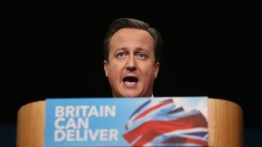
Why has David Cameron made his conference slogan 'Britain can deliver'? That word 'deliver' is revolting. Cameron clearly likes it: 'Britain delivered', he said after the Olympics. But if only Dave and his handlers read the Spectator's Dot Wordsworth more closely, they'd know better. In 2003, Dot wrote: 'Politicians and managers who use the word deliver should think again . Until recently, the most frequent use of the word deliver was in the phrase 'deliver us from evil.' The sense 'liberate, set free' had been conveyed by the Latin liberare . But in late Latin this meaning had been taken over by the emphatic deliberare, which in classical Latin meant 'to weigh well. 'So I suppose there would have been a late Latin Dot Wordsworth complaining of the misuse of liberare ..
David Cameron has a tough task ahead of him for this week's Conservative conference - a task that got a little harder when Ed Miliband surprised almost everyone by producing a cracking speech this week. The Prime Minister has a number of problems to tackle when he arrives in Birmingham. These include a rowdy party growing increasingly agitated about a number of issues including Europe, a chief whip sent in to control said rowdy party whose authority has been undermined before he has even started twisting arms, a chancellor struggling with his own authority on economic policy, and a Mayor determined to steal the show with his own conference speech and his building campaign against Heathrow expansion.
Mr Steerpike is now available weekly in the magazine. This one's been getting them talking today: It’s a hat-trick! Word reaches me that Dave may be about to lose his third spin doctor in a row. First Andy Coulson left to spend more time with his Fingertip Guide to the Criminal Law. Then Steve Hilton legged it to California. Now Craig Oliver, Coulson’s replacement, is said to be heading for the chop. Mr Oliver, once a BBC news chief, enjoys the rare distinction of being completely unknown to the general public and his friends tell me he’s been doing a superb job as the PM’s communications tsar. But Andrew Mitchell changed all that.
Ed Miliband's ‘One Nation’ conference speech will have put the populist cat amongst Downing Street’s toffee-nosed pigeons. Now young Dave's people will have to work out how to respond to this inspired piece of political cross-dressing, even if it is essentially diaphanous. One (alleged) Tory, though, is very happy with the direction in which the national debate seems to be travelling. Mr Steerpike found Phillip Blond, the 'Red Tory' and founder of the Respublica think-tank, cock-a-hoop after the speech: 'Ed Miliband has thrown down a blue Labour challenge to the Conservatives. No. 10 needs a Red Tory response unless they want to see Ed's One Nation politics win the next election.
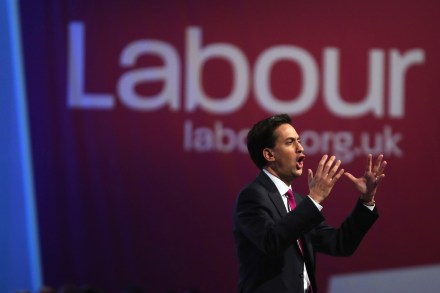
The first thing to remember about Ed Miliband's speech to the Labour conference today is that it's not about you, it's about us. That is, it was designed to persuade the media to give Miliband a fresh look more than it was an attempt to impress the general public, far less the Labour members gathered in Manchester. Initial impressions are that he succeeded in this aim. See Tim Shipman and Fraser Nelson, neither of whom are normally considered much of a Milibander, for good examples of this reappraisal. (John Rentoul is, of course, an exception.) Indeed, I can't recall when the British half of my twitter timeline was last quite so impressed by any speech given by any British politician, far less any intervention made by Edward Miliband Esq.
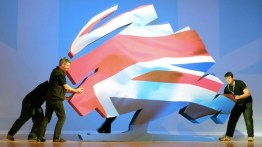
This conference season marks the half way point to the next election and we can see the political battle lines becoming clearer. The Tories, as their new poster campaign shows, intends to hammer Labour as the party that has learnt nothing from its mistakes. The argument of the coalition parties, which Nick Clegg previewed in Brighton, will be that the world has changed but Labour is stuck in the pre-crash era with its borrow and spend economics. Ed Miliband for his part wants to run as the man who is ‘on your side’. Today’s policy announcement taking aim at pension charges and the energy companies are designed to resonate with those voters who feel that the economy is not working for them.
Three months after it was sent, the Prime Minister has replied to a letter signed by over 100 backbench Conservative MPs calling for legislation in this parliament for an EU referendum in the next. John Baron, who co-ordinated the letter, is not releasing David Cameron's response as the original message was private, too. But I've managed to get my hands on a copy from elsewhere, and here are some of the key points Cameron makes: 'As we discussed, I do believe it would be wrong to rule out any type of referendum for the future. However, I am concerned that making a legal commitment now to hold a referendum in the next Parliament without setting the exact referendum question would not be a workable, nor a sustainable, position.
Last night David Cameron became the first British Prime Minister to appear on the David Letterman chat show whilst in office. Unfortunately for the PM, the most noteworthy thing to come out of the interview was Cameron’s inability to answer two questions on basic British history.
William Hague has a rather awkward meeting in his diary today with his Russian counterpart Sergei Lavrov. The pair were due to discuss Syria, and now they can also discuss David Cameron's provocative comments at the United Nations last night. The Prime Minister told the UN General Assembly that the ongoing atrocities in the country were a 'terrible stain' on the hands of the UN. He said: 'The blood of these young children is a terrible stain on the reputation of this United Nations. And in particular, a stain on those who have failed to stand up to these atrocities and in some cases aided and abetted Assad's reign of terror. 'If the United Nations Charter is to have any value in the 21st century, we must now join together to support a rapid political transition.