David cameron

Will supporting gay marriage help the Tories? It’s all a matter of location, location, location. – Spectator Blogs

From our UK edition

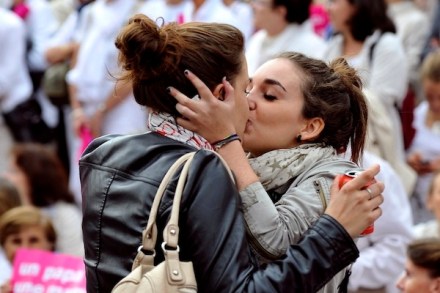
Do pollsters and pundits actually understand how British elections work? I sometimes wonder. Take, for instance, the debate concerning whether or not supporting gay marriage might win the Conservative party more votes than it loses. The Prime Minister says there are polls that suggest it would. Not so fast, retorts ComRes's Andrew Hawkins. He argues: Your letter of 19 October 2012 to The Rt Hon Cheryl Gillan MP states that “a recent poll by ComRes found that 10 percent of current Conservative voters say that the policy [to legalise same-sex marriage] would make them ‘less likely to vote Conservative’ compared with 7 percent saying it would make them ‘more likely to vote Conservative’.

The View from 22 — Britain vs. Germany, kicking the Lib Dems and the BBC 28

From our UK edition

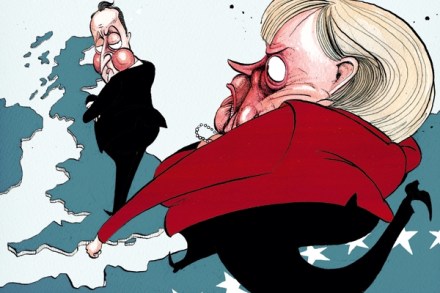
Are Britain and Germany heading for an almightily clash over the future of the EU? In this week's Spectator, Christopher Caldwell argues that Angela Merkel has had enough of Britain's position and is out to give David Cameron a kicking over Britain's lack of solidarity with her nation. On the latest View from 22 podcast, Fraser Nelson explains the significance of about is about to happen: 'The [problem is the] extent to which Europeans don't understand us, they can not get that for Britain, it is an issue of sovereignty. They keep thinking well the Brits don't want to agree the next budget, let's give them a few sweeteners — a subsidy here, a commissioner there. They are trying to horse trade with us, where for us now it's gone beyond that.

Exclusive: David Cameron accused of misleading over gay marriage polling

From our UK edition

One of Britain’s leading pollsters has written to the Prime Minister to rebuke him for misleading his supporters over whether the Conservative Party would suffer in the polls if they legislated on gay marriage. The Spectator has seen an incredible exchange of letters between the Prime Minister, the former Welsh Secretary, Cheryl Gillan, and Andrew Hawkins, the CEO of the polling company ComRes. Since being sacked in September, Gillan has become one of the Prime Minister’s more vocal critics and recently slammed the government's gay marriage proposals. Responding to Gillan in a letter that was then leaked to the Pink News, David Cameron relied heavily on polling data from ComRes to claim that legalising gay marriage would make more people vote Conservative.

Abu Qatada and the who governs Britain question

From our UK edition

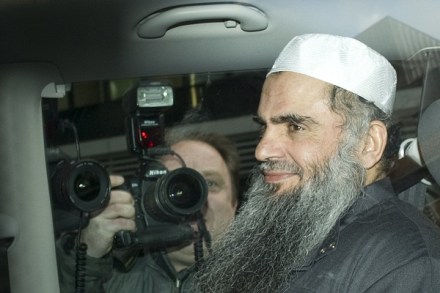
No government ever wants to look like it is in office but not in power. This is why this country’s inability to deport Abu Qatada is causing such concern in Conservative circles. David Cameron will be well aware of the symbolism of the issue. In his conference speech this year, he boasted that “For years people asked why we couldn’t get rid of those radical preachers who spout hatred about Britain while living off the taxpayer……well, Theresa May – a great Home Secretary - has done it – and she’s got Abu Hamza on that plane and out of our country to face justice.” Today, Cameron declared himself ‘completely fed up’ with the fact that Abu Qatada is still here.

No ifs, no buts, we need a decision on Heathrow now

From our UK edition

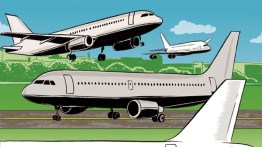
The Prime Minister presumably believes we face a critical shortage of airport capacity in London. Why else would he signal a possible U-turn on what was a headline pre-election promise? He knows that one reason west London voters backed the Conservatives in the last general and local elections was his decision to rule out any prospect of building Labour’s 3rd runway at Heathrow. But if that is how he feels, why on earth would he commit to doing absolutely nothing for three years? I am yet to meet anyone who believes an airport review should take anything like so long; indeed the majority of options have been studied to death. Moreover, it wouldn’t simply be a three-year delay. Add a lengthy planning process, and it could be more like six years before work even begins.

Race, gay marriage and modern Conservatism. Lessons for David Cameron from America. – Spectator Blogs

From our UK edition

So, we've had nearly a week to digest the results of the American election and contemplate what, if anything, it might all mean for politics there and, naturally, in this country too. Let's begin with a necessary caveat: the "read-across" from American elections to the British political scene is something that must be handled deftly. If considered with a sensible measure of proportion, however, it can be instructive since some of the challenges facing political leaders in Britain are comparable in kind (though not always in degree) to those faced by their cousins in the United States. Demographics aren't destiny and policy matters more than journalists sometimes liked to pretend.

The energy sector’s Libor-style scandal

From our UK edition

As David reported earlier, today's Guardian carries allegations of price-fixing in the energy markets. The paper has an account by Seth Freedman, who worked as a price reporter at ICIS Heren, detailing how he observed suspicious trades that looked like attempts to manipulate the daily index price. Based on Freedman's account, the alleged manipulation looks very much like that employed by City traders in the recently-exposed Libor scandal. Ironic, then, that the 'suspicious' trades Freedman observed came on the same day as Martin Wheatley published his review of Libor for the Treasury: Friday 28 September.

No playing fields of Eton for Arthur Cameron

From our UK edition

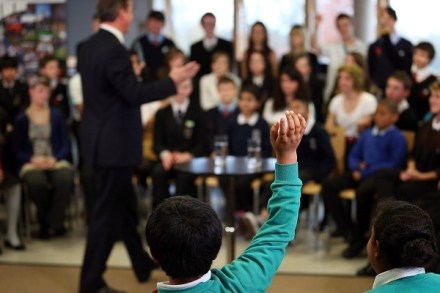
The Prime Minister chose his words carefully earlier today when asked if he would be sending his children to private school. Sky News’ eagle-eyed Sophy Ridge reports that Cameron was cross-examined by a pesky school kid at a ‘Cameron Direct’ meeting this morning at the John Cabot Academy in Bristol. Cameron told his inquisitor that he ‘would like’ his children ‘to go to state school’, which is nearly the same thing as saying that they will do. The Prime Minister pointed out that his two children of school age - Nancy, 8, and Arthur, 6, attend state primary schools, which implies that they will continue to do so at secondary level. Only he didn’t quite say that because what he actually said was: ‘That is my intention.

The BBC saga distracts from Abu Qatada deportation and bail decision

From our UK edition

The decision to award George Entwistle a £1.3 million payoff appears, as my colleague Rod Liddle notes, to have misjudged the public mood (and indeed the mood of the majority of hard working and underpaid BBC staff). It is the sort of development about which the government feels it ought to comment, to provide a source of moral leadership. There is an added complication because the government must do so without infringing the BBC’s independence. There is even more danger in this case because the Chairman of the BBC has launched a very spirited assault on the corporation’s detractors in the Murdoch press and elsewhere; this is a possible culture war in the making.

What will the coalition do next?

From our UK edition

We are now closer to the 2015 election than the 2010 one. We also expected by now to have the coalition’s mid-term review, the document that will set out its priorities for the second half of its term in office. But its publication has now been delayed until January. This is because the debates about what new policies to include in it are still going on. The quad—David Cameron, George Osborne, Nick Clegg and Danny Alexander—met on November 1st to discuss various ideas for it. They were, as I report in the Mail on Sunday, joined by Oliver Letwin and David Laws for this meeting with the Cabinet Secretary Jeremy Heywood also present. Dominating the meeting was ‘earn or learn’.

Waiting for Leveson

From our UK edition

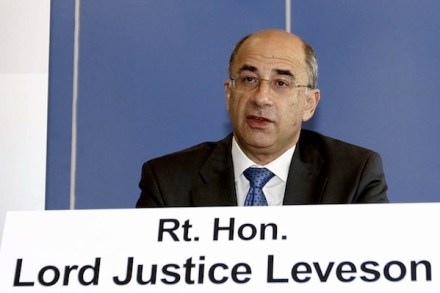
One issue that is in the background of nearly every political conversation at the moment is the Leveson Inquiry and how David Cameron will respond to its recommendations when it reports in the next few weeks. What Cameron does will do a lot to shape the political and media mood between now and the next election. Cameron is keen not to be seen to pre-judge the matter, hence his warning to Tory Cabinet Ministers recently to watch what they say about it, and is playing his cards close to his chest. But those close to him are well aware that there’s a danger that Miliband and Clegg—who have The Independent reveals been holding talks on the matter—will come out almost immediately for what Leveson proposes. This could leave the Prime Minister looking isolated.

‘Cameron will not turn back’: EU budget summit under threat

From our UK edition

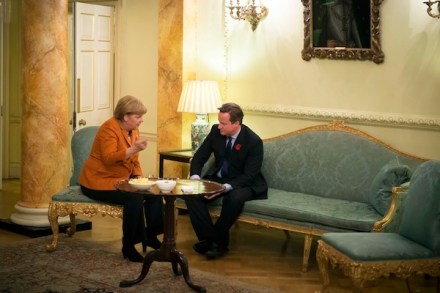
Will David Cameron be denied his veto moment after all? Brussels sources appear to think the European Union budget summit on 22 and 23 November could still be cancelled. A report from Italian wire service ANSA quotes one source saying 'everything indicates that it will be impossible to overcome the British veto' and that cancelling the summit remains an option. This follows reports recently that Angela Merkel was threatening to cancel the summit as it was pointless if Britain was going to veto any increase above one in line with inflation. The German Chancellor had a lengthy dinner with Cameron to discuss the summit on Wednesday night, but their talks haven't stopped the European rumour mill.

The danger of the This Morning ‘paedophile list’

From our UK edition

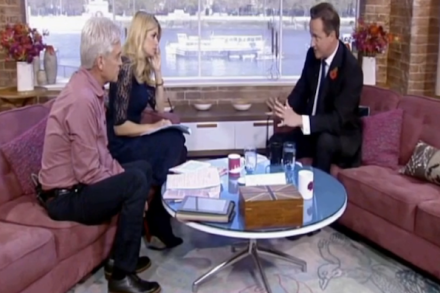
The Prime Minister goes on a mid-morning talk show and is forced to respond to a list of alleged paedophiles that the presenter has taken off the internet. If you put this in a political satire, it would be dismissed as far-fetched. But that is what happened when David Cameron went on This Morning. No-one is disputing the seriousness of the allegations involved. But does anyone really believe that the best way to uncover the truth is for the Prime Minister to be handed a list of names that a TV presenter has taken off the internet? Another concern about the coverage of this scandal is the terms that are being used. As no media organisation is confident enough to publicly name any living individual, we instead see suspicion being cast on whole groups of people.

Oh say can you see, MPs on a jolly

From our UK edition

Team Cameron, as my colleague James Forysth points out, are rather pleased with Obama’s victory. Downing Street’s finest have been pushing the idea that Barack Obama’s victory speech echoed, word for word, Cameron’s constant refrain that ‘we are all in this together’ and that the 'inherited economic mess' is slowly being overcome. Dave the Statesman, don’t you know? Obama has his admirers on the Opposition benches, as we know. The Labour Party was out in force at the two biggest victory bashes in central London last night: CNN’s opulent shindig at One Mayfair and the tackier affair at the US Embassy.

Obama’s victory is a great solace to Cameron, and No.10 will exploit it to the full

From our UK edition

Four years ago, in opposition, the Cameron offices were a swing state in the US election. Most were for Obama but there was still a sizable number who held a torch for John McCain. But this time round it is hard to think of anyone in Downing Street who wanted a Romney win. I asked several people in No. 10 who would have voted for Romney, but only one name ever came up. The idea of a Tory Downing Street urging on a Democratic President would come as a shock to those who served in the Thatcher and Major governments. In the 1980s, Ronald Reagan and Margaret Thatcher had common foes at home and abroad. But it would be a mistake to think that the relationship between Tories and the Republican party went into decline when they both left office. Instead, it got even closer.

US election 2012: Obama’s victory is a relief for David Cameron

From our UK edition

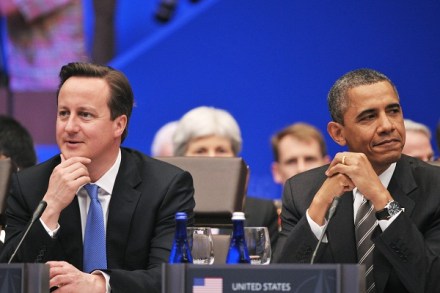
David Cameron welcomed Barack Obama's re-election in the early hours of this morning, tweeting: 'Warm congratulations to my friend @BarackObama. Look forward to continuing to work together.' He later released this statement: 'I would like to congratulate Barack Obama on his re-election. I have really enjoyed working with him over the last few years and I look forward to working with him again over the next four years. There are so many things that we need to do: we need to kick start the world economy and I want to see an EU-US trade deal. Right here in Jordan I am hearing appalling stories about what has happened inside Syria so one of the first things I want to talk to Barack about is how we must do more to try and solve this crisis. Above all, congratulations to Barack.

David Cameron is out to warn of the nuclear threat from Iran

From our UK edition

David Cameron is using his Middle East tour to remind Gulf States about the tremendous threat Iran’s nuclear ambitions pose to the region. This was something he touched on yesterday in Abu Dhabi during a questions and answers session with students, but expect it to form a very substantial part of his discussions with the Saudis today. After the Israelis, no one is more perturbed by the idea of Iranian nuclear arsenal than Saudi Arabia. The House of Saud worries about Iranian influence expanding into the Gulf and is unlikely to watch such a development with passivity. Rather than develop their own, the Saudis will simply buy one from Pakistan sparking a nuclear arms race in the region. Qatar and Egypt will quickly develop their own programmes.

David Cameron’s tricky tour of the Gulf

From our UK edition

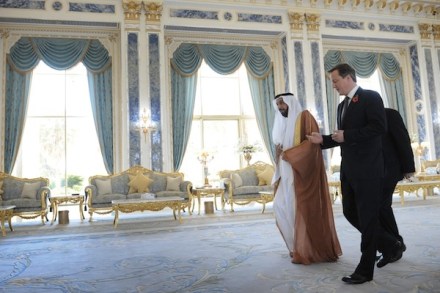
David Cameron is on a tricky tour of the Gulf states this week. It's not so much that he's trying to sell arms to the countries he visits: 300,000 British jobs do depend on the defence industry, with 65,000 relying specifically on arms sales. But he is having to tread very carefully on the subject of human rights. Arab countries are uneasy with the way Britain has embraced the Arab Spring, while Britain remains uneasy about those countries' record on how they treat their subjects. This morning, in an interview with the BBC's Frank Gardner, the Prime Minister sought to reassure critics that he will raise rights records with the leaders he meets, but that there was nothing wrong with trying to sell Typhoon jets to Dubai and Saudi Arabia.

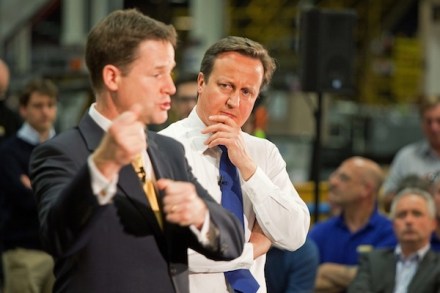
Cameron and Clegg locked in staring contest on boundary reforms

From our UK edition

Nick Clegg and David Cameron still can't agree over the future of the boundary review, and their continuing stalemate led to legislation on individual voter registration being shelved indefinitely in the House of Lords. An amendment to the Electoral Registration and Administration Bill tabled by Labour's Lord Hart and backed by Lib Dem Lord Rennard would have delayed the changes until 2018 - in line with Nick Clegg's pledge of revenge this summer that the review be delayed until after the 2015 election. The problem is that Cameron didn't know about the amendment until his staff read about it on Paul Waugh's blog, and he apparently lost his rag with Clegg as a result.

Is David Cameron struggling to keep up with public opinion on Europe?

From our UK edition

Over the past two weeks, the government has been desperately trying to harden its position on the European Union to match public opinion. David Cameron has been rather bullish with his plans to opt out for 130 EU law-and-order measures and the veto threat over the budget, despite being outfoxed by both Labour and his backbenchers on the latter. Has it been successful? As Isabel reported yesterday, the voters of Corby, Witney and Doncaster North are not entirely happy with the Conservatives’ current position and new national polling reflects a similar attitude. This weekend’s YouGov poll compares public attitudes today towards the EU to this time last year.