David cameron

Why The Spectator will take no part in state licensing of the press

From our UK edition

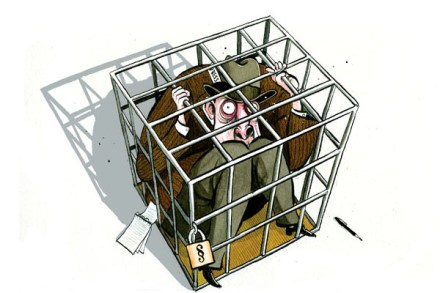
Lord Justice Leveson reports at 1.30pm tomorrow and David Cameron has blocked out 90 minutes in parliament to respond. The big question is this: will he introduce state licensing of the media? A group of 42 Tory MPs wants him to, and No.10 apparently thinks they will rebel if he doesn’t. But this would mean revoking Britain’s 317-year history of press freedom, and give Parliament power to set the parameters under which the press operates. If the state seeks to compel publications to join the government scheme, then they face a choice: sign up, or defy the new law. In tomorrow’s Spectator, we make our choice. We say in our leading article that we would happily sign up to any new form of self-regulation which the industry proposes, no matter how onerous.
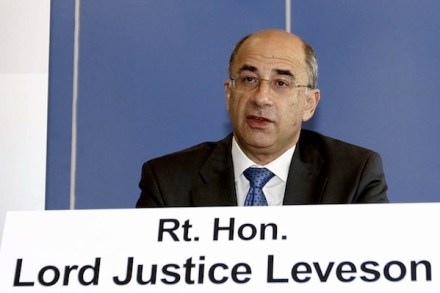
Cameron to receive Leveson report as Tory party splits on press regulation

From our UK edition

David Cameron will receive his copy of the Leveson report later today, and will meet twice with Nick Clegg to discuss its contents: once this evening, and again as part of a coalition committee tomorrow. There will be a Commons statement tomorrow at about 2.30 from the Prime Minister, but Nick Robinson reports this morning that the Deputy Prime Minister is considering speaking after his colleague if the pair fail to agree on the government's response to the Leveson report. Those won't be the only tensions over the recommendations from the Inquiry, though. Scores of Tories are among the 86 MPs,who have signed a letter which today pleads with the government to not introduce state-backed regulation of newspapers.

I spy spice

From our UK edition

Two thousand spice lovers crossed the river last night for the enormous British Curry Awards at Battersea Evolution. Between dousing my tongue with milk to calm the fiery dishes, I chatted about Leveson with the Justice Secretary and adoption with the leader of UKIP. The former was coy, the latter seething. Other political heavies braved the curries' heat: a dinner jacket-less Patrick McLoughlin sat at a top table, as did Francis Maude, who was wearing a tie for a change. Maude was not too chatty with Nigel Farage; but sources close to the pinstriped-one say that Grayling was much friendlier.

Cameron at pains to show Britain was not isolated in EU Budget talks

From our UK edition

David Cameron took great pains in his statement to the Commons on the EU budget summit to emphasise the alliances that Britain had formed in trying to keep the budget down. He started by telling MPs that Britain had worked 'together with like-minded allies from a number of countries', and repeatedly used words such as 'together' and references to 'we - and others'. This was important as one of the key lines of attack that Labour has tried to make since last year's veto is that Britain is standing isolated in Europe. Labour struggled to make an impact, both in Miliband's response to Cameron's statement and during the ensuing debate.

Liam Byrne tries to turn David Cameron’s striver language back on him

From our UK edition

The Leveson Inquiry will dominate this week. Inside Number 10 they regard it as ‘the most difficult’ of the three big issues dominating their time at the moment – the other two are the autumn statement and the EU Budget. But I suspect that voters will be far less interested in Leveson and the Prime Minister’s response to it than the media and political class are. I’d be surprised if Cameron’s handling of it changed the views of voters—as opposed to those of elites— of him. So, on The Sunday Politics today it was striking to see Liam Byrne, Labour’s welfare spokesman, trying to turn Cameron’s striver rhetoric back on him.

A satisfactory outcome at the EU budget talks for David Cameron

From our UK edition

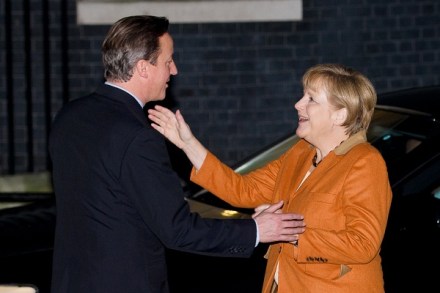
So, the EU budget summit has — as expected — broken up without agreement. We await the date of the next discussion of the matter. But for the moment it means there is nothing that David Cameron will have to try to pilot through parliament. Talking to those close to the Prime Minister, I sense that they are not unhappy with this conclusion. In Downing Street, they feel that their criticisms of the running costs of the EU bureaucracy have struck a chord with other contributor countries. They’re also pleased that Cameron has managed to strike a tough negotiating position without isolating himself. But what is giving them the greatest satisfaction is how solicitous of the British position Angela Merkel was. They regard this as a promising sign for the coming renegotiation.

EU budget talks end

From our UK edition

The EU Budget discussions have ended with no agreement, as seemed inevitable after yesterday’s struggles and rows. David Cameron has been copping a lot of flak for his intransigence, particularly from Francois Hollande, who has spent much of the time talking of the need for 'solidarity' with Europe - by which he means the Common Agricultural Policy. Despite these headlines, it's worth remembering that plenty of other countries objected to Van Rompuy's proposals, and for many different reasons. Indeed, far from being isolated, Britain may have forged closer relations with those countries thanks to the experience of these talks.

Europe’s new iron curtain

From our UK edition

The last 24 hours have yielded no agreement in Europe, and they have seen David Cameron’s ambitions decline (he appears resigned to the fact that EU spending will not be limited to 886bn euros, his original objective); but they have also demonstrated that Britain is far from alone at the diplomatic table. David Cameron has been able to forge pragmatic alliances and exert diplomatic pressure precisely. For example, his latest tactic at the budget discussions is to appeal to the downtrodden nations of southern Europe by insisting that the EU’s bureaucracy take its own medicine by raising retirement age and cutting jobs and reducing the final salary pension cap.

David Cameron’s tricky position on the Leveson Report

From our UK edition

Politics is gearing up for the publication of the Leveson Report next Thursday. It was telling that when Boris Johnson picked up politician of the year at The Spectator Parliamentarian of the Year awards, he didn’t use the occasion to list of his achievements in London or to reminisce about the Olympics but rather took the opportunity to decry the possibility of statutory regulation of the press. On the other side is Ed Miliband, whose party is committed to backing whatever Leveson comes up with. It is unclear yet what Nick Clegg and the Liberal Democrats will do. But there are a large chunk of Tory MPs who appear to have come round to the idea of statutory regulation.

PMQs: Ed Miliband goes mainstream

From our UK edition

A muted PMQs today. But Cameron opened a fresh offensive which may prove to be a blunder. The leaders began by discussing the Gaza crisis in bland and soporific tones. The absence of heat and noise from the debate indicates how little it affects Britain. And how little Britain affects the debate. Cameron and Miliband were in virtual agreement throughout. And they were keen to urge everyone, other than themselves, to work harder to create peace. Cameron suggested that Obama should make the Middle-East a key objective of his second-term, just as one might make weeding the raspberries a key objective of the coming weekend. Miliband noted that ‘confidence in the two-state solution is dwindling.

Guto’s Revenge

From our UK edition

Look out for Mr Steerpike in this week's Spectator magazine, but here's a taster of what's coming up: 'Lynton Crosby's swear-box is filling up. The Aussie strategist may have guided Boris to victory in this year's mayoral contest, but he managed to alienate many of BoJo's inner circle in the process. One former Boris aide leaked a rumour that Crosby had made disparaging asides about 'f***ing Muslim voters' in London. Instant retaliation followed when a Crosby crony let slip that the Australian guru regarded all Boris's aides as 'f***wits.' These dark whispers are extremely unwelcome to Crosby. He hates 'process stories' which shift attention away from clear political messages and onto managerial snarl-ups.

Aviation: Don’t say one thing and do another

From our UK edition

Some tickets to the Spectator’s next debate, ‘No Ifs, No Buts: Heathrow Must Have a Third Runway’, are still available. Tim Yeo, chairman of the energy and climate change select committee, and Jon Moulton, chairman of Better Capital, and influential Tory backbencher Graham Brady will be speaking in favour of the motion, while Daniel Moylan, Boris’ right hand man, and John Stewart, chairman of the ClearSkies campaign, will oppose the motion. Click here for more information and the box office. In the piece below, Cheryl Gillan MP, the former Secretary of State for Wales, discusses many of the economic issues that surround this vital political debate.

The politics of energy

From our UK edition

When David Cameron made his surprise announcement about forcing energy companies to offer customers their cheapest deal, he added, as an afterthought, that the leader of the opposition had missed the chance to be on the side of the consumer when he was energy secretary. I would be surprised if the average voter knows that Miliband was energy secretary; but, from Cameron’s perspective, the line of attack makes sense: energy prices and the cost of living are vital political issues for this government.

David Cameron pulled every which way on Europe

From our UK edition

Another day, another set of newspapers full to bursting with pieces about Britain’s fractious relationship with the European Union – all of which, in their way, will unnerve David Cameron. The most enjoyable read is Boris Johnson’s column the Telegraph. Boris made his name as the Telegraph’s European Community Correspondent in the late ‘80s and early ‘90s, writing amusing stories about the EC’s penchant for mad waste and corruption. He gives a reprise today, drawing attention to the fact that the EU distributes your money to Spanish sheep farmers who do not have any sheep. Boris’ conclusion is that David Cameron must go into this week’s debates armed with Maggie’s handbag and tell Brussels that enough is enough.

David Cameron’s speech to the CBI

From our UK edition

Here is the full transcript of the speech David Cameron gave to the CBI earlier today. It is, on the face of it, a speech full of intent and energy; but, two and half years into government, David Cameron will be judged by what he does, not what he says. As John Cridland, DG of the CBI, put it in response to Cameron's words: 'Where's the beef?' I look around this room and see people I’ve been on trade missions with all around the world to Africa, China, India, Russia, Mexico, Brazil. It’s great to see Aggreko here - we were in Africa together and I’m glad you’ve sealed that deal in Cote d’Ivoire and are selling in one hundred countries today.

The gap between what David Cameron says and what he does

From our UK edition

David Cameron (and a host of other politicians, including Ed Miliband, Vince Cable and Boris Johnson) will address the CBI’s annual conference this morning. Cameron’s widely trailed speech is a call to arms; indeed, he wants to put the public sector on a war-footing. The speech will contain the usual spiel about Britain being in a ‘global race to succeed’ and the need for innovation and cutting red tape, faster decision making etc, etc, etc. You’ll know, of course, that these urgent words come from the man who feels that the decision on a third Heathrow runway cannot be made until after the next election. This fact mocks Cameron’s claim that 'the Cabinet I chair is now a Growth Cabinet...

How Lynton Crosby could save the Tories in 2015

From our UK edition

Over the summer, the balance of probability nudged away from a Cameron win towards a Miliband win in 2015. The collapse of the boundary review deal lifted the bar for Cameron, who might have struggled anyway. The Cameron operation - for all of its strengths elsewhere - has proven weak at campaigns. Failing to win a majority in a recession against a loathed opponent was one sign, the disastrous mayoral referenda another and the tragicomedy of the PCC elections completed the hat-trick. And then there were the U-turns, many of them defeats at the hands of ad hoc groups running a decent week-long campaigns: 38 Degrees on health reform, etc. The prospect of the 2010 team running the 2015 election would encourage only Labour.

David Cameron under attack from voters, Ed Miliband, David Davis and Angela Merkel on Europe

From our UK edition

The Sunday Papers and the broadcast shows are packed with accounts of Britain’s fractious relationship with the European Union, and what that means for David Cameron. The Observer gives space to a poll, the headline of which says that 56 per cent of Britons would ‘probably or definitely’ vote to leave the EU against 30 per cent who would probably or definitely vote to remain in the union. The Independent on Sunday carries a ComRes poll on the more immediate question of next week’s EU budget discussions. The findings will give Mr Cameron a headache: 66 per cent of voters want the budget ‘cut rather than frozen’. The voters will be disappointed: a cut is a fantasy. Even a freeze is looking unlikely because recipient countries are likely to oppose it.

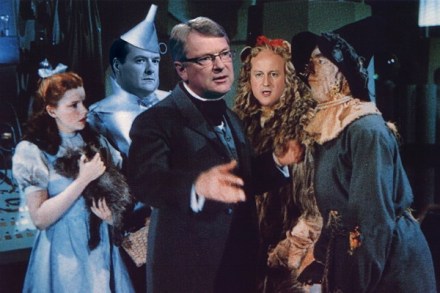
David Cameron brings in the Wizard of Oz

From our UK edition

After months of will he/won’t he, Lynton Crosby has decided to join the Cameron clan. The Sunday Telegraph reports that the Australian strategist behind Boris’ two victories has signed up as a consultant to run David Cameron’s re-election campaign. The efforts to secure his return were described in the political column in this week's Spectator: 'Later this month, George Osborne and two of the Prime Minister’s most senior political aides — Stephen Gilbert and Andrew Cooper — will sit down with Lynton Crosby to see if a command structure for the election campaign can be worked out. Conservative high command is keen to bring Crosby, the man who oversaw Boris Johnson’s elections as London Mayor, on board.

Imposing a minimum price for alcohol will leave Cameron with a political hangover

From our UK edition

On Monday, the government is set to announce its alcohol strategy. It is expected that this will call for a minimum unit price of 40p. As Graham Wilson reports in The Sun, this idea is a personal favourite of the Prime Minister but opposed by several influential members of the Cabinet. These ministers worry that it’ll be seen as the rich man taking away the poor man’s pleasure. Given the media reaction to the pasty tax and the caravan tax, this is a legitimate concern. They also fear that a successful legal challenge to it, which is a distinct possibility, would do further damage to the government’s reputation for competence.