D.h. lawrence

All the gossip about Lady Chatterley’s Lover

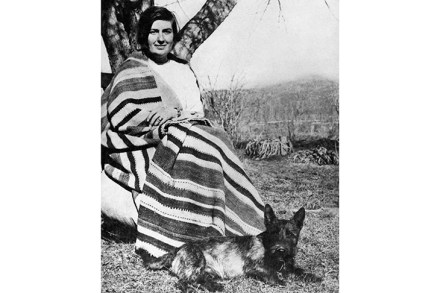
Lady Chatterley’s Lover was written in a villa outside Florence during the winter of 1927-28, two years after D.H. Lawrence was diagnosed with TB. Described by him as ‘a phallic novel, but good and sun-wards, truly sun-wards’, the tale is set in his native Nottinghamshire, which he left in 1912 when he eloped with his aristocratic wife Frieda von Richthofen, who was then married to his tutor. Frieda, who valued her freedom, was enjoying an affair with the Italian officer Angelo Ravagli, who became her third husband after Lawrence’s death in 1930. It is believed that Lawrence was impotent for the last years of his life. In the evenings he would read aloud his finished pages, in which the Lawrentian philosophy is expressed by Oliver Mellors, gamekeeper to Sir Clifford Chatterley.
Pride and Prejudice retold in a thousand different ways

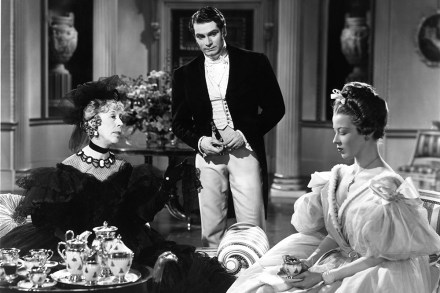
‘It is a truth universally acknowledged that any essay about Jane Austen... must be in want of a poorly rendered paraphrasing of her most famous opening lines,’ writes Ella Risbridger in this sharp, gleefully obsessive field guide to romantic fiction. For her, Austen is the genre’s ‘mother’, and she crisply notes that while George Eliot disparaged ‘silly novels by lady novelists’, ‘she does appear to have read a lot of them’. Risbridger is the author of two cook books, including the award-winning Midnight Chicken (and Other Recipes Worth Living For); a children’s novel, The Secret Detectives; and the editor of anthologies of poetry and food writing. She has read a lot of romance novels, too.

The lonely passions of Katherine Mansfield

Katherine Mansfield refused to be pinned down. Aged 17, she told a friend she planned to lead ‘all sorts of lives’, already chafing at the limitations of her parents’ bourgeois world. She warned her first lover that she liked ‘always to have a great grip of life, so that I intensify the so-called small things – so that truly everything is significant’. Living, to Mansfield, was a challenge to be confronted head-on, a restless and active process of ‘shedding and renewing’. Her passion for life fortified her through a horrifying succession of troubles. It fed her art; it also exhausted her.  ‘Life’, in its most capacious sense, is the subject of Mansfield’s fiction.

Extremes of passion: What Will Survive of Us, by Howard Jacobson, reviewed

There is not going gently into that good night, and then there is teetering into it on spiked-heel boots while strapped into a leather corset in search of clandestine kicks among like-minded fetishists. If it sounds an exhausting and chilly way to spend an evening, well, it is. At least, that’s how it feels to Sam Quaid, the middle-aged playwright who is beset by misgivings – he himself is dressed in ‘the more chicken-hearted guise of a fallen Quaker who had never seen the sun’ – but gamely determined to accompany his lover, Lily. Where is Sam’s obeisance going to lead him, or Lily?

What do Beethoven, D.H. Lawrence and George Best have in common?

This is not a book about tennis. Roger Federer appears early on, trailed by the obligatory question ‘When will he retire?’ He figures more prominently in the final 80 pages – still looking, despite the imminence of hanging up his racquet, as if he moves ‘within a different, more accommodating dimension of time’. There are cameos from some of the game’s other stars at various points on the way to the exit: the young Bjorn Borg (‘heir to some non-specific Scandinavian malaise’), the often crocked Andy Murray (‘a mumble-core Hamlet’) and the middle-aged, disgraced Boris Becker (afflicted by a ‘hitherto unseen condition called testicular elbow’). But the title is a characteristic act of wrong-footing.

An impossible guest: Second Place, by Rachel Cusk, reviewed

A great writer must be prepared to risk ridiculousness — not ridicule, although that may follow, but the possibility that the work will collapse into some or other version of nonsense. If it doesn’t, though, it is precisely the elements that flirt with disaster that will likely make it both superficially distinctive and artistically substantial. For the novelist and memoirist Rachel Cusk, whose most recent creation, the ‘Outline’ trilogy, attempted a savage blending of the two forms, risk comes frequently in the form of sailing dangerously — and, for her admirers, thrillingly — close to the parodic.