Culture

The irony of the Hampstead ladies’ pond transgender row

From our UK edition

How ironic that it should take an invasion of the female-only pond in Hampstead by trans women to make luvvies realise the implications of allowing any old Tom, Dick or Harry who self-identifies as female into women’s spaces. Those virtue-signalling ideals are all very well around your fashionable dinner tables, but remember: it’s real women in the real world — prisons, refuges and anywhere vulnerable women exist — who have to live with the consequences.

Spotted: a right-wing comedian on the BBC

From our UK edition

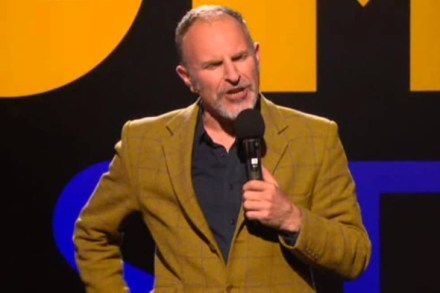
I just exulted to my wife that Simon Evans had been on Radio Four’s The News Quiz. He’s a very funny man, Evans, but is also regarded as Britain’s only right-wing comedian. There are actually quite a few others – Leo Kearse, for example. Anyway, Evans was in excellent form, defending Donald Trump and describing the NHS as a Socialist Utopia which did not work. The audience wasn’t sure what it should do, and Evans was of course ribbed for his opinions by the other three panellists and indeed the compere. Which is when I thought: hang on, why should I be grateful to the BBC for allowing one single representative of majority opinion on air? And yet it was such a breath of fresh air.

The death of the high street has been greatly exaggerated

From our UK edition

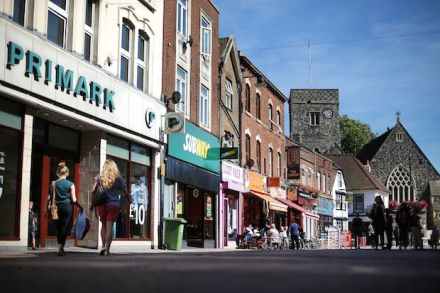
Predictions of the death of the shop have become as much a ritual of New Year as fireworks and the singing of Auld Lang Syne. The two big retailers which have so far reported on their business over the Christmas period have provided the usual ammunition. Next reported sales up by 1.5 per cent in the 54 days to 24 December (compared with 2016), but only because online sales (which rose 13.6 per cent) offset sales in physical shops (which were down 6.1 per cent). Debenhams had a miserable Christmas, with like-for-like sales falling 2.6 per cent in the 17 weeks to 30 December. It is now thinking of shifting out some clothing racks and shoving gyms into its stores. So is it the end of the shop as we know it, as online retailers gnash away at their business?

Keir Starmer must answer this question about John Worboys

From our UK edition

A Martian visiting Britain in recent months might be a little confused as to the nature of human morality – not to mention as to where on the body we have our sexual organs. First the country becomes consumed by the wicked behaviour of man who lightly touched a woman’s knee. Then, a man who was found guilty of drugging and raping 19 women is quietly approved for release by the Parole Board as if his offences were no big deal. It emerges that he was suspected of 100 more rapes, too, but the Crown Prosecution Service (CPS) never even bothered to charge him with those.

Ann Widdecombe is the feminist hero we need right now

From our UK edition

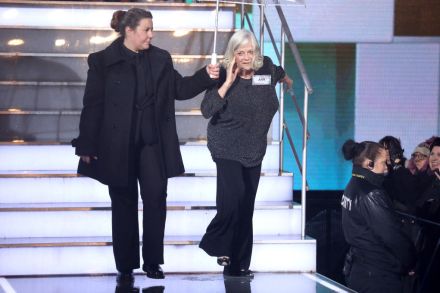
Britain has a new feminist hero. She’s a diminutive, eye-rolling force of nature. A BS-deflecting defender of the right and ability of women to get stuck into public life as well as any man can. A warrior against the neo-Victorian view of the female sex as fragile and unable to deal with the amorous advances of tragic blokes. It’s Ann Widdecombe, former Tory MP, Catholic convert, borderline national treasure, and now contestant on Celebrity Big Brother. But this is no ordinary Celebrity Big Brother. It’s a feminist one, a Suffragette one. Yes, the Channel 5 show has gone political, giving a nod to the hundredth anniversary of women in Britain winning the vote (well, women over 30) by making the CBB house an all-female one. (For now.

Feminists complaining at being called ‘honey’ are a tiresome bunch

From our UK edition

Not surprisingly, feminists lost no time this week weighing in behind Emily Lucinda Cole, a Virgin Trains passenger who took great exception to being addressed by a rail employee 'with that hideously patronising word women shudder at in contexts such as these: ‘honey’'. And indeed, the episode she complained about did suggest that the term wasn’t altogether friendly. When she told her ticket inspector she took exception to the brusque way he checked her ticket (and yes, I’m wondering about that), and that she’d be complaining to the bosses, he told her: 'You go ahead, honey'. He may have been an overworked Virgin employee fed up with middle-class girls getting uppity with him or he may have been a bad tempered so and so. It's difficult to tell.

Nine reasons to be cheerful this year

From our UK edition

Since it’s the first week of the New Year I’m going to pretend the bad stuff isn’t happening and focus on the lovely, life--affirming things I learned (or relearned) last year. Here are some of them.   1. There is hope for the youth. Yes, I know we think they’re all grisly little Marxist snowflakes who are going to vote in Jeremy Corbyn, but this is largely a product of brainwashing and poor governance, rather than fundamental malignity. In fact, some of the kids I encountered last year have given me great hope: check out, for example, the two teenagers I interviewed for my podcast, Sebastian Shemirani and Steven Edginton.

New Year, new world order

From our UK edition

  Old establishment New establishment Order of the Garter BBC Sports Personality of the Year Parliament’s Woolsack The Supreme Court The Borgias Sir Nicholas Serota and friends William Rees-Mogg Owen Jones Jacob Bronowski Simon Cowell Ciggy soak and TV cook Fanny Cradock Clean-living (Deliciously) Ella Mills Shirley Williams Lily Allen MCC committee members BBC trustees Sid James Lord Sugar Oxbridge high-table dinners Institute for Government lunchtime talks Toad in the hole Sushi Richard Ingrams Guido Fawkes website Bishop of Sodor and Man Emma Thompson Young Conservatives Tinder The Astors The Kardashians The Dimblebys The Dimblebys Athenaeum Babington House BBC Facebook Morecambe and Wise Philip Hammond and John McDonnell Roast.

Does alcohol make us more right-wing?

From our UK edition

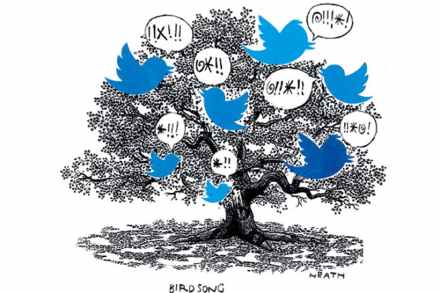
Although I wrote in my last post that social media makes people miserable, Twitter is also a fantastic resource for acquiring knowledge from experts and specialists in different areas. One of my favourite accounts is Rolf Degen, who daily tweets a number of scientific studies into human behaviour. Just before Christmas he linked to a story concerning the impact of alcohol consumption on politics, suggesting that booze makes us more right-wing. According to the paper ‘alcohol strips away complex reasoning to reveal the default state of the mind’ and drunkenness therefore encourages ‘low-effort, automatic thought’ and so promotes political conservatism.

Is ‘Hi’ the word of 2017?

From our UK edition

A book that changed my way of looking at the world was The Lore and Language of Schoolchildren. It showed how playground rhymes and games were handed down to new generations without direct involvement of grown-ups. Iona Opie, one half with her husband, Peter, of the team that brought out the book in 1959, died this year, aged 94. In their research, they built up the world’s biggest private collection of children’s books, now in the Bodleian Library. I remember the thrill of finding duplicates, with their bookplate, in the Charing Cross Road 30 years ago. Children, with their independent culture, can parody things from the adult world.

The Lost City of Z is a very long way from a true story — and I should know

From our UK edition

We’re closing 2017 by republishing our twelve most-read articles of the year. Here’s No. 3: John Hemming on why Percy Fawcett wasn't the great explorer of Hollywood myth: The new film The Lost City of Z is being advertised as based on the true story of one of Britain’s greatest explorers. It is about Lt-Col Percy Fawcett. Greatest explorer? Fawcett? He was a surveyor who never discovered anything, a nutter, a racist, and so incompetent that the only expedition he organised was a five-week disaster. Calling him one of our greatest explorers is like calling Eddie the Eagle one of our greatest sportsmen. It is an insult to the huge roster of true explorers. Had the advertisement been about a soap powder, it would fall foul of the Trade Descriptions Act.

Safe spaces and ‘ze’ badges: My bewildering year at a US university

From our UK edition

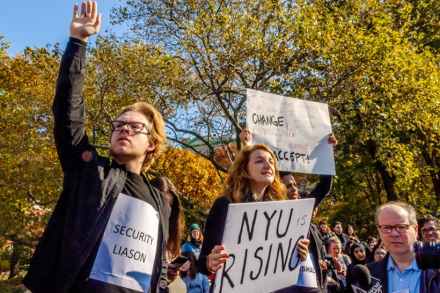
We’re closing 2017 by republishing our twelve most-read articles of the year. Here’s No. 4: Madeleine Kearns on her time at New York University: As a child in Glasgow, I learned that sticks and stones might break my bones but words didn’t really hurt. I’m now at New York University studying journalism, where a different mantra seems to apply. Words, it turns out, might cause life-ruining emotional trauma. During my ‘Welcome Week’, for example, I was presented with a choice of badges indicating my preferred gender pronouns: ‘he’, ‘she’, ‘they’ or ‘ze’? The student in front of me, an Australian, found this hilarious: ‘Last time I checked, I was a girl.’ Her joke was met with stony silence.

Get off social media for 2018

From our UK edition

Was 2017 that terrible? Everyone feels like they’re losing and the world is going to hell, and in many ways it does feel like a dark cloud is approaching. This article, about a sex robot conference being moved after a threat from Islamic extremists, did strike me as the sort of thing one of the more pessimistic of 20th century writers might have predicted about our age. People are so depressed about the year they even got angry about Taylor Swift being happy, because how dare she. And yet despite this being such a terrible year medical progress continues in a miraculous way, worldwide poverty continues to tumble and while the planet is more violent than at the beginning of the decade, it has nothing like as many wars nor as many casualties as the 70s or 80s.

The consequence of this new sexual counter-revolution? No sex at all

From our UK edition

We’re closing 2017 by republishing our twelve most-read articles of the year. Here’s No. 7: Douglas Murray on the sexual counter-revolution: We are in the middle of a profound shift in our attitude towards sex. A sexual counter-revolution, if you will. And whereas the 1960s saw a freeing up of attitudes towards sex, pushing at boundaries, this counter-swing is turning sexual freedom into sexual fear, and nearly all sexual opportunities into a legalistic minefield. The rules are being redrawn with little idea of where the boundaries of this new sexual utopia will lie and less idea still of whether any sex will be allowed in the end.

The great online advertising swindle

From our UK edition

Conmen and fraudsters thrive in confusion. And few places are more confusing and opaque than the jargon-ridden world of online advertising. Which is odd really, since the entire social media edifice – Google, Facebook, Twitter, Snapchat – depends on it. 2017 was the year of the tech-lash, when people and politicians started to push back against tech-led disruption. But there’s potentially a far more significant threat looming for the tech giants: ad fraud. On one level, online advertising is very simple: you get shown endless adverts as you bounce your way around the net, and an advertiser pays whenever someone either looks at, or – the holy grail! – clicks on one of the damn things.

In defence of Matt Damon

From our UK edition

Movie star Matt Damon has tentatively, politely suggested that the #MeToo cleansing of Hollywood, this chasing of suspected perverts out of the film world, has hints of a 'culture of outrage' to it, and guess what has happened to him? Yep, he’s been consumed by the culture of outrage. He's been insulted, demonised, Twitter-raged against. 'Is Matt Damon OK?', asked one newspaper headline, because if you express an outre opinion these days, people will worry that you're ill. It feels like a grimly fitting end to 2017: someone raises concerns about outrage, and before he’s even finished explaining himself he's shut down by outrage. I've read Damon's comments, which he made in a couple of interviews, five times now, and I cannot see a single controversial thing in them.

We live in an era of illusion – and delusion

From our UK edition

Matt Hancock, a government minister, has felt obliged to declare formally, 'Objective reality exists.' To his credit, he confessed to a certain shamefacedness about this but he added that he believes he had a duty to reassure us. I find it hard to understand what Mr Hancock’s statement means. By 'objective reality' does he mean truth? If so, then the proposition 'There is such a thing as truth' is self-evident – a necessary proposition – because if someone attempts to refute it and says, 'There is no such thing as truth,' then either that proposition is true or the one who states it is wrong. In either case, there is something that is true.

Rupert Murdoch is selling Sky at the top of the market

From our UK edition

There are plenty of questions to be asked about the decision by Rupert Murdoch to sell 21st-Century Fox, including Sky in this country, to Disney.  On what, for example, will Momentum blame the loss of the 2022 election if not the malign influence of the Australian tycoon? Is the old rattlesnake finally bowing out of the game, or is he already plotting a comeback? And how will the dynastic power struggle within the Murdoch family play out? But the most interesting one is this. Has the master media deal-maker pulled off another coup, or will he come to regret selling what has long seemed the jewel in his corporate crown? On the surface, the decision to sell his 39 percent of Sky looks an odd one. Murdoch has been battling for years to get full control of the company.

Sex scandals ain’t wot they used to be

From our UK edition

The death last week of Christine Keeler, a central player in the Profumo scandal which helped bring about the end to thirteen years of Tory rule in the early 1960s, can be seen as another salutary reminder of Britain's decline. To put it simply: even sex scandals ain't wot they used to be. British decadence is usually measured by such dull yardsticks as GDP, the fall in value of the pound, withdrawal from the far flung outposts of Empire, and the decision – taken by the then Prime Minister Harold MacMillan just before the Profumo affair broke – to apply for membership of the Common Market, today's European Union. But the drop off in quality of the sex scandals that regularly embarrass our ruling caste is an equally valid sign of  decline and fall.

Snowflakes are now triggered by the term ‘snowflake’

From our UK edition

This has got to be the own goal of the year. Millennials want people to stop calling them ‘snowflakes’ because it is an unfair term of abuse that damages their mental health. Get your head round that if you can. In response to the accusation that they’re soft, oversensitive and too easily wounded by words and ideas, young adults are effectively saying: ‘No we aren’t. And if you keep saying we are, we will be plunged into mental despair.’ There aren’t enough faces and palms in the world to express the exasperation such a self-defeating defence deserves. This epic self-own was uncovered in research by Aviva. It surveyed 2,022 Brits aged between 16 and 24 and found that three quarters of them think the snowflake jibe is ‘unfair’.