Cuba

How the third world war was narrowly averted

From our UK edition

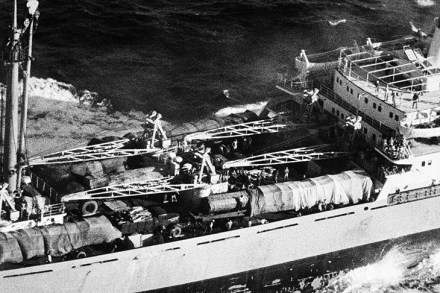
Nuclear weapons carry a payload of cold logic: if both sides have them, neither will ever use them. But in 1962, when the Soviet Union and US squared up to one another over Cuba, that logic broke down. As this superb new book shows, the Cuban Missile Crisis was the product of miscalculation, ignorance and staggering recklessness. The main culprit was Nikita Khrushchev. His first error was to mistake the US president for a callow weakling. ‘Don’t worry,’ he assured his Cuban friends, ‘I’ll grab Kennedy by the balls.’ After their first meeting, JFK remarked that negotiations with Khrushchev had been the ‘roughest thing in my life’.

Why did Florida’s Cubans vote for Trump?

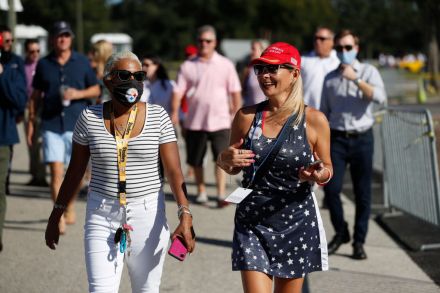
At its narrowest point, the Florida Straits is only 93 miles wide. You could swim it, if you were exceptionally motivated and athletic. I remember the first time I landed at Miami airport. I was struck by the amount of Spanish being spoken, and the signs advertising Cuban coffee. I immediately understood the dynamic that led to southern Florida jokingly being dubbed ‘Northern Cuba’.As one of the earliest states to announce its results, Florida crushed Biden supporters’ hopes for a landslide early in the night. Trump’s victory has been attributed to the Cuban vote. Comedian Jaboukie Young-White tweeted ‘the kkkubans came out in full force’ after Trump’s victory in Florida was announced.

cubans florida latinx

The creators of Breeders are locked into a game of How Far Can You Go

From our UK edition

Sky One’s Breeders (Thursday) bills itself as an ‘honest and uncompromising comedy’ about parenting. To this end, the opening scene featured Martin Freeman as Paul trying to do some work while his two children under seven made a bit of noise a couple of rooms away. Having given himself a little pep talk about not screaming at them, Paul then screamed at them — bursting in on their blameless fun to yell: ‘Jesus fucking Christ! How many times do I have to tell you to be quiet?’ He further informed them that he was going to leave home and they should ‘tell mummy that daddy’s gone cos he couldn’t stand the fucking noise anymore.

The New Republic’s useful idiot tour

'To live in Havana', Graham Greene once wrote, 'was to live in a factory that turned out human beauty on a conveyor belt.' To work as Cockburn does, as an underfed Grub Street hack, is to work in an industry that turns out pointless emails on a conveyor belt. Every now and then though a real diamond rolls out of the coal chute. On Friday The New Republic invited its readers on a Caribbean jaunt – to Raúl Castro’s Cuba. Under the heading 'Discover Cuba and Support the Cuban People' the email read: 'While Trump petulantly restricts travel to Cuba, The New Republic invites you to discover the culture, society and politics of the island, and most of all bolster the people of Cuba when they need it most.

cuba the new republic

Sun, sea and spooks

From our UK edition

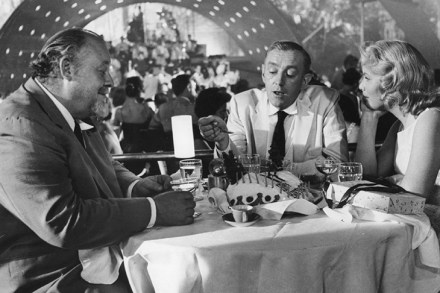
Cuba meant a lot to Graham Greene. Behind his writing desk in his flat in Antibes he had a painting by the Cuban artist René Portocarrero, presented to him by Fidel Castro, who had signed his name on the back, so that Greene didn’t know which way to hang it. Another prize possession was a tatty Penguin copy of Our Man in Havana, kept together by Sellotape, which the Russian cosmonaut Georgy Grechko had read in outer space, and in which, while circumnavigating our planet, Grechko had underlined the places in Havana that he had visited. ‘I’ve been reading it all my life, both on earth and in space,’ he wrote in his inscription when presenting the paperback to Greene in 1985. ‘I’ve learned it by heart.

Prince Charles’s trip to Cuba is a big mistake

From our UK edition

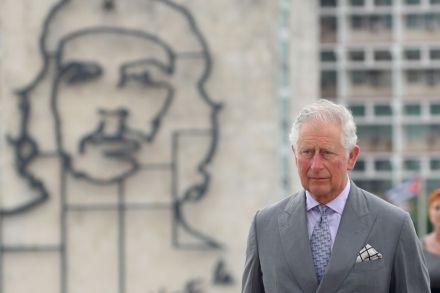
More than 120 years ago, Winston Churchill sailed to Cuba. While there, he dreamt of a country ‘free and prosperous…throwing open her ports to the commerce of the world, sending her ponies to Hurlingham and her cricketers to Lords.’ Now, in spite of Cuba’s communist revolution, the British government seems to have the same optimistic view as Churchill. But is it right to do so? On Sunday, the Prince of Wales and the Duchess of Cornwall landed in Havana. Their tour is the first official royal appointment in Cuba, a four-day trip the British government hopes will strengthen economic and diplomatic relations with the communist country. The royal trip may be historic, but no matter how you spin it, commercially, it is a complete waste of time.

The troika of absurdity

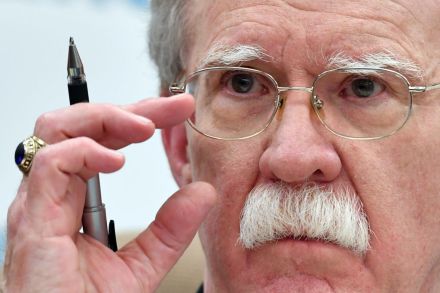
In a speech richly deserving adaption as a Saturday Night Live skit, US national security adviser John Bolton has unveiled the latest extension of America’s enemies list. Eclipsing the post-9/11 ‘Axis of Evil’ we now have a ‘Troika of Tyranny,’ consisting of those powerhouse troublemakers Cuba, Venezuela, and Nicaragua. According to Bolton, ‘this triangle of terror stretching from Havana to Caracas to Managua is the cause of immense human suffering, the impetus of enormous regional instability, and the genesis of a sordid cradle of communism in the Western Hemisphere.’ But fear not. Under the leadership of President Trump, the United States is now ‘taking direct action against all three regimes to defend the rule of law, liberty, and basic human decency in our region.

john bolton venezuela

The old man and his muse: Hemingway’s toe-curling infatuation with Adriana Ivancich

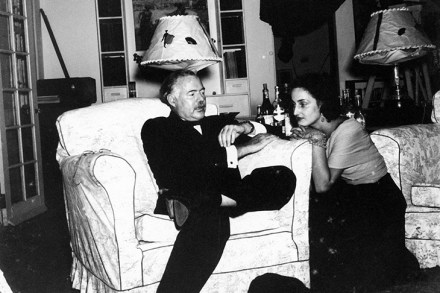
One rainy evening in December 1948, a blue Buick emerged from the darkness of the Venetian lagoon near the village of Latisana and picked up an Italian girl — 18, jet black wet hair, slender legs — who had been waiting for hours at the crossroads. In the car, on his way to a duck shoot, was Ernest Hemingway — round puffy face, protruding stomach and, at 49, without having published a novel in a decade, somewhat past his sell-by. He apologised for being late, and offered the rain-sodden girl a shot of whisky which, being teetotal, she refused.

ernest hemingway adriana ivancich

The old man and the siren

One rainy evening in December 1948, a blue Buick emerged from the darkness of the Venetian lagoon near the village of Latisana and picked up an Italian girl — 18, jet black wet hair, slender legs — who had been waiting for hours at the crossroads. In the car, on his way to a duck shoot, was Ernest Hemingway — round puffy face, protruding stomach and, at 49, without having published a novel in a decade, somewhat past his sell-by. He apologised for being late, and offered the rain-sodden girl a shot of whisky which, being teetotal, she refused.

The city of ugly love

From our UK edition

Cuba’s gorgeous, crumbling capital has always been a testing ground for writers. That heady combination of revolution, cocktails, sex and unpainted mansions seems somehow to set literary pulses racing. Trollope, Hemingway and Graham Greene all described it with verve, but there’s also plenty of dross. The city certainly charmed me, and, a few years ago, I thought I’d add to the pulp with my own contribution. I started courting London’s Cubans, and even had the ambassador to lunch. But despite some intriguing gossip (e.g. that Che Guevara was no fun at parties, and utterly deadpan), I abandoned the whole idea. It seemed to me that Havana was about to change forever, and that whatever I wrote would be old hat before the ink was dry.

On the trail of a lost masterpiece

From our UK edition

On 27 May 1939, the German liner St Louis docked in Havana with 937 passengers on board: all but a handful of them were Jews in flight from the Third Reich. After a dismal farrago of diplomatic obstruction, bare-faced corruption among local officials and the incitement by Nazi propaganda of anti-Semitic prejudice ‘even’ (as Leonardo Padura sorrowfully puts it) ‘among the open and happy Cubans’, only a score of refugees could disembark. The US refused entry to the rest. Their ship of despair sailed back to Europe.

A hellish paradise

From our UK edition

‘Short of writing a thesis in many volumes,’ Patrick Leigh Fermor wrote in his preface to The Traveller’s Tree, ‘only a haphazard, almost a picaresque, approach can suggest the peculiar mood and tempo of the Caribbean and the turbulent past from which they spring.’ Island People, Joshua Jelly-Schapiro’s first book, is an academic picaresque. This unlikely hybrid might be the ideal vehicle for a trip around the ‘American lake’; the Caribbean’s cultures and peoples are also hybrids, legacies of unlikely crossings. The masters, slaves, indentured labourers and merchant middlemen of the Caribbean were the first truly modern societies, drawn and dragged to a hellish paradise solely to serve a global economy.

Long life | 8 December 2016

From our UK edition

While American conservatives, including Donald Trump and the Cuban exiles in Florida, whooped with joy at the news of the death of Fidel Castro, and while millions of America-haters throughout the world extravagantly mourned his passing, Barack Obama was circumspect. ‘History will record and judge the enormous impact of this singular figure on the people and world around him,’ he said. This was a restrained comment by an American president about a foreign leader whose 47 years of dictatorship had been sustained almost entirely by stirring up hatred of the United States; and we won’t have to wait for history’s verdict on his impact on that particular country, for we know already how enormous it was. He not only humiliated JohnF.

The Spectator’s Notes | 1 December 2016

From our UK edition

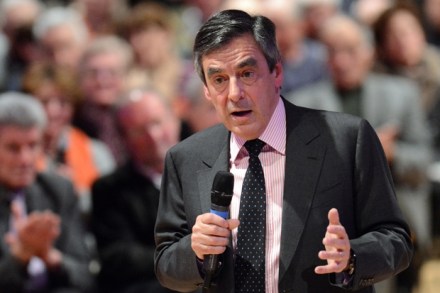
It seems perplexing that François Fillon, now the Republican candidate for the French presidency, should be a declared admirer of Margaret Thatcher. Although she certainly has her fans in France, it is an absolutely standard political line — even on the right — that her ‘Anglo-Saxon’ economic liberalism is un-French. Yet M. Fillon, dismissed by Nicholas Sarkozy, whose prime minister he was, as no more than ‘my collaborator’, has invoked her and won through, while Sarko is gone. In this time of populism, M. Fillon has moved the opposite way to other politicians. He says his failures under Sarkozy taught him that France needs the Iron Lady economic reforms which it has never really tried.

Revolutionary Cuba’s racism problem

From our UK edition

You can tell a lot about a country from its sexual politics. Out one night at La Fabrica, a state-funded arts venue and club in suburban Havana, a friend and I got chatting to a group of local girls. While we were talking, a trio of young black men were doing some kind of coordinated dance routine next to us. 'That’s cool,' I said. One of the girls rolled her eyes. 'I would never dance with a black guy,' she said, with a nonchalance suggestive of something that subsequently became very apparent. Racism is normal, and everywhere, in Cuba. Since Castro’s death we’ve heard everything about the perceived successes and failures of revolutionary Cuba. The conversation has run the usual gamut from economics to politics.

Watch: Douglas Murray gives Richard Gott a history lesson

From our UK edition

With Emily Thornberry en route to Cuba to attend the funeral of Fidel Castro, back in Blighty landbound socialists -- with selective memories -- continue to take to the airwaves to heap praise on the late dictator. Happily during one such appearance, from Richard Gott -- a former literary editor of the Guardian -- on Sky News, Douglas Murray was on hand to offer a few home truths.

Is Justin Trudeau totally clueless about Castro’s Cuba?

From our UK edition

In Miami’s Little Havana, champagne fizzed all weekend. Meanwhile, the rest of us in the free world amused ourselves comparing the barmiest political reactions to the death of Fidel Castro. Jeremy Corbyn is strong in the running for the 'Despot Hagiography Award', though top honours must go to the national statesmen remembering a tyrant as a saint. ‘A giant among global leaders,’ Irish President Michael Higgins gushed, ‘whose view was not only one of freedom for his people but for all of the oppressed and excluded peoples on the planet.’ His statement went on to praise Cuba’s health system as 'one of the most admired in the world’.

Castro created a façade for tourists – and misery for Cubans. Why can’t Corbyn see that?

From our UK edition

To hear Jeremy Corbyn hail Fidel Castro as a great hero of social justice is to be reminded that those who toast communists are never those who have actually lived under communism. Corbyn has visited Cuba: He might have been taken on a day tour of Havana, where tourists are ushered to buy famous Cuban cigars, replicas of Che Guevara’s hat and postcards with historic revolutionary slogans such as ‘¡Hasta la Victoria Siempre!’ On his bicycling tour Corbyn will have doubtless visited the charming colonial towns of Trinidad, Santiago de Cuba and Cienfuegos, perhaps swam in the Bay of Pigs or conducted a pilgrimage to Castro’s 1950s rebel headquarters in Comandancia de la Plata.

Jeremy Corbyn’s celebration of Castro proves that he’s not a serious leader

From our UK edition

Just when you thought the story of the Labour Party in the 21st century couldn’t get any more tragic, Jeremy Corbyn decided to issue a statement celebrating the life of a totalitarian leader who tortured and murdered his opponents. I wonder how many people will be ripping up their membership cards after Corbyn's comments on Fidel Castro. Perhaps not many, because Castro’s Cuba acted for so long as a lodestar for those who still see the United States as the greater evil in the region: a predatory colonial force holding the poor of Central and South America as hostages to neo-liberalism. A country without adverts, but with a functioning health service, 99 per cent literacy, the Buena Vista Social Club and Carlos Acosta: now that, they say, is surely something to admire.

Fidel Castro was a cruel dictator. Ignore the revisionists

From our UK edition

Why are left-wing dictators always treated with more reverential respect when they die than right-wing ones, even on the Right? The deaths of dictators like Franco, Pinochet, Somoza are rightly noted with their history of human rights abuses front and centre, but the same treatment is not meted out to left-wing dictators who were just as monstrously cruel to people who opposed their regimes. The death of Fidel Castro is a perfect case in point. BBC News described him as ‘one of the world's longest-serving and most iconic leaders’ only mentioning in the fourth paragraph that ‘Critics saw him as a dictator’. Critics?!