Cuba

Donald Trump could lead a new revolution in Cuba

From our UK edition

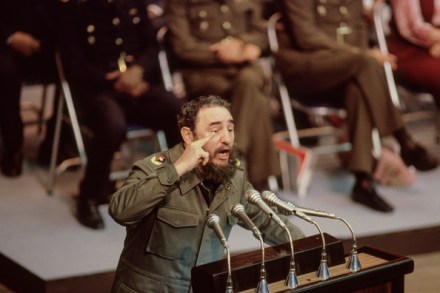
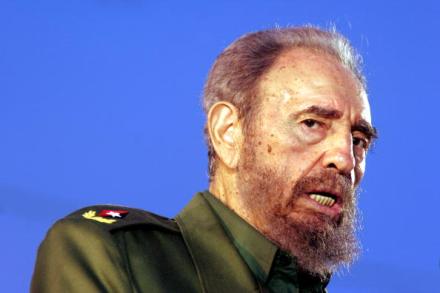
Sola mors tyrannicida est, wrote Thomas More: death is the only way to get rid of tyrants. And so it has proved for Fidel Castro. Twenty-six years ago, he looked finished. The USSR had collapsed, and the Soviet subsidies that had propped up the Cuban economy for 30 years had been abruptly terminated. Around the world, statues of Lenin were being melted down or sold off to collectors of kitsch. But Castro never wavered in his revolutionary fervour. Unlike the nomenclatura of Eastern Europe, he had not inherited the communist system, nor seen it imposed by a foreign army. The Cuban revolution was his revolution, and he was damned if he was going to give it up. By sheer force of personality, Castro kept the red flag flying over his muggy Caribbean island.

In the shadow of Picasso

From our UK edition

‘My painting is an act of decolonisation,’ declared Wifredo Lam. These are the first words you read on entering the retrospective of his work at Tate Modern. But I must say that both Lam and Tate got this statement 100 per cent back to front. On the contrary, Lam’s work strikes me as entirely a product of colonialism. It’s none the worse for that, but it’s not any better either. Lam (1902–1982) was originally from Cuba. His father, Enrique Lam-Yam, had emigrated from China and his mother, Ana Serafina, was of mixed African and Spanish descent. He was, in other words, a rather typical inhabitant of the new world. And the rich fusions of that milieu have produced such cultural wonders as Afro-Cuban music and, across the Gulf of Mexico in Louisiana, jazz.

A stronger pound, Cuban coffee and ‘back yard’ funerals

From our UK edition

The pound has enjoyed its biggest one-day surge in value for eight years as investors bet on Britain remaining in the EU. And the FTSE 100 recorded its best day for a year as shares in British companies soared by £47.5 billion, the Daily Mail says. ‘Analysts said the rally was a sign that investors from around the world now expect Britain to remain in the European Union – allaying fears of an economic hit following Brexit,’ according to the paper, which has been vocal in its support of Britain leaving the EU. Sir Philip Green continues to come under fire from MPs, says the Times. The ex chief of BHS is accused of diverting money away from the pensions fund during the sale of the company.

The Rolling Stones’s Saatchi show is clearly a money-spinner – what’s wrong with that?

From our UK edition

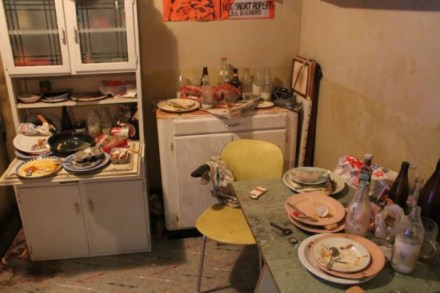
The most restless, resilient, rapacious rock & roll group in the world is on the move again. Less than two weeks after finishing a routinely Herculean tour of Latin America with an epochal show in Cuba, the Rolling Stones were back in their London hometown, disrupting traffic on the King's Road as Mick Jagger, Keith Richards, Charlie Watts and Ronnie Wood glad-handed a media scrum at a red carpet event to mark the opening of their latest project, Exhibitionism at the Saatchi Gallery. Towards the start of this 'immersive' odyssey, you find yourself in a room that looks like the set of a Harold Pinter play. Grease-plastered dishes are piled up in a blocked sink; overflowing ashtrays spill over the mantelpiece; a lingering smell of stale fish and chips permeates the air.

Viva Obama! Viva Fidel! Viva Jean-Claude Juncker!

From our UK edition

In Cuba, they are shouting: ‘¡Viva Obama! Viva Fidel!’ What a slogan. The FT headline ignorantly described this as a ‘Nixon in China’ moment: implying that Obama had previously been opposed to Castro’s Cuba. The US President is expected to come to Britain next month to order us to stay in the EU. Let us strew his way with palms. Let all of us — workers, peasants and soldiers — shout with one voice ‘¡Viva Obama! Viva Jean-Claude Juncker!’ This is an extract from Charles Moore's Notes. The full article can be found here.

Sixty years on

From our UK edition

The book of the year has long been a favoured genre in popular history, and is a commonplace today. While a book of hours endlessly recycles, the point of the book of the year is change, the more the better. There is an implied contest between years — you say 1917 is the most important; I trump you with 1940, or 1968 or 1979…. It is at once a rather silly genre, potentially nothing more than a dreary compendium of novelties, and one with distinct possibilities, as illustrated by both these books taking on 1956, one globally, one for Britain. Simon Hall’s approach is to write the story of a year in global history, by moving through the Americas, Africa and Europe, taking up the story of particular events as they happen at the rate of over one a month.

On the money

From our UK edition

The Big Short is a drama about the American financial collapse of 2008. It talks you through sub-prime mortgages, tranches, credit-default swaps, mortgage-backed securities, collateralized debt obligations ...and, yes, I just bored myself to tears typing that list. I had to prop my eyes open with matchsticks typing that list. I would even propose that I was more bored typing that list than I’ve ever been in my whole life, which is saying something, as I saw Monuments Men. And, previously, I would have proposed that there is no way you could ever make any of the above fascinating or compelling or sexy, let alone scathingly funny. But The Big Short is fascinating, sexy, compelling and scathingly funny. It’s a miracle.

Cuban comet

From our UK edition

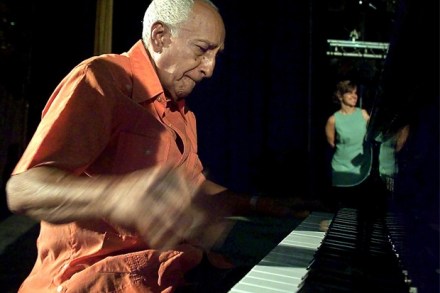
By chance, my first night in Havana in 1987 was the night the clubs went dark to mark the death of Enrique Jorrin, the inventor of the cha-cha-cha, whose rhythmic brainstorm had gone global. My grandparents used to dance cha-cha-cha at Latin nights at the Grand Hotel in Leicester in the 1950s. Rubén Gonzalez, Jorrin’s pianist, thought that his death spelled ‘the end of the old music’ and went into retirement, his piano destroyed by termites in the tropical humidity. Another contemporary who didn’t quite make his mark was Ibrahim Ferrer — he’d been in a moderately successful band Los Bucucos. Ibrahim retired at about the same time, for similar reasons to Rubén — the work had dried up.

Robert Conquest: ‘There is something particularly unpleasant about those who, living in a political democracy, comfortably condone terror elsewhere’

From our UK edition

Robert Conquest, the historian of Soviet Russia who has died aged 98, was also The Spectator's literary editor between 1962 and 1963. The following essay was published in the magazine on 4 May 1961, in response to a letter published in the Times about the Bay of Pigs Invasion.  The round robin on behalf of some supposedly Leftist cause is a well-established little nuisance which we should all have got used to by this time. The letter sent by Mr.

Portrait of the week | 23 July 2015

From our UK edition

Home Parents would be able to have their children’s passports removed if they were suspected of planning to travel abroad to join a radical group, under provisions outlined by David Cameron, the Prime Minister, to deal with Islamist extremism. It emerged that five British pilots embedded with allied forces had been taking part in air strikes over Syria, which Parliament had voted against in 2013. Julian Lewis, the Conservative chairman of the Defence Select Committee, accused Mr Cameron of making up policy ‘on the hoof’. Lord Richards of Herstmonceux, the former Chief of the Defence Staff, said that in order to defeat the Islamic State, ‘tanks would have to roll and there’s going to have to be boots on the ground’.

Visit Cuba – it’s the perfect holiday destination for poverty fetishists

From our UK edition

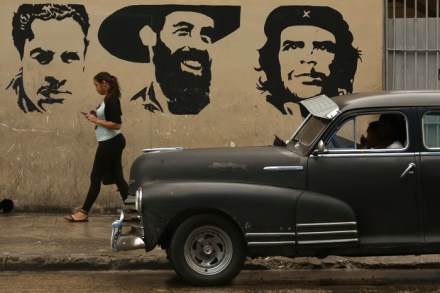
Since last December, when officials from Cuba and the United States announced that the two countries, locked in a Cold War stand-off for 54 years, would seek to normalise relations, the tourist industry has been admonishing us to travel to Cuba ‘before it changes’. Despite Cuba’s listless youth being well-versed in American culture - be it the latest fashions, pop songs or movies - on the surface Cuba remains stuck in a time warp. For tourists, the museum piece aspect of Cuba is a big part of the appeal. Thus visitors to Havana can go for a ride in a Cadillac, take in the neo-classical architecture (along with the smoke from a good cigar) and sip a mojito at Ernest Hemingway’s old drinking spot.

From ambrosia to zabaglione

From our UK edition

Should sugar be taxed? Some of the contributors to The Oxford Companion to Sugar and Sweets seem to think so. Sugar certainly appears less appealing than it used to. Its negative effect on our teeth is undeniable, and it now takes the rap for many of the ills we formerly blamed on fats, such as obesity, high blood pressure and diabetes. But sugar is also now bound up with politics, because of its historical connection with slavery. Our awareness of this we owe to the groundbreaking, imaginative scholarship of Sidney Mintz, whose 1985 Sweetness and Power: The Place of Sugar in Modern History is easily the most frequently referenced work by the 265 contributors to this massive volume.

Portrait of the week | 14 May 2015

From our UK edition

Home David Cameron, the Prime Minister, soon got used to the surprise of the Conservatives being returned in the general election with a majority of 12. He retained George Osborne as Chancellor of the Exchequer and made him First Secretary of State too. Theresa May, Philip Hammond, Michael Fallon and Iain Duncan Smith also stayed put, but Chris Grayling replaced William Hague, who had left the Commons, as Leader of the House, to be replaced as justice secretary by Michael Gove, who was replaced as chief whip by Mark Harper. Amber Rudd became Energy Secretary. John Whittingdale became Culture Secretary in place of Sajid Javid, who became Business Secretary. Boris Johnson was to attend weekly political cabinets.

Letter from Cuba: The tourists are coming – but don’t expect Walmart just yet

From our UK edition

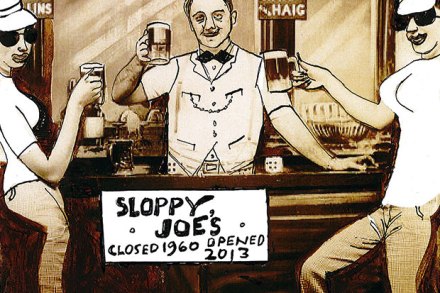
Sloppy Joe’s — which starred in the film of Graham Greene’s Our Man in Havana — was always likely to wither on the post-revolution vine. As the decadent hangout of unsavoury ‘imperialists’ whom Fidel Castro despised, it never stood much of a chance. Frank Sinatra, John Wayne and local hero Ernest Hemingway all used to call in from time to time, slaking their thirst at the 65ft-long mahogany bar. It closed in 1960 and no one expected to see mojitos and daiquiris being poured here again, at least not until Fidel and his brother Raúl were gone. But needs must. Double measures and double standards keep Cuba alive.

Both Belgium and the United States should be called to account for the death of Patrice Lumumba

From our UK edition

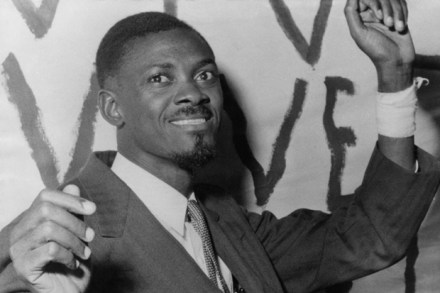
For decades, all the outside world knew was that Patrice Lumumba, the Congolese independence leader, had been done away with. Like so much connected with the Congo, details were lost in the murk of Africa’s magnificent but broken giant. He had been fed to Katangan pigs, drowned in the river — or was perhaps even still alive and being held hostage in the Ituri rain-forest. So radiotrottoir assured me variously in January 2001 when I made my first visit to Kinshasa around the 40th anniversary of Lumumba’s disappearance. The reason for my trip felt darkly familiar: one of Lumumba’s successors as national leader, Laurent Kabila, had himself just been assassinated by a ‘turned’ bodyguard.

Restoring diplomatic ties with Cuba? What’s with all this eruption of sanity in Washington?

From our UK edition

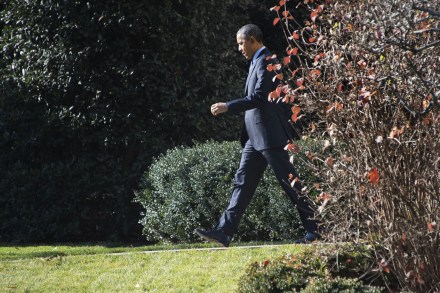
The conventional wisdom, at least in Britain, seems to be that Barack Obama's presidency has been a desperate disappointment. That is partly a reflection of the extravagant - impossibly so - expectation that accompanied him to the White House and partly, of course, a simple reminder of political reality. And yet it seems to me that you can make a persuasive case that he's been a better President than his predecessor (a dismally low bar, granted) but also a better President than Bill Clinton. This, true, reflects the gravity of the times. Clinton complained in his autobiography that he'd been deprived the chance of tackling the kind of challenges that secure a place in the history books. His years in office were too sunny, too fat, for that.

What a lost prison manuscript reveals about the real Nelson Mandela

From our UK edition

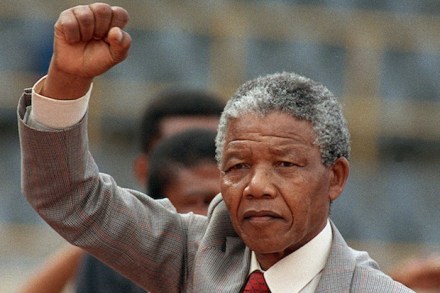
This is a story about Nelson Mandela, and it begins on Robben Island in 1974. Prisoner number 466/64 is writing up his life story, working all night and sleeping all day.  Finished pages go to trusted comrades who write comments and queries in the margins. The text is then passed to one Laloo Chiba, who transcribes it in ‘microscopic’ letters on to sheets of paper which are later inserted into the binding of notebooks and carried off the island by Mac Maharaj when he is released in 1976. Outside, the intrepid Mac turns the microscopic text into a typescript and sends it to London, where it becomes the Higgs boson of literary properties, known to exist but not seen since it passed into the hands of the South African Communist Party, or SACP, in 1977.

Alexander Chancellor: The Chinese must save the cigar from extinction

From our UK edition

In Dorchester during the Christmas holiday I bought a two-slice electric toaster at Currys. It was a nice little toaster that worked very well when I got it home. And it cost only £4.50, which turned out to be little more than half the price of a packet of Marlboro cigarettes. It’s some years since I gave up smoking; but at my peak I smoked three packets of Marlboros a day, which now would cost the same as more than five two-slice electric toasters. Or, put another way, with the money I have saved from giving up smoking I could buy nearly 2,000 electric toasters a year. I could by now be running a successful electric toaster shop.

Venezuela: a shining example of how not to help the poor

From our UK edition

No serious person today views the Cuban Revolution as anything other than an impoverished tyranny – up to and including the leaders of that Revolution, who have been hastily turning toward capitalism since learning in 2009 that the island was on the brink of insolvency. It remains much easier to find useful idiots willing to defend Venezuela’s so-called ‘Bolivarian revolution’, however, which until recently was supposed to promise something better than its ossified Caribbean neighbour. Not for much longer, perhaps; for Venezuela is on the brink of a social explosion after 15 years of economic incompetence by Islington’s favourite petrocrat. It was reported this week that, absurdly, the most oil rich country in the world is facing food shortages.

Carlos Acosta, the great dancer, should be a full-time novelist

From our UK edition

Carlos Acosta, the greatest dancer of his generation, grew up in Havana as the youngest of 11 black children. Money was tight, but Carlos won a place at ballet school, and before long he was enthralling audiences at Covent Garden as a half Jagger, half Nureyev figure with a twist of the moon-walking Jackson in the mix. Now Acosta is about to leap into the world of literature with a debut novel, Pig’s Foot, written over a period of four years during rehearsal breaks. For all its manifest debt to Latin American so-called ‘magic realists’ (Marquez, Borges, Vargas Llosa), the novel stands triumphantly on its own. In pages of salty-sweetprose, it traces five generations of a black family through Cuba’s tumultuous recent history.