Crisis

If you think your bills are bad now, just wait

Forgive the doom-mongering, but the US, and especially the UK, may be dangerously on course for a sovereign debt crisis. Yet debt and deficits play a surprisingly minimal role in our countries’ politics. Overspending on borrowed money hardly featured in either nation’s elections of 2024. A Labour MP hoping for Andy Burnham to challenge Keir Starmer for her party’s leadership recently told Times Radio that investors would see the UK as “the best place to be” if only the government pursued “progressive policies that do speak to our communities.” She added darkly, “The markets will have to get into line” – which was like brandishing a saber at the heavens and threatening that the weather “will have to get into line”... or else!

debt bills

How much does Britain still ‘love’ the NHS?

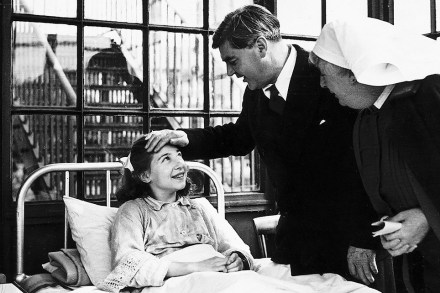
‘Of course I support the NHS. Everybody supports the NHS, or says they do,’ poked the comedian Frankie Boyle in one of the many campaigns promoting the health service. To admit you don’t believe in this national institution is as taboo as not caring about Britishness, about goodness, about people. The public is keen to find evidence for this collective belief. Nigel Lawson famously said that ‘the NHS is the closest thing the English have to a national religion’ – words which tend to be heard as praise. But his comment was laced with criticism. He continued, ‘with those who practise in it regarding themselves as a priesthood. This made it quite extraordinarily difficult to reform.

Turmoil in Tuscany: The Three Graces, by Amanda Craig, reviewed

The title of Amanda Craig’s enjoyable and provocative ninth novel might conjure the dancing trio in Botticelli’s ‘Primavera’ (which we visit in the book, set in Tuscany); but the three graces here are Ruth, Diana and Marta, elderly expat friends who meet for weekly gossips over coffee, ‘united by age, exile, the love of dogs and their disinclination to discuss their infirmities’. The women may be less beautiful than Botticelli’s, but they are certainly more formidable. By the end of the first chapter they’ve already smashed a car window to rescue an overheating dog.

How the British helped JFK navigate the Cuban Missile Crisis

From our US edition

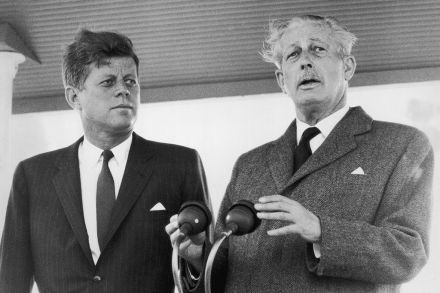
The Atlantic alliance hasn’t always been quite as special as politicians on both sides of the sea like to pretend. To take just the last sixty years: there were the differing views on Vietnam that led Lyndon Johnson to assess the British premier Harold Wilson as "a creep," while Richard Nixon privately considered Ted Heath "weak" and "as crooked as a corkscrew" (which was saying something coming from him). In October 1962, however, the principal Western leaders really did have something special. Between them, they probably helped save the world from nuclear annihilation. When on October 16, President John F.

Don’t bet on the EFFing crisis bringing down Boris

Boris Johnson is taking one heck of a risk by making labour shortages a deliberate part of his economic strategy. That, at least, is the conventional wisdom about the Prime Minister in the wake of party conference season.  If things go well, then businesses will raise productivity by investing heavily in new machinery and more training for home-grown workers who currently lack key skills. And then all will be fine for Johnson. But if things go badly, labour shortages will merely fuel rampant inflation, while gaps on shop shelves will become endemic. Key groups of voters will turn on the PM, hastening his demise.

Are low wind speeds to blame for Britain’s energy crisis?

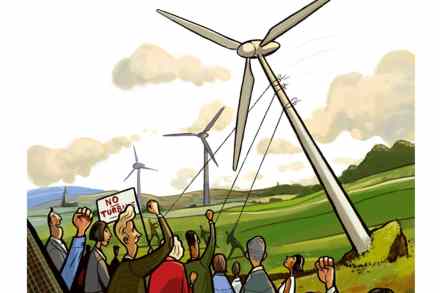
Why has Britain suddenly been plunged into an energy crisis, with day ahead auction prices for electricity rising to over £400 per MWh, ten times what they were this time last year? The spike in global gas prices caused by economic recovery from Covid has been commented on often enough, as has the failure of Britain to maintain sufficient gas storage reserves – we have closed a large gas storage facility as other countries have been building up theirs’. So, too, we have learned of the failure of many smaller energy companies to hedge the prices of their energy, thus putting them at risk of spikes in wholesale prices.