Crime

The pernicious rise of the Fake Fuzz

From our UK edition

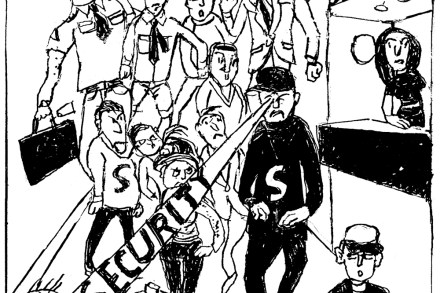
The Harrow Council ‘enforcement officers’ might have been more extreme in their language than other members of the Fake Fuzz, but their arrogance was entirely typical. Uniformed security guards are appearing everywhere. Shops, pubs, train carriages – the wannabe rozzers are there, in your face, vests bulging, walkie-talkies at the ready. They glower and loom, filling your day with bad vibes and absurd rules. It’s unclear what started the argument in Harrow, but the member of the public whose video went viral last week was told by the two officers not to ‘butt in my business’, then ordered to come to a nearby alleyway where one of them would ‘show you what time it is’. Needless to say, the man refused the offer.

How many people did Australia’s backpacker murderer kill?

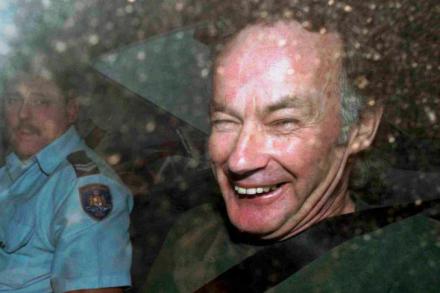
Australians are known for world-class performances in many fields. Mostly, our achievements are a source of national pride, but one field of achievement causes us only horror and shame. Our serial killers are some of the most prolific and brutal anywhere. And none are more brutal or prolific than the late, unlamented, Ivan Robert Marko Milat. Milat took his victims into the forest bound, terrified and subjected them to unspeakably sadistic torture The facts of Milat’s known killing spree are gruesome and horrific. In the late 1980s and early 1990s, Milat turned the Belanglo State Forest, a bushland reserve off the main highway to Melbourne, and 80 miles from Sydney, into his personal killing field.

backpacker

Henry Nowak and the dangers of ‘anti-racist’ dogma

From our UK edition

‘I can’t breathe.’ When those chilling words were uttered by George Floyd in 2020, they provoked global outrage. The combination of the horrific manner of Floyd’s choking by the police officer Derek Chauvin, the pressure cooker of lockdown and the historical tensions around American race relations led to worldwide protests; despite Floyd’s death being 4,000 miles away in Minnesota, Keir Starmer felt compelled to take the knee in solidarity. ‘I can’t breathe.’ These were also the dying words of Henry Nowak, an 18-year-old student in Southampton murdered by the 23-year-old Vickrum Digwa. Nowak was coming back from a night out when he was stabbed by Digwa five times with a ceremonial knife. When the police were called, Digwa accused Nowak of having been racist.

The lessons from Henry Nowak’s murder

From our UK edition

I wonder how many readers have ever heard of the name Kriss Donald? The young Glaswegian was just 15 years old in 2004 when he was kidnapped by a local gang of Pakistani men. The group selected him because he was white and they had some beef with a group of white men with whom Donald had no connection at all. After driving around for hours, the gang – led by one Imran Shahid – stabbed Donald repeatedly before dousing his body in petrol and setting him alight. I also wonder how many readers have heard of the name Tony Timpa? The white, unarmed Texan was 32 in 2016 when he suffered some sort of mental breakdown in public. Instead of assisting him, police arrived at the scene and restrained him in such a way that he died.

Japan isn’t as safe as you think

I was robbed in Tokyo recently, an experience as unexpected as it was distressing. Despite long years in London, plus decades of rough and ready globetrotting to some of the sketchiest places on earth, I have never been a victim in any of these notorious crime hotspots (I feel snubbed especially by London), but this was the second such experience in supposedly the safest city in the world.   What are the odds? The first time I dropped my wallet in a branch of the bargain bucket Don Quijote store and later received a phone call from the staff saying they had it, with ID cards intact but 50,000 yen gone.

Does a propensity for crime depend on one’s DNA?

From our UK edition

This book begins strangely. Kathryn Paige Harden and her man Travis go off into the Texas desert to take some LSD in the hope that it will provide a ‘hard serotonergic reboot’. They have not so far had sex, but Travis has plans. ‘You’ll come back with your third eye,’ he says, ‘and then we’ll fuck. You’ll be glad we waited.’ At this point you may be tempted to hurl the book across the room. The self-centredness is oppressive. But persist. It rapidly becomes a very powerful read. Harden is a psychologist and behavioural geneticist, and the primary theme of Original Sin is the way in which science raises questions about morality and the law. For example, is a psychotic man who murders his wife less guilty than a sane man who does so with a clear head?

Shameless Britain: we are a nation of shoplifters

It’s been more than a week since Sean Egan, a manager at Morrisons in Aldridge, announced that he’d been sacked just for doing his job – for stopping a thief nicking booze – and national outrage over the whole affair is still running high. Sean is on morning TV as I write, donations to pay for his appeal rising steadily. In part, the fuss is a measure of sympathy. Sean worked at Morrisons for 29 years and was liked by the people of Aldridge. He was sacked, say Morrisons, because they have a “deter, don’t detain” policy – though what Morrisons think could possibly have deterred this thief, given his long list of previous convictions, is anyone’s guess. But the feeling for Sean isn’t just a swell of support for one man; it’s also a symptom of wider frustration.

shoplifters

Shameless Britain: we are a nation of shoplifters

It’s been more than a week since Sean Egan, a manager at Morrisons in Aldridge, announced that he’d been sacked just for doing his job – for stopping a thief nicking booze – and national outrage over the whole affair is still running high. Sean is on morning TV as I write, donations to pay for his appeal rising steadily. In part, the fuss is a measure of sympathy. Sean worked at Morrisons for 29 years and was liked by the people of Aldridge. He was sacked, the supermarket says, because it has a ‘deter, don’t detain’ policy – though what it thinks could possibly have deterred this thief, given his long list of previous convictions, is anyone’s guess. But the feeling for Sean isn’t just a swell of support for one man; it’s also a symptom of wider frustration.

What happened to Provence?

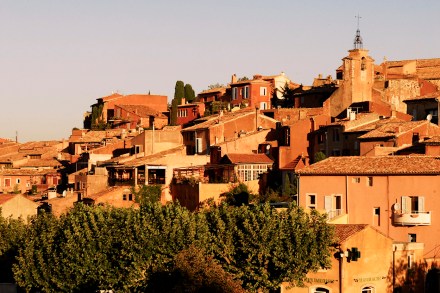
The best time to visit Provence, I always advise when asked, is in the spring before the scorching heat and summer crowds. I have been spending time in the south of France since the early 1990s. Provence was fashionable in those days. Peter Mayle’s massively successful book, A Year in Provence, inspired thousands to pull up stakes and move to southern France to emulate his idyllic life in the Luberon hills. Some settled farther west in the Dordogne, famously called "Dordogneshire" for its concentration of British expats. Mayle became a one-man publishing industry, following up with sequels including Toujours Provence and Encore Provence. Thirty years ago, I stayed with friends who owned a renovated farmhouse with a spectacular view of the Dentelles de Montmirail.

Letters: Ban PPE graduates from public office

From our UK edition

Dark Greens Sir: Both your leading article and Angus Colwell’s cover piece (‘Zacked Off’, 28 March) are bang-on. Although I have never been an activist, I do have some previous as an environmentalist. Among other things, I was briefly employed by the Green party at the turn of the century. I felt I could support it because it represented something important that was otherwise missing from political discourse. It was vaguely liberal, or even libertarian, but not really on the left-right axis. In the mid-2010s I rejoined the party for two years and found that it had been heavily colonised by ‘progressives’ but still contained a decent core. No longer.

Tradecraft secrets: a choice of crime fiction

From our UK edition

If it takes one to know one, this may explain why spy fiction is enjoying such a renaissance, since among the best new titles are those written by former intelligence operatives. I.S. Berry and David McCloskey are both former CIA officers who happily acknowledge how much their novels rely on their past careers. Equally impressive is the work of ex-MI6 officer James Wolff, whose use of a pseudonym puts him at a comparative disadvantage when it comes to promoting his books, but whose Spies and Other Gods (Baskerville, £20) places him in the top tier of today’s spy writers. A young ex-academic, Aphra McQueen, is sent by a parliamentary oversight committee to investigate a whistleblower’s complaint about MI6.

Organised crime is targeting artisanal food

From our UK edition

Organised crime has a new focus: high-end food production. The latest victim is Wildfarmed, a UK-based, regenerative flour business co--founded by one half of the band Groove Armada. Last month, 50 tons of its flour were stolen, disguised as a wholesale order for the French supermarket E. Leclerc. In an audacious move, the fraudsters asked for the wording on the bags to be translated into French. Wildfarmed obliged. The 1kg bags – all 50,000 of them – were loaded into containers ready for export. Then they vanished. Wildfarmed’s disco-ball neon branding makes it a surprising target. But the real question is not how anyone hides a haul of hard-to-miss flour bags, but whether this theft is a bellwether.

Why is crude oil measured in barrels?

From our UK edition

Crude estimates Why is crude oil measured in barrels?  — From medieval times onwards, all sorts of commodities were measured in barrels for convenience, from wine to eels to whale oil. However, standardisation only arrived in fits and starts. Since Richard III’s time, a barrel of wine was defined as 42 ‘wine gallons’, but this wasn’t the same as 42 gallons of water. When the US oil industry started in the mid 19th century, traders adopted the same measure as was used for selling wine. However, in 1824, Britain had standardised a gallon as 20 per cent larger than a wine gallon, the latter of which was renamed a ‘US gallon’. Hence a barrel of oil is only 35 imperial gallons.

Dark family secrets: Repetition, by Vigdis Hjorth, reviewed

From our UK edition

‘Back then, of course, I didn’t know my parents were locked into an impossibility even greater than mine. That I was living in a crime scene.’ So writes the narrator 48 years after the strange events that unfold in this bitter, brief, shattering novel. But what was the crime? Is the narrator the victim? Is her controlling mother’s hysteria over perfectly normal adolescent exploits explained by the fact that the father had abused his daughter? Is the narrator in truth Vigdis Hjorth? And is this book then the Norwegian novelist’s harrowing memoir? Is autofiction really fact in a cunning mask? Is all fiction waiting to be decoded into reality? Like the police, Hjorth doesn’t do answers.

Do I have what it takes to be a magistrate?

I’m thinking of becoming a magistrate. Before applying, I was advised to attend a few sessions and find out how it all works. My first case was a bag theft from a London pub. The accused, an Algerian football ace, pleaded guilty through an interpreter. The court heard that his glittering football career had been cut short by ‘an accident’ and he was currently living in London ‘with the support of friends’. The magistrate, a kindly, soft-spoken redhead, fined him £60 and made a note of his ‘good character’. She reduced his fine by £20 as a reward for pleading guilty. The defendant lounged against the rail of the dock looking irritable and impatient as his sentence was pronounced. Outside the court, he spoke to his lawyer without a translator.

‘Here’s a novel concept – arrest bad people’: how Sir Stephen Watson turned around Greater Manchester Police

From our UK edition

Sir Stephen Watson, Chief Constable of Greater Manchester Police (GMP), is Warrington-born, Rhodesia-raised. His father was an engineer in the Royal Navy and his work took the family to South Africa, South West Africa and then, when Sir Stephen was still a schoolboy, the breadbasket. The Watson family stayed in Rhodesia until Robert Mugabe became prime minister in 1980 and threw them out. ‘I saw the collapse of policing,’ Sir Stephen says. ‘I saw the collapse of the rule of law. I saw the collapse of health systems, of education systems, of legal systems.’ He also saw what Britain could lose. ‘I think there is a complacency in the UK. We take things for granted. I like to quote Kipling on this: “What should they know of England who only England know?

Where exactly is the Middle East?

From our UK edition

Less near Where exactly is the Middle East?  – The term was first popularised in an article by Alfred Thayer Mahan, a US academic on naval strategy, published in the National Review in 1902, proposing that western powers would need outposts like Gibraltar to serve their interests in the region, which he defined as the countries bordering the Persian Gulf. This distinguished it from the Near East, a now largely defunct term for the countries surrounding the eastern Mediterranean, including Turkey and the Balkans. Over the first half of the 20th century, the Middle East gradually consumed the Near East.

The uncomfortable truth about the new Mental Health Act

From our UK edition

Three years ago, Nottingham University students Grace O’Malley-Kumar and Barnaby Webber, along with caretaker Ian Coates, were murdered by Valdo Calocane in a psychotic rampage. These were preventable deaths. Calocane should have been detained long before he went on his killing spree. The fact that he wasn’t is the consequence of a decade of progressive ideology in the NHS and police, who turned a blind eye to Calocane’s psychosis in part because he was a black man. By 2023, there could have been no doubt about his violent tendencies. In 2020, he was arrested after he attempted to force entry into his neighbour’s flat, believing (falsely) that his mother was being raped inside. Just 11 minutes after he was released on the same day, he attempted to force a woman’s door.

The gentrification of British crime novels

From our UK edition

Eighty years ago this month, in February 1946, the left-wing Tribune magazine published George Orwell’s essay ‘The Decline of the English Murder’ in which the writer identified a certain class of crime as most appealing to the tabloid-reading British public – and contrasted the ‘cosiness’ of this type of early 20th-century domestic murder with the brutal sadism of killings committed in Britain during the second world war.  Two years previously, in 1944, while war still raged, in another essay entitled ‘Raffles and Miss Blandish’, Orwell specifically contrasted the ‘hard-boiled’ school of crime fiction with the gentlemanly Raffles stories of E.W. Hornung, featuring a well-mannered upper-crust jewel thief.

Who’s the victim in Zohran Mamdani’s New York?

Mayor Zohran Mamdani made a hospital visit to comfort the victim of a knife attack on a police officer, who was forced to fire his weapon to defend himself. Of course, the bed Mamdani visited was that of the schizophrenic man, Jabez Chakraborty, who charged at police and was shot as a result. It almost goes without saying that New York’s new mayor did not check in on the officer.Face and voice full of strained emotion, Mamdani said after the visit: “No family should have to endure this kind of pain,” referring to the family of the knife-wielder. He made no remarks about the strains on families of police officers whose incredibly difficult, and increasingly thankless job, puts them face-to-face with knife wielding assailants for a starting salary of $60,000.

Mamdani