Covid-19

‘You are endangering the world’: German tabloid goes to war with China

From our UK edition

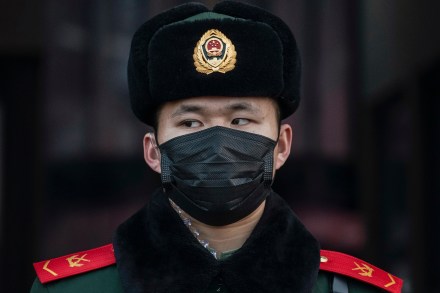
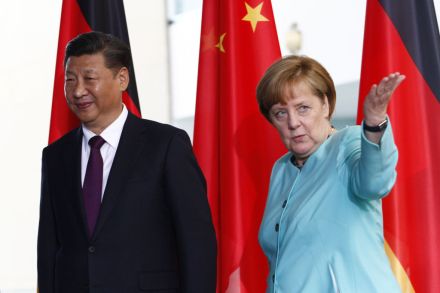
Could China have done more to prevent the coronavirus pandemic? One tabloid editor in Germany certainly thinks so and an extraordinary bust-up has broken out between the Chinese government and his newspaper as a result. The row kicked off last week when Bild – the best-selling paper in Germany – published an editorial entitled 'What China owes us', calling for China to pay reparations of £130 billion for the damage done by the outbreak of the virus.  Later that day, the Chinese embassy in Berlin then responded with an open letter saying ‘we regard the style in which you 'campaign' against China in your current report on page two as infamous...
Did the government really ‘brush aside’ coronavirus fears in January?

From our UK edition

Was Matt Hancock shrugging off Coronavirus in late January? An 'insight' article in the Sunday Times which has spread like wildfire online accuses him of doing so. The virus was making its way over the world, it says, but 'it took just an hour that January 24 lunchtime to brush aside the coronavirus threat. Matt Hancock, the health secretary, bounced out of Whitehall after chairing the meeting and breezily told reporters the risk to the UK public was “low”.

When will the public accept an end to the lockdown?

From our UK edition

In the weeks leading up to Boris Johnson announcing lockdown measures, ministers and aides wondered how in the world you could enforce a lockdown like the one seen in authoritarian China in a liberal democracy such as the UK. But following Dominic Raab confirmation on Thursday that there will be another three weeks of lockdown, public resistance is the least of ministers' concerns. The biggest surprise about the lockdown within government has been the level of public support for it. Polling has repeatedly shown that rather than fighting the social distancing measures, Britons are embracing them more obediently than anyone in might have dared imagine.

The global politics of a pandemic

From our UK edition

The Great Game of the 21st century is upon us and as ever it’s a scramble for resources. This time, though, the thirst is not for land or diamonds or gold. Personal protective equipment has become the oil of the contemporary moment: desperately needed by a world that is strafed by coronavirus. Britain has its own urgent PPE supply problems. But what about the broader international struggle? The answer to this question offers the clearest glimpse of how our post-pandemic global politics is likely to look.   At the top of this scramble stands China. Ahead of the curve (for obvious reasons), it imported about 2.5 billion healthcare items between 24 January and 29 February, thereby denying vital equipment to other countries.

Leaked US document suggests Covid may be less lethal but more widespread

From our UK edition

Have we been vastly underestimating the number of people who have been infected with Covid-19 and correspondingly overestimating its mortality? No one knows because we don’t know just how widespread this infection is in the population at large. But a leaked document from the US Department of Homeland Security suggests that the US government, at least, is working on the assumption that the virus is a lot harder to contain – but a lot less deadly – than is widely assumed. The document compares the likely outcome of two scenarios: one in which the outbreak is ‘unmitigated’ – i.e. life carries on as normal – and one in which the government imposes a 30-day 'shelter in place' order followed by further mitigation measures.

The joy of pumping iron at 83

From our UK edition

Gstaad So the days — and months — drift by. This once peaceful Alpine town is packed with rich refugees fleeing the you-know-what. They come from nearby cities crammed with real migrants. There isn’t an empty apartment left, and the locals are raking it in. Two good friends have died, the village is supposed to be locked down, but God awful bikers are everywhere. Yes, they are biking down the middle of narrow paths which makes it impossible to keep your distance from them. What boggles the mind is the mentality of the morons who refuse to practise social distancing. The hotels, clubs and restaurants are shut, so surely they must be aware that there’s a virus making the rounds. But they persist in brushing past one as if it’s touchy-feely season.

A first-hand account of a racehorse trainer’s battle for survival

From our UK edition

Sport may well be ‘the great triviality’ as Timeform founder Phil Bull once put it, and racing as trivial as any. But many thousands of jobs depend on it. To get an idea of the impact the pandemic is having on the 550 licensed training yards in Britain, I called up my friend Simon Dow at his Epsom yard. Back at Clear Height stables, where he has had his greatest successes with horses such as Young Ern and Chief’s Song, Simon has around 30 horses. Typically, the first thoughts of this articulate workaholic were with those living in the London tower blocks visible on clear days from the Epsom gallops. ‘We have to remember how lucky we are by comparison. We have so much freedom.

The UK will not request an extension to the Brexit transition period

From our UK edition

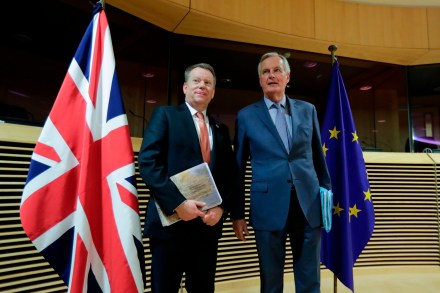
David Frost, the Prime Minister’s chief Brexit negotiator, has held discussions with the First Secretary of State Dominic Raab and other senior ministers in the last few days. As I say in tomorrow’s Spectator, the conclusion of these discussions has been that the UK will not request an extension to the transition period. Interestingly, I understand that no one in these discussions backed asking for an extension. The thinking is that a delay would not solve the fundamental policy problems and that a deal is either possible or not. Another factor, I understand, is that the government worries about the cost of any extension.

Keir Starmer is the conservative we need in this time of crisis

From our UK edition

These are discombobulating times. A deadly pandemic; the United States at sea, China belligerent and the EU at war with itself. British politics was in flux before the virus hit. Now it is vertiginous. The Tory party, long seen as the guardian of the status quo, has been forced to change tack as it deals with the fallout. Keir Starmer, recently elected as Labour leader, will play a vital role in this realignment – but not one we would once have envisaged. Starmer’s election as Labour leader in the midst of coronavirus is a good thing. He is the anti-Corbyn for a Labour party looking for calm and stability after almost five turbulent years. He is the definition of the establishment technocrat in an age of populists.

Rishi Sunak tries to calm coronavirus crunch fears

From our UK edition

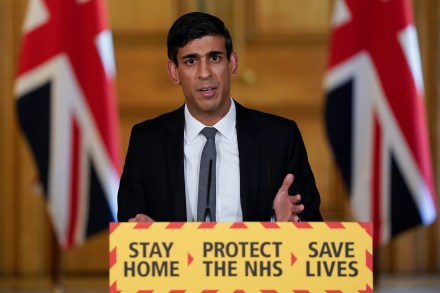
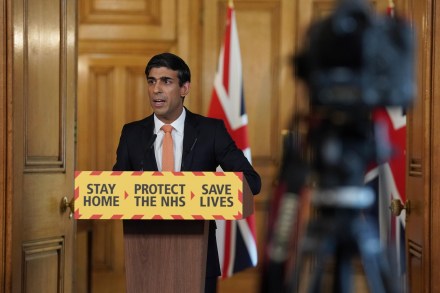
Following Tuesday's bleak headlines over the effect the coronavirus lockdown could have on the economy, the Chancellor attempted to strike an optimistic note in the daily government press conference. With the OBR projection suggesting three months of lockdown followed by a partial easing could lead to the UK economy shrinking by 35 per cent, Sunak said that while the prediction was worrying the figures were in some ways unsurprising as these are unprecedented times. However, the Chancellor stressed that it was simply 'a possible scenario' and it 'may not even be the most likely'.  Sunak said the important takeaway is that the economy would likely 'bounce back quickly' once measures are lifted.

OBR analysis reveals staggering impact of Covid-19 on UK economy

From our UK edition

Just days after the Office for Budget Responsibility announced its economic forecasts in March, the reality of Covid-19’s impact on the UK economy sunk in, and its projection was rendered completely obsolete. A month later, with a clearer picture of the toll the virus and lockdown have taken, the OBR today released its new coronavirus analysis, showing a staggering 35 per fall in real GDP in the second quarter, and an unemployment spike of up to 10 per cent – that is, 2 million additional people out of work.

The contradiction at the heart of ministers’ coronavirus response

From our UK edition

The stories I hear from what healthcare workers call 'the frontline' – code for those working directly with Covid-19 patients – are traumatising. 'I am seeing scores of death,' says one senior doctor. 'It's hideous... I'm palliating [giving temporary relief to] people in their 70s to 90s on the wards who were never remotely suitable for intensive care and who are dying horribly quickly, and nastily too, if they don't get the proper care. 'The ward staff don't have the experience and the poor patients don't have a loved one by their side acting as their advocate'.

Where is the vigorous debate about our response to Covid?

From our UK edition

After a career as a scientist and clinical academic, I have been struck by how often they (we!) have very complicated and exceedingly well-reasoned ways of getting things quite wrong. That’s why I have always thought it best for the recommendations of experts to have ‘advisory’ status only. Experts’ roles are to examine the minutiae of a small subject area – with a view to gaining or advancing understanding. It is the job of our politicians and civil servants to develop appropriate policies.  Experts can be guilty of being monomaniacs, interested only in the thing they are studying. That’s understandable, of course, because many of these things are hard to comprehend.

Easter Sunday puts the trade-offs of the lockdown into perspective

From our UK edition

Perhaps today, more so than any day before it, we understand the trade-offs of this lockdown. An Easter Sunday that would normally be spent with loved ones will be spent by many people alone. Churches are a no-go zone. Friends who live down the street feel miles away. Family traditions and big meals are, at best, shared together on video apps – for others, they’re on hold until next year. These are the harsh realities of the lockdown, designed to slow the spread of a deadly pandemic. But the vast majority of us understand why it’s so important to stay inside right now – and are willing to keep doing so.

Obviously Boris doesn’t deserve coronavirus – but do those who say so deserve to lose their jobs?

From our UK edition

Not for the first time since the coronavirus crisis began, controversy has hit Derbyshire. While the other week it was the county’s finest sending up drones to spy on and shame people walking in the Peak District, this week it's a Labour councillor who has had the whip withdrawn and lost her job at a law firm for saying something nasty about Boris Johnson on the internet. Sheila Oakes, who is also the mayor of the Derbyshire town of Heanor, made a fool of herself the other day on Facebook. In response to another post, encouraging people to pray for the PM, she said that Johnson, who has just come out of intensive care with coronavirus, ‘completely deserves’ to be laid up because he is ‘one of the worst PMs we’ve ever had’.

The unknown factor that will help decide when the lockdown ends

From our UK edition

Dominic Raab used the daily coronavirus press conference to confirm that the nationwide lockdown is unlikely to be lifted anytime soon. The First Secretary of State said that 'the measures will have to stay in place until we clearly have the evidence that we have moved beyond the peak'.  As for when we should start to see the number of fatalities fall, the chief scientific officer Patrick Vallance said that this could be around two weeks after the peak of Intensive Care Unit admissions. Given that no one thinks we have yet reached that point, there is some way to go. As for what happens after, the most sobering point of the conference came from Vallance when he was asked about the overall rate of infection.

Boris Johnson moved out of intensive care

From our UK edition

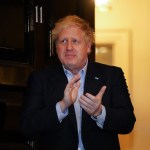
The Prime Minister was moved out of intensive care on Thursday evening but remains in hospital. After being moved on Monday night to an ICU where he received oxygen treatment, Boris Johnson's health has slowly improved in recent days. Now, in the clearest sign he is on the road to recovery, Johnson no longer requires a bed in intensive care. A No. 10 spokesman said: The Prime Minister has been moved this evening from intensive care back to the ward, where he will receive close monitoring during the early phase of his recovery. He is in extremely good spirits. This is not to say that Johnson should be expected to return to work imminently.

Our exile in NW1

From our UK edition

Laikipia The sweetest sound to me now is the dawn chorus of birdsong at home on the farm. I lay awake in bed and listened, as a light rain fell on the coconut thatch above me. When I walked out into the garden the three dogs burst out of the house to go off exploring. While I made coffee in the kitchen, our cats Omar and Bernini rubbed against my legs until I fed them and then in walked Long John Silver the orphaned calf, looking for a bowl of milk. I headed out to the crush where the herds were coming in to be dipped. Cattle were mooing, the sheep were bleating and the cowhands were whistling and shouting. With dew sparkling on the grass and the air alive with the hum of bees, I felt so grateful to be here. Home.

Sunak bails out charities – but are his measures actually working?

From our UK edition

At Wednesday's coronavirus briefing, Chancellor Rishi Sunak turned his attention (and the Treasury’s coffers) to the charity sector, which will receive £750 million to support vital services for the community. The money will be divided between small, local charities working with vulnerable people and charities that provide ‘essential services,’ with Sunak citing St John Ambulance and the Citizens Advice bureau as two examples of potential beneficiaries. The support comes as organisations like Cancer Research announced in recent days that they would have to scale back their medical research due to a projected drop in donations on which they rely to keep their services going.

The unforeseen costs of Covid-19

From our UK edition

Assumptions made about the UK’s Covid-19 support packages are starting to unravel. When the Chancellor announced unprecedented spending to tackle the virus, he aimed to keep people in their jobs and mitigate an inevitable economic crash. But unemployment is soaring and the economy is contracting at a rapid pace, with growth figures set to plummet further than they did during the financial crash, and possibly even below that of the Great Depression. Despite the government's measures, the economic effects are being acutely felt – and the Treasury’s coronavirus policies may have spurred on some unwanted activity of another sort.