Covid-19

Why unemployment figures haven’t budged

From our UK edition

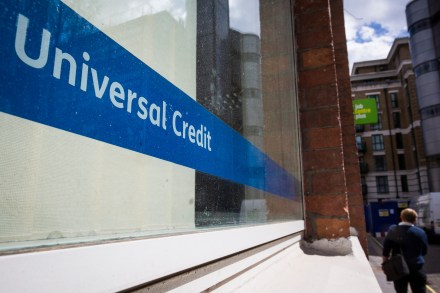
Look past the headline statistics and you’ll see economic reality starting to infiltrate the labour market. Today’s employment figures from the Office for National Statistics mark very little movement from the previous quarter, with employment at 76.4 per cent (down 0.2 per cent on the previous quarter) and unemployment at 3.9 per cent (unchanged from the previous quarter, still hovering at a record-low level). Yet today also marks the biggest decrease in UK employment for a decade, since May 2009 in the wake of the financial crash. For many workers, being temporarily away from paid work is likely to become permanent How can this be?

Will Hancock’s ‘Zoom medicine’ take off?

From our UK edition

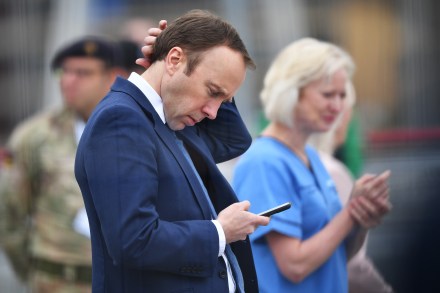
It's not unusual that the left and right hands of government don't know what the other is doing: despite being based in the same postcode, different departments are notoriously bad at communicating. They even stop speaking to one another occasionally, with secretaries of state blocking new policies at what is known as the 'write-round' stage of policy development. This is where ministers consult colleagues across government on a policy, which others can then block. Sometimes departments have such a strong objection to a policy in another ministry that they refuse to sign off anything else through write-rounds until this plan is dropped.

Are the Bank of England’s forecasts too optimistic?

From our UK edition

The Bank of England offers a mixed bag of forecasts today. It now expects Britain’s economic downturn to be less extreme than feared, while also predicting a recovery will take longer than originally thought. The Bank now expects the economy to contract 9.5 per cent in 2020, substantially less than the 14 per cent drop it predicted at the height of the national lockdown. But it joined the Office for National Statistics in revising its optimism for a sharp V-shaped recovery downward, expecting nine per cent growth in 2021, with GDP not returning to pre-Covid-19 levels for another eighteen months. The Bank’s forecast remains one of the most optimistic, still showing the resemblance of a V-shaped recovery. But are these scenarios accurate reflection of what’s to come?

Has Sweden been vindicated?

From our UK edition

Sweden has released growth figures for the second quarter – a contraction of 8.6 per cent – and two narratives are circulating. The first is that the Swedish experiment has failed spectacularly, resulting in both a higher death toll than its Scandinavian counterparts as well as a collapsed economy. The second is that Sweden has been vindicated, taking a much less severe economic hit than the EU’s average and in a better position to recover as well. Which is the fairer assessment? Sweden has indeed taken an economic beating despite never instigating a full lockdown.

Is the jobs cliff-edge fast approaching?

From our UK edition

As ‘Eat Out to Help Out’ kickstarts this month – giving customers 50 per cent off their meals (up to £10) at restaurants and pubs that have signed up to the scheme – the centrepiece of the Treasury’s Covid-19 policy package starts to wind down. From this month, employers will be asked to pay a small part of their employees’ wages: 5 per cent now, 10 per cent next month, and 20 per cent in October, before furlough officially comes to an end. A policy that was initially expected to have take-up from 10 per cent of businesses has become the crutch of more than one million businesses across the UK, as nearly ten million employees have been furloughed for some length of time over the past four months.

How local are these ‘local lockdowns’?

From our UK edition

In an effort to avoid another national lockdown at all costs, the government is relying on two tools: a comprehensive track-and-trace scheme and localised lockdowns. The first isn’t expected to be up and running until autumn at the earliest, after a series of setbacks and U-turns (the pains of which are already being felt, as infection rates have started to creep up). The second is arguably in full swing, as East Lancashire, Greater Manchester and parts of West Yorkshire join Leicester in having specific rules and restrictions imposed, due to fears of a rising R-number. But are these really local lockdowns, or regional ones?

Why does England have the worst excess deaths in Europe?

From our UK edition

On 12 May, the government stopped publishing international comparisons of its Covid-19 death toll in the daily press briefings. The argument was that the data wasn’t helpful, and perhaps even misleading: the way calculations were carried out varied country-by-country, with each nation on a different timescale when experiencing the peak of infections and death. There would be a time for international comparisons, but that time wasn’t now. Today, the ONS picks up where the press briefings left off, comparing excess mortality rates throughout Europe. The data is not specifically calculating Covid-19 deaths, but rather all causes of mortality on a five-year average.

Boris warns of a second wave

From our UK edition

On a visit to Nottingham this morning, Boris Johnson warned that a second wave of Covid-19 could be on the verge of 'starting to bubble up' in Europe. Meanwhile, he defended his government’s lightning-speed reintroduction of a 14-day quarantine for travellers entering the UK from Spain. But concerns of a second wave are not solely related to Spain or select European countries. Yesterday the Financial Times revealed the Prime Minister’s warning to over a dozen businesses that the threat of another Covid wave in autumn is very real. It's not just what’s happening abroad, but the possibility of infection rates spiking within the UK that has captured the government’s attention.

Is Yuriko Koike the Nicola Sturgeon of Tokyo?

From our UK edition

Few politicians have come out of the corona crisis as well as Tokyo Governor Yuriko Koike. As the face of the metropolitan area’s official response to the pandemic, the 68-year-old former cabinet minister has won plaudits for her nightly face-masked updates and guidance briefings. For her efforts, she was rewarded with a landslide in last week’s gubernatorial election. But with a recent surge in cases in the Tokyo area, Governor Koike has become embroiled in a war of words with the national government that could have long-term implications. The latest infection figures in Tokyo (which have risen to around 150 cases a day) have alarmed many, but as ever with corona stats, context is everything.

Should we abandon hopes of a V-shaped recovery?

From our UK edition

It is an uptick so small that it could almost be comic, but the UK economy started to grow in May: by 1.8 per cent following a 20 per cent slump in April. Office for National Statistics figures out today show that, even in lockdown, surging online retail sales - coupled with signs of a recovery in construction - show a small increase in GDP. The big question is what shape we can now see: a L, a Nike swoosh or a sharp V? Reopening the economy can only go so far: tackling people’s fear of Covid-19 is key for a V-shaped recovery Today’s increase suggests growth is  - every so slightly - on the up, easing doomsday concerns about an L-shape (that is, no recovery at all).

Boris Johnson changes ‘work from home’ advice

From our UK edition

Has government policy on going back to work just shifted? Today at his "People’s PMQs", the Prime Minister was asked about support for universities and the social distancing measures that will be needed to make it safe for students and faculty to return. But Boris Johnson applied his response further than the university sector, turning the formal guidance - 'working from home where possible' - on its head: ‘I want people to go back to work as carefully as possible – it’s very important that people should be going back to work if they can, now. I think everybody’s taken the ‘stay at home if you can’. I think now we should say ‘go back to work if you can’.

This NHS clap is not for its carers

From our UK edition

At 5pm, we are being encouraged to head to our windows and doors to clap for the National Health Service on its 72nd birthday – the idea is that we’d be doing, once again, what we did in lockdown. Except we wouldn’t. The original gesture was to show thanks to the many healthcare staff (and a broader scope of key workers) who were putting their lives on the line to help others, treating our sick at the peak of the virus in the UK. These are brave people at the best of times, but especially so in the early months of the pandemic, when we were still in the dark as to how contagious it was, who was most likely to suffer from it, and just how deadly it would become. But this evening’s round of applause for the NHS isn’t like the others.

Does Boris’s ‘new deal’ offer anything new?

From our UK edition

Today Boris Johnson launched his ‘new deal’ for Britain – billed as an economic recovery plan to follow the Covid recession.  It sounds positively Rooseveltian. It sounds like a new deal. All I can say is that if so, then that is how it is meant to sound and to be, because that is what the times demand – a government that is powerful and determined and that puts its arms around people at a time of crisis. What has changed is the PM’s political positioning, away from the market economy and towards state intervention But were the announcements really a 'new deal’ – or a new anything? The vast majority of the announcements were not new but manifesto promises from the 2019 election.

Are Britain’s employment figures too good to be true?

From our UK edition

Lining up graphs of the UK’s growth figures last week and its employment figures this week, you would struggle to believe the data was from the same decade, let alone the same month. Despite the economy contracting by a quarter in March and April, unemployment figures haven’t budged: 3.9 per cent ending the month of April, unmoved from the quarter before, and more remarkably only up 0.1 per cent from the previous year.  The employment rate remains surprisingly high too: 76.4 per cent, down 0.1 per cent on the previous quarter. Despite the shuttering of the economy, employment and unemployment continue to hover at record highs and lows, like they did before the crisis began.

How fast can Britain recover from its economic free-fall?

From our UK edition

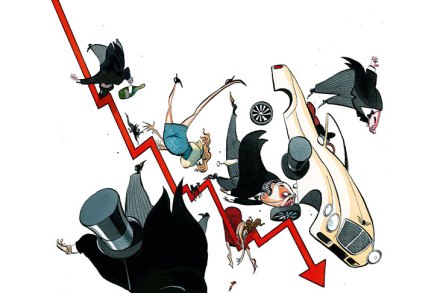
Putting the UK into lockdown was only going to send growth in one direction: down. While today’s figures from the Office for National Statistics were expected, they nevertheless confirm that the UK has experienced its largest monthly economic contraction on record. The UK economy shrank 20.4 per cent in April. Combined with March’s GDP drop (now the second largest fall since records began), the British economy is a quarter smaller than it was in February. Putting these figures alongside other monthly slumps makes for stark comparison. Hits taken for additional bank holidays and for the pain experienced during the financial crash barely compare to what’s happened in light of the shutdown of Britain’s economy.

Is Britain set to be the sick man of Europe?

From our UK edition

The global lockdown has seen economies shrink and unemployment soar across the world, pushing governments to borrow at rates never seen in peacetime. On Wednesday, the OECD published country-by-country estimates for the economic hit – and its projections for the UK are some of the worst. Under the scenario of no second wave (that is, assuming countries won’t need to lockdown again this year), Britain’s economic downturn is forecast to be the worst in the G7, and fourth-worst in the OECD, with an 11 per cent fall in annual GDP. In the case of a second wave, prospects still aren’t great: in the G7, Britain’s 14 per cent downturn is on par with Italy and France, and the country retains a dismal place in the OECD line-up.

Can Britain avoid a second lockdown?

From our UK edition

What comes next, now that the transmission rate and prevalence of Covid-19 have fallen significantly? (Before you shout at me, yes I know there is frustration and some bemusement among scientists that illness incidence and numbers of deaths have not dropped faster in the UK, but they have nonetheless reduced significantly, if not uniformly, everywhere). There are detailed plans from the government for when and how to restart certain businesses and social activities in the coming six weeks. But there is not a clearly articulated strategy for how we are expected to live and work between now and the end of the year (and beyond). So I've tried to piece together what ministers and officials have said privately and publicly about different elements of the longer-term strategy.

Can America’s 2.5 million jobs miracle be replicated in Britain?

From our UK edition

The US economy created 2.5 million jobs last month – the biggest monthly jobs gain since records began a century ago, albeit only a partial recovery from the 22 million jobs lost during lockdown. These figures have blown expectations out of the water. Economists were predicting yet more unemployment: the consensus was unemployment reaching 8.3 million, or 20 per cent in May, up from 14.7 per cent in April. Defying the odds, unemployment actually fell to 13 per cent, signalling an unexpectedly early start in the rebounding of the American economy. The biggest winners were workers in hospitality, who made up almost half of the new jobs, followed by construction.

Portrait of the week: MPs return, dentists reopen and racing resumes

From our UK edition

Home Primary schools were allowed to reopen but many did not want to. MPs voted to return to their physical presence in parliament. The government told people they were allowed to meet in gardens or on rooftops, up to the number of six, as long as those from different households remained two metres apart. About 2.5 million vulnerable people in England and Wales, who had been advised to stay at home, were now advised that those living alone might meet another single person out of doors. Rosie Duffield, the Labour MP for Canterbury, resigned as a whip after she was found to have gone for a walk with her current partner at a time that he was still living with his wife. Racing resumed. The Queen rode a fell pony at Windsor Castle.

Has Covid-19 evolved to become less deadly?

From our UK edition

Covid deaths Has Covid-19 evolved to become less deadly?— Global infections reached a new peak on 29 May, with 125,473. The daily average for the past seven days is 108,965, 36% higher than in the week beginning 14 April.— However, deaths peaked at 8,429 on 17 April. The daily total for the past seven days is 3,902, 43% lower than in the week beginning 14 April.Source: Worldometers Quiet hospitals How did NHS activity change in the last quarter of 2019/20 compared with a year earlier?Hospital admissions -9.6% Elective admissions -9.7%GP referrals -13.9% Other referrals -8.