Covid-19

What we know so far about the Oxford vaccine

From our UK edition

It’s three for three as far as positive outcomes from Covid vaccine trials are concerned. But the announcement from AstraZeneca and Oxford University, at a first glance, may not seem to be as exciting as those from Pfizer-BioNTech and Moderna. The figures are a bit of a head-scratcher, so let’s look at them in more detail. Monday's results from AstraZeneca and Oxford University state that the combined Phase 3 interim analysis from their COV002 and COV003 studies (based in the UK and Brazil respectively) included 131 Covid-19 cases and that the vaccine was found to be 70.4 per cent effective overall — but that vaccine efficacy in two dosing subgroups was 90 per cent in one and 62 per cent in the other.

Germans face a ‘lockdown light’ for Christmas

From our UK edition

Germans, just like Britons, will have to cope with restrictions during this year’s Christmas holidays. Yesterday, Angela Merkel and the heads of Germany’s federal states agreed on an updated catalogue of regulations that will allow ten adults to meet for a Christmas party. After three weeks of what is widely called a ‘lockdown light’, the infection rates in German cities and regions continue to remain above the threshold that has been set by medical experts. The vast majority of Landkreise (regional districts) have recorded an incidence proportion of higher than 50 cases per 1,000 inhabitants within the last week.

What do excess deaths tell us about Covid?

From our UK edition

Assessing the number of Covid deaths has been notoriously difficult throughout the pandemic. Over the summer, English figures were revised down by more than 5,000 after researchers at Oxford University discovered a flaw in the way Public Health England was registering deaths. Another route for assessing the mortality of Covid is to look at excess deaths — while comparing this year's deaths to previous years is a blunt instrument, it is also in some ways more reliable. We may not know the reason for death but we know that more are occurring. Tuesday's release by the Office of National Statistics (ONS) looking at weekly registered deaths in England and Wales painted a bleak picture.

Macron’s Covid war goes from bad to worse

From our UK edition

Politicians whom the Gods wish to destroy, they first make ridiculous. On Tuesday evening, as the deaths attributed to Covid-19 reached 50,000, Emmanuel Macron, president of the Republic, again commandeered French television channels to announce his latest strategy to end the national lockdown. He claimed to be making himself perfectly clear as his timetable for ending lockdown was conditioned by the subjunctive. The big give was that from Saturday, we are to be allowed to spend three hours daily outside, and to venture 20km (no more) from our front doors. (This will be a relief to a friend in the Dordogne who was 'verbalisé' by the flics last week when she was discovered 1.2km from her house, 200m more than permitted.

Should London be split into different tiers?

From our UK edition

What will the new map of tiers look like when England exits lockdown next week? It certainly won’t be the same system we left behind when we went into lockdown on 5 November. For one thing, we have been told that restrictions are tightening and that more areas will be shunted into Tier 3. The epicentres of new infections at the moment are not as much in the cities as relatively low-income suburban and semi-rural areas in Lincolnshire and North Kent. Swale (528 new infections per 100,000), East Lindsey (467) and Boston (433) currently top the infection charts. Liverpool by contrast — the first place to go into Tier 3 — can now make the case that it should be the first place to come out of it: infections are down to 173.

A vaccine won’t solve all our Covid problems

From our UK edition

Today’s Oxford-AstraZeneca vaccine update has raised hopes that life in Britain could start getting back to normal by spring. But cheers in Downing Street didn’t extend to AstraZeneca’s share price, which fell by nearly three per cent in response to the news. Why the dip in the wake of such good news? AstraZeneca vaccine’s effectiveness – recorded at 70 per cent – is notably lower than its Pfizer and Moderna competitors. What's more, the 70 per cent figure has been reached by averaging results from two groups who received the vaccine in different doses: a smaller group, who were given half a dose at first, recorded a 90 per cent efficiency rate, and the larger group, who were given two full doses, only a 62 per cent efficiency rate.

Why is Sadiq Khan talking London down?

From our UK edition

Sadiq Khan's powers as London mayor are relatively limited, but part of his remit is to act as a salesman for London. He is there to talk up the virtues of one of the greatest cities in the world. It was surprising then to see him concede at the weekend that we have to 'accept the fact that there is potentially an existential threat to central London as we know it.' This surely is the opposite of what the mayor of London should be saying at this moment in time. It also demonstrates why Sadiq Khan deserves to lose the election in May. Sadiq Khan already lost my vote months ago when he announced that the next mayoral contest would be a referendum on rent control.

Do some people have hidden immunity against Covid?

From our UK edition

Remember ‘immunity passports’? Back in April they were floated as a possible means by which we could all get back to a normal life. We could be tested for antibodies to SARS-CoV-2 – the virus which causes Covid-19 – and, if we tested positive, we could be allowed to go about our business. The presumption was that we would be immune from further infection, at least for a while. The idea quickly bit the dust. There was one good argument against it: it might encourage young people, who are very unlikely to come to harm from Covid-19, deliberately to set out to catch it in order to gain a positive antibody test and therefore an immunity passport.

No. 10’s Christmas trade-offs

From our UK edition

The government’s Covid-19 strategy is designed to keep Christmas gatherings on the cards. But what might be the trade-offs? At this morning’s Downing Street press conference on Covid-19 data, Public Health England's Dr Susan Hopkins and deputy chief scientific adviser professor Dame Angela McLean gave some indication of what tactics could be used to make Christmas week feel as normal as possible. Dr Hopkins referenced Sage advice, suggesting that ‘for every day we release, we’ll need two days of tighter restrictions'. (Public Health England has since issued a correction to this statement, saying every day of 'release' will require five days of increased restrictions.

Denmark is creating a roadmap for mandatory vaccination

From our UK edition

Could British residents be forced to have a Covid-19 vaccine? Yesterday Health Secretary Matt Hancock refused to rule out mandatory inoculation, telling TalkRadio that the government would ‘have to watch what happens and… make judgments accordingly’. His comments have sparked questions about how realistic the prospect of mandatory vaccination is in the UK, or what restrictions people could face – with MP Tom Tugendhat suggesting that the unvaccinated could be banned from workplaces – if they refuse to get inoculated. If a policy of mandatory vaccination were to be carried out in the UK, what might it look like?

Britain’s advertising industry has effectively been nationalised

From our UK edition

Has the advertising industry been nationalised? It certainly looks that way. The run-up to Christmas is usually the time for UK advertisers to spend big. But not this year. While the John Lewis Christmas ad has been greeted with some fanfare, this is the exception, rather than the rule in 2020. Companies whose businesses have been shuttered and whose customers are locked down see little point in spending money on advertising. In any recession, one of the first things to be cut is the advertising budget.  However, there seems to be one mighty paymaster propping up a lucky few ad agencies: the government.

The questionable ethics of Operation Moonshot

From our UK edition

Now that we seem to have two Covid-19 vaccines that work, do we really need Operation Moonshot, the government’s programme to test 10 million people a day by early next year? It’s a poignant question, not least because of the extraordinary sums which appear to have been committed to it: briefing documents leaked to the BMJ in September suggested that it could cost £100 billion, which is close to the annual NHS budget in England. What would be the point of testing the entire population of Britain once a week if the virus was being controlled by a vaccine? The cost aside, there is growing medical opinion against the idea.

Why has England banned worship?

From our UK edition

Over the weekend, more than a hundred religious figures from across the different faiths launched a legal challenge against the ban on communal worship in England. They claim the Covid restrictions are a violation of their basic human right to freedom of religious expression. Leaders from the Anglican and Catholic churches, as well as the Muslim Council of Britain, are in agreement on how unfair they view the ban. It's difficult to think of a cogent argument against their position.  For background, I am an atheist. Raised in a Catholic family, I never truly believed, even as a small child. Atheism has been something that has been with me throughout my whole life. Yet the argument that those of faith should be allowed the freedom of communal worship is compelling.

Sweden’s rule of eight marks a change of strategy

From our UK edition

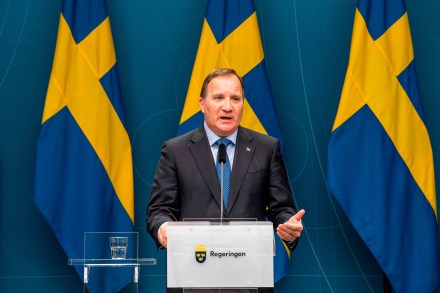
Sweden has been pretty much the only country in the world to have responded to coronavirus using a voluntary system: advising, rather than instructing, the public. But this has changed today with Stefan Löfven, the Prime Minister, saying he will pass a law to introduce a ban on gatherings of eight people or more.  'Do your duty. Do not go to the gym, do not go to the library, do not have parties. Do not come up with excuses that would make your activity OK,' he said in a press conference. 'It is your and my choices — every single day, every single hour, every single moment — that will now determine how we manage this.

There’s nothing wrong with profiting from a vaccine

From our UK edition

A couple of shots to the arm and this will all be over. With today’s news from Moderna, last week’s from Pfizer, and with a potential update from AstraZeneca in the next few days, we may soon have three vaccines against Covid-19 (and if you add in candidates from Russia and China perhaps more). And yet, it turns out, that some people are already fretting about potential side effects from that. And they don’t just mean a mild fever or muscle ache. They mean something far, far nastier. Profits. While most of us have been feeling a lot better about the epidemic over the last week, Jeremy Corbyn seems most worried that — once a vaccine has been approved and the virus eliminated — a big company might make some money from it.

Have Moderna outdone the Pfizer vaccine?

From our UK edition

Another week, another set of preliminary results from a Covid-19 vaccine trial. This time it is the Moderna vaccine candidate, mRNA-1273. And, to judge by the figures put out by the company this morning, it has outdone the Pfizer vaccine in its efficacy. Out of the 30,000 people involved in the phase three trial (half of whom were given the vaccine and half of whom were given a placebo), 95 went on to contract Covid-19. Of those who became infected, 90 were in the control group and only five had been given the vaccine. Eleven participants had a severe case of Covid, all of whom were in the control group. The findings have allowed Moderna to claim, provisionally, that the vaccine is 94.5 per cent effective.

Is the Liverpool mass-testing scheme a gimmick?

From our UK edition

The revelation that both Pfizer and Modena have created seemingly effective and safe Covid vaccines that could be here by December is surely the first bit of good news 2020 has brought us. But we are, of course, nowhere near yet out of the woods. Even if a vaccine gets regulatory approval by early December, all our resources and logistics will have to be focused on procuring, delivering, and then monitoring its roll-out. Boris Johnson himself has urged caution about the Pfizer vaccine, saying ‘there is a long way before we have got this thing beat’. But while the PM is displaying a healthy degree of realism about the challenges of deploying a vaccine, is the government still in a make-believe world when it comes to mass-testing gimmicks?

Sunday shows round-up: Brexit deal could fall down over fishing

From our UK edition

Simon Coveney - Internal Market Bill could mean no trade deal Ireland's Foreign Minister Simon Coveney returned to Sophy Ridge's show this week to make clear his objections to the government's Internal Market Bill. The bill, which famously threatened to break the EU Withdrawal Agreement in 'a specific and limited way', has recently been watered down by the House of Lords. However, it is expected that the government will reinsert the offending clauses, which would keep Northern Ireland's market aligned with Britain in the event of no trade deal. Coveney warned that this move could derail the prospective trade deal altogether: https://twitter.com/RidgeOnSunday/status/1327899546903588864?

Don’t censor the anti-vaxxers

From our UK edition

Pfizer has come up trumps. Now that a vaccine for Covid-19 is more than just a possibility, we can breathe a collective sigh of relief. But before we relax too much, a new problem arises: will people actually take it? A third of people in the UK – and half of people in the United States – say they are either uncertain or unlikely to agree to be vaccinated against coronavirus, according to research from the Royal Society and the British Academy. It’s easy to scorn anti-vaxxers. They are the tin-foil hat wearing idiots who set fire to 5G phone masts at the start of the ‘plandemic’.