Covid-19

It’s time for Ireland to stand up to the EU

From our UK edition

Ireland’s political class is facing a moment of truth. Following yesterday’s extraordinary events — with the EU temporarily triggering Article 16 of the Northern Ireland Protocol as part of its desperate effort to manage its self-made vaccines crisis — the Dublin elites have some serious soul-searching to do. They must now ask themselves if they are willing to be members of this institution that has just treated them with such contempt; which has just signalled in front of the entire world that it does not take Irish sovereignty or Irish democracy very seriously at all. Contempt is not too strong a word for what the EU has just done to Ireland.
Could this drug offer immediate protection from Covid-19?

From our UK edition

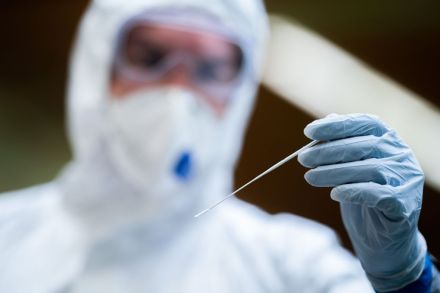
When Donald Trump returned to the White House after a brief spell in hospital with Covid-19 last October he made a video attributing his rapid recovery to a drug he called ‘Regeneron’. ‘They call it a therapeutic drug, but to me it wasn’t therapeutic – it made me better,’ he said. ‘I call that a cure.’ Naturally, given that Trump had on a previous occasion appeared to advocate injecting humans with disinfectant, there was an element of scepticism on the part of many viewers. However, the drug he was talking about went on the receive emergency use authorisation in November from the US Food and Drug Administration. We now have interim results from a Phase 3 trial in which the drug was used as a ‘passive vaccine’.

The grim reality of being locked up during lockdown

From our UK edition

What's it like being locked up during lockdown? The latest statistics on prison safety paint a grim picture of life behind bars, which has been made worse by the pandemic. Even the good news must be caveated. Assaults on staff have reduced quite dramatically, which in any circumstances must be a good thing given a backdrop of record-breaking rates of violence until the virus struck. However, they have reduced mainly as a consequence of an unprecedented lockdown introduced to prevent the spread of Covid-19. This has dramatically reduced the time inmates spend outside their cells; as a consequence, it has rather limited the available opportunities for prisoners to knock seven bells out of prison officers and each other.

Britain gets a boost to its vaccine programme

From our UK edition

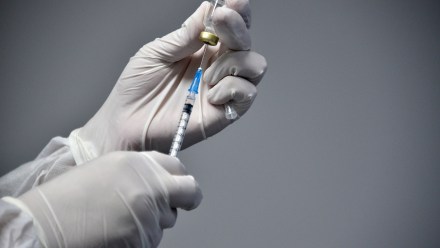
As the blame game gets underway in Brussels over the EU's sluggish vaccination programme, the UK government has fresh reason for cheer: a new coronavirus jab. The Novavax vaccine has successfully completed its phase three trials — finding it to be 89 per cent effective in large-scale UK trials. This data will now be passed to the MHRA to assess whether the vaccine can be approved for UK use. While the vaccine is thought to be highly effective against the Kent strain of Covid, it is less effective against the South African variant. While it still offers some protection, Novavax is following Moderna's lead in developing a booster shot to tackle this.

The EU vaccine debacle poses a dilemma for Remainers like me

From our UK edition

There is no question about it, at least if you want to evaluate things objectively: the UK has handled Covid vaccine rollout well (at least so far) and the EU has dealt with it badly. For a Remainer like me, this raises a difficult question: does this prove that Brexit was a good idea after all? Compared to the EU27, the UK has been able to act nimbly in vaccine negotiations. While Brussels has been held up by various delays and supply issues, these have not affected the UK. This is thanks in large part to the fact that its contract with AstraZeneca was signed three months before the EU vaccine deal. The UK also took a gamble, betting on a vaccine that had not yet passed clinical trials.

A handy guide to Hotel Quarantine

From our UK edition

On the one year anniversary of the arrival of the Covid virus in the UK, the government has introduced strict quarantine measures to stop the virus arriving again. The shock discovery that the virus mutates in other countries, as well as our own, has prompted the government to incarcerate travellers as they step off their plane. Robert Jenrick, the Secretary of State for Housing has added the responsibility of ‘housing people in hotel rooms against their will’ to his portfolio. This week, he said: 'There will be a time when we will look back and say, with hindsight, that there are things the government could have done differently. But that time is not now'. With the foresight of hindsight, a senior government Minister has shown perfect near-sightedness about our situation.

This is just the start of the Brussels-Britain bust-ups

From our UK edition

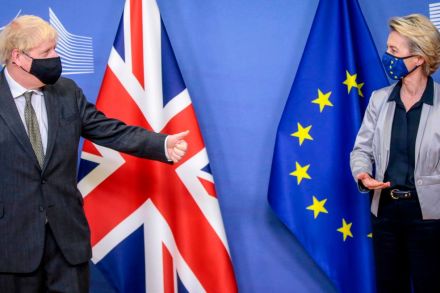
This is a crucial year for the UK’s two most important relationships, I say in the magazine this week. If the Johnson/Biden diplomatic relationship has got off to a better start than expected, the same cannot be said of the post-Brexit UK/EU one. The alignment between Johnson and Biden on climate change, Russia and China is helping the alliance. This relationship should become closer still given the two side’s agreement on China, the most important geo-political issue of the decade. The EU will attempt, often in not particularly edifying ways, to assert itself as the bigger partner.

Is the virus retreating?

From our UK edition

Imperial College’s React study was in the news again this morning. The latest instalment swabbed 167,642 people between 6 and 22 January and found that 2,282 of them tested positive. A weighted average suggested that 1.57 per cent of the population had the virus between those dates. The study concluded: 'Prevalence remained high throughout, but with the suggestion of a decline at the end of the study period'. It led to reports this morning that the latest wave of the epidemic is declining only very slowly. The React study, however, seems to be increasingly out of line with government data on new infections, as picked up through the test and trace system. On 6 January, the seven day average of new infections across the UK stood at 594.6 per 100,000.

‘Sexist’ covid poster scrapped by the government

From our UK edition

Another day, another Covid advertising fail for the government. Fresh from discontinuing a radio ad suggesting joggers and dog-walkers are 'highly likely' to have coronavirus, a 'stay home, save lives' poster has been pulled.  The advert, which showed women cleaning and caring for children while a man lounged on a sofa, sparked accusations of sexism. 'It has been withdrawn and removed from the campaign. I will make clear that it does not reflect the government's view on women which is why we have withdrawn it,' Boris Johnson's official spokesperson said today.  Oh dear..

The vaccine row shows the EU doesn’t understand contract law

From our UK edition

The EU rejects 'the logic of first-come first-serve,' said the EU's health commissioner Stella Kyriakides. 'That may work at the neighbourhood butcher's but not in contracts, and not in our advanced purchase agreements'. Contract law is an area of law I know well. And it is not a political comment to say the commissioner is wrong. We don't know precisely what the contract between AstraZeneca and EU member states says. But the EU did publish another vaccine supply contract here. All this makes it very difficult to see what case the EU has In any would-be-case involving this contract, the EU has two massive hurdles to jump. Firstly, contractors undertake to use their 'reasonable best efforts' to manufacture enough supply.

The EU goes to war over the vaccine

From our UK edition

German politics is backing Brussels in the ongoing dispute between the EU and AstraZeneca over Covid vaccine shipments. The European Union alleges that the pharma firm, which is producing the Oxford-developed vaccine, is planning to supply the UK faster and while failing to fulfil its contract with Brussels. A meeting on Wednesday between officials and representatives from the Cambridge-based company was described as 'constructive' but no solution was found. Meanwhile, Martin Schulz, the former president of the European Parliament and prominent German Social Democrat, called for hard action against AstraZeneca. ‘This company is heavily dominated by the Brits and has apparently clear priorities as to which countries it supplies,’ he said.

Boris’s border crackdown raises some big questions

From our UK edition

Throughout the pandemic, Britain has taken a relatively relaxed approach to controlling its borders. Restrictions on travel have come and gone since last March, but, on the whole, Britain has always leaned towards openness. The government has trusted people to make sensible judgements and follow quarantine rules upon return. Now attitudes have shifted. This afternoon, Home Secretary Priti Patel laid out the details of the government’s new, quasi-Australia style quarantine policy. Arrivals from 22 ‘high-risk’ areas will soon be forced to quarantine in a hotel when they arrive in Britain. There will be no exceptions to the rule, and travellers must stay put for ten days, even if they test negative for Covid-19.

Controlling borders is a critical step in the fight against Covid

From our UK edition

Over the last two months our fight against Covid-19 appears to have changed dramatically. The emergence of novel variants in the UK, South Africa and Brazil has generated plenty of headlines and concern. We shouldn't panic. But one thing is clear: if we don't act now, we could come to regret it. In the UK, for obvious reason we have been most focused on the B.1.1.7 variant. The evidence seems pretty clear that it is more transmissible and potentially more severe. Part of the reason we have such extensive data on virus mutations in the UK is the quite astonishing efforts that have gone into sequencing the viral genomes.

PMQs: Starmer’s opposition is strangely muted

From our UK edition

Boris Johnson had a very difficult backdrop to today's Prime Minister's Questions, having marked 100,000 deaths in the coronavirus pandemic last night. But, strangely, he didn't have a particularly difficult session in the Commons. Sir Keir Starmer did, as you might expect, lead on the death toll, asking the Prime Minister repeatedly why he thought the UK had such a high death rate, and why he wouldn't learn the lessons from the pandemic now so that the government didn't repeat its mistakes. Johnson was able to deal with this reasonably easily, arguing that while he did think there would be a time to learn the lessons of what happened, that time wasn't now. The public, he said, want politicians to come together and focus on rolling out the vaccine and protecting the health service.

The EU is blaming everyone but itself for its vaccine debacle

From our UK edition

Something has gone badly wrong with the EU's rollout of the Covid vaccine. Yet in its response to this debacle, Brussels seems determined to double down, engaging in behaviour of the pettiest kind as it blames everyone but itself for what has happened. 'The companies must deliver', Ursula von der Leyen, the EU commission's president said this week, as she announced the launch of a 'vaccine export transparency mechanism'. In reality, this plan to oblige companies to notify the commission when vaccines leave the EU (into Britain, for example) is an attempt to pile pressure on the pharmaceutical firms who have given us the only way out of the situation we find ourselves in.

German paper doubles down on Oxford vaccine claims

From our UK edition

Yesterday's extraordinary row over the Oxford-AstraZeneca vaccine has just become even stranger. The German government spent much of Tuesday rubbishing reports they had found the jab to be only 8 per cent effective among the over 65s. A claim that was published by the Düsseldorf-based financial paper Handelsblatt following a tip-off from anonymous sources within the German government. Instead, according to the country's health ministry, there had been a very embarrassing misunderstanding:  At first glance it seems that the reports have mixed up two things: about 8 per cent of those tested in the AstraZeneca efficacy study were between 56 and 69... But one cannot deduce an efficacy of only 8 per cent with older people from that.

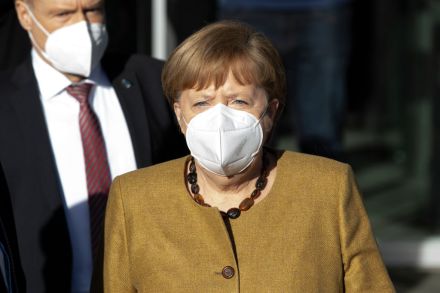
Merkel is making a mess of Germany’s Covid vaccine rollout

From our UK edition

Angela Merkel is known for her competency, yet even Mutti's defenders would struggle to use that word to describe Germany's rollout of the Covid-19 vaccine. German firm BioNTech won the race to develop a vaccine, but this has not prevented crippling supply shortages, which has forced states including North Rhine-Westphalia, in the west of the country, to suspend jabs.  German health minister Jens Spahn has come under fire and his insistence that 'the vaccine is a scarce product worldwide' rings hollow when Germans look at the speed of the vaccine rollout in Britain. Now, to make matters worse, German's health ministry has found itself caught in a fresh row: over the effectiveness of the AstraZeneca Covid-19 vaccine.