Covid-19

The big state won’t save our post-Covid world

From our UK edition

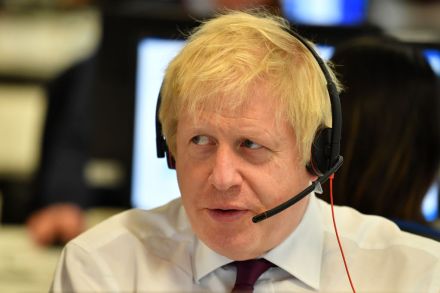
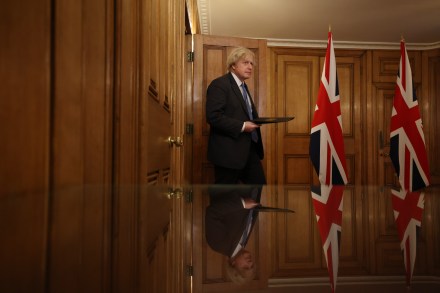
The big state is back. The Budget puts Britain on a path to having the highest tax levels since the 1950s, and a state that controls as much of our GDP as it did in the days when it still owned carmakers, phone lines and travel agents. Despite Rishi Sunak’s best efforts to contain spending, the figures are likely to go higher still, as the bills for the NHS, social care, and disrupted education continue to rise. But it’s not just about the numbers. Even before the pandemic, the political winds were blowing towards larger government, with Boris Johnson embracing a more muscular, state-led industrial strategy. But the pandemic has put that on steroids.
The weekly cost of lockdown

From our UK edition

Lockdown has always been a matter of trade-offs. The impact of suppressing the economy to also suppress a deadly virus has had consequences on every aspect of life, from non-Covid health treatment, to rising unemployment, to the impact on children’s education. But these costs can be calculated in something much closer to real time. New data from the OECD, analysed by The Spectator and unveiled in this week’s magazine, shows the weekly difference between a country’s economic activity now and how it compares with the year before.  First, let's look at change in lockdown stringency — as measured by Oxford University's Blatavnik School of Government. When the second wave struck, Britain ended up with the tightest lockdown in the developed world.

Sunak’s Covid budget offers a glimpse of Britain’s Brexit freedoms

From our UK edition

Rishi Sunak’s planned corporation tax hike is a reminder of the importance he sets by trying to put the public finances on a sounder footing. He think that his room for manoeuvre in this crisis has been, in part, because the public finances were in reasonable shape before it.  The vaccination programme remains this government’s most important economic policy As I say in the magazine this week, his concern about debt has long been about the cost of servicing it (which remains low) rather than its precise level. But the debt pile is now so large that small movements in interest rates have big consequences. But straightening out the public finances will need growth.

Is the fall in Covid infections really slowing down?

From our UK edition

Imperial College’s REACT study is given a prominence over other Covid data, but it is a struggle to understand why. This morning, as so often, BBC news bulletins included the latest tranche of results from the study, suggesting that the fall in new Covid infections is ‘slowing'.  The data appears to confirm a deceleration in the fall in infections that was evident in the Test and Trace figures a fortnight ago – and which I wrote about here a week ago – but which has since been reversed. React seems to be telling us a story which we could equally glean much earlier from the PHE figures.

Perhaps it is time to nationalise our failing railways

From our UK edition

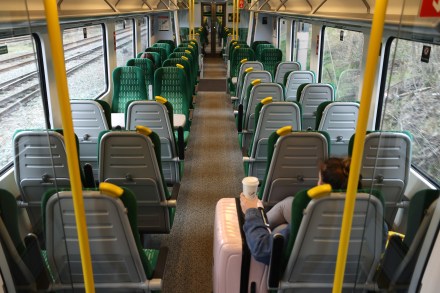
We mustn’t abandon the railways to market forces, many on the left asserted when British Rail was broken up and privatised in the 1990s. They needn’t have worried. A quarter of a century on and we have yet to see a market force take to the tracks. Wasn’t the whole purpose of privatisation supposed to be to transfer financial risk from the taxpayer to private finance?  Instead, as soon as the Covid crisis struck, while other industries were offered loans, furlough payments and business rate relief but were otherwise left to fend for themselves, the rail industry was propped up as if nothing was wrong. The government simply suspended the franchise system and paid the industry directly to lug fresh air around the country.

How worried should we be about the Brazilian variant?

From our UK edition

How worried should we be about the news that P1, one of the two Brazilian variants of Sars-CoV-2, has been found in six people who travelled from Brazil to Britain before the hotel quarantine rules came into force, and that one of these people has yet to be traced? Variant P1 is of concern not just because laboratory study has revealed changes to the spike protein, which might make it theoretically more transmissible, but because of real-world data from Manaus, the Amazonian city to which its origins have been traced. It was first detected in Japan on 6 January among a family which had travelled from the city.

The rapid fall of Germany’s health minister

From our UK edition

Young, polished and confident, Germany’s health minister became the country’s most popular politician in 2020. A darling of the conservative right, Jens Spahn, was even tipped as a candidate to succeed Angela Merkel as chancellor. At the peak of his popularity last November, surveys indicated approval from nearly two-thirds of all Germans. He seemed to reflect the success story that was Germany’s handling of the pandemic, the personification of friendly German efficiency. Fast forward to last week, and you find a defensive Spahn facing a hostile one-hour long grilling in parliament. His arms crossed and his jaw set, the 40-year-old was visibly tense as he braced himself for questions from angry MPs.

When will Boris urge workers to return to the office?

From our UK edition

One of the big post-Covid unknowns is whether people will return to big city centre offices or not. As I write in the Times today, the truth is that no one in government can be quite sure of what is going to happen. The Government does have some levers it can pull if it wants to nudge people back to their desks. At present it is instructing people to work from home, advice that’s not due to be reviewed before 21 June. There is also the question of social distancing. If the one-metre rule remains in place after 21 June, it will restrict how many staff any business can accommodate. There is a recognition that you can’t push people to crowd onto public transport until you can be sure it is safe The government can set an example if it wants to.

Are people tiring of lockdown?

From our UK edition

Is the decline in new Covid infections slowing down? That is the picture painted by the government’s figures for confirmed infections, arrived at via the NHS Test and Trace system. The most recent figures show that the 71,320 cases recorded in the seven days to Wednesday are 15 per cent down on the previous seven days — a substantial fall, yet over the previous few weeks numbers had been declining at around 25 per cent every week. The fall in deaths, on the other hand, appears to be accelerating. The figure for the past seven days — at 2,684 — is 30 per cent down on the previous seven days. Hospitalisations are declining at a rate that falls between the two — down 20 per cent over the past week.

What Angela Merkel can learn from the Queen about vaccine scepticism

From our UK edition

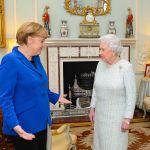
You have to feel for Germany. After a fraught vaccine procurement process, not only is the government struggling to persuade its citizens to take the Oxford AstraZeneca vaccine, but Angela Merkel has now stated that she will not be given the jab on account of her age.  ‘I do not belong to the recommended age group for AstraZeneca,’ the German chancellor told Frankfurter Allgemeine Zeitung newspaper. It could well be the final nail in the coffin for an EMA-approved, safe vaccine that has cost her country millions. Merkel’s view may be aligned with government policy – she is 66 and therefore, under the German rules which state that over 65s should not be given the vaccine, she does not qualify for a dose.

Spare a thought for students

From our UK edition

Spare a thought for those due to sit their A-Levels next summer. They have already had considerable disruption to their education. But today’s announcement that this year’s A-Level grades will be done by teacher assessment risks compounding their misfortune.  It means that the current lower sixth will be competing for university places — and jobs — against those who have received teacher assessed grades, which are bound to be more generous than those that an exam would produce. (For all sorts of understandable reasons, teachers will want to give their pupils the benefit of the doubt when awarding potentially life-changing marks). The disadvantage the current lower sixth cohort is being put at is so obvious that the government will have to address it.

Too much good news could spell trouble for Boris

From our UK edition

Tory MP’s reaction to the lockdown easing plan is a mixed bag. In general, they would have preferred a quicker timetable. But, as I say in the magazine this week, there is also relief that Johnson has explicitly ruled out going for a zero-Covid strategy and that there is an end date for all restrictions. A big fear on the Tory benches was that unless a date was set, restrictions could drag on for years in the way that rationing did after the second world war.  If the data on vaccine take-up and efficacy continues to beat the government’s models, there will be some very impatient Tory MPs One senior Conservative backbencher from the more libertarian wing of the party observes that the plan ‘could have been worse’.

Why aren’t exams going ahead?

From our UK edition

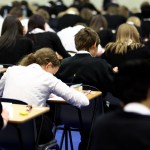
When Boris Johnson talked about trusting teachers, I suspected that the government must be desperate. Trust is not a word I have head much in my 25-year teaching career. I am no longer trusted to go into a GCSE exam hall to look at the paper that my class is sitting in case I somehow manage to undermine the integrity of the exam. But that was 2019. This morning Gavin Williamson confirmed that this year, it will come down to me and my colleagues in school. There will be no exam papers, no external markers, and certainly no algorithms. Before the pandemic we weren’t even trusted to mark coursework for fear that we gave too much help, now we have been left in charge of the whole process.

Can Boris Johnson help struggling students?

From our UK edition

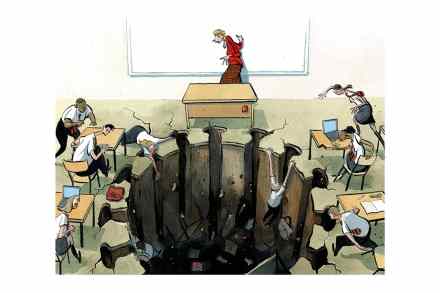
Helping children catch up on the best part of a year out of the classroom is one of the biggest tasks facing the government. On Wednesday, Gavin Williamson announced an extra £400 million in funding which schools can use to run summer programmes and other catch-up projects. That's on top of £300 million allocated last month and £1 billion announced last year. Ministers hope that their Recovery Premium will help schools support particularly disadvantaged pupils, who have fallen further behind than their peers as a result of having to do remote learning for so long. But they are also under pressure to show that they are thinking about the long-term, as even the best summer schools will not repair the damage to learning, confidence and other skills caused by the pandemic.

Face masks in schools: a note on the evidence

From our UK edition

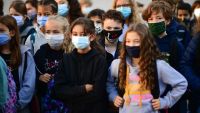
Secondary-school children returning to school from 8 March will be required to wear masks in classrooms, at least for several weeks. That is in contrast to the initial return of children to school last summer. It wasn’t until November that they were required to wear masks at school, and then only in corridors and other communal areas. But should we be forcing children to wear masks? A German study – in a preprint which has yet to be peer-reviewed – has reported negative symptoms of children who wear masks in that country.

Germany is regretting its criticism of the Oxford Covid jab

From our UK edition

Germany’s fridges are filled with Oxford jabs. But there's a problem: 80 per cent of the 735,000 doses delivered to Germany so far have not been used. The vaccine is being described in the German press as a 'shelf warmer'. There are even reports of people missing appointments at vaccination centres if they have been notified that they will receive the AstraZeneca product. While this is alarming, a lukewarm reaction to the vaccine might not come as a surprise. The vaccine's reputation has been repeatedly undermined by reports about its efficacy. A decision in Germany not to use the vaccine for over-65-year-olds, despite the European Medicines Agency having approved it to be given to all adults, has hardly helped.

In defence of Keir Starmer

From our UK edition

Now that we've finally heard Boris Johnson's 'roadmap' out of lockdown, a key question remains: when will we see a return to politics as normal? It might not be the most pressing concern for most people, but for Keir Starmer and his supporters, it matters. Only when this happens can Labour start making some serious assaults on the Tories stubborn poll-lead. As a Labour member of ten or so years I want Starmer to have a chance to shine. After all, it is not like my party has been blessed with great leaders in recent years. Much of my time on the doorstep during the 2010 and 2015 general elections involved shying away from talk about leadership.

We could all pay the price for the EU’s foolish vaccine nationalism

From our UK edition

I'm a card carrying, Europe-loving, wishy-washy centre-left liberal. It therefore pains me to point this out: the EU in general, Ursula von der Leyen specifically, and some of the prominent European leaders such as Emmanuel Macron are getting policy and messaging on vaccines badly wrong. They need to urgently ditch the peacock displays of tribal politics. The French president, in particular, who leads one of the most vaccine sceptical western nations, should not have so publicly questioned the efficacy of what has clearly turned out to be a vaccine that is working in the fight against Covid-19. The consequences of their words could well be long-lasting.

Tory MPs react to Boris Johnson’s roadmap

From our UK edition

Boris Johnson's roadmap out of lockdown moves at a much slower pace than many of his backbenchers would like. Despite, this, the Prime Minister has so far managed to avoid a large backlash from Tory MPs with his blueprint for ending lockdown. While leading figures of the Covid Recovery Group were quick to voice their objections in the Commons chamber over the fact restrictions will be in place until late June, the Prime Minister received a relatively warm reception when he addressed his party via Zoom on Monday evening. The Prime Minister was 20 minutes late for the call meaning questions were relatively limited. He began by assuring MPs that the government would not adopt a zero covid strategy. Instead, the country would need to manage it like flu.