Countryside

Dumbing down the house

From our UK edition

Osterley Park on the western fringes of London is a rare survival. A Robert Adam house, with splendid Adam interiors, it’s still surrounded by its Elizabethan stables, an 18th-century landscape and classical follies — in the middle of urban Hounslow. Over the past decade, this Georgian gem has been increasingly despoiled and dumbed down by the National Trust. The Trust is spending £356,000 to turn Osterley Park into a child-friendly leisure centre. As one of the huge posters strapped to the park fence says, the money will pay for ‘A new skills area for young families providing kids with a safe place to learn to cycle and gain confidence’. Why splurge this vast amount of money on something you can already easily do on the paths at Osterley, i.e. bicycle?


The Spectator podcast: Sturgeon’s second stab

From our UK edition

On this week’s episode we question whether Nicola Sturgeon might be tempted by a second independence referendum, consider the increasingly frosty relations between the USA and Russia, and ask whether city dogs are a menace to sheep. First, Theresa May was in Scotland this week for meetings with Nicola Sturgeon ahead of Scottish Tory conference. Thanks to Brexit, the Scots appear to have another opportunity to try and go it alone, but with support for independence still routinely polling below 50 per cent, will she pull the trigger?

Flock horror

From our UK edition

Pity the poor sheep. Every other animal has its champions. There are fox fanatics, dog obsessives, campaigners for cat welfare. Pigs, once a celebrity pet of choice, have their supporters, too. But it’s sheep who need friends right now, because they are, quite literally, under attack. My Facebook pals are mostly country types and barely a day goes by without one of them posting a picture of a sheep mauled, often fatally, by untrained, unrestrained city-dwelling dogs. Camilla Swift is joined by Ben Fogle to discuss the plight of sheep: Sheep-worrying used to be quite a minor problem but it is now getting much worse in terms of the number of incidents. The police say that up to 15,000 sheep were killed last year, which is ten times higher than previous estimates.

A model village

From our UK edition

From ‘Sir Thomas Acland’s example’, The Spectator, 3 March 1917: In 1912 we discussed the idea — a favourite dream of ours — that some characteristic English village, perfect of its kind but likely to lose its quality in the hugger-mugger expansions of modern enterprise, might be acquired by the National Trust to be kept forever as a specimen, in a changing world, of what used to be… Men freely give pictures and collections of china and plate and furniture to the nation. Why not the grouped architectural works of man? Why, too, should not open pieces of country be given as often as pictures and bronzes and statues?

Diary – 9 February 2017

From our UK edition

February Fill-Dyke. But north Norfolk is dry, at least in terms of rain. Instead we have coastal flooding. Three years ago, a tidal surge caused major damage and destruction to sea defences, wildlife habitats, paths and buildings. Another surge last month was less dramatic but still reached the gate of a friend’s house, set well back, behind marshes and road. It is terrifying to experience this unstoppable force and hear its mighty roar. Whole shingle banks were flicked aside. As a small child, I stood on the cliff top above raging seas in Scarborough, and the storm seemed biblical. You never underestimate the force of nature, and possibly the wrath of God, once you have witnessed a tidal surge. Brexit has been as bad as any surge in washing away hitherto strong foundations.

British placenames

From our UK edition

British placenames are so good you can read the map for entertainment rather than navigation. Hardington Mande-ville, Bradford Peverell, Carlton Scroop — they sound like characters in a novel. In fact, P.G. Wodehouse often raided the atlas when writing: Lord Emsworth is named after a town in Hampshire, while a village in the same county gave Reginald Shipton--Bellinger his surname. There’s plenty of silliness out there — Great Snoring in Norfolk, Matching Tye in Essex, Fryup in Yorkshire. Some good old-fashioned smut, too: Lusty Glaze, Pant, Bell End and a couple of Twatts. Kent boasts a Thong — and it’s only a mile or so from Shorne. But enough of your sniggers. Our placenames are educational, telling the history of who was where, when.

Monumental folly

From our UK edition

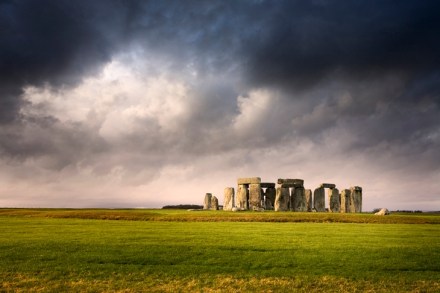
The astonishing has happened at Stonehenge. Some prehistoric force has driven ministers to make a decision. It is to spend half a billion pounds burying the adjacent A303 in a tunnel, to bring ‘tranquillity’ to the ancient place. The result has been a predictable outcry from protestors. The television historian Dan Snow has compared the Transport Secretary, Chris Grayling, with Isis in Palmyra: ‘vandals and zealots who destroy ancient artefacts’. Stonehenge drives men mad. The stones have for a quarter of a century been as impregnable to change as they have always been to interpretation. Whitehall has been unable to decide what to do with a single-carriageway road which runs 200 metres from the stones and causes hour-long traffic jams in summer.

Barometer | 12 January 2017

From our UK edition

Black background A Morris dancing troupe with blacked-up faces had to abandon its performance in a Birmingham shopping centre after being heckled and accused of racism. — There are several explanations for the tradition of Border Morris groups blackening their faces, but it was certainly established by 1509, when a Shrovetide banquet for ambassadors featured torch-bearers with blackened faces. — Some believe it to have derived from Spain and Portugal, where dancers blacked up as Moors. Others believe that it derives from the practice of poachers blackening up to conceal themselves in darkness. — Blacking up is punished more mildly now than in the 18th century: a 1723 anti-poaching law made it a capital offence to be caught in a forest with a blackened face.

Sherry to start

From our UK edition

Someone came up with a century-old quotation plangent with irony and sadness: ‘The year 1916 was cursed: 1917 will surely be better.’ That was Tsar Nicholas II. Poor fellow: tragedy for him and his family, tragedy down the decades for tens of millions of his subjects. Its spectre is still haunting Russia. Although we raised a toast to the tsar’s memory, tragedy was far from our minds as we welcomed the latest New Year in a mood best described as eupeptic pessimism. Not hard to do: Dorset is one of the least dyspeptic places on earth. My friends who live there sometimes try to discourage me from praising their sweet especial rural scene.

Autumn riches

From our UK edition

A few days ago, on the Dorset/Somerset marches, autumn was still in orderly retreat. Although a pear tree’s leaves had turned sere and yellow, the last fruit was still peeping through. Across the lawn, a horse chestnut was undressing, festooning the lawn with bronze. Out of a cloudless sky, a mild seasonal sun blessed the scene with a gentle glow, as if it were pouring Sauternes. Along the Ladies’ Walk, the yellows and greens were reinforced by bushes in russet mantles and by the triumphant redness of acers and liquidambar. We could have almost been in the New England fall, at least for a few yards. Autumn, fall: the two have profound resonances from different histories. As one might expect from its French name, autumn is full of good eating.

Real life | 3 November 2016

From our UK edition

For three months after I move to the country, I am told, I am going to be in the most almighty panic. I will ask myself repeatedly what on earth I have done. I will have sleepless nights worrying that I should never have left London. I will wake in a sweat in the early hours gripped by the idea that I cannot possibly survive now I am not ten minutes’ walk from the Northcote Road. And then, magically, one day, about three months in, I will wake up in my country cottage and look out of my bedroom window at the sea of green and say, ‘This is the best decision I have ever made.’ I’m really glad a few friends who have done this move have talked me through it, because I panic at the best of times.

Diary – 20 October 2016

From our UK edition

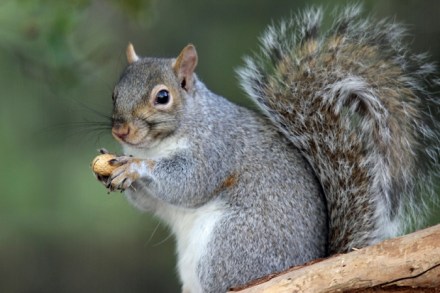
The week began badly when I spotted three grey squirrels gathering beechnuts in our arboretum. During our time at our home in Northamptonshire, my wife and I have anguished over our reluctance to indulge in wanton killing — and how far our tolerance of damage to the trees and nesting birds will stretch. But two years ago, we resolved the dilemma when squirrels wrecked our 30 nesting boxes. They had gnawed into the entrance holes before destroying the eggs and chicks. We employed two expert keepers who, in nine months, shot or trapped more than 400 squirrels over the 70-acre area. The increase in young birds the following summer has made us determined to maintain our ‘no squirrel’ policy.

The missing lynx?

From our UK edition

Sometimes an idea is so barmy that worrying about it ever becoming reality seems pointless. So when the Labour MP Andy Slaughter asked the Environment Secretary a few weeks ago about re-introducing lynx to the English countryside, the instinctive reaction of all those listening must have been, ‘Yeah, right! Good one!’ In fact, the basis of Mr Slaughter’s inquiry was a concept known as ‘rewilding’, which is fast becoming the new obsession of the left and the avowed intent of the more fundamentalist members of the naturalist lobby.

Long life | 8 September 2016

From our UK edition

There is no cherished assumption that now goes unchallenged. The latest one is that country air is good for you. Ronald Reagan was much mocked when he said in 1981 that ‘trees cause more pollution than automobiles do’, but scientists later surprised everyone by saying that he was at least partially right. And now it is claimed that if you live near to a pig, cow or chicken farm, you might as well be living in Oxford Street. A study conducted by Utrecht University in Holland has found that more Europeans die from air pollution in the countryside than in cities, mainly from the fumes of manure storage and slurry spreading. Of course, this may not be true; for no such findings ever get unanimous acceptance.

Local heroes | 8 September 2016

From our UK edition

In one village after another across the country, pubs are closing, as many as 25 a week by some counts, and this is accepted with English fatalism. But the people of South Stoke, near Bath, chose not to accept the loss of the Packhorse mutely; the locals decided to save their local. And in the process they may have demonstrated that ‘community’ and indeed ‘local’ or localism are not merely empty rhetoric. Part of the charm of Bath is its setting, lying in a valley ringed by hills, a town surrounded by villages.

Bare ruined choirs

From our UK edition

We’re so used to looking at the abbeys smashed up by Henry VIII — particularly Rievaulx and Byland, in north Yorkshire — that we forget quite how odd they are. It’s not just that they’ve been preserved as ruins for 500 years, although that’s odd enough in a country that’s only saved ruins properly for a century. What’s odder is that these vast structures were built in such remote spots. It’s like finding a ruined Westminster Abbey in the middle of nowhere. When the Cistercians left Clairvaux in Burgundy, they were so desperate for peace that they came all the way north to found Rievaulx in 1132, and Byland a few years later.

House style

From our UK edition

Last Sunday, I went to see two of the greatest paintings in Britain — at least in the estimation of our Georgian ancestors. When they first arrived here, in 1790, they were accompanied by a special naval escort. After Turner saw one of them, he said the experience made him both ‘pleased and unhappy’, because it seemed beyond his powers to imitate. These are the so-called ‘Altieri’ Claudes, by any reckoning among the most spectacular pictures produced in late 17th-century Rome. Today they hang at Anglesey Abbey, Cambridgeshire, where — at least on the afternoon I was there — few others had found their way to see them. Not that the place lacked visitors.

Magic at St Michael’s Mount

From our UK edition

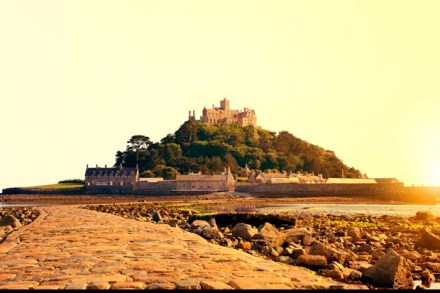
The Sail Loft is under a castle on a mountain on an island in the sea; for that, I could forgive it anything. It is on St Michael’s Mount in Marazion near Penzance, an island so charming and devoid of internet connection it almost strips me of words. If I lived here I would not write again; I would not need to. I would be happy, and who judges fish when they are happy and finds it not enough? It is accessible along a granite causeway for four hours each day — then the path goes back to the sea and one must take a boat; it is more ruthless than magic. I wish I lived here, and could drown my neighbours, who are customers at the betting shop in Camden. We do flood them, but only with the shower, and grouting does not have the malevolent possibilities of the Celtic Sea.

The perfect holiday cottage

From our UK edition

‘Farm cottage available, Dorset. Long or short let. £5 per week.’ I was looking for a writing bolthole, so I rang. ‘Bit off the beaten track but it’s quiet all right,’ said the owner. It was also unfurnished. ‘We can get some basics together for you.’ So, in the summer of 1968, I drove down to Dorset and my first holiday cottage. It was backed by a large wood, surrounded by fields of dairy cows and meadows of wild flowers, bordered by elms. Remember elms? God’s finest trees. They whispered in the wind. Furniture. A deal table and chair. Cooker. Enough crockery, cutlery and utensils for one. An armchair, old and comfortable. A bed, old and uncomfortable. A small table with a mirror. Pegs for hanging clothes.

My wild success

From our UK edition

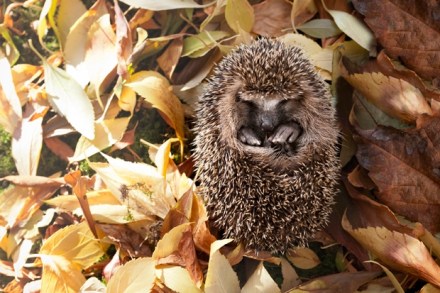
I’ve just tripped over the damned hedgehog for the second time in as many days. He has retreated into the greenhouse and is glaring out at me from under the workbench, rigid with indignation. I suspect he has learnt this expression from my cats. Truth be told, after 14 months’ acquaintance, with time out for hibernation, we’ve got each other’s measure by now. My two elderly rescue moggies barely spare the drama king a second glance. I’ve worked hard to acquire a hedgehog. And a great spotted woodpecker, goldfinches, greenfinches, chaffinches, grey squirrels, dunnocks, tits of every persuasion — you get the picture. But Mr Hog is my triumph to date, proof of a project that is nearing fruition.