Countryside

Hare coursing gangs are terrorising the countryside

From our UK edition

If you’re driving at dawn or at dusk in the countryside at this time of year, you might well see shady-looking men standing around in a stubble field, their 4x4s parked close by and ‘long’ dogs — greyhound types — straining on the lead beside them. Watch and you’ll see them walk up the field, or along the edges, until a hare makes a bolt for it. The men are ready. This is what they’re there for. A dog is let off the lead, and someone with a phone videos the scene. The footage is being live-streamed to others who have placed bets on the outcome —guessing which dog will kill the most hares per ‘slip’, or chase. When the hare has been caught (or when it’s scarpered), another dog has a go.

Can giving voice to the horrors of the past re-traumatise?

From our UK edition

It is 50 years since Ronald Blythe published Akenfield, his melancholy portrait of a Suffolk village on the cusp of dramatic change. Akenfield was actually a composite of two real villages, Charsfield and Debach, and Blythe’s oral history was a patchwork created from about 50 conversations — with figures including a pig-farming colonel, the over-stretched blacksmith and a rural dean who reported residents being ‘blunted and crushed by toil’. It was an unsparing vision of rural poverty, yet also a homage to disappearing ways of life and the virtues of small communities. Last Saturday’s Akenfield Now, on Radio 4, followed local sixth-former Anna Davies as she surveyed the landscape afresh.

The commercialisation of shooting may kill the whole sport

From our UK edition

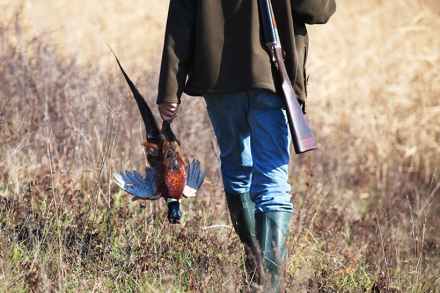
A few years ago I was sitting on the sofa at Sandringham enjoying a ham sandwich with the Queen’s then-head gamekeeper, David Clarke. The thing about working for the royals, he said, is that if a drive’s a flop, they completely understand. What Clarke meant is that even if no royal bags a bird, they won’t complain. It’s about the day, not the numbers dead. Sandringham (unsurprisingly) provides a snapshot of a bygone sporting era, a time when most shooting syndicates were collections of friends and locals, before entrepreneurial types sussed there was a few quid to be made out of shooting. Nowadays, armed with just an iPhone, a bloke on his City law firm lunch break can book a day where a bag of 500 pheasants is guaranteed.

Letters: parliament has a responsibility to stop Brexit

From our UK edition

Parliament’s responsibility Sir: I always enjoy reading the intelligent and outspoken Lionel Shriver. But her latest article (14 September) puts forward an invalid argument. As Ms Shriver points out, no one in the USA seriously argued that the disaster of Trump’s election, and the damage it could cause the country, meant the result should be contested. She compares this with the fact that many in the UK want to overturn the EU referendum result; and concludes from this that our political system is ‘broken’. But had an election been fought here, with one party promising Leave and the other Remain, few would be seriously arguing for the overturn of the outcome — whatever it was. Elections are, rightly I believe, taken more seriously than referendums.

A gang of sheep rustlers is stalking our county

From our UK edition

Though autumn is happily still some way off, we’ve already reached that stage in the shepherd’s calendar when full-grown lambs loud bleat from hilly bourn. In fact they now look bigger than their mothers. The easiest way of differentiating the ewes from the lambs is that the latter still have their fleeces while the former are shorn and look thoroughly careworn and knackered from having to feed their demanding and needy adolescents long after it’s strictly necessary. What’s rather spoiling my nature notes at the moment, though, is the nagging fear that next time I venture out into the fields on my morning walk with the dog, our pastoral idyll will have been reduced to a bloody shambles of discarded entrails and severed heads.

Why aren’t the Tory leadership contenders courting rural voters?

From our UK edition

Around nine million people – over 17 per cent of the population – live in an area classed as ‘rural’. That number is set to grow; by 2025, it has been estimated that the population of the English countryside will have increased by half a million. So surely, when a politician is bidding to become the next prime minister, it would make sense to consider what the rural population’s priorities might be. A national survey of rural opinion on the leadership contest, organised by the Countryside Alliance, would indicate that this isn’t happening. It’s far from new to say that farming communities are worried about Brexit, and concerned that their needs aren’t being considered in the debate. But that’s not the only cause for concern.

Enough grousing about grouse moors

From our UK edition

I was surprised to read the article by Ben Macdonald in last week’s Spectator urging Britain’s grouse moor owners to ‘rewild’ their estates. It argued that these Tory toffs had spent the past 100 years ‘destroying our natural heritage’, that the UK land under shoot management is an ‘economic desert’ that is ‘destroying both jobs and wildlife’ and that the ‘acts of desecration’ involved in the creation of grouse moors is a ‘debt’ that has ‘never been repaid’. There was a big clue that Macdonald might not know what he’s talking about early on in the article.

The scourge of the grouse moor

From our UK edition

Britain’s hunting estates were once beautiful. Walking through the New Forest, we can all appreciate how the purchase of land for hunting can radically protect our countryside. Almost a thousand years after William the Conqueror set aside this wooded wonderland, we can still enjoy its aged oak pastures, Britain’s largest herds of free-roaming grazing animals, and a chorus of birdsong that has been lost in most other corners of our land. Britain’s original royal forests model is recognised around the world as a commonsense approach to hunting. From Alaska to Scandinavia, hunters, alongside ecotourists, invest huge profits to sponsor the natural world. Hunters take a quota of animals from these special places — and leave the rest.

Nature’s real enemy: squeamish greenies

From our UK edition

This is the time of year when the English countryside reaches peak incredible: when we rural folk mentally pinch ourselves in disbelief at our extraordinary good fortune in inhabiting the most beautiful landscape on earth. On every walk you see something to delight the eye and lift the spirits.

Don’t blame Chris Packham for the shooting ban

From our UK edition

Last week, on the first day of the government’s ban on farmers shooting pest birds, I walked across St James’s Park and came across a pigeon murdered by a crow. It was on its back, wings spread, with a nasty hole torn in its chest. It looked like a botch job by an amateur heart surgeon, or an allegory for the whole messy, sorry affair. The ban — a sudden revoking of the old general licences to shoot — was announced right in the middle of the crop-sowing season by Natural England, a semi-autonomous offshoot of Defra. It consulted no one and gave baffled farmers just a few days’ notice, insisting that this was the only possible course of action after lobbying group Wild Justice claimed the licences were illegal.

The secret of their success

From our UK edition

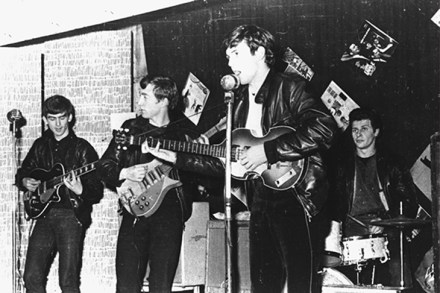
Which of the Beatles would you most like to have been? Not either of the dead ones, presumably. Nor the one continually derided for his alleged lack of talent. Definitely not the embarrassing, gurning, two-thumbs-up uncool one… Anyway, it’s a trick question. The correct answer, at least it is for me after watching The Beatles: Made on Merseyside (BBC4, Friday), is Pete Best — the drummer who got ousted just before the band got big because he was too good-looking, too quiet and, some say, because Brian Epstein couldn’t handle his mum’s pushiness. Best, I’d always imagined, was the unluckiest man in history.

Real life | 21 March 2019

From our UK edition

‘Don’t touch anything sharp. Don’t saw anything or drill anything or sand anything,’ said the builder boyfriend as he left the house. ‘I generally agree,’ I said, mindful of the fact that this is what the keeper used to say. ‘But I’m disappointed you include sanding, because I think I made a very good job of the living room floor, and now I’m going to sand the dining room.’ I truly believe there is nothing a deranged woman with a sander can’t achieve. The builder b and I are trying to get the last bits of the house finished so it is in a fit state to be sold.

Real life | 24 January 2019

From our UK edition

The frustrating thing about rights is that when you give them to people they don’t cherish and appreciate them. They turn them ungratefully upside down like a modest-sized Easter egg and shake them vigorously to try to work out if something better might be inside. Right to roam is like this. You would think walkers would be delighted to be told they can wander across a farmer’s land, skirting fields full of sheep and horses to take a short cut to a pub, or to make a nice circular route for their Sunday ramble. Not a bit of it. Since right to roam, walkers seem to be almost exclusively furious about footpaths. They want to know why they cannot stray off them to wander around your fields as well, letting their huge dog loose to run around chasing your horses.

How can we put an end to all these dog attacks on sheep?

From our UK edition

This spring I wrote in the magazine about how sheep attacks were on the rise, as wayward dogs were becoming an increasing problem for farmers. Sadly, since I wrote the piece in March, the problem hasn’t got any better. Pictures of sheep that have been either mauled or killed by family pets still appear constantly on my social media feeds, and over the summer numerous dogs have had to be shot by farmers to stop them attacking their livestock. Things have got so bad in some places that in Wiltshire, for example, the National Trust has been forced to ban dogs from some of the areas it looks after close to Stonehenge.

Britain’s countryside is about far more than ‘good versus bad’, or ‘us versus them’

From our UK edition

Last month, an article appeared in The Telegraph under the headline ‘Head of Wildlife Trust faces call to resign over hunting past’. An alternative headline could have been: ‘Anti-hunting activists have whole worldview turned upside down’, because that is really the only story here. The hunting past of Mike Bax, head of the Kent Wildlife Trust, is simply proof of what every pragmatic conservationist already knows: that hunting, shooting and fishing go hand in hand with conservation. Mr Bax has been a dedicated member of the Kent Wildlife Trust for 30 years. During that 30 years he has also hunted with a pack of beagles, which, if you don’t know, are small hounds that prior to the hunting ban would gamely hunt hares.

The Suffolk-Essex border

From our UK edition

You’ve already seen a picture of the Essex-Suffolk border. Assuming you’ve seen Constable’s ‘The Haywain’, that is: the Stour (the river into which the farmer has cleverly driven his cart) forms the county boundary, meaning the land on the left is Suffolk, that on the right, Essex. Years of David Beckham and jokes about girls in white stilettos had rather inclined me against Essex, so when I moved to Suffolk it was galling to discover I had a Colchester postcode. Only gradually did I realise how well the two counties work together. This part of the world is beautifully untrendy — it’s on the way to nowhere other than the North Sea, so, unlike the Cotswolds, we are spared invasion by tourist coaches.

Dumbing down the house

From our UK edition

Osterley Park on the western fringes of London is a rare survival. A Robert Adam house, with splendid Adam interiors, it’s still surrounded by its Elizabethan stables, an 18th-century landscape and classical follies — in the middle of urban Hounslow. Over the past decade, this Georgian gem has been increasingly despoiled and dumbed down by the National Trust. The Trust is spending £356,000 to turn Osterley Park into a child-friendly leisure centre. As one of the huge posters strapped to the park fence says, the money will pay for ‘A new skills area for young families providing kids with a safe place to learn to cycle and gain confidence’. Why splurge this vast amount of money on something you can already easily do on the paths at Osterley, i.e. bicycle?

The Spectator podcast: Sturgeon’s second stab

From our UK edition

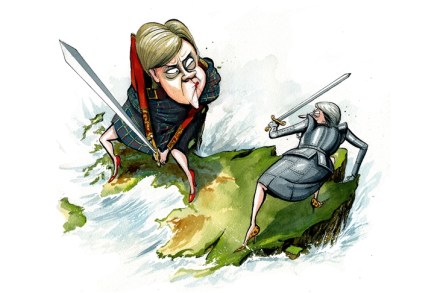
On this week’s episode we question whether Nicola Sturgeon might be tempted by a second independence referendum, consider the increasingly frosty relations between the USA and Russia, and ask whether city dogs are a menace to sheep. First, Theresa May was in Scotland this week for meetings with Nicola Sturgeon ahead of Scottish Tory conference. Thanks to Brexit, the Scots appear to have another opportunity to try and go it alone, but with support for independence still routinely polling below 50 per cent, will she pull the trigger?

Flock horror

From our UK edition

Pity the poor sheep. Every other animal has its champions. There are fox fanatics, dog obsessives, campaigners for cat welfare. Pigs, once a celebrity pet of choice, have their supporters, too. But it’s sheep who need friends right now, because they are, quite literally, under attack. My Facebook pals are mostly country types and barely a day goes by without one of them posting a picture of a sheep mauled, often fatally, by untrained, unrestrained city-dwelling dogs. Camilla Swift is joined by Ben Fogle to discuss the plight of sheep: Sheep-worrying used to be quite a minor problem but it is now getting much worse in terms of the number of incidents. The police say that up to 15,000 sheep were killed last year, which is ten times higher than previous estimates.

A model village

From our UK edition

From ‘Sir Thomas Acland’s example’, The Spectator, 3 March 1917: In 1912 we discussed the idea — a favourite dream of ours — that some characteristic English village, perfect of its kind but likely to lose its quality in the hugger-mugger expansions of modern enterprise, might be acquired by the National Trust to be kept forever as a specimen, in a changing world, of what used to be… Men freely give pictures and collections of china and plate and furniture to the nation. Why not the grouped architectural works of man? Why, too, should not open pieces of country be given as often as pictures and bronzes and statues?