Corn

In praise of corn, a Thanksgiving essential

From our US edition

The Indians, as we innocently called them in the days of my youth, put their name to it: “Indian Corn.” Somehow, “Native American” or “First Peoples Corn” just doesn’t do it, so here let us observe this now-verboten usage. Technically, Indian Corn (known as calico or dent corn too, for its coloration and dents in the kernels) is one variety of maize, first cultivated, they say, in Mexico thousands of years ago. Columbus, who called the natives “Indians” because he was looking for India, brought back seeds to Europe in the 1490s; they did not take. The Plymouth colonists in the 1620s, from whose early travails the American feast of Thanksgiving emerged, grew Indian corn courtesy of the local Wampanoag tribe. It no doubt helped them survive when the English peas ran out.

corn

The ‘historic’ national dishes which turn out to be artful PR exercises

In 1889, Raffaele Esposito, the owner of a pizzeria on the edge of Naples’s Spanish Quarter, delivered three pizzas to Queen Margherita, including one of his own invention with tomatoes, mozzarella and basil, their colours taken together resembling the Tricolore. The Italian queen loved the pizza, and Esposito duly named it after her. In that restaurant today hangs a document from the royal household, dated 1889, declaring the pizzas made by Esposito to be found excellent by the queen. And so was born the Pizza Margherita, a dish now synonymous with Naples. The queen’s seal of approval in the wake of Italian unification, which had proved difficult for Naples, came to represent the embracing by the governing royal family of an impoverished city by way of their cheapest street food.

The little joys of growing corn in Connecticut

From our US edition

They were neighbors and friends. Harold Loeb, an economist, writer and heir to the Guggenheim and Loeb fortunes, and his wife Vera lived down the Saugatuck River from us on Snake Drive, at the end of Buttonball Lane. Harold was better known as having been betrayed by Ernest Hemingway in Paris in the 1930s — Robert Cohn in The Sun Also Rises was modeled after him. Harold got even in The Way It Was, published in 1959. He asked my father to sketch him for the book’s back cover. Among other things they had in common a gift for gardening. My father, known for his charcoal sketches of celebrated locals of Weston, Connecticut, planted a large, Walden-inspired plot surrounded by a white picket fence, where weeds were allowed as long as they didn’t interfere with the crops.

corn

Bud Light and the beervolutionary wars

From our US edition

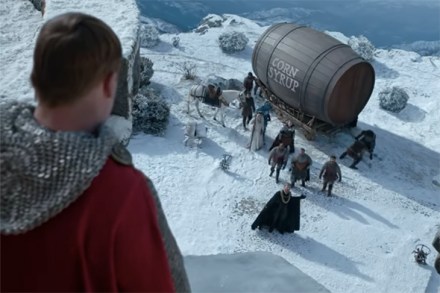
When historians reflect on Superbowl LIII, what will they say? They might look upon Adam Levine’s tattooed body and despair. They might bemoan the absence of excitement in an utterly forgettable game between the predictable champions and a transplant franchise with four fans. But what should be noted by all scholars of the period, is the first shots fired in the Great Light Beer War. Bud Light, continuing its largely successful Medieval Times-themed campaign, decided to take the fight from the fake Game of Thrones jousting fields to its light beer competitors. In an admittedly not-bad-for-a-beer-company commercial, the king ventures across the realm, stopping at various competitors’ castles to give them their corn syrup. https://www.youtube.com/watch?

bud light corn syrup