Corfu

‘Too bohemian for Bournemouth’: the young Lawrence Durrell

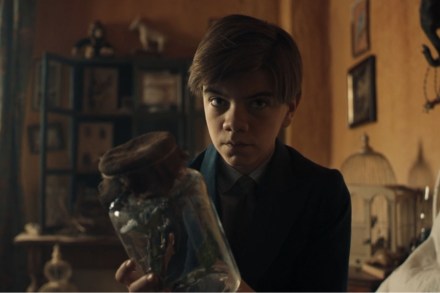
These legendary lives need the clutter cleared away from them occasionally. Lawrence Durrell and his brother Gerald turned their family’s prewar escape to an untouched Corfu into a myth that supplied millions of fantasies. It still bore retelling and extravagant expansion recently, if the success of ITV’s series The Durrells is any sign. (One indication of that pleasant teatime diversion’s accuracy: the actor playing Larry, Josh O’Connor, is 6ft 2in. Larry himself was a whole foot shorter.) How Louisa Durrell, struggling with life in Britain after returning from India, went in a bundle with her children to a Greek island of cheap Venetian mansions, heat and innocent adventure is always going to have its appeal.
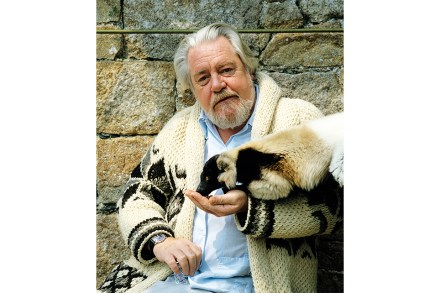
Four legs good, two legs bad – the philosophy of Gerald Durrell

We know of the Durrells mainly through their own writings, outstandingly My Family and Other Animals, about their years in Corfu in the 1930s, and from the image of them created by TV and film adaptations of this work. Gerald and Lawrence were the best known members of the family, the first as a zoologist and conservationist, the second as an experimental writer. Their siblings, Margaret (Margo) and Leslie, will always be perceived through the lens Gerald turned on them in My Family – the former as a flighty eccentric, something like an extra from a Carry On film, the latter as a pantomime villain. Their mother, Louisa, was loved unreservedly by her children and comes across in My Family as a kindly eccentric.

How cricket came to Corfu

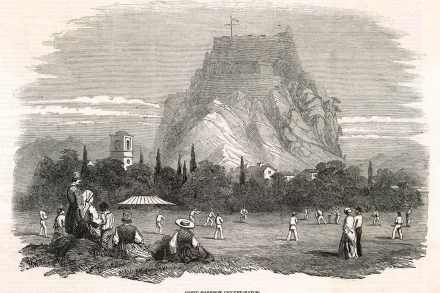
If you are ever at one of those dinner parties where the company is competing to slag off the iniquities of the British Empire, counter with the two words: ‘Corfu’ and ‘cricket’. Although never an actual colony (but rather a British protectorate), Corfu and the Corfiots are that rare thing – unashamedly Anglophile. There are several good reasons for this, not least including the British creation of the island’s celebrated university and Corfu town’s water and sewerage system. But for some, the protectorate’s greatest gift was cricket. This year Corfu will be celebrating the bicentenary of the coming of the game to the jewel of the Ionian Sea – making Greece one of only four countries in the world to have played the game for that long.

Simon Nye on The Durrells of Corfu

From our US edition

Where I go, The Green Room goes. Last week, I was on the Greek island of Corfu. With a heavy heart, I had accepted an invitation to deliver a short talk about the novelist Lawrence Durrell, of whose work I’m wholly ignorant, to an audience of experts in Lawrence Durrell. I’ll spare you the details of how the talk went. It rapidly emerged that most of what I know about the Durrell family comes from the television series The Durrells of Corfu, which was adapted for television by Simon Nye from the memoir-novels of Gerald Durrell. Being serious-minded literary and academic types, we passed many long and arduous hours conferring hard in the Dionysios Solomos Museum, the home of the poet who wrote ‘Hymn to Liberty’, the lyrics of modern Greece’s national anthem.

The real Durrells of Corfu

From our US edition

There’s a wonderful moment in the third television series of The Durrells in Corfu when Louisa, the mother of Gerald and Lawrence Durrell, has been reading a badly-spelled essay by Gerald, her youngest son. She turns to him with proud love in her eyes and says ‘Larry writes to dazzle. You write to entertain.’Screenwriter Simon Nye could not have better expressed the different literary skills of the two brothers. Lawrence, in his mid-twenties in the 1930s, was destined to become a leading poet of his generation and then, as he put it, to ‘stumble into prose’ with the ground-breaking Alexandria Quartet (1957-60).

durrells