Conservative party

Cameron repulses Harman’s misdirected assault

The PMQs attack No 10 was expecting from Labour on the Coalition’s planned spending cuts did not materialise and today’s was another relatively quiet affair. It started with a minute’s silence in memory of those who died in the shootings in Cumbria. Harman asked one question on gun laws before moving on to the electoral roll and whether it is fair to redraw the boundaries on a roll that does not include three and a half million people. Harman would be on quite strong ground here except for the fact that the boundaries were redrawn under the last government using this electoral register, a point Cameron made. When Harman moved

Osborne’s successful first outing on the international stage

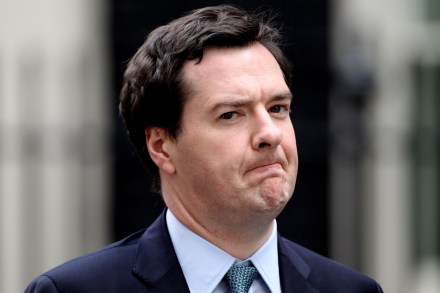
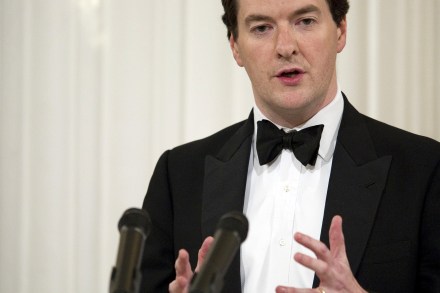
George Osborne’s Asia trip has now been rounded off with a meeting of the G20 finance ministers in South Korea and he is now heading back to Britain and his Budget preparations. The trip must be marked up as a success for Osborne. In its communiqué, the meeting implicitly endorsed Osborne’s two major moves since becoming Chancellor, cuts this year and the setting up of the Office of Budgetary Responsibility:  ‘We welcome the recent announcements by some countries to reduce their deficits in 2010 and strengthen their fiscal frameworks and institutions’ No one can doubt that the Tories have comprehensively won the argument for in-year cuts. With a growing domestic

Red Vince sips clear blue water

Deprived of the comforts of third party opposition – the ability to say and do as he pleased – Vince Cable has had to put away childish things. Of necessity, the business and enterprise secretary cannot be a socialist. And Cable used yesterday’s speech at the Cass Business School to prove he’s no socialist.   He convinced. Cable will enact the coalition’s plans to reform regional development agencies, cut preferential micromanagement grants that supersede the judgement of markets, demolish stifling small business regulation, curtail short-term speculation on company takeovers to protect shareholders, cutting the deficit early and the part-privatisation of the Royal Mail. He also endorsed long-standing Tory policy of

Flotilla follies

Two groups in the Conservative party that have worried most about Con-Lib government are the social conservatives and the neo-conservatives. The latter have been particularly worried about UK relations with Israel. There is a real concern in parts of the Conservatives Party that three factors would come together to sour Anglo-Israeli relations: what the neo-conservatives see as the Foreign Office’s knee-jerk Arabism, the presence of many supposed Arabists in Cameron-Hague’s teams, and the anti-Israel bias exhibited by many leading Liberal Democrats. Whatever the truth of these allegations, they are held with considerable fervour. But Nick Clegg’s reaction to the conflict shows that the Lib Dem leader is both holding to

Will the coalition fall over Europe?

Well, well. Simon Hughes has just made firm Eurosceptic comments in the Commons. He said: ‘I’m also clear…that we need to revisit some of the decisions like the working time directive where I think we made a mistake, and there have been mistakes in the European Union. “And my great enthusiasm for the European Union and for better collaboration across Euope doesn’t make me blind to things that have not gone well and where we need to do better. And overly prescriptive regulation such as the working time directive is one of those. “I don’t take the view that there’s only ever a one-way traffic of power from this parliament

Mods & Trads: Australian Edition

An interesting piece from the BBC’s Nick Bryant, arguing that Australian conservatives have concluded that Cameron failed to win an overall majority because he was insufficiently clear – that is, right-wing. The Liberal leader Tony Abbott appears determined not to make the same mistake [sic*] and is modifying, that is to say abandoning, some of his predecessors modernising touches as Australia prepares for its election next year. If Abbott wins – though at present the polls suggest the electorate doesn’t like Abbott’s Liberals or Prime Minister Rudd’s Labour party and would, in a burst of Aussie Cleggmania hand the Greens 16% of the vote – then we can expect the

Hughes in the ascendant

The indications are that Simon Hughes will become Lib Dem deputy leader. Politics Home reports that Hughes is backed by 29 of the party’s 57 MPs, which make him the outright winner in the race with Tim Farron. Hughes also received the backing of 60 percent of party activists on the Lib Dem Voice website. The Tories will be both wary and pleased at this development. Hughes is left-wing, determinedly so, and among those who favoured a deal with Labour. Rumours abound that Cable’s resignation was contrived to promote Hughes, who is also said to be livid at being excluded from government – an Ashen-faced Hughes was spied shaking his

David Laws resigns

It was inevitable, but this is hugely regrettable as Laws is a star performer and I feel he has been the victim of a media gay-hunt that belongs to a bygone era. The sums of money involved are slight in comparison to some, and there are arguments that other ministers should resign for having committed similar or worse offences and for having shown markedly less contrition. But it is refreshing that a minister would resign over a personal transgression with haste and dignity.  His successor is understood to be a Lib Dem, probably Chris Huhne or Jeremy Browne. Huhne made his money working on hedge funds so he is a more or less a like for like replacement. I’m uncertain he shares Laws’s enthusaism for the Tory position

The transparency revolution

David Cameron has made his first podcast since becoming Prime Minister. There are a couple of noteworthy points: he didn’t name-check any Lib Dems (a slight if perhaps telling oversight); and he reiterated his call for a ‘transparency revolution’, allying accountable public services with a new style of open politics. The coalition will ‘rip-off the cloak of secrecy… and rebuild public trust in politics.’  Oh the difference a day makes. Recorded on the train down from Yorkshire yesterday, pithy catchphrases such as ‘by the time we’ve finished, they (politicians) will have far, far fewer places to nowhere to hide’ sound a little insensitive today. But I’m nit-picking. It’s an excellent spiel: clear,

Can he stay or must he go?

Paul Waugh and Matthew D’Ancona are debating whether David Laws will stay or go. D’Ancona is plain that Laws must go; Waugh wonders if this is an ‘Ecclestone moment’ and that Cameron and Clegg will dig in. John Rentoul agrees with Waugh. Laws’s situation looks bleak, and Andrew Grice concludes that Laws is no longer master of his fate. But it is not hopeless and Laws can survive. Laws is indispensible to the coalition – especially with left-wing Lib Dems Menzies Campbell and Simon Hughes increasingly intent on dissent. Second, who would replace him? There’s more talent on Virgin TV than there is on the blue and yellow benches, and

Sir Menzies Campbell: Cameron and Clegg look like brothers

Surprise, surprise – Menzies Campbell doesn’t sound 100% taken with the coalition in interview with Andrew Neil on Straight Talk this weekend.  This is, don’t forget, the man who encouraged the Lib Dems to seek a deal with Labour at the last minute.  And here he claims that he “would have found it very difficult to make the kind of arrangement with David Cameron that Nick Clegg has obviously found so easy.”  He adds that: “…there is this determination to make [the coaltion] work and nowhere is that more obvious than in David Cameron and Nick Clegg.  I mean, they are quite extraordinary, the extent to which their views coincide

Laws unto himself

Wondering why David Laws put in such a convincing performance when defending the government’s cuts at the dispatch box on Wednesday?  This little detail from Allegra Stratton’s excellent profile of him might help explain: “A friend confirmed that for the past six months, as the official Lib Dem party line decided on by Vince Cable was no cuts, Laws had been telling friends he believed the markets wouldn’t tolerate it. ‘He has been saying privately the cuts have to start straight after the election,’ they said.”

Was last night’s Question Time a preview of how the coalition will deal with the media?

All kinds of hoohah about last night’s Question Time, for which Downing St refused to put up a panellist because of Alastair Campbell’s involvement.  If he was replaced with a shadow minister, they said, they would happily get involved.  But, as the excutive editor of Question Time explains here, the Beeb wasn’t prepared to go along with that.  So Campbell got to lord it up in front of the cameras. For the reasons outlined by Guido and Iain Dale, it was probably a slight mis-step by the coalition – but not one, in itself, that will have any important rammifications for them or the public.  For while it’s not the

Encouraging early signs for the coalition

Was the delayed ballot in Thirsk and Malton a referendum on the coalition government?  If so, the result released in the early hours of this morning will greatly reassure David Cameron and Nick Clegg.  The Tory candidate Anne McIntosh won the seat with 52.9 percent of the vote (up from 51.9 percent in 2005), and the Lib Dems came second with 23.3 percent of the vote (up from 18.8 percent).  Labour were pushed way down into third place on 13.5 percent (down from 23.4 percent). So, over three-quarters of the vote for the two coalition parties. I’d be hesitant to draw any firm conclusions from a one-off election, conducted under

A new approach to party management

The newly-elected 1922 Executive is another demonstration of the strength of the right wing of the Conservative party. Paul Goodman notes that of the seven MPs elected to the executive who were are not new to Parliament, six are on the right. The only one who isn’t is Nick Soames, who is a special case. As one member of the ’22 executive said to me earlier today, Soames, because of his immense popularity and standing in the party, transcends his factional labelling. Of the five new MPs elected to the exec, three — Robert Halfon, Charlie Elphicke and Priti Patel — are definitely on the right of the party. On

The IDS agenda could help to end the benefits trap

Yesterday, it was Michael Gove’s schools agenda. Today, it’s the other main reason to get behind the coalition: IDS’s plans for fixing the welfare system. The Secretary of State for Work and Pensions has given a speech outlining them this morning. You can read it here, and I’d certainly encourage you to do so. There are plenty of welcome ideas in there, but none more so than IDS’s emphasis on removing disincentives to work from the tax and benefit system. We at Coffee House have banged on about his “dynamic” approach, developed at the Centre for Social Justice, for some time now – and with due cause. You can set

To increase capital gains revenues cut rates, don’t increase them

To address the deficit, George Osborne will probably have to raise taxes. This is a grim truth to which most people are reconciled. But raising taxes and raising revenue are two different things. If the Chancellor is serious about closing that deficit, then he would doubtless be interested in the idea that a Capital Gains Tax raise from 18 per cent to 50 per cent might be a chimera tax. That is to say, one which raises no money at all. Worse, in fact, the odds are that tax revenues will fall and the deficit will be made worse by this tax rise. The international evidence is absolutely clear. As

Cameron’s public debate with his backbenchers

So, did Cameron say anything particularly noteworthy during his interview on the Today programme?  In truth, not really.  Most of the answers were of the “let’s wait and see what in the Budget” variety.  The ratio of spending cuts to tax rises: wait and see.  Plans for hiking capital gains tax: wait and see, and so on.   The only answers that weren’t determined by the Budget seemed to be his racing tips for the sports bulletin.  You can hear them here. But that isn’t to say the interview wasn’t revealing.  For much of it, Cameron was quizzed about the objections that David Davis and John Redwood have raised to the

Gove must guard against the vested interests

Polly Toynbee was on ‘mute’ on Sky News in my office, the remote wasn’t working, which is frustrating because I’d love to hear how someone mounts a passionate defence of why local government should have monopoly control of state schools. Very few things in politics are indefensible, but a system which doles out sink schools to sink estates is one of them. When Michael Gove was a journalist, he described comprehensive education as the greatest betrayal of the working class. And now, as Education Secretary, he is outlining a system that will give the poor the same choice of schools that the rich have. Who on earth could be against