Conservative party

Why a public sector pensions levy makes sense

Today’s papers are awash with stories that a public sector pensions levy will be announced in tomorrow Emergency Budget. Trade unions have already issued dire warnings, ranging from the PCS’s promise to “organise the widest possible popular opposition,” to Bob Crow of the RMT’s rather prosaic: “when someone’s winding up to give you a kicking you have a clear choice — you can either take them on right from the off or you can roll over and hope that they go away.”  Public sector workers, however, should not be so dismissive.   In our report, released on Friday, we argue for an “Irish style” graduated public pensions levy of 7.5

The two sides of the VAT question

There are two main aspects to the VAT issue: one distasteful, the other less so.  The distasteful one is the issue of whether the government has a mandate for hiking VAT in tomorrow’s Budget.  Of course, government is often the art of the unexpected, so we shouldn’t be surprised to see measures implemented that weren’t explicitly raised in the election campaign – particularly when it comes to tax rises.  But all the claims that there were “no plans” to raise VAT do jar against reports like: “Osborne insisted the budget measures would be spread fairly across society, suggesting capital gains tax will rise and promising a new banking levy. But

Who is prepared to cut, and who isn’t?

One of the leitmotifs of this Parliament  – and something which, by many inside accounts, is helping the coalition immensely – is the willingness of the civil service to wield the axe within their own departments.  And now, courtesy of Reform and the Institute of Chartered Accountants, a new survey suggests that this mentality may stretch beyond Whitehall.  It quizzes public sector “finance decision makers,” and the headline finding is that: “82 per cent of respondents think further savings can be made within their organisation in the next year without affecting the current level of service they provide.” Far more intriguing, though, is the finding that 84 percent of them

Nick Clegg’s Big Week

With the cuts comes the candy: the sweet-tasting morsels which, it is hoped, will prevent tomorrow’s Budget from being too much of a collective downer for the nation.  We’re already hearing that a council tax freeze will be pencilled in for next year, and you can expect a few more treats besides. National insurance, for instance, is looking like an obvious candidate. From George Osborne’s perspective, these sunnier measures will serve a two-fold purpose.  Like I say, it will be hoped that they keep the public on board with the government’s project: stick with us, the message will run, and you’ll get more of this in future.  But they will

What will the Labour attack be in a year’s time?

It’s days like this when you realise just how stuck Labour are in a Brownite groove.  Everywhere you turn, there’s some leadership candidate or other attacking the government for choosing to cut public spending this year.  Ed Miliband claims that the Lib Dems have been “completely macho … completely cavalier” about cuts.  Andy Burnham says that this year could “damage us in the long run”.  And even those who aren’t chasing the leadership are getting in on the act: Alistair Darling writes that the coalition has “a fiscal policy that undermines fragile growth”. So we already know what Labour’s broad response to this week’s Budget will look like.  But it

John Hutton: a good man for the job

While we’re enjoying a burst of optimism about the coalition, it’s worth highlighting the news that John Hutton has been put in charge of a review into public sector pensions.  As I’ve said before, Hutton was one of the most quietly impressive figures of the New Labour era, and someone who impressed during his time at work and pensions. Even the Tories’ current welfare agenda owes a lot to Hutton: he commission the Freud Review which set the parameters for welfare reform in this country, and he fought on its behalf against a reluctant Gordon Brown. In a wonkish sort of way, it will be exciting to see what happens

Osborne’s massive opportunity

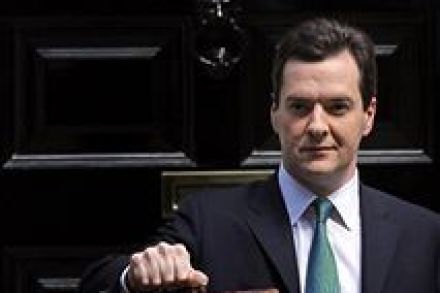
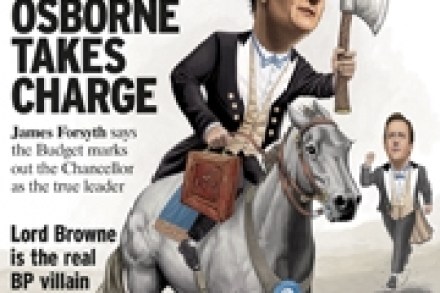
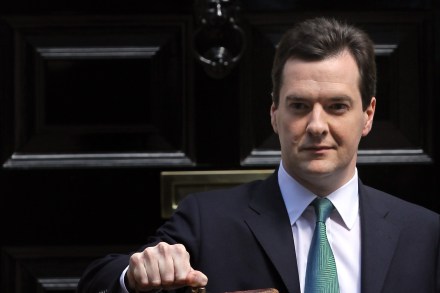
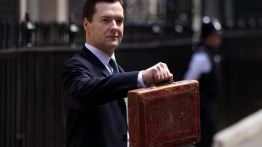
I’m quite optimistic about George Osborne’s budget – in the same sense that one might have been optimistic when Churchill took over from Chamberlain. Not because the situation is good, or because you think the road ahead will be easy or enjoyable, but because the road no longer leads to disaster. Not that Osborne is a Churchill – even though he will have his own fair share of blood, sweat toil and tears for us on Tuesday. I’m pretty confident he’ll head in the right direction, and at the right speed. I discuss this in my News of the World column today, but will say a little more here: 1.

The Budget: compromise and non-compromise

It’s hard to overestimate the significance of Tuesday’s Budget. George Osborne’s statement won’t just determine the course of our economy for the next few years, but also the political life of this government. Spending cuts and tax rises may not inevitably “fracture the coalition,” as Peter Oborne puts it in the Mail today. But they certainly have the potential to. Happily for the coalition, the current political mood is so geared towards fiscal restraint that there will be little immediate opposition to Osborne’s general plans.  That will come once the effects of spending cuts are felt in individual constituencies  – months, even years, down the line. But there are a

Lord Ashcroft clarifies a few things

After all the hoo-haa about Lord Ashcroft’s tax status, it’s only fair to mention this passage from his interview with the Telegraph today: “He explains that new laws brought in under the Coalition mean that all members of the Lords will have to be fully taxed. Yes, I reply, but when does he plan to come onshore? ‘I already am.’ Really? There has been no public announcement. So he is now paying all of his taxes, including everything that comes from his businesses around the world? ‘Yes. So I say to people don’t go moaning on about it because it is no longer an issue. The point is moot… Can

Cameron previews the austerity budget

Tick, tock, tick, tock: only three-and-a-bit days to go until George Osborne’s long-anticipated austerity Budget, and the coalition is gearing up its efforts to prepare us for the worst.  Exhibit A is David Cameron’s interview in the Times this morning, which contains few pleasantries and a whole heap of stern talk  – particularly for those in the public sector.  As the PM puts it: “There is no way of dealing with an 11 per cent budget deficit just by hitting either the rich of the welfare scrounger … there are three large items of spending that you can’t ignore and those are public sector pay, public sector pensions and benefits.”

Almost a great man

Of those prime ministers whom the old grammar schools escalator propelled from the bottom to the top of British society since the second world war, Ted Heath and Margaret Thatcher were in many ways the most alike. Wilson, that classic greasy-pole climber, tactically brilliant, strategically trivial; Major, decent, straightforward, a good man lifted to power on the shoulders of his many friends as a healer who could unite: both these are types, the one less admirable than the other, but familiar to history. Heath and Thatcher are much odder, more dangerous and more remarkable. It is an extraordinary tribute to the modern Conservative Party that both chose it as the

The schools revolution is under way

There’s an historic tinge to proceedings this morning, as Michael Gove prepares to release an application form by which parents, charities and other groups can establish free schools.  In effect, this is zero hour for the policy that The Spectator described as “reason enough to vote Conservative” a couple of months ago. The coalition is hoping that the first of the new breed of schools will appear in September next year. Much of it will come down to take-up: how many schools are set up, and when. So it’s encouraging that people and organisations are already expressing heavy interest in the government’s plans.  As Michael Gove revealed in an excellent

The Big Society reincarnated

The Big Society is a great idea. But its problem has always been that it lacks definition; voters and even some Tory MPs aren’t quite sure what it means. But an idea being floated today gives you a sense of its practical and political potential. It is being suggested that the community right to buy, the idea that the community should have first refusal on any asset being sold off, should be applied to the port of Dover. The last government wanted to privatise the port but the new MP for Dover, a Tory called Charlie Elphicke has proposed that a community trust be allowed to buy the port and

Osborne gets upfront about our debt burden

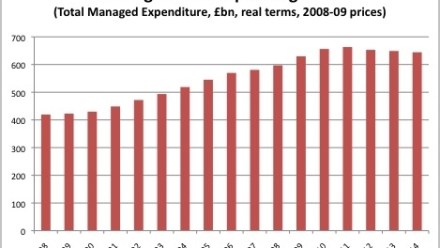
A couple of weeks on holiday, and there’s plenty to catch up on.  First, though, George Osborne’s speech to Mansion House yesterday evening.  In terms of substance, it was fairly radical stuff.  And it’s encouraging that so many of the Tories’ solid plans for reforming the financial regulatory system have survived the coalition process.  But, really, it was one simple, little sentence which jumped out at me.  This: “Debt [is] set to still rise even at the end of this five year Parliament.” “So what?” you may be thinking, “we knew that already.”  Ah, yes, but we’ve rarely heard a politician be quite so upfront about our debt position before

How Hughes will play the coalition

Simon Hughes is an experienced campaigner, whose reputation is deservedly blemished by a handful of duplicities – Peter Tatchell, denying a referendum on the Lisbon Treaty and the like. Hughes has just appeared on the Daily Politics and, very subtly, split the Lib Dems from the Tories. It was very simple: the Tories are responsible for all that’s bad and the Liberal Democrats are benevolent. First, Hughes dissociated the Liberals from tax rises: “I hope that the chancellor’s hearing the voices that says VAT is not the right tax to change in the budget next week.” Those voices are, of course, his ‘colleagues in the Treasury’ – an enlightened check

Trimble frozen out of government

The announcement that Lord Trimble will join the Israeli review into the flotilla incident is a reminder that he has no role in the current government. Trimble takes the Tory whip and given that the party is not overly supplied with Nobel Prize winners, it is a bit of a surprise that no role has been found for him. In opposition, the word was always that relations between him and the new leadership of the Ulster Unionists, the Tories’ electoral allies in Northern Ireland, were not great. But the UUP leader has resigned since the election. Now, it may well be that Trimble himself is the obstacle. Even his admirers

Seeing it through

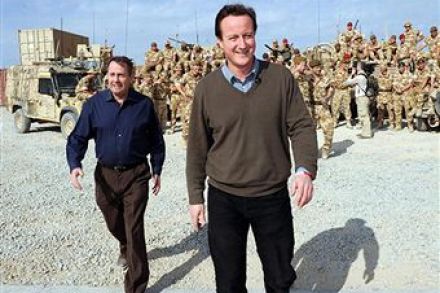
David Cameron’s address to the House contained no surprises. NATO and its allies are 6 months into a strategy to stabilise Afghanistan. All sides of the House were agreed that Britain should fulfil its commitments, but remain in Afghanistan not a day longer than necessary. That date is unknown. Like Blair and Brown before him, Cameron aspires to ‘improve Afghan security’. ‘Stability’ surely means the expulsion of al Qaeda from Afghanistan. How likely is that without the complete co-operation of the Taliban? (At what cost would that be secured?) And, as Julian Lewis MP pointed out, is al Qaeda more dangerous in Afghanistan than it is The Yemen, Somalia or

Naughty Nokes

Life has imitated art – or Jilly Cooper in this case. The former chief executive of the National Pony Club, Caroline Nokes MP, 37, has been having a three year affair with a Tory toy boy, Councillor James Dinsdale, 27. Theirs was an affair of hotel-room assignations and steamy conference meetings – Bournemouth has little else to commend it. They were outed by the Sunday Mirror. Mrs Nokes, a married mother of one, was photographed entering the Kensington Close Hotel last Monday night. Minutes later, Mr Dinsdale arrived, casually dressed in a blue hoodie. Taking a ‘Hug a Hoodie’ to extremes, Mrs Nokes checked out at 8:30 the following morning.

David Davis is the darling of the Tory right

ConservativeHome conducted a poll into prominent, right-wing Tory backbenchers. Unsurprisingly, David Davis topped the poll. 70 percent of respondents hold that David Davis represents their views and 54 percent believe he articulates those views effectively. John Redwood and Daniel Hannan were some way behind as DD’s closest rivals. Davis’s chief weapon is communication. Plain speaking and from a working class background, people easily identify with him; and he expresses an acute intelligence in simple terms, something that John Redwood has failed to do. And whilst Hannan has charisma, Davis has more – the fruit of a decade at the forefront of British politics. Above all, Davis espouses talismanic grass-roots causes:

Keeping the backbenches occupied

In this new world of Coalition politics, there is a difference between Conservative party policy and government policy. There are things that the Conservatives would like to do but can’t do because they didn’t win a majority. As Tim wrote this morning, this provides an opportunity for the Conservative parliamentary party to fill this gap. When the backbench policy committees of the 1922 are set up, they should start working on developing, detailed policy ideas rather than just critiques of Coalition policy. The Prime Minister should encourage this for three reasons. First, it would provide him with a series of possible options for the next manifesto. Second, it would give