Conservative party

Clegg believes

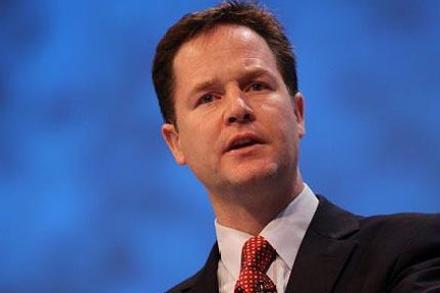
There’s an snappy little anecdote in Steve Richard’s column today, which bears repeating in these parts: “Clegg is in a similar position in relation to his party as Tony Blair was over Iraq. Blair used to go around telling his colleagues: ‘It’s worse than you think. I believe in the policy.’ Clegg is known to have told friends after George Osborne’s Budget: ‘The good news is I’m not a patsy. The bad news is I believe in the Budget.'” Nothing I’ve seen or heard over recent weeks has dented my opinion from before the election: that Clegg is, in relative terms, a fiscal hawk with a strong reformist bent.  Indeed,

The malleability of ringfences

Rachel Sylvester is on top form in the Times today, and I’d urge CoffeeHousers to delve behind the paywall (or borrow someone’s copy of the paper) to read her column.  Its central point?  That ministers are discovering ingenious ways to exploit and undermine the ringfenced health and international development budgets.  The Home Office is saying that drug rehab programmes should fall under health spending.  The Foreign Office is trying to pass off some of their spending as development, and so on.  And, crucially, the Treasury seems to be going along with it: “The Treasury seems to be tacitly endorsing this approach, with officials emphasising that departmental boundaries are artificial.” As

Gove puts democracy ahead of bureaucracy

Michael Gove’s welcome freeze on Building Schools for the Future will invite tomorrow’s press to claim only that this means 715 various building projects are not being carried out. In fact, what it means is that the fund will be open for the Swedish-style new schools. The budget will be transferred from bureaucratic priorities to those of communities, as expressed by those who wish there to be a new school. One of the great tragedies of the politicians’ stranglehold over education is that they just love huge, shiny buildings to point at, complete with new whiteboards and all the latest gadgets. The Swedish experiment has shown the parents care not

Boris is keeping the faith

Both Tim Montgomerie and Bernard Jenkin report that Boris has not lost the faith: the Mayor of London is opposed to ditching first past the post. This runs contrary to what was reported in the Times this morning. It makes sense: Johnson’s contempt for coalition government is open – it is highly unlikely that he’d advocate a reform that might entrench it. It also adds to the growing narrative of Boris Johnson protector of the traditional right. Cameron’s position on voting reform is intriguing. As Iain Martin notes it’s as clear as mud, and deliberately so. The preservation of the coalition is everything. Cameron is far too canny to campaign

If the BBC won’t cut costs, then Hunt must

From a completely selfish standpoint, I’m pleased that the BBC has saved 6Music. The decision does, however, raise a pertinent question: why is one of the public sector’s mammoth institutions seemingly impervious to spending cuts? Never mind DfID and the NHS, ring-fencing Sue Barker is simply inadmissible. Mark Thompson, the Director General, has identified the barest modicum of cuts. The BBC’s ‘gold-plated’ pension scheme might be limited (subject to union agreement), which will save roughly £50million. But the BBC has awarded 70 percent of its employees a £475 annual pay rise. Few companies in the private sector, especially broadcasters, can afford such generosity. It’s that same with presenters’ pay. Thompson

Is Boris the only Tory losing faith in FPTP?

While we’re on the subject of Boris, this article by the Times’s Sam Coates is worth noting down.  It suggests that the Mayor of London has “lost faith” in our first-past-the-post voting system, and has declined the opportunity to campaign in its favour.  And while he remains an “agnostic” about the alternative votes system, he is more inclined towards it after “the election and the successful creation of the coalition”. Now, Boris’s views are Boris’s views – so we shouldn’t read too much into the story.  But it will still reinforce the idea that more and more Tories are coming around to AV.  And it could fuel fears that the

The coalition’s spending cuts are forcing Labour into a corner

It’s becoming a familiar drill: another morning in Westminster accompanied by new spending cuts from the government.  Today, it’s the schools budget which is being trimmed to the tune of £1.5 billion, with the cancellation of Labour’s plan to rebuild some 700 schools.  But there are also reports of cuts to civil service pay-offs, and even of legislation to make it tougher for the unions to protest those cuts.  After yesterday’s news, the Treasury is clearly on a roll. Of course, the main political reason for all this early activity is that the coalition hopes to get much of it out of the way while the public is still on

Cameron’s realignment of our party politics

When the coalition was first formed, I expected it to collapse in months. But, then, I was expecting the type of coalition that I’d seen in the Scottish Parliament when Labour and the Lib Dems kept their distance (and their mistrust). But what has emerged is a far tighter coalition – and one that may even end up in a merger. Cameron has been very generous to the Lib Dems, in both Cabinet places and policies. But since then, he has just grown more generous. In the News of the World today, I wonder if he’s playing for keeps.   It was great to welcome Nick Clegg to The Spectator’s

The Treasury is playing a very smart game

Picking up David Laws’ axe at the Treasury was never going to be easy – but all credit to Danny Alexander, who seems to be managing it with some degree of gusto.  After those extra savings he announced a few weeks ago, the Chief Sec has now written to ministers asking them to identify cuts of up to 40 percent in their budgets.  I repeat: 40 percent.  That’s higher than the highest roundabout figure I heard before the election (30 percent, from civil servants as it happens).  And it tops the 33 percent that the IFS suggested might be necessary last week.  Quite a few ministers will be quaking at

Hague caught in the middle

When General Petraeus called for a “united effort” on Afghanistan earlier, he might as well have been addressing our government.  Between David Cameron’s and Liam Fox’s recent statements, there’s a clear sense that the coalition is pulling in two separate directions.  And it’s left William Hague explaining our Afghan strategy thus, to the Times today: “‘The position on combat troops is as the Prime Minister set out last weekend. By the time of the next election, he hopes we won’t still be fighting on the ground. We are working towards the Afghan national security forces being able to stand on their own two feet by 2014,’ but there is ‘no

The coalition’s big choice on Incapacity Benefit

The coalition’s plan for moving claimants off Incapacity Benefit and into work is, at heart, an admirable one.  For too long, IB has been used a political implement for massaging the overall unemployment figures, and it has allowed thousands of people to wrongly stay unemployed at the taxpayers’ expense.  There is, quite simply, a moral and economic case for reform. But that doesn’t mean that Professor Paul Gregg’s comments in the Times today should be ignored.  Gregg is one of the architects of the current system for moving claimants off IB, and he raises stark concerns about how that system is currently operating.  The main problem, he says, is the

The Ashcroft report

One thing that the AV referendum might do is revive the debate in Conservative circles about why the party did not win a majority in the general election. As the most striking example so far of the price of Coalition, it is likely to start off some grumbling about why the party is in position where it has to govern with the Lib Dems. Interestingly, on this front, Francis Elliott reports in The Times today that Lord Ashcroft has nearly finished his review of the campaign and that an ‘early draft is said to be unsparing in its criticism of Mr Cameron and his inner circle.’ But Ashcroft has yet

David Davis: the coalition hasn’t got a way of negotiating with the Tory party

I doubt No.10 will be all that charmed by David Davis’s comments on Straight Talk with Andrew Neil this weekend, but they should certainly take note of them.  They contain some substantive points about the government’s relationship with Tory backbenchers, and points which Davis is not alone in making.  The key passage comes when he discusses the watered-down capital gains tax hike: “I don’t think a victory over [the Lib Dems], I mean, it’s quite interesting, we tried to design this, whatever you want to call it, I don’t know whether it’s a rebellion or a difference of view, to really be a precursor to what’s going to happen over

Report: David Cameron will campaign against AV

ITV’s Lucy Manning reports that David Cameron will campaign against AV ahead of next year’s referendum  In one respect, it’s not surprising news: this is what the Tories have always said they’d do.  But given recent rumblings and speculation to the contrary, it’s still worth noting down. If the Tories don’t change their minds before 5 May 2011, the question is how loud and proud that ‘No’ campaign will be.  If Cameron keeps it low-key, then it might win him some goodwill with the Lib Dems.  But, equally, it could leave him stranded between a strong Yes campaign on one side, and more vocal No campaigns on the other –

Three questions about the AV referendum

So now, thanks to Left Foot Forward and reports this morning, we know: the referendum on an alternative vote system will take place on 5 May 2011, the same day as same day as the English local, Scottish Parliamentary and Welsh Assembly elections.  There are plenty of ins and outs, whys and wherefores – most of which are neatly summarised by David Herdson over at Political Betting.  But here are three questions that pop into my head, and are worth idly pondering on this sluggish Friday morning: 1) Does this strengthen the divide or weaken it?  Holding the AV referendum on the same day as local and regional elections was

Clegg’s plans to cut back the state

It may have overlapped generously with his first speech as Deputy PM, but Nick Clegg’s effort today is still a breezy read.  Its subject is how the overreaching state should be pushed back out of people’s lives.  Its rhetoric is punchy and persuasive in equal measures. And there’s even a mention for that most underrated of creatures: the grey squirrel.   But it’s not just freedom and fauna; there are dashes of substance in there too.  This, for instance, is something I hadn’t come across before: “…my colleague, Eric Pickles, will shortly be asking Councillors and Council staff to identify outmoded, outdated and obsolete secondary legislation which could be cut

What happened to the Tory manifesto?

During the love-in at the start of the coalition, no one really asked which Tory pledges bit the dust. It becomes relevant now: the Tory pledge to reduce immigration to the “tens of thousands,” for example, was in their manifesto but not in the coalition agreement. Although verbally restated later, it is still seen as being a flexible pledge due to its absence in that document. There is no record of what was dropped, so we at CoffeeHouse have provided one below. I won’t say it’s a rip-roaring read. But for those who think manifestos mean something, it’s good to have on the record. UPDATE: I agree with Mycroft, below,

The plan’s afoot

In the midst of this ongoing row about employment numbers, it is worth noting that the OBR figures released today show that there’ll be 610 thousand fewer public sector jobs at the end of parliament than there are now. But the overall number of jobs in the economy will increase by 1.34 million. This means there’ll be 1.95 million more private sector workers at the time of the next election. As I wrote in the magazine last week, one of the aims of the Budget was to shift employment from the public sector to the private sector. The OBR’s numbers show that the Budget should do this. There are, at

The case against cutting prison numbers

With all the hoo-haa about Ken Clarke’s plan to reduce prison numbers, it’s worth disinterring the Spectator’s leader column on the subject from a couple of weeks ago.  Here it is, for the benefit of CoffeeHousers: One of the many ludicrous Liberal Democrat policies which Tories enjoyed rubbishing during the general election was their plan to send far fewer criminals to prison. But, alas, it seems that some bad ideas are infectious. Last week Ken Clarke, the new Justice Secretary, suggested that we can no longer afford to keep so many prisoners — so we should sentence fewer, and for shorter periods. Why, he asked, is the prison population twice