Conservative party

The ruthless inefficiency of the Tory party

From our UK edition

It is hard to love the Conservative party. But one reason it has at least always commanded a certain amount of respect is thanks to its reputation for ruthless efficiency. Personally I have found that reputation to be only half true. It is true that the party can be ruthless, but only in being ruthlessly inefficient. Look at the mechanism by which it removed the Prime Minister who brought it its largest majority since Margaret Thatcher. True, Boris Johnson had his faults. But did the party not know these in advance? Why was it not able to add the stabilisers so obviously needed to keep a rickety, not to mention rackety, figure in the top job once it had placed him there? It should cause no surprise.

The Conservative party has ceased to be serious

From our UK edition

I’m not sure that the Conservative party wants to win elections. Tom Tugendhat was knocked out of the leadership contest on Monday, and Liz Truss is now the bookies’ favourite to be the next Prime Minister. Any party that thinks the latter beats the former cannot say it is serious. There are several reasons for Conservatives to ignore me on this topic. First, I’m not a Conservative. Second, Tugendhat and I are friends. Third, I take a view of party politics that seems to be utterly out of fashion these days. That view is that politics works better when parties try to win the other side’s votes. When Conservatives pursue Labour voters, the worst bits of right-wing conservatism are muted. When Labour woos Tory supporters, the worst bits of the left are sidelined.

Labour won the Tory leadership debate

From our UK edition

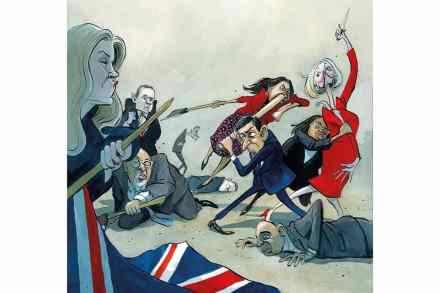
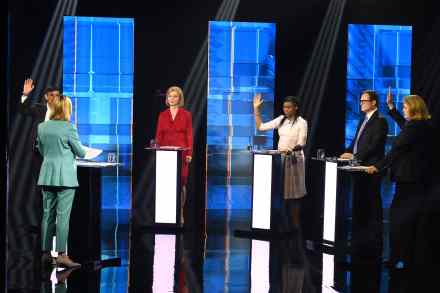
That was quite a debate. I’ve never seen senior Tory ministers and MPs lay into each other so publicly.  Rishi Sunak accused Liz Truss and Penny Mordaunt of being socialists – not a compliment in the Tory lexicon – for being reckless with the public finances. Truss attacked Sunak for raising taxes to record levels. Kemi Badenoch called for unity while attacking more or less everyone for everything. Mordaunt seethed at what she saw as the cheap personal attacks she’s faced in recent days, especially over the trans debate. Tom Tugendhat attacked everyone else for being current or recent members of Boris Johnson’s government.

Sunday shows round-up: Penny under the spotlight

From our UK edition

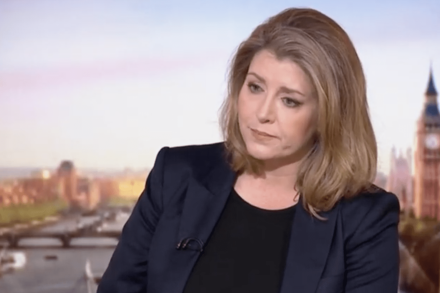
Penny Mordaunt – I’m being smeared over self-ID claims No Conservative party leadership race is ever without drama. With the first TV debate now under their belt, the five candidates are fending off scrutiny not just from the opposition and the media, but from each other. One of the biggest rifts from Friday’s debate was when Penny Mordaunt denied that she had ever been in favour of self-identification for transgender people while she was equalities minister. Her rivals, Kemi Badenoch and Liz Truss, suggested this was not true, and leaked documents reported in the Sunday Times today appear to back this up. Speaking to the BBC's Sophie Raworth, Mordaunt sought to defend her record: https://www.youtube.com/watch?

What the Tory candidates’ logos say about them

From our UK edition

There’s a particularly amusing picture from the 1997 Tory leadership contest of Ken Clarke and John Redwood awkwardly paired up under a blue sign with the words ‘Uniting to Win’ on it. Though their campaign for power was forgettable, uniting to lose against William Hague of all people, they can take solace in being an unlikely pair of trend-setters. Theirs was the first use of a logo and slogan in an internal party contest, the start of a succession of design shockers on the British public ever since. The standard of this year’s leaders’ logos shows a slow decline. Back to basics would be a fine thing. Most slogans have been comically dire.

Why I should become prime minister

From our UK edition

This is an edited transcript of Kemi Badenoch's speech announcing her candidacy for the Conservative party leadership. It's time to tell the truth. For too long, politicians have been telling us that we can have it all: have your cake and eat it. And I'm here to tell you that is not true. It never has been. There are always tough choices in life and in politics. No free lunches, no tax cuts without limits on government spending, and a stronger defence without a slimmer state. Governing involves trade-offs, and we need to start being honest about that.  Unlike others, I'm not going to promise you things without a plan to deliver them. People are sick of that. They're crying out for honesty. Today, I want to be honest about our economic challenge.

Why we’ll all miss Boris

I think that Thomas Babington Macaulay had the last word about Boris Johnson’s forced resignation as prime minister of the UK: “We know no spectacle so ridiculous,” Macaulay wrote, “as the British public in one of its periodical fits of morality.” Macaulay’s line needs to be slightly adjusted, it is true, because, ridiculous though public displays of puritanical moralism are, in this case it was mostly Boris’s colleagues in Parliament, not the public at large, that suffered that unbecoming fit of morality. Indeed, throughout it all, Boris — a politician with more élan than any prime minister since Margaret Thatcher — remained popular with the public. He was especially popular, I think, with the American public. And why not?

boris johnson trade

The 57 Tory ministers who resigned – forcing Boris to go

From our UK edition

Boris Johnson has announced that he is resigning as Prime Minister after facing a tide of ministerial resignations. Below is the full list of cabinet ministers, junior ministers and other government employees who resigned, forcing the Prime Minister to act. Cabinet ministers who have resigned from Boris Johnson's government: 1. Oliver Dowden, party chairman (5.35 a.m. 24 June) 2. Sajid Javid, health secretary (6.02 p.m. 5 July) 3. Rishi Sunak, chancellor (6.10 p.m. 5 July) 4. Simon Hart, Wales Secretary (10.30 p.m. 6 July) 5. Brandon Lewis, Northern Ireland Secretary (6.49 a.m. 7 July) 6. Michelle Donelan, Education Secretary, (8.53 a.m. 7 July) Junior ministers, trade envoys and party officials who have resigned from Boris Johnson's government: 1.

Boris Johnson saved by his hollow party

Boris Johnson has survived the attempt by some in Britain's Conservative party to remove him as prime minister. The margin not quite close. But by being so publicly called into question, both the prime minister and his party have been weakened. Dogged by real and performative public disapproval, Johnson will have difficulty remaining in power for the rest of the parliamentary term, and more performing to do in the next election to remain in office after it. In the fabled axioms of British politics, two things are meant to be clear. One is that the Conservative party is the natural party of government. The country is slightly right-of-center, the logic goes, and it is a rare Labour challenge which can defeat this innate advantage.

Is Boris Johnson losing the south?

From our UK edition

The great Tory success in 2019 was winning a host of new seats while keeping hold of their traditional southern heartlands, including many seats that had voted Remain. But the local election results will increase concern among Tory MPs that these seats are becoming vulnerable. The Tories have in the last couple of hours lost control of Maidenhead, Huntingdonshire, and Wokingham. Talk to Tories in these types of places and they cite a variety of reasons for their difficulties. Some say that these voters don’t like levelling up – they suspect it is code for taxing them more so that more can be spent in the Tories’ new northern seats. Then, there is a more general complaint that No. 10 pays more attention to the newest parts of the Tory coalition.

What are the Tories for?

From our UK edition

It’s an odd accusation to levy at Boris Johnson’s government, but the Conservative party feels grey. Flights of fancy suggesting a bridge to Northern Ireland or – a thought to make 19th century Royal Navy strategists shudder – to France have given way to a carousel of scandals and disappointments. The former is cheap or cruel; the latter marked mostly by their predictability. This week confirmed a suspicion I’ve held for a while; the Conservative party, being neither meaningfully socially conservative nor particularly interested in using an 80 seat majority, exists for the sole purpose of keeping Labour out of office.

What happened to Tory radicalism?

From our UK edition

Whatever advantages money may have brought Rishi Sunak as he rose to become Chancellor of the Exchequer, his wealth has now become a serious hindrance to his career. Whatever decisions he takes, everything is seen through the prism of his personal financial situation. If he rejects demands for greater public spending, he will be accused of throwing the poor to the lions. If he raises taxes, he will be accused of failing to understand how ordinary people are struggling. If he cuts them, he will be accused of pandering to his rich friends. Even acts of private generosity by Sunak seem to arouse suspicion when made public.

The changing face of No. 10

From our UK edition

David Canzini has made quite an impression since he joined No. 10 as the Prime Minister’s deputy chief of staff in February. He’s there not just to provide focus but to make the operation feel a bit more traditionally Tory. At a recent meeting with government aides, Canzini, a former Tory party campaign director from the Lynton Crosby school of bluntness, asked for a show of hands: who was a signed-up Conservative party member? More than half the room. For the uninitiated, Canzini pointed to membership forms in the corner. No. 10 plans to check on their progress in a few weeks. Canzini’s approach marks a wider shift in No. 10 to try to repair the Prime Minister’s relationship with the parliamentary party.

Kemi Badenoch: the curriculum does not need ‘decolonising’

From our UK edition

When the government published a report last year by the Commission on Race and Ethnic Disparities (CRED) into racism in the UK, it was the subject of controversy. The report concluded the UK does not have a systemic problem with racism (while accepting there are issues), and a number of charities dubbed it 'deeply troubling'. A year later and the government finally set out its response to the report and how it intends to deal with the inequalities highlighted in it.  Taking its founding principles from the original report, it essentially accepts the chair Tony Sewell’s logic that the different outcomes for different minority groups means that it is the wrong approach to attribute every problem to racism.

Rishi Sunak is no Gordon Brown

From our UK edition

How at home Rishi Sunak looks in the company of academics. The chancellor delivered the 34th Mais Lecture this afternoon at the Bayes Business School in east London. Standing at the lectern in his dapper blue suit, he had the air of a cerebral super-monk bred on figs and yogurt. He’s the first British chancellor to hold an MBA from Stanford and he seemed perfectly at ease in this warm, well-lit room full of brain-boxes with double-firsts in economics. He speaks their jargon fluently. Instead of a ‘job’ he talks about ‘an employment outcome ’. His term for a ‘career’ is ‘a fulfilling professional experience.’ And when he refers to education he says, ‘upskilling’ or ‘support for learning.

Ending restrictions won’t save Boris

From our UK edition

Boris Johnson certainly managed to rally the troops on their first day back from recess this afternoon as he told the Commons that all remaining domestic Covid restrictions were coming to an end.  The most explosive moments of the past few months haven't been about the continuation of Covid restrictions From this Thursday, the legal requirement to self-isolate following a positive test will come to an end. Until 1 April, people who test positive will be advised to stay at home, but after that 'we will encourage people with Covid-19 symptoms to exercise personal responsibility, just as we encourage people who may have flu to be considerate to others'.

The Tory warlords who will determine Boris’s fate

From our UK edition

When news broke over the weekend that former minister Nick Gibb had become the 14th Tory MP to publicly call for Boris Johnson to resign, cabinet loyalists were furious. They weren’t just concerned about the growing number of no-confidence letters — they were angered by what they saw as a co-ordinated effort by ‘One Nation’ Conservatives to oust the Prime Minister. One Nation Tories, a 40-strong parliamentary group, have long been regarded with suspicion by Johnson’s inner circle. ‘They’re the government’s most obvious and vocal critics,’ says a member of the whips’ office. They tend to occupy traditional shire seats or sit in Lib Dem/Tory marginals. During the Brexit referendum they veered towards Remain.

Boris is finished — it’s when, not if

From our UK edition

This week, Michael Gove's lengthy Levelling Up white paper talked about the ancient city of Jericho. This was largely because of its size and natural irrigation, but perhaps the Biblical story of the city's walls falling might be more fitting given the state of Downing Street. The response in the Conservative party to not one but four senior resignations — for unconnected reasons — is pretty fatalistic. Martin Reynolds and Dan Rosenfield were doomed because of the former’s ‘BYOB’ email and the latter’s unpopularity with Tory MPs. But the Munira Mirza case is stranger: senior staff don't tend to quit. Ministers like to resign in a blaze of glory, but even in the dying days of an administration people tend to want to go down with the ship.

Inside Boris Johnson’s showdown with Tory MPs

From our UK edition

After Tory MPs spent the afternoon laying into Boris Johnson over Sue Gray's summary of her report, the Prime Minister finds himself in a much more fragile position than when he started the day. Tonight he addressed Tory MPs at a meeting of the 1922 committee. Given Johnson's Commons appearance rattled MPs rather than improving relations, Johnson went into the meeting on the backfoot. The demand to hear the PM speak was so great that MPs arriving late were turned away. The demand to hear the PM speak was so great that MPs arriving late were turned away Johnson began the meeting by telling MPs he had a really torrid time in the Commons chamber and needed to do a better job of explaining how seriously he took Covid, given it did 'nearly kill me'.

The Tory party is split on one issue: Boris

From our UK edition

‘I can’t put into words how awful this is’ remarks one Tory MP. The party is split not on the kind of policy issue that people can debate but on the question of one man: the Prime Minister. Neither side is finding this struggle rewarding. The Johnson loyalists feel that they spend all day trying to bail water out of the boat, only to be hit by another wave as yet another story breaks. Those who want Johnson gone fear that the police investigation may slow every-thing down and that the current mantra, ‘Wait for the Sue Gray report’, will simply morph into ‘Wait for the Met report’. In No. 10, there is still a mood of defiance.