Conservation

Franken-Wildlife: will cloned game destroy hunting?

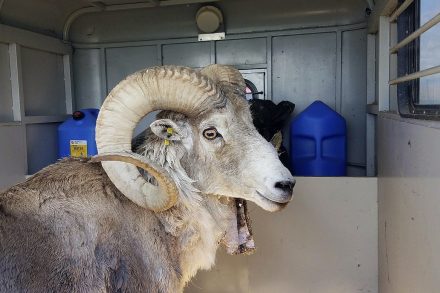
In October 2024, a Montana rancher was sentenced to federal prison time and charged a hefty fine for illegally cloning a giant hybrid sheep, afterwards referred to as the “Montana Mountain King.” Using testicles and other tissues illegally imported to the United States from an argali Marco Polo (Ovis ammon polii) sheep hunted in Kyrgyzstan, the rancher contracted a laboratory to create cloned embryos which he then implanted to ewes on his ranch, eventually resulting in an impressive male specimen tailored for the captive trophy hunting industry. He then worked with co-conspirators to use semen from the cloned animal to impregnate various other sheep and create hybrid specimens of large body and horn size for illegal sale to captive hunting facilities in various other states.

Cloning

A road to healthier forests

The US Department of Agriculture rescinded the 2001 Roadless Rule last week, a regulation that restricted road building and timber extraction in about 30 percent of land managed by the National Forest System. Judging the pushback from environmentalists, you might think that President Trump was selling Yosemite to a logging company. But the red-tape cutting actually increases public recreation access and opens neglected forests to fire-mitigation projects. Conservationists should be celebrating. On paper, the Roadless Rule preserved America’s most beautiful landscapes. In practice, the regulation proved burdensome and ecologically counterproductive. For instance, some 2,400 Tinglit Native Alaskans reside on islands in the Tongass National Forest.

forests road

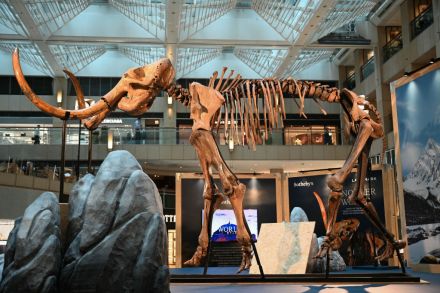
First came the dire wolf – the wooly mammoth is next

With all the insane news this week surrounding President Trump’s tariff and trade drama, only one non-political story was significant enough to break through the news cycle: a Texas-based company called Colossal Biosciences has bred three dire wolves and is currently keeping them in a secret 2,000-acre natural habitat somewhere in the United States. That’s right: dire wolves. An extinct species. A beast so mythical that we only really know of it from Game of Thrones. In fact, as we learned in an interview with a comic book magazine, Game of Thrones creator George R.R. Martin has even visited the dire wolf reserve. There is a non-AI-generated photo of him online cradling a dire wolf pup and weeping tears of joy.  Immediately, skepticism blew up online.

Rewilding the world

I recently found myself scrolling World Cement Weekly in search of news of a massive rewilding project in northern Mexico, created and funded by the cement giant Cemex. The growing success of the rewilding movement is strangely little known — though there are now places that are wilder, more vibrant, more teeming with life than they have been for centuries, few outside the movement know anything about them. Two decades ago, a nature-loving chief executive of Cemex decided that the company would acquire 346,000 acres of degraded land on Mexico’s border with America, an area larger than Los Angeles, renamed the El Carmen Nature Reserve.

rewilding

The Galápagos evolution even Darwin didn’t foresee

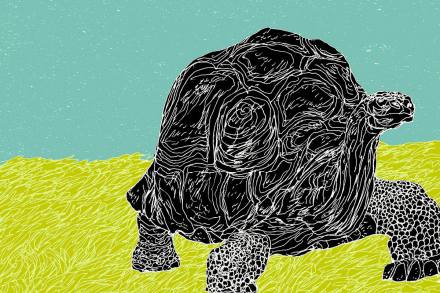
Lonesome George, a Pinta Island giant tortoise, spent the latter half of his hundred years munching on cacti and roaming around the Charles Darwin Research Station on the Galápagos island of Santa Cruz. He borrowed his name from the 1950s American comedian and actor George Gobel and one of the three B-52 Stratofortresses that completed the first non-stop jet circumnavigation of the world in 1957. But the name was ultimately more fitting for the tortoise who was the last of a million-year-old species. In 1959, fishermen introduced three goats to Lonesome George’s home of Pinta Island, one of the smallest islands of the Galápagos archipelago. Just ten years later, they had multiplied to around 40,000.

Galápagos

Bringing back rhinos in Pakistan

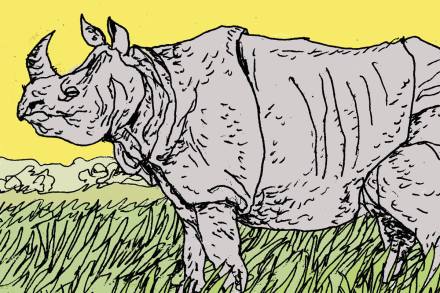
The drive from Islamabad to Multan takes about eight hours. We passed through fields of citrus fruit and farmers tending weed-burning fires. Boys carried giant bunches of twigs over their heads or zipped by on old Honda 70s, balancing water tubs. All had early-Beatles haircuts and wore the shalwar kameez, the Punjabi suit of lightweight trousers and a tunic. Multanis, distinguished by their good looks and their own musical dialect, are called meethi churiyans by other Punjabis, meaning “sweet knives.” They are charming and generous, serving up piles of warm chapati and mutton chops, before stinging you with a hefty bill.

rhinos

How game ranching protects endangered species

Game ranching in Africa is big business, farming wild animals that unlike regular livestock have evolved there and don’t need much care. What they do need is space. South Africa’s most famous reserve, Kruger National Park, is an 8,000-square-mile chunk of wilderness on the border with Mozambique, but private land stocked with wildlife covers almost ten times that area. Ranchers stock their property at game auctions where animals are sold to ranchers who either want to introduce a species or add a new bloodline. In 2019, American cattle breeders were delighted when an Angus bull sold in North Dakota for a record $1.51 million. But in 2016, the winning bid for a stud buffalo in South Africa was close to $10 million.

game
goose

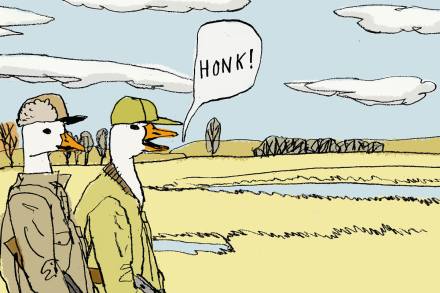
My first family goose hunt

It's a slow Sunday in Paducah, Kentucky, the day before our snow goose hunt. Morning Mass down the road, where the priest quizzingly asked where we were from. Brunch with my husband’s family at a cozy café. Chocolate cake with that crackly boiled icing and fresh coffee in the late afternoon at his aunt and uncle’s house. It isn’t until close to dinnertime that we pack up our bags and hit the road for the bootheel of Missouri, where we will hope to catch a few hours of sleep at our hotel before we meet our local hunting guide. About halfway through our drive, the phone rings with bad news. Our guide, Scooter, spent the day scouting and could find no signs of geese at his usual spots.

Meet the men who want to bring back the woolly mammoth

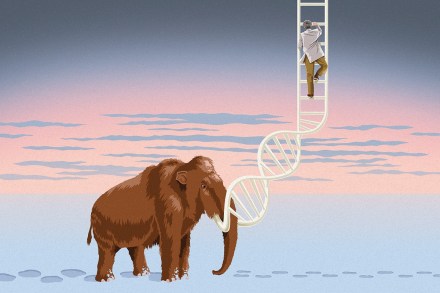
A few minutes into celebrated Harvard geneticist Dr. George Church’s appearance on The Colbert Report, Stephen Colbert motioned towards him conspiratorially. “How do you think your work will eventually destroy all mankind?” asked the comedian, peering meaningfully over his glasses and tapping the table. “It’s a couple of options. Do you think it’s going to be like a killer virus? Or more like a giant, mutant, killer-squid-man, who arises from the Pacific, between Easter Island and Chile, and feasts on our flesh?” Colbert’s probing was tongue-in-cheek, of course. But the joke worked because it touched on real concerns. Dr. Church, sixty-eight, has had a long and storied career, including helping to launch the Human Genome Project in 1984.

mammoth

Stop ignoring the real environmentalists

What does throwing soup on a piece of art have to do with the environment? When we hear the word environmentalist, what comes to mind is something like an Extinction Rebellion or JustStopOil activist: young, urban, progressive, with an expressly political agenda. But what if there are other categories of environmentalists that are expressly ignored, that may have the insights we need to solve the very real environmental problems we face? In my PhD research, I spoke with people who produced a significant amount of food for their own consumption in and around Chicago. Many of them were were disaffected by the focus on climate change and the obsession with consumption as activism.

environmentalists

Among the green conservatives

The American Conservation Coalition last week held its first official summit, hosting a vibrant crowd of over 250 people. The organization boasted speakers such as Michigan congressman Peter Meijer, New Hampshire governor Chris Sununu and conservative radio host Jason Rantz. Cockburn was lucky to attend — and even luckier to partake in the open bar. The many speakers held talks and panels on topics such as China as a player in the clean energy arms race, nuclear power as an alternative to fossil fuels, and the deregulation of free market economies. While it is still far from the mainstream attitude in conservative thought, the ACC represents a growing minority of people who recognize climate change as a threat, only without the left's “doom and gloom.

Liberalism and existential insecurity

After 1789, conservatism was the party of insecurity, pessimism and fear, liberalism the party of confidence, optimism and eager anticipation, down to the early years of the twenty-first century when the mood of hubristic triumph that followed the collapse of the Soviet Union deflated almost overnight, in the United States especially, where liberal democrats have come to resemble the “normal American of the pure-blooded type” whom Mencken described as going “to rest every night with an uneasy feeling that there is a burglar under the bed, and... [getting] up with a sickening fear that his underwear has been stolen.

liberalism

The hidden victims of the South African shutdown

I sit in a National Park in South Africa, looking at an empty restaurant in which a robust staff, hired on for the peak international travel season, stand idle and bored. Many will likely be let go next week as the tourism declines yet again. Many were out of work for a year and only just hired back. The ripple effect of the latest travel shutdown is felt immediately here. Many parks in Southern Africa lost 80 percent of funding through the last shutdown, which in South Africa was one of the most severe. We work here with the Rangers, tasked with protecting the last great population of rhino and elephant, and they cannot afford boots, let alone salaries to pay the staff who work without pause.

south africa shutdown

Leftist tree-huggers and backwoods conservatives unite!

There is paradox among 'outdoorsy' people that manifested itself to me in an indelible way over the weekend. Being something of a 'crunchy con,' I took part in the Pennsylvania Environmental Council’s Public Lands Ride — a group bicycling event that tours riders through Moshannon State Forest — that happened to take place on opening day of archery deer season this year. I was biking beside Six Mile Run, admiring the picturesque outline of a lone fly-fisherman standing in the glittering stream, when I glimpsed a tired-looking Subaru Outback parked along the side of the gravel forestry road. 'A support vehicle,' I thought, wondering why the volunteer would choose to set up her station so close to the one I’d just passed.

nature