Communism

Will Cuba be reborn as a Caribbean Las Vegas?

From our UK edition

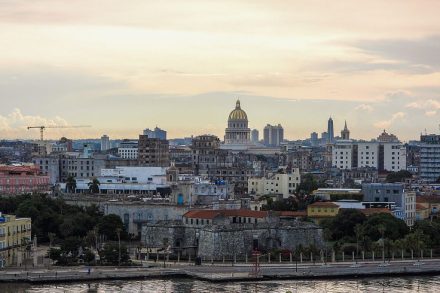
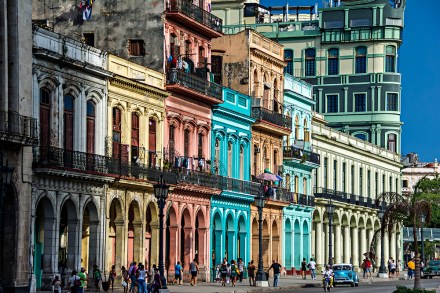
Cuba’s revolutionary spirit is giving out. Donald Trump has called on Cubans to ‘make a deal before it’s too late’ and has threatened military action. More than six decades on from the revolución of 1959, all talk is of the Yanqui dollar and how to acquire it. The scramble for greenbacks has fed into Cuba’s sex industry. In the dollar-happy resort of Varadero, the locals suffer police surveillance and the indignity of rationed food while prostitutes as young as 15 hover outside the motels. Yet for all the hardship and belt-tightening, Cuba commands sympathy from the international left as a last bastion of communism.
Were the lies we told to combat communism so shameful?

From our UK edition

This, we might imagine, is the Age of the Fake. AI videos; TikTok fascists; the Joycean mind-fragments of a US president for whom truth itself is an ever shifting quantum concept. Surely no other generation has had to navigate such a disorientating landscape of deceit. Or perhaps they have. Our old friends the Russians gave the world The Protocols of the Elders of Zion at the start of the 20th century – a lethal, widely circulated (and still circulating) hoax outlining the world-dominating plots of Jewish people. Meanwhile, a still unidentified forger composed the Zinoviev Letter, which was published by the Daily Mail a few days before the 1924 general election.

How interwar Germany became a breeding ground for evil

From our UK edition

Did no one who lived through the Weimar Republic of 1918-33 see what was coming, asks Victor Sebestyen in his impressive new book. The politicians, the intellectuals, the foreign visitors who converged on Berlin in the wake of the first world war all wrote about the anti-Semitism and violence they witnessed, but virtually no one perceived where Germany was heading until it was too late. A great deal has been written about the Weimar years, much of it in hindsight; but Sebestyen, the author of bestselling books on Hungary and Russia, sets out to relate events as they unfold – to tell the story as it happened. The result is a fascinating portrait of how frighteningly easy it is for a democracy to crumble.

Kneecap’s breathtaking Cuban hypocrisy

While most Cold War cultural battlegrounds have long been paved over or turned into a theme park, Cuba has retained a place in the hearts and minds of the West’s luxury leftists. Beautiful weather, sandy beaches, famous cigars and, of course, a long-standing enmity with the US have all ensured the country remains perhaps the last stubborn redoubt of revolutionary, western hipsterism. So it made perfect sense that leading the charge in last weekend’s much trumpeted "aid flotilla" to the island nation was the Irish language-speaking novelty rap act, Kneecap.

kneecap

In Cuba, a revolution is over

If you’ve ever thought of visiting the crocodile-shaped island of Cuba, or run into someone recently returned from sultry nights in the country’s salsa halls, there’s a good chance you’ll have heard the phrase “See it before it changes.” And I don’t mean because of Hurricane Melissa. The idea is that the centrally planned communist state, one of the last on Earth, will soon morph into America and a balmy Brigadoon full of people unencumbered by money, modern cars or Alexa will evaporate. I think most people, if they knew what Cubans have endured, wouldn’t use that phrase, which is up there in its lack of tact with “they’re poor but they’re happy.

cuba havana

Is it possible to retain one’s dignity in the face of annihilation?

From our UK edition

Before the second world war, the Croydon-born cricketer C.B. Fry was offered the throne of Albania. It’s not certain why. Possibly because his splendid party piece involved leaping from a stationary position backwards on to a mantelpiece. Or because, historically, the Balkan nation has been so inexplicably Anglophile as to appreciate the pratfalling funnyman Norman Wisdom. Sadly Fry declined the role and it was later taken by the fabulously named if catastrophic ruler King Zog (real name Ahmed Muhtar Zogolli). Had Fry accepted, history, that capricious monster mixed of chance and fate, would have been very different. In reality, Zog was toppled in 1939 by Mussolini’s invading fascists, who turned Albania into an Italian protectorate before it fell under the Nazi yoke.

Art and radicalism in 1930s Britain

From our UK edition

What is art for? How can it, should it, relate to the political framework of its time? How far can it shade into ‘propaganda of the imagination’? These are some of the questions threading through Andy Friend’s compelling account of the first decade of the Artists International Association, or AIA, a vital but under-explored British movement welding art and politics against the growing threat of international fascism.  The story opens in 1933 in the candlelit rooms of Misha Black above Seven Dials, Covent Garden, where a dozen impecunious jobbing artists met to discuss a sensational report from the Soviet Union.

A rebellious childhood: Lowest Common Denominator, by Pirkko Saisio, reviewed

From our UK edition

How do you dispose of 48 uniform volumes of the collected works of Lenin and Stalin? Pirkko Saisio and her mother hatch a plan. The books are ‘dumped into the trash bin’ by their apartment block, then coated with ‘a week’s worth of eggshells and fish guts and newspapers’. No one will find them, Mother insists. If anybody did, ‘there’s no way they’ll know they’re ours’. So Pirkko no longer has to hide the embarrassing tomes when friends drop round. Executed during true-believing Father’s absence, Lenin and Stalin’s stinky downfall is one of many bittersweet episodes that make Lowest Common Denominator such a piquant account of a childhood and a time.

Cambridge University should be ashamed of itself for honoring Angela Davis

Remember Angela Davis? Few people under fifty do. Was Cambridge University counting on that historical ignorance when it decided to honor Angela Davis with an honorary degree?   In case you, Dear Reader, are a little fuzzy about Davis, I note for the record that the former Black Panther and two-time vice-presidential candidate on the Communist Party ticket with Gus Hall is the recipient of many honors, including the Soviet Union’s Lenin Peace Prize.  Cambridge University, of course, has long demonstrated a certain fondness for Commies, as the names “Kim Philby,” “Guy Burgess” and “Anthony Blunt” remind us.

Zohran Mamdani’s radical parents

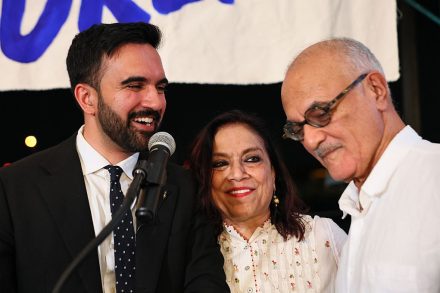
Voters often pay a premium for socialism. It’s the modern-day equivalent of free-range eggs or an electric car. Zohran Mamdani, a self-described “democratic socialist,” embodies that premium. In New York’s Democratic mayoral primary election, he got blown out of the water with lower-income voters – but won overwhelmingly with young, white, college-educated idealists desperate for the revolution. He would be the furthest left mayor New York City has ever seen if elected in November. While his policy prescriptions – city-run grocery stores, higher taxes on the wealthy and a diminished police presence – are radical proposals, it is his deep devotion to socialism that truly defies convention. There is no question that Mamdani loathes the West.

zohran Mamdani

Zohran Mamdani’s grocery chain will be a crime against New Yorkers

Of all the policies proposed by Zohran Mamdani, the socialist winner of last week’s New York’s Next Top Mayor competition, the idea of city-run grocery stores has proved the most divisive. If you want to reduce prices at halal carts by taking away regulations on street vendors, you’re going to get 80-plus percent approval rating. But state-owned groceries are another story. Modern history is strewn with tales of state-owned grocery disasters.

Zohran Mamdani

The shadow of communism still looms over the Balkans

From our UK edition

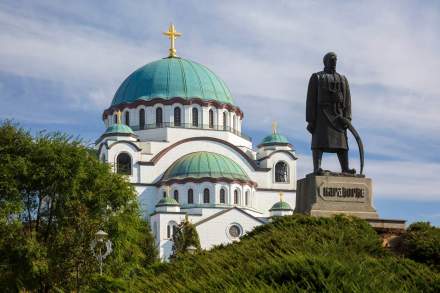
Our Serbian guide Zoran is a jovial fellow and as we rumble through the streets of Belgrade in our minibus he regales us with a joke about the difference between the various nationalities of the former Yugoslavia, all now with countries of their own. ‘We Serbs are rude,’ he says, ‘but the Croatians are self-centred, the Bosnians are thick, the Montenegrins are lazy and the Macedonians are just Serbs with a speech defect. As for the Slovenians, they are so polite they must be gay!’ Joking about each other is a definite improvement on fighting each other, as per so much of their history. The countries on my Balkan tour – Serbia, Romania and Bulgaria – have been struggling for more than three decades with their post-communist problems. But they do like a laugh.

The novel that makes Ulysses look positively inviting: The Aesthetics of Resistance, by Peter Weiss, reviewed

From our UK edition

The translator’s preface to the third volume of The Aesthetics of Resistance informs us that ‘Several deadlines came and went on the way to this translation’. That is quite the understatement. The German edition of Peter Weiss’s 1,000-page historical novel appeared in 1975. A full English translation has been in the offing for more than 20 years. In the meantime, Weiss has won just about every literary accolade Germany has to offer, and his play Marat/Sade has become known as the theatrical ‘starting gun’ of the 1960s. Whatever the translator Joel Scott has in store for us, it had better be worth the wait.

The Democratic war machine

To understand what’s wrong with the American left and the Democratic party – two different but entwined things, to be sure – look to Vladimir Ilyich Lenin. Look also to the work of the historian Sean McMeekin, including his latest book, To Overthrow the World: The Rise and Fall and Rise of Communism. Earlier this spring I emceed an event in McMeekin’s honor, as he received the award for “Conservative Book of the Year” from the Intercollegiate Studies Institute. It gave me the opportunity to chat with him about Lenin’s doctrine of “revolutionary defeatism” and much else, including the fairy tale the West tells itself about how communism ended.

Democratic

Inside the Unholy See: the infiltration of the Vatican by foreign powers

From our UK edition

Since it became independent in 1929, Vatican City has been the world’s smallest state. Every evening the gates close, leaving behind only 500 permanent residents. I once spent a week behind the walls as a guest in the Santa Marta hostel where the Pope lives; at night the deserted courtyards are thrillingly spooky. But it’s during the day that they echo with the footsteps of secret agents. The Vatican has been teeming with spies since popes started living on this 100-acre plot of land west of the Tiber when they returned from Avignon in 1377. In the 20th century it entered a new era of espionage when the papacy was targeted by Nazi Germany, Soviet Russia and the United States. By definition, secret agents are supposed to be difficult to identify.

When will Ronald Reagan get the recognition he deserves?

From our UK edition

The talented military historian Max Boot has published a well-researched life of Ronald Reagan that is fundamentally wrong. First the good parts: he has combed through lots of archives finding new information and has interviewed countless people who worked with or knew Reagan. His style also bears the reader effortlessly along. Yet his claim that Reagan was merely a lightweight pragmatist who had little effect on reviving the American economy, resuscitating the country’s self-esteem or winning the Cold War is absurdly revisionist. It says more about the author’s own rejection of the Republican party than it does about Reagan’s world-historical achievements.

South Asia in a time of the breaking of nations

From our UK edition

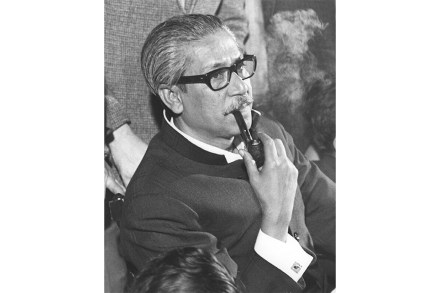
Early on Christmas morning in 1962, the Indian diplomat S.S. Banerjee heard a mysterious knock on his door in Dacca, East Pakistan. Standing outside in the darkness was a 14-year-old boy, who beckoned to him to follow, and minutes later Banerjee found himself opposite the firebrand politician Mujibur Rahman, a pipe-smoking Bengali activist who had recently transformed from a Pakistani nationalist into one of the country’s fiercest critics. For the next hour, the two men engaged in small talk, with Banerjee growing increasingly mystified as to why he had been summoned. Then, just as he was about to go home, he was handed a small envelope intended for the Indian prime minister Jawaharlal Nehru.

The dark side of life in Cuba

From our UK edition

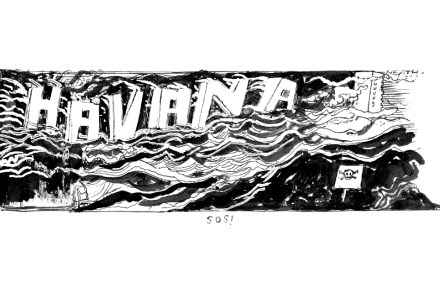
The first scent of trouble came when Cuba’s government ordered all its non-essential workers home. By packing them off (and there are plenty of them, given Cuba is one of the world’s last centrally planned communist states) the government hoped the island’s exhausted national power grid would get a breather. It didn’t work, the main power station crashed, and Cuba went dark. At first, I didn’t think it was a big deal. Power cuts in this all-but-bankrupt state have long been a daily scourge. But it turns out there’s a categoric difference between 20 and 24 hours of blackout. I came to Cuba in 2018 for a three-month stay and here I am, now married with a three-year-old son. Friends call this my ‘Cuban midlife crisis’, which I resent.

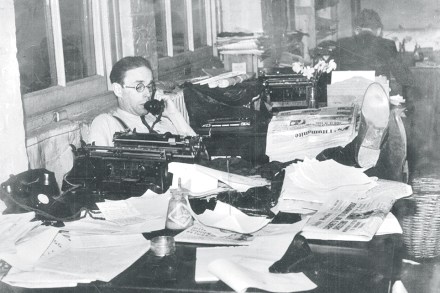
The journalist’s journalist: the irrepressible Claud Cockburn

From our UK edition

No one should be put off reading Patrick Cockburn’s remarkable biography of his father by its misleading subtitle. ‘Guerrilla journalism’ doesn’t do justice to its subject. The suggestion of irregular warfare from the left underrates Claud Cockburn’s great accomplishments in mainstream politics and journalism and doesn’t begin to embrace the romantic and daring complexity of his life and career. By late 1931, his eyewitness reporting at the start of the Great Depression convinced him that Marx was right Indeed, it is the journalist son’s signal achievement to have surmounted left-wing cliché and written a fascinating and subtle portrait of a paradoxical career.

What do we mean when we talk about freedom?

From our UK edition

When the Yale historian and bestselling author Timothy Snyder was 14, his parents took him to Costa Rica, a country lauded for its conservation of natural resources that is rated freer and happier than the United States. He recalls feeling liberated and unfettered as he hiked in cloud forests with his brothers, seeing monkeys, sloths and spectacular birds. One day, a local friend led the boys on a mysterious quest to view something special; after walking for three hours through a maze of paths, they arrived at a cascade hiding a cave, where they could gaze out at the green world through curtains of falling water.