Colonialism

Our academics are attacking the whole concept of knowledge

From our UK edition

The first problem about decolonisation is the word itself. Colonisation is the process of establishing control over a foreign territory and its indigenous inhabitants, by settlement, conquest or political manipulation. But decolonisation? It has come to mean much more than the reversal of that process. Today, it refers to an altogether wider agenda, whose central objective is to discredit or downgrade the cultural achievements of the West. Objective truth and empirical investigation are mere western constructs. They are optional ideas which need have no weight beyond the western societies which invented them. But the West has imposed them on the rest of the world by a process akin to the colonial conquests of the past four centuries.

A thoroughly modern 18th-century heroine: The Future Future, by Adam Thirlwell, reviewed

From our UK edition

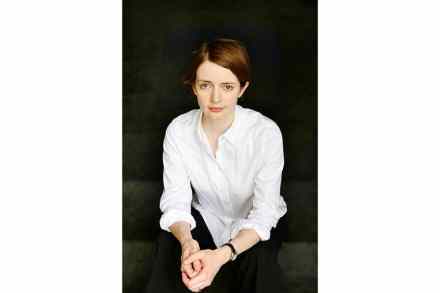
Adam Thirlwell’s latest novel begins in revolutionary France and chronicles the travails of its embattled celebrity heroine, Celine, who is being subjected to a campaign of malicious gossip about her sex life. She resolves to cultivate a coterie of influential writers to wrest back control of the narrative – cue earnest meditations on power, misogyny and the ability of the written word to shape reality. Meanwhile, she finds solace in female company, reflecting: In a society made of words and images and circulating and recirculating, all devoted to disinformation, it was very difficult to find any personal safety, and one minuscule form might just be this intense form of friendship between two women.

Shamebridge: why is Cambridge so embarrassed about its past?

From our UK edition

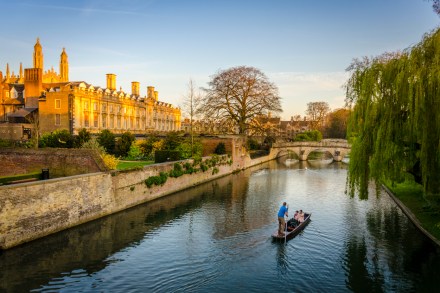
Finding Cambridge’s ugly side isn’t easy, but a walking tour of the city promises to show you it. Uncomfortable Cambridge, which bills itself as the ‘perfect introductory tour’ of the city, suggests tourists are wrong to think this is a place of beauty. Rather, Cambridge is a place we should be ashamed of – or at least feel a bit awkward about. The university is at the heart of the one-and-a-half hour tour, which costs £14 per person. Our guide begins by telling us that Cambridge isn’t as guilty as Oxford, which is good news – but it’s mostly downhill from there. St John’s College, where William Wilberforce and Thomas Clarkson studied, is the first target. Both men are commemorated with statues: Wilberforce’s is inside the chapel; Clarkson’s outside.

The Roman roots of ‘colony’

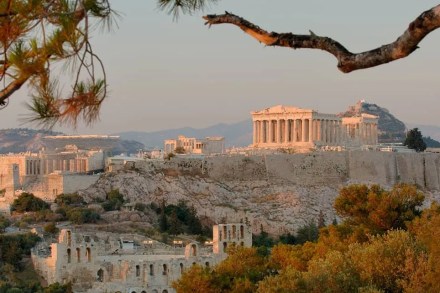
The word “colony” meets with a sharp intake of breath these days, but “province” raises no eyebrows. How very odd. The ancient Greeks invented the western notion of the colony. But “colony” is the term the Romans applied to it and is of Latin derivation, from colo, “I cultivate, inhabit” and so colonia. The ancient Greek term was apoikia, literally “a home apart, away”, or perhaps a “home from home.” Greeks established these apoikiai widely around the Mediterranean, mainly from the 8th to 6th centuries BC, clustering along the coasts of Turkey, northern Greece, all around the Black Sea, southern Italy, the eastern Adriatic, Sicily, parts of southern France and Spain, and Cyrene, as Plato said, “like frogs around a pond.

colony

Not all Americans are so crass

From our UK edition

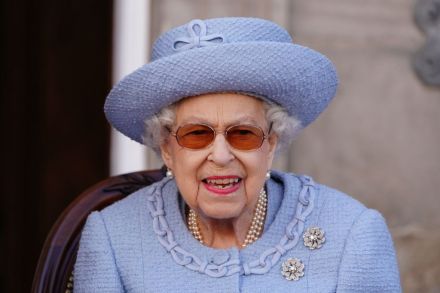
In the face of American snark about the Queen’s death, many a British newspaper reader was disgusted. With bad tidings imminent on Thursday last week, an academic at Carnegie Mellon tweeted: ‘I heard the chief monarch of a thieving raping genocidal empire is finally dying. May her pain be excruciating.’ An assistant professor in Rhode Island tweeted that she would ‘dance on the graves of every member of the royal family, especially hers’. Once the bleak news was in, a co-host of the popular US television show The View imagined this the ideal time to observe: ‘If you really think about what the monarchy was built on, it was built on the backs of black and brown people… She wore a crown with pillaged stones from India and Africa.

The ignorance of Queen Elizabeth’s ‘anti-colonialist’ critics

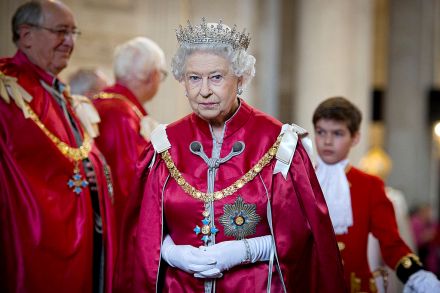
As Alexander Larman writes, the passage of the Queen is not a tragedy. No life lived so well, so dutifully, and with such faith in so many things now lost to us can be considered a tragedy. But it is nonetheless very sad, even for those of us in America — a nation she loved in so many ways. Her death seems like another blow to another important institution of the West, undermined in recent decades by boomer proclivities and millennial narcissism, and likely to break into a thousand pieces in the absence of the old-world values Elizabeth represented. What is more tragic, and more offensive, is the degree to which the Queen's passing has been met by historical ignorance from the anti-Western left and its attendant useful idiots on the decadence-obsessed right.

College condemns professor who celebrated Queen Elizabeth’s death

Carnegie Mellon University told The Spectator they "do not condone" tweets from one of their professors that wished Queen Elizabeth II an agonizing death. Uju Anya, who teaches in the Department of Modern Languages, referred to Queen Elizabeth as the "chief monarch of a thieving raping genocidal empire" and said she hoped her dying moments would be "excruciating". Twitter later removed the tweet for violating its terms of service. [caption id="attachment_39734" align="aligncenter" width="1024"] Uju Anya Twitter Screenshot[/caption] "I'm not wishing her dead. She's dying already," Anya said in another tweet. "I'm wishing her an agonizingly painful death like the one she caused for millions of people.

uju anya

The lost world of the Karoo

From our UK edition

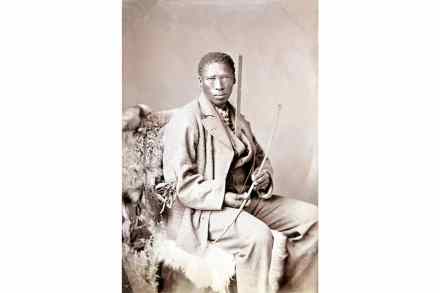
Julia Blackburn’s Dreaming the Karoo is the diary of a very bad year: from March 2020, when a research trip to South Africa was cut short by the sudden emergence of Covid, to March last year. Blackburn had gone to Cape Town, and then into the dry interior, the Karoo, to explore the lost world she had found in an obscure volume that she had once chanced upon in the London Library. Specimens of Bushman Folklore, by the linguists Wilhelm Bleek and Lucy Lloyd, published in 1911, contains the texts – life stories, origin myths, tales about animals, accounts of murders of women and children by the encroaching colonists – given by many of the /Xam, a Bushman group of hunter-gatherers. These informants were captives, hundreds of miles from their homes.

We let Hong Kong down: Chris Patten on the end of colonial rule

From our UK edition

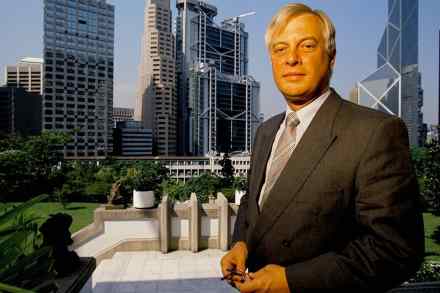
After 13 years in parliament, rising star Chris Patten had the bad luck to be one of the few Tory MPs to lose his seat in 1992. Had he been re-elected he would probably have become chancellor of the exchequer. Instead, he found himself in the wilderness. But not for long. Within months he had been appointed governor of Hong Kong, tasked with the tricky business of presiding over the transfer of the territory to communist China. It was a lucky break. Had he been chancellor, the odds are that his political career would have come to a sticky end the following September, when the pound fell out of the Exchange Rate Mechanism. Instead, it was Norman Lamont who drew the short straw. By the time Patten arrived in Hong Kong the clock was ticking.

Travels in time and space: Sea of Tranquility, by Emily St. John Mandel, reviewed

From our UK edition

It’s a bold writer who confronts a major historical moment such as a pandemic before it’s over, but Emily St. John Mandel has a claim to fictionalised outbreaks. Her 2014 novel Station Eleven presciently envisioned a devastating flu. That book was televised by HBO and became a major hit, and this latest touches on the same ground. As J.G. Ballard proved, revisiting a subject – as a painter might – can be a fertile approach in speculative fiction. Sea of Tranquility initially adopts a time-leaping structure reminiscent of David Mitchell’s Cloud Atlas (which itself sprang from Italo Calvino’s masterpiece If On a Winter’s Night a Traveller). In 1912, we meet a young English aristocrat exiled to Canada for his radical views.

Don’t cancel John Donne’s poetry

All the way across the Atlantic, the British literary world has been seized by John Donne fever. Katherine Rundell’s biography of the metaphysical priest-poet has led to excitable chattering about his life and work. The book, Super-Infinite: The Transformations of John Donne, will be released in the US in September — a significant enough delay as to make the Declaration of Independence look like a mistake. Aside from radically different publication dates (again: would you rather have lower taxes and freedom from George III, or a brilliant Donne biography?), the specter of the far-off American continent has long since loomed large in Donne studies.

The race report critics are guilty of gaslighting

From our UK edition

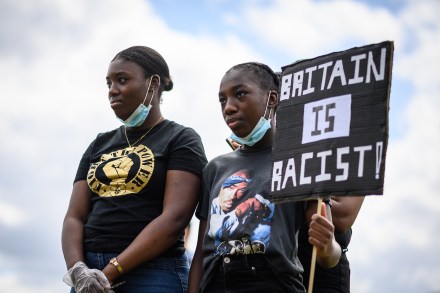
The Sewell Report on race and ethnic disparities is courageous, thoughtful and measured. Its relative optimism has triggered a torrent of bile from those personally or professionally wedded to the idea that Britain is a systemically racist society. They accuse the report of disregarding what is fashionably called ‘lived experience’ — in other words, anecdotal evidence and subjective impression. Its use of carefully considered objective data, the critics allege, devalues the lived experience of ethnic minorities. Lived experience has validity, but — by definition — only for those who have lived it. It proves nothing beyond itself, and certainly nothing systemic.

Were old children’s history books racist?

From our UK edition

If Brighton and Hove Council has its way, children as young as seven are to be taught about the ‘white privilege’ supposedly derived from 500 years of colonialism. But is it true that the history we have been learning from childhood has been infused with the great isms of our day – colonialism, imperialism and racism? I thought I would test this on a small scale by going back to the first history books I read. H.E. Marshall, who wrote Our Island Story, was also the author of the knockabout book Kings and Things. She knew all about trigger warnings: ‘The story of England,’ she proclaimed, ‘is thought to be a story too frightening or too difficult for the very young person’s understanding.

Kemi Badenoch is right about colonialism

From our UK edition

Kemi Badenoch, the equalities minister (and, now, for Levelling Up) has come under attack for an off-hand remark she made on colonialism some years ago. In a leaked WhatsApp exchange, according to VICE World News, Badenoch wrote, ‘I don’t care about colonialism because [I] know what we were doing before colonialism got there. They came in and just made a different bunch of winners.’ What did she mean? The reporter from VICE offers an interpretation:, ‘The British Empire and its European counterparts believed in the superiority of white people, and indigenous groups experienced extreme exclusion, displacement and violence in order for the British to take control.

The crisis at the heart of the National Trust

From our UK edition

When Tim Parker announced his resignation as chairman of the National Trust last week, it was a first. Since it was founded in 1895, the Trust has endured many controversies, but until now the shared acceptance of its founding purposes has seen it through. The very first meeting proposed a body ‘for the holding of lands of natural beauty and sites and houses of historic interest to be preserved intact for the nation’s use and enjoyment’. The National Trust continued thus ever since, enforced by Acts of Parliament. This unity of purpose as a conservation organisation enabled it to become the owner of more than 600,000 acres of land and 200 historic houses, with nearly six million members — the greatest heritage organisation in the world.

Who volunteers to be lectured by children?

From our UK edition

The screenwriter Russell T. Davies has said that only gay actors should be cast in gay parts, believing this leads to greater authenticity. The obvious question here is how would Russell know who is gay and who is not gay when he comes to casting? It is not always obvious, surely. Do all gay actors who attend casting sessions enter the room humming hits from Mamma Mia! before enthusing over the decor? Perhaps Russell just guesses, like I do when I’m watching the BBC weathermen flouncing around. The other obvious question is that if it’s authenticity you’re after, surely gay men must never be cast in straight roles? For reasons never properly explained, authenticity doesn’t seem to matter when it comes to straight roles.

The trouble with a ‘decolonised’ curriculum

From our UK edition

I always felt sorry for my father, then president of a chronically strapped educational institution, for having ceaselessly to approach wealthy prospective donors with a begging bowl. How much more delicious, I imagined during his tenure, to instead be the widely welcomed party that doles out the dosh. But as the administrators of Australia’s Ramsay Centre for Western Civilisation have discovered since 2017, it isn’t always easy to give money away. Funded by a $3 billion bequest from the late healthcare magnate Paul Ramsay, the centre was established in order to revive the flagging humanities at Australian universities.

The National Trust’s shameful manifesto

From our UK edition

The National Trust has brought out its ‘Interim Report’, with the clumsy title ‘Addressing our histories of colonialism and historic slavery’. Such use of the word ‘histories’, as opposed to ‘history’, is an alert that a woke view is coming your way. Like ‘diversity’ and ‘multiple narratives’ (also deployed in the report), it suggests plurality but imposes uniformity. The aim is to be ‘historically accurate and academically robust’. According to John Orna-Ornstein, the Trust’s director of culture and engagement, ‘We’re not here to pass judgment on the past’.

Hoping to find happiness

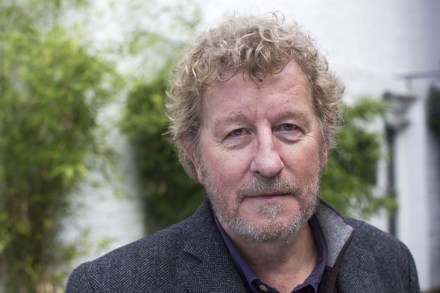
It is a truth universally acknowledged that a serious novel must be in want of a theme. Paris Echo soon makes it clear that it has several. It’s about the shifting nature of history and the mysterious footprints of the past in the present. It’s also concerned with the myriad and biased interpretations that we place on past events. Another preoccupation is the ambiguities of spoken and written French. Modern Paris, the novel’s main setting, allows Sebastian Faulks to explore his themes through two main viewpoints. There’s Tariq, a precociously self-aware 18-year-old Moroccan from a middle-class family in Tangier, who comes to Paris in search of himself, his mother’s French family and an obliging woman who will help him lose his virginity.

paris echo sebastian faulks

A meditation on history

It is a truth universally acknowledged that a serious novel must be in want of a theme. Paris Echo soon makes it clear that it has several. It’s about the shifting nature of history and the mysterious footprints of the past in the present. It’s also concerned with the myriad and biased interpretations that we place on past events. Another preoccupation is the ambiguities of spoken and written French. Modern Paris, the novel’s main setting, allows Sebastian Faulks to explore his themes through two main viewpoints. There’s Tariq, a precociously self-aware 18-year-old Moroccan from a middle-class family in Tangier, who comes to Paris in search of himself, his mother’s French family and an obliging woman who will help him lose his virginity.